Key Takeaways
- Tree impact damage in North Haven often causes hidden structural deflection that requires professional assessment, not just shingle replacement.
- Insurance adjusters may offer settlements that cover only surface repairs, missing critical structural damage that can cost 10x more.
- Proper documentation before tree removal is essential—once the tree is gone, proving structural damage becomes much harder.
- Strategic roof replacement after tree damage can qualify for federal tax credits and energy-efficient upgrades.
I'll never forget a call I got from a homeowner over on Quinnipiac Avenue back in the spring of 2022. A massive silver maple—beautiful tree, honestly—had surrendered to a wet March snow and laid itself right across their master bedroom. From the driveway, it didn't look terrible. The branches were resting on the peak, and the shingles just looked a little scuffed. But once I climbed into that attic with a high-intensity floodlight and a digital level, the reality changed. The ridge board had shifted nearly 3 inches, and the collar ties were splintered. If that homeowner had just called a "shingle guy" to swap out some asphalt, that roof would have eventually sagged or failed entirely during the next heavy snow.
In North Haven, we have a unique mix of older hardwood canopies and newer construction that doesn't always handle impact loads the way 1920s timber framing does. When a tree hits your home, the physics are brutal. It's not just about the puncture; it's about the shockwave that travels through the entire structural skeleton of your house.
The Hidden Physics of Impact and Structural Deflection
When a tree limb falls, it doesn't just land; it "loads." Most asphalt shingles are designed to shed water and resist wind, but they have zero structural load-bearing capacity. The moment that wood hits the roof, the energy is transferred directly to the plywood decking and the rafters beneath. In my experience, even a limb that weighs less than 150 pounds can compromise the fastener pull-through resistance of your decking.
The real danger is what I call "invisible deflection." This happens when the rafters flex under the weight, pulling away from the ridge or the exterior wall plate. If you simply perform a standard roof repair without checking the plumb of the walls and the level of the ridge, you're just putting a band-aid on a broken bone. According to FEMA's hurricane and storm mitigation guidelines, structural integrity is the first line of defense against future wind uplift. If those rafters are even slightly out of alignment, the wind load on your roof changes entirely, making your home more susceptible to the next big nor'easter.
Look, I've seen crews try to "toe-nail" cracked rafters back together. That is a recipe for disaster. If a rafter is split, it needs to be "sistered"—which means a new, identical piece of lumber is bolted alongside it to restore the load-bearing capacity. I always tell my North Haven clients: don't let anyone touch a shingle until you've seen the condition of the skeleton underneath.
The Insurance Documentation Trap in New Haven County
One of the biggest mistakes I see North Haven homeowners make is letting the tree removal service do their job before the roofing damage is fully documented. I get it—you want that 2-ton oak off your kitchen as fast as possible. But the insurance adjuster needs to see the "crush zone" in its original state to justify the cost of a full structural restoration.
The reality is that adjusters are trained to look for the cheapest path to "functional" repair. They might offer a settlement that covers 12 bundles of shingles and 4 hours of labor. But if your rafters are compromised, that check won't cover 10% of the actual cost. Before you sign off on any insurance payout, you should calculate the true replacement cost based on current Connecticut material prices and labor rates. North Haven labor isn't cheap, and the specialized equipment needed for steep-slope impact work adds up quickly.
"A tree hitting a roof is a structural event, not an aesthetic one. If your consultant isn't looking at the rafter tails and the soffit vents, they aren't doing a real assessment."
I recently worked with a family near Wharton Brook who was being low-balled on a "partial" repair. I had to show the adjuster that the impact had actually shifted the chimney flashing on the opposite side of the house due to the house-wide vibration. That's the level of detail you need when dealing with New Haven County claims.
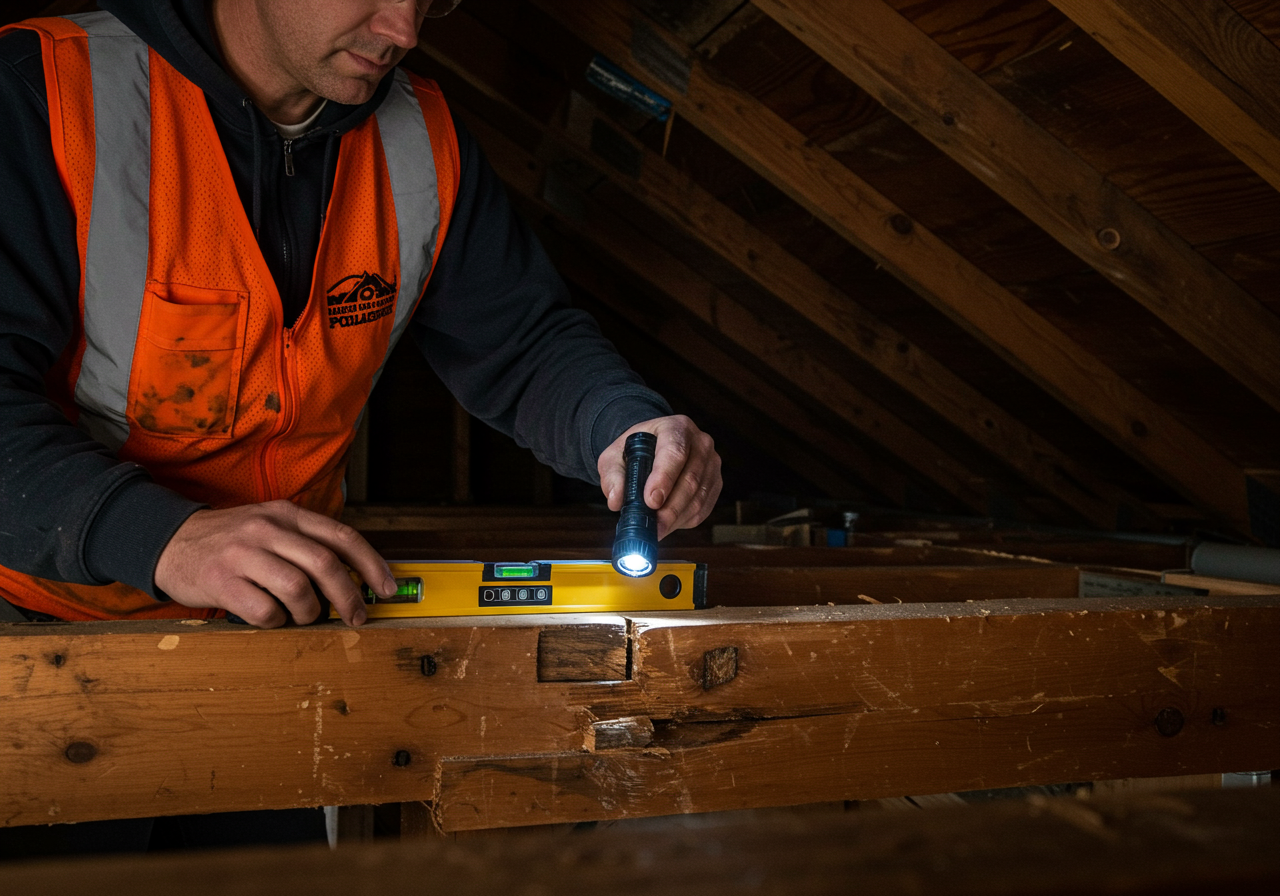
Tree Damage Assessment in North Haven
Professional structural assessment is critical after tree impact—visible damage is often just the tip of the iceberg.
Assessing Decking vs. Structural Rafter Failure
When we get on a roof after a tree fall, we're looking at three distinct layers of damage. First is the "shedding layer" (shingles and underlayment). Second is the "decking layer" (the plywood or OSB sheets). Third is the "framing layer" (the rafters and trusses).
If the tree punctured the roof, the decking is toast. There is no such thing as "patching" a hole in a roof deck. You have to remove the shingles back to the nearest rafters, cut out the damaged wood, and install a full new sheet of CDX plywood (I prefer 5/8-inch for North Haven snow loads). But if the impact was heavy enough to crack a rafter, we're often looking at a situation where a complete roof replacement is the only way to ensure the home remains warrantable. Many manufacturers, like GAF or CertainTeed, will void your wind warranty if the underlying structure is compromised or if the new shingles are installed over uneven, deflected decking.
Impact Damage Scenarios
| Feature | Glancing Blow | Direct Puncture | Structural Crush |
|---|---|---|---|
| Visual Signs Present | |||
| Structural Assessment Needed | |||
| Full Replacement May Be Required |
The 'Patchwork' Trap
The Recovery Roadmap: From Tarping to Tax Credits
Once the tree is gone, your first 24 hours are critical. In North Haven, March weather can flip from clear skies to a soaking rain in three hours. Emergency tarping isn't just about throwing a blue sheet over the hole; it's about "shingling" the tarp—tucking the top edge under the remaining shingles so water can't run underneath it.
But here is where you can actually find a silver lining. If you have to replace a large section of your roof, or the whole thing, you should look at upgrading your materials. According to Energy Star guidelines on cool roofs, installing reflective shingles can significantly lower your summer cooling costs, which is a big deal in our humid CT summers. Furthermore, if you choose the right materials, you may be eligible for federal tax credits. You can check the IRS instructions for Form 5695 to see if your new "cool roof" qualifies for a residential energy credit. It's a way to turn a disaster into a long-term investment.
Long-Term Value: Repair vs. Strategic Replacement
Based on 10-year total cost of ownership
The bottom line is that a tree fall is a traumatic event for your home. Don't let the pressure of the moment force you into a sub-par repair. Take the time to get a technical assessment that looks past the shingles and into the heart of your home's structure.
Get Your Free Roof Assessment Today
Connect with verified North Haven roofing pros who understand structural damage assessment.
No credit card required • Free to use
Get Your Free Roof Quote
Enter your zip code to get started
In North Haven, we take care of our own, and that means making sure your roof is ready for whatever the next season throws at us. Whether it's a heavy snow in March or a summer thunderstorm, your roof needs to be a solid shield, not a collection of patches.
FAQ

About Daniel Roberts
Verified ExpertDaniel Roberts is a Senior Roofing Consultant with over 15 years of experience in the New England residential construction industry. He specializes in storm damage assessment and energy-efficient roofing systems.