Key Takeaways
- Historic homes in Portland often have 3+ layers of old roofing, adding roughly $3,200 to $4,800 in labor and disposal fees alone.
- Structural reinforcement is a common hidden line item; 100-year-old rafters often need 'sistering' to handle modern building codes.
- Synthetic materials can save you up to 40% compared to natural slate while maintaining Portland's neighborhood aesthetic.
- Federal grants and CT-specific preservation loans can offset costs if you follow strict historical guidelines.
I remember standing on a sidewalk near the Portland Brownstone Quarries a few winters ago, looking up at a stunning 1890s Victorian with a homeowner named Sarah. She'd just received a quote for a "simple roof replacement" that was $12,000 higher than her neighbor's. The contractor hadn't explained why. When we climbed up into her attic, the reason was staring us in the face: original spaced sheathing meant for cedar shakes, covered by three layers of asphalt shingles that were literally bowing the rafters. Sarah wasn't just buying a roof; she was paying for a century of shortcuts. In Portland, we don't just have houses; we have puzzles. If you don't know what's under that top layer of shingles, your budget is basically a work of fiction.
Why Portland's Historic Layers Drive Up Labor Costs
When you live in a town as storied as Portland, your roof isn't just a weather barrier—it's a historical record. The biggest "gotcha" in Middlesex County isn't the price of the shingles themselves; it's the labor required to get the old ones off. Most modern homes have one, maybe two layers of shingles. I've seen Portland homes with five.
In 2026, the cost of hauling away roofing debris in Connecticut has spiked. You aren't just paying for the crew's time; you're paying by the ton at the transfer station. If your contractor finds "cedar over slate over planks," you're looking at a labor surcharge that can easily hit $4,500 before a single new nail is driven. You need to insist that your quote includes a "per-layer" tear-off fee clearly defined in the contract. Don't accept a vague "extra labor as needed" clause.
Furthermore, old Portland homes often use "skip sheathing"—slats of wood with gaps between them. Modern shingles require a solid surface. If your home was built before 1930, you should budget for an entirely new deck of CDX plywood. That's an additional $85 to $115 per sheet in the current market.
The Multi-Layer Tear-Off: A $3,500 Surprise
Let's talk about the math that contractors hate to discuss upfront. A standard "square" (100 square feet) of roofing removal usually costs about $50 to $75 for a single layer. In Portland, where we deal with steep pitches and multiple historic layers, that price can jump to $150 per square. On a 2,500-square-foot roof, that's a $3,750 swing in the budget.
I always tell people to check their attic floor for "shingle dust." If you see bits of old cedar or gray slate crumbles, you have a multi-layer project. If you're seeing signs of sagging or leaks during this January thaw, you might be looking at precise roof replacement numbers that include structural decking. But don't let a contractor tell you they "won't know until they rip it off." A quick peek in the attic or a core sample at the eave can tell them exactly what they're up against.
Did You Know?
Did you know that Portland was once world-famous for its brownstone? While that stone makes for beautiful foundations, it also means many local historic homes have very specific drainage needs where the roof meets the masonry.
Choosing Materials That Match Portland's Visual Heritage
If you live near Main Street or in one of the historic districts, you probably feel the pressure to keep things looking "period correct." Natural slate is the gold standard, but it's also $1,800 to $2,400 per square. For a typical Portland home, that's a $60,000+ project. Most of us don't have that sitting in a drawer.
This is where synthetic slate and high-end architectural shingles come in. Brands like DaVinci or certain CertainTeed lines offer the look of stone or wood without the 5,000-pound weight penalty. But here is my Dana Jackson "Buyer Beware" tip: ask for a sample board and walk it across the street. Look at it from the sidewalk. Does it look like plastic? If it does, your property value might take a hit that outweighs the savings.
Historic Material Comparison (2026 CT Pricing)
| Material | Lifespan | Cost Per Square | Weight Issue? |
|---|---|---|---|
| Natural Slate | 75+ Years | $2,100 | Yes |
| Synthetic Slate | 50 Years | $1,100 | No |
| Architectural Asphalt | 25 Years | $450 | No |
| Standing Seam Metal | 50+ Years | $1,350 | No |
If you're just dealing with a few cracked tiles on an existing slate roof, you might not need a full overhaul. Sometimes roofing repair services in Portland can extend the life of a historic roof by another decade for a fraction of the replacement cost.
Dealing With Portland's Unique Masonry and Chimney Flashing
Portland homes are famous for their massive, beautiful chimneys. But in the roofing world, a chimney is just a giant hole in your roof. On a historic property, the flashing—the metal that seals the gap between the brick and the shingles—is almost always the first point of failure.
In January, as ice cycles through freeze-thaw stages, old lead or copper flashing can pull away from the brownstone or brick. I've seen "pros" try to fix this with a $10 tube of caulk. That's a band-aid on a bullet wound. A proper historic flashing job involves "counter-flashing," where the metal is actually tucked into the mortar joints of the chimney. According to FEMA's low-slope and flashing protection guides, improper sealing at these junctions is the leading cause of interior water damage during New England winters.
Expect to pay $800 to $1,500 per chimney for custom copper flashing. It sounds expensive until you're paying a mason $5,000 to rebuild a water-damaged chimney stack three years from now.
"The most expensive roof you will ever buy is the cheap one that ruins your home's original plaster crown molding."
Finding State and Federal Aid for Historic Repairs
Most people think they're on their own when the bill for an old Victorian comes due. But if your home is a contributing member of a National or State Historic District, there are options. While many programs focus on commercial properties, the USA.gov home repair assistance portal frequently updates listings for state-level grants or low-interest "preservation" loans.
In Connecticut, the Shoreline and Middlesex County areas sometimes have access to specific neighborhood revitalization funds. The catch? You usually have to use approved materials. This might mean you can't use the cheapest asphalt shingle, but the grant might cover the 30% price difference to get you into a high-quality metal or synthetic roof.
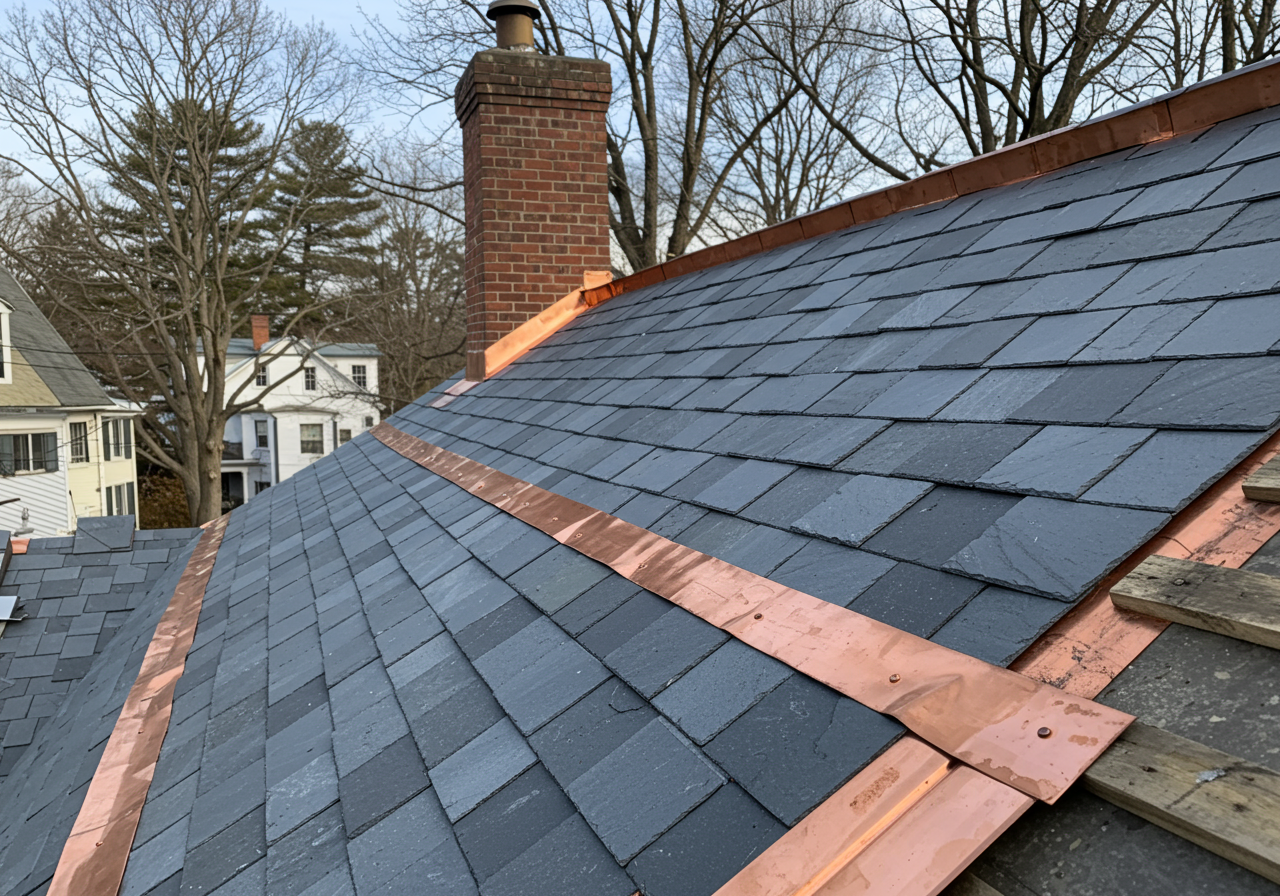
A restored Victorian home in Portland, CT
Historic homes require a balance between modern durability and period-accurate aesthetics.
Also, don't forget the energy angle. Adding proper attic insulation while the roof is off can qualify you for federal tax credits. The DOE insulation and roofing guide highlights how a "cool roof" or increased R-value in the attic can slash those brutal January heating bills by up to 15%.
How to Vet a Contractor for a Pre-1920s Property
You wouldn't hire a Prius mechanic to fix a 1965 Mustang. Don't hire a "production" roofer who primarily does new construction in suburban developments to touch your historic Portland home. They will approach your project with a "rip and replace" mentality that can destroy original details.
Ask potential contractors these three specific questions:
How do you handle 'spaced sheathing' if you find it under the old shakes?
A contractor familiar with historic homes will know to install a solid deck before applying modern shingles.
Can you show me a photo of a step-flashing job you did on a brick chimney?
Proper flashing requires counter-flashing tucked into mortar joints, not just caulk.
Are your crews trained in lead-safe work practices?
Pre-1978 homes often have lead paint on the soffits and fascia, requiring special handling.
Before you sign anything, use an interactive cost estimator to get a baseline for Middlesex County. If a contractor's bid is significantly lower than the average, they're likely planning to skip the structural repairs or reuse old, brittle flashing. In my book, a "deal" on a historic roof is just a delayed disaster.
Get Your Free Roof Quote
Enter your zip code to get started
The reality of owning a piece of Portland history is that you are a steward, not just an owner. Taking the time to line-item your roofing quote—ensuring the disposal, decking, and flashing are all accounted for—is the only way to protect your investment. Keep your receipts, take photos of the process, and never pay more than 10-15% as a down payment.
FAQ

About Dana Jackson
Verified ExpertDana Jackson is a Homeowner Advocate & Cost Analyst who helps Connecticut families navigate the financial aspects of roofing projects. She specializes in finding the best value and avoiding common pricing pitfalls.