
Key Takeaways
- Ground-based inspections with binoculars reveal problems you can't see from on top of the roof.
- Granule loss in gutters signals premature shingle aging that requires immediate attention.
- Attic ventilation issues often masquerade as roof leaks, causing unnecessary repairs.
- Early spring detection prevents $8,400+ in avoidable structural damage and interior repairs.
Imagine you're finally walking the dog down Main Street toward the Durham Fairgrounds, enjoying that first afternoon where the air doesn't bite your face. You glance up at your roof and notice a single shingle tab that looks slightly lifted—just a tiny shadow where there shouldn't be one. You tell yourself you'll deal with it "once the yard dries out." But in my experience, "once the yard dries out" is usually two weeks after a heavy Middlesex County rainstorm has already turned that minor lift into a saturated patch of attic insulation.
I've spent a lot of time tracking how our local microclimates impact home longevity. Spring in Durham isn't just mud season; it's the most critical diagnostic window for your home. If you miss the signs now, you aren't just looking at a damp ceiling; you're looking at a structural compromise that could have been solved with a few tubes of sealant in March.
The Mistake of Climbing Before You Look
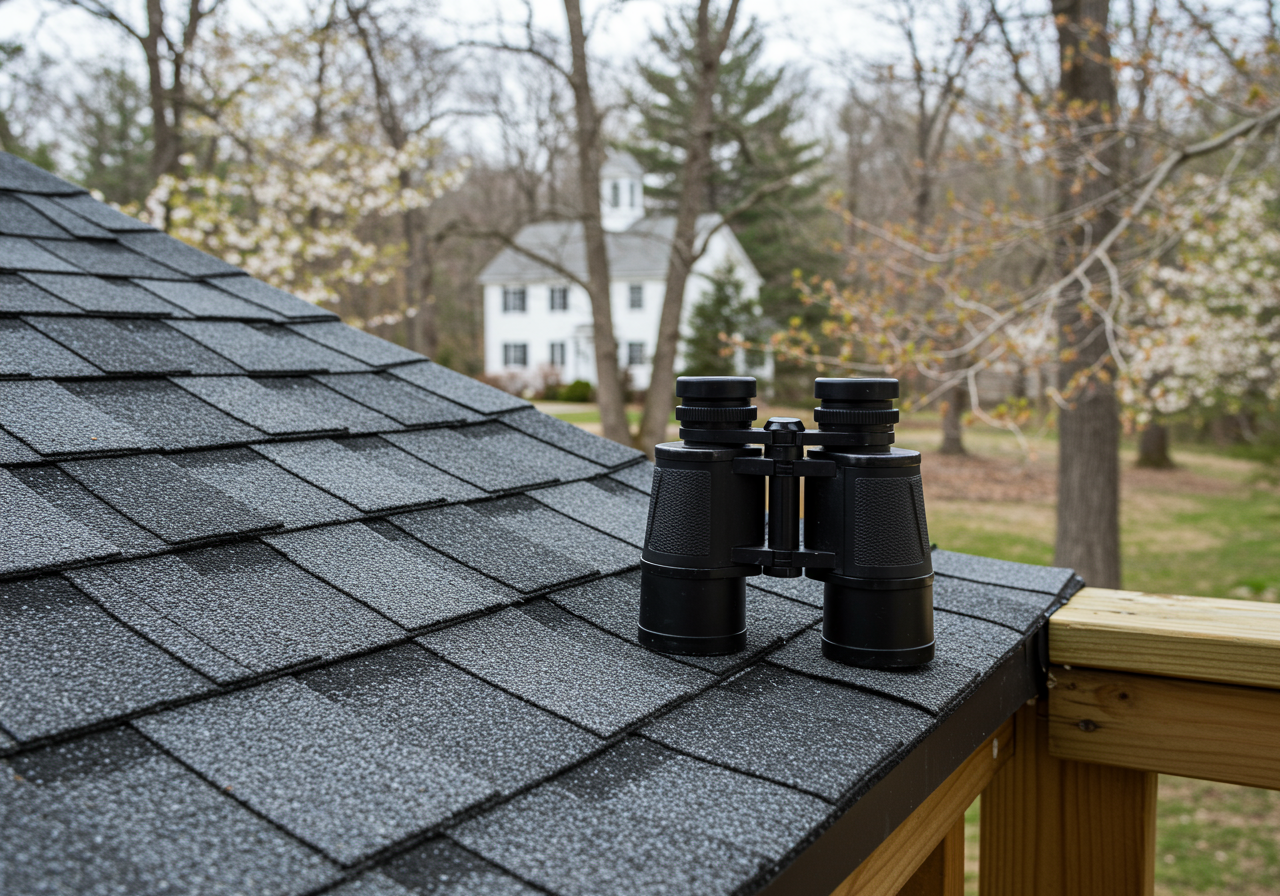
Most homeowners think a roof inspection starts with dragging the heavy extension ladder out of the garage. That's a mistake—both for your safety and your diagnostic accuracy. I always start my spring rounds with a pair of high-powered binoculars. By standing across the street or in the backyard, you can see the "lay" of the roof much better than when you're standing on top of it. You're looking for "fish-mouthing"—where shingles curl up in the middle—or subtle color changes that indicate loss of granules.
I remember a neighbor near the Coginchaug River who insisted his roof was fine because he "walked it" every year. From the ground, I could see a slight dip in his ridge line that he couldn't see while standing on it. That dip was a failing support beam caused by three winters of ice damming. If you spot something concerning from the ground, that's when you call in a pro for a targeted roof repair before the damage spreads to your rafters.
Noah's Safety Tip
Treating Gutter Debris as Just "Dirt"
When you're cleaning your gutters this month (and you really should be), don't just scoop the muck and throw it away. Look at it. If you see what looks like heavy, dark sand, those are your shingle granules. Shingles are basically just asphalt-soaked mats covered in stone "armor" to reflect UV rays. Once those granules end up in your downspouts, the asphalt underneath is naked to the sun.
In Durham, where our summer sun can be surprisingly intense following a damp spring, naked asphalt will crack and "alligator" in a single season. I've logged the storms that actually rip shingles off, and it's almost always the "bald" ones that go first. If your gutters look like a beach at the bottom, your roof's "sunscreen" is gone.
Ignoring the Low-Slope Transitions
Does your Durham home have a modern "bump-out" or a sunroom with a flatter roof? These transition areas—where a steep roof meets a shallow one—are the most common failure points in Connecticut. Winter ice often gets shoved into these seams, and as it melts in the March sun, it creates a back-pressure that forces water under the flashing.
I've seen dozens of homes near the Middlefield line where the main roof was perfect, but the sunroom transition was rotting out from the inside. FEMA's low-slope protection guide emphasizes that ponding water is the enemy here. Even if you don't see a leak in your living room, check the exterior wood around these transitions for "soft spots" or dark staining.
The Attic Ventilation "Ghost"
A roof inspection that doesn't include the attic is only half an inspection. During our "February thaws," moisture from cooking and showering travels upward. If your soffit vents are clogged with old bird nests or blown-in insulation, that moisture stays in your attic. By March, this manifests as "attic frost" that melts into what looks like a roof leak.
Last year, I helped a friend who thought they needed a whole new roof because of water spots on their ceiling. It turned out their ridge vent was completely choked with pine needles from those big trees we have all over Durham. A quick cleaning saved them a fortune. However, if the plywood is already black with mold, you might be looking at a larger project. To get a sense of the scale, you can estimate your project costs based on current local material prices.
Estimated Roof Lifespan by Material in CT
Missing the "Flash" Point
Flashing is the metal shielding around chimneys, dormers, and vents. In Connecticut, the constant freeze-thaw cycle (which we see plenty of in Durham's early spring) causes metal to expand and contract at a different rate than the wood and shingles. This pulls the nails loose or cracks the caulking.
I always tell people to look for "rust bleeding"—those orange streaks on your shingles. That's a sign that your flashing has lost its galvanized coating and is about to fail. If you have an older chimney, the mortar might also be crumbling. Catching this now is the difference between a $300 flashing fix and a $3,000 masonry and interior drywall repair later this summer.
Spring Roof Inspection in Durham
Identifying common spring roof problems before they become costly repairs
The "One and Done" Shingle Trap
Many Durham homeowners think that if they don't see shingles on the lawn, the roof is fine. But our March winds are notorious for "unsealing" shingles without blowing them off. The shingle stays in place, but the adhesive strip underneath is broken. The next time we get a driving rain from the Northeast, the water will be blown straight up and under that shingle.
I call this "the silent killer." You can test this (safely from a ladder at the edge) by gently seeing if the bottom edge of the shingle lifts easily. If it does, the seal is broken. In our climate, once that seal is gone, it rarely re-sticks on its own.
Forgetting the Moss and Algae Growth
Durham is beautiful because of its trees, but those trees create shade. If the north-facing side of your roof has green fuzzy patches or black streaks, you have a biological problem. Moss acts like a sponge, holding water against your shingles for days after a rain. When that water freezes at night, it expands and pries the shingles apart.
Don't just power-wash it! That's the fastest way to destroy your roof's integrity. Use a zinc or copper-based cleaner. If the moss has already started "lifting" the shingles with its roots, you might be past the point of simple cleaning. When the structural integrity is compromised, it's often more cost-effective to upgrade to a modern roof system that includes algae-resistant granules.
"In Durham, a roof doesn't just fail all at once. It dies in the small gaps created by March winds and April showers that we choose to ignore because the sun is finally shining."
The Mistake of Budgeting Without Data
The biggest error I see isn't technical—it's financial. Homeowners either panic and overspend on a "flashy" solution they don't need, or they ignore a critical problem because they fear the cost. In 2026, we have better tools for this. Don't guess what a repair or replacement should cost in Middlesex County.
If you find your roof is beyond a simple patch job, you may be eligible for financial help. The USA.gov home repair portal lists various federal programs that might offer assistance for energy-efficient roofing upgrades or emergency repairs.
Perform a ground-based binocular scan for lifted tabs.
Start from across the street or your backyard to see the full roof profile and identify any obvious issues before climbing.
Check gutters for excessive granule 'sand'.
If your gutters look like a beach, your shingles are losing their protective coating and need immediate attention.
Inspect attic for damp insulation or dark plywood spots.
Look for signs of moisture, mold, or water damage that might indicate ventilation issues or leaks.
Verify that all flashing is still seated flush against the chimney.
Check for rust streaks, loose metal, or gaps that could allow water intrusion.
Get a professional estimate if more than 3 areas show damage.
Multiple problem areas indicate systemic issues that require professional assessment and repair.
By taking these steps in March, you're not just maintaining a roof; you're protecting your biggest investment from the unique challenges of our Connecticut climate. A little vigilance now means you can actually enjoy the Durham Fair this fall without worrying about what's happening over your head.
Get Your Free Roof Quote
Enter your zip code to get started