
Key Takeaways
- Granule loss in gutters is a critical early warning sign—28% weight loss means waterproof failure is imminent.
- Curling shingles (cupping or clawing) indicate dried-out asphalt that's vulnerable to wind damage.
- Flashing failures around chimneys and dormers cause 82% of roof leaks, not shingle field failures.
- Attic ventilation is crucial—poor airflow can shorten roof life from 25 years to just 13 years.
Most Putnam homeowners are essentially living under a ticking financial time bomb and they don't even realize it until the ceiling starts dripping in the middle of a January thaw. I've reviewed enough repair invoices in Windham County to tell you that a roof doesn't just "die" overnight. It gives you warnings—subtle ones that look like minor maintenance but scream "impending disaster" to anyone who knows how to read the math of home depreciation. In the "Quiet Corner," we deal with high humidity from the Quinebaug River valley and heavy snow loads that punish aging shingles. If you aren't looking for these specific failure points, you're basically volunteering to pay for a full structural deck replacement instead of a standard shingle swap.
1. The Gutter "Sand" Trap
If you're cleaning your gutters and notice what looks like coarse black sand, your roof is shedding its skin. Those granules are the only thing protecting the underlying asphalt from the sun. Once they wash away, the shingles bake, go brittle, and crack. I recently looked at a Putnam colonial where the owner ignored the "sand" for three years. By the time he called a pro, 40% of his shingles were "bald," and the UV damage was so deep that the roof was leaking in six different spots.
When you see those granules, get a quote. Don't wait until the shingles look like smooth cardboard. You can connect with verified contractors through ZikQuote to see if you're looking at a localized repair or a full-blown replacement before the next storm hits.
2. The "Curling" Aesthetic Disaster
Shingles should lay flat. If the edges are turning upward (cupping) or the middles are bulging (clawing), the asphalt has dried out. In Putnam, our winter winds love these curled edges. They provide the perfect leverage for a gust to get underneath and peel the shingle right off the deck. I've seen wind-stripped roofs where the repair cost was $4,250, but a proactive replacement would have saved the homeowner the interior ceiling repair costs.
Inspect roof from the ground with binoculars
Look for shingles that don't lay flat—edges curling up or centers bulging indicate age and UV damage.
Identify cupping or clawing patterns
Cupping means edges lift up; clawing means the center bulges. Both signal dried-out asphalt.
Check for missing shingle tabs after high winds
Curled edges catch wind easily. After storms, look for gaps where shingles were torn away.
Get an attic-side inspection for moisture
If shingles are curling, water may already be getting in. Check the attic for stains or dampness.
Compare replacement quotes vs. repair costs
Multiple curled shingles often mean the whole roof is aging. Compare full replacement vs. repeated repairs.
3. The $800 Flashing Fail
Flashing is the metal transition around your chimney and dormers. It's the #1 spot for leaks. Most of the "failed" roofs I inspect in Putnam are actually perfectly fine shingles with $800 worth of rotted flashing. But here's the kicker: if that flashing leak goes unnoticed for two years, it rots the plywood decking. Now your "cheap repair" is a $14,600 replacement because the structural integrity is gone. Always make sure your contractor uses new lead or copper flashing—never let them "re-use" the old stuff to save a few bucks.
4. Attic Daylight and "Starry Nights"
Go into your attic on a bright afternoon and turn off the lights. If you see pinpricks of daylight coming through the boards, you have a problem. Water follows the same path as light. If light is getting in, snowmelt is getting in. I once helped a family near the Putnam Riverlands State Park who thought their roof was fine until they went up to get Christmas decorations and found the insulation was a soggy, moldy mess.
"A roof is a system, not just a layer of shingles. If your attic isn't venting, you're essentially slow-cooking your shingles from the inside out."
Poor ventilation is a silent killer. According to the Department of Energy's guide on insulation, proper attic airflow is vital for the lifespan of your materials. If your roof is "cooking," it will fail in 14 years instead of 25.
5. The 18-Year Wall
In Connecticut, the "25-year" shingle is a bit of a myth. Between the ice dams and the summer humidity, most asphalt roofs in our area start to show real fatigue around the 17 to 19-year mark. If your roof was installed in 2007, you are officially in the "danger zone."
Expected vs. Actual Roof Lifespan in Connecticut
I tell Putnam homeowners to start budgeting once the roof hits year 15. If you wait until it's leaking, you lose your power to negotiate. You'll be desperate, and desperate people overpay. Understanding how our matching process works can help you find a pro who won't take advantage of that urgency.
6. Moss and the "Quiet Corner" Moisture
Putnam has beautiful, wooded lots, but those trees dump shade and moisture on your roof. If you have green moss growing on your shingles, it's not "charming"—it's a parasite. Moss roots (rhizoids) dig into the shingle and lift it, allowing water to seep under. I've seen moss-heavy roofs in Windham County that looked like a forest. Underneath that moss, the shingles were essentially mush. If the moss covers more than 20% of the roof, the moisture damage to the underlying wood is likely already done.
Never Power Wash Moss
7. The Sagging Ridge Line
Look at the peak of your roof. Is it straight as a ruler, or does it dip in the middle? A sag usually means the internal rafters are rotting or the decking is saturated with water. This is the most expensive failure because it involves carpentry, not just roofing. If you see a sag, stop reading and call a pro. You're no longer looking at a "maintenance" issue; you're looking at a potential collapse under a heavy New England snow load.
Before you hire anyone for a structural job like this, always verify their license via the CT eLicense portal to ensure they are registered for major home improvements.
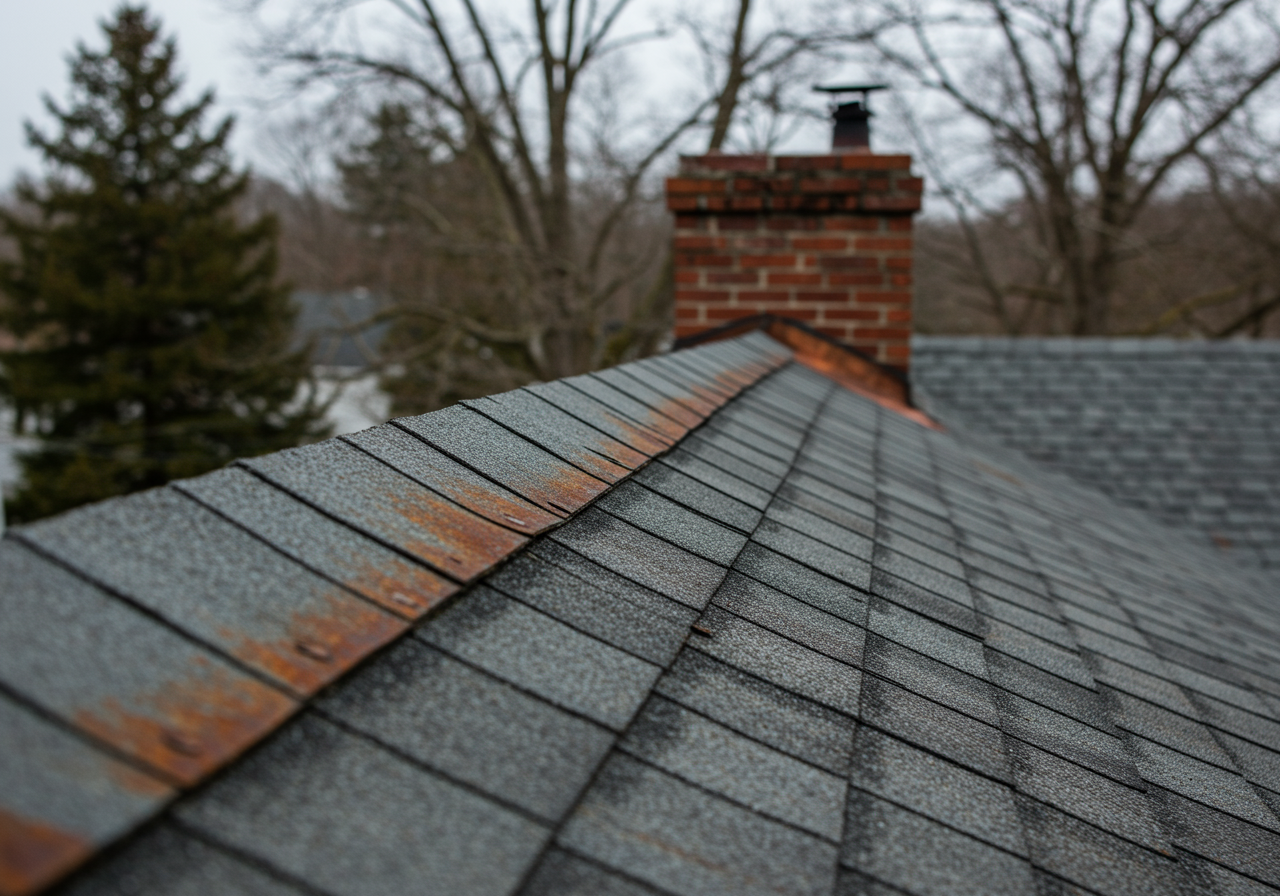
Putnam Roof Failure Warning Signs
Learn to spot these critical red flags before they become expensive problems.
Don't wait for the next Putnam nor'easter to find out your roof is failing. Get an instant, honest estimate today.
Connect with verified CT pros in minutes.
No credit card required • Free to use
A roof replacement in Putnam shouldn't be a mystery or a financial ambush. By spotting granule loss, curling, or attic moisture early, you can move from "emergency mode" to "smart shopper mode." Remember, the cheapest quote is rarely the best value, but the most expensive quote is often just fluff. Get the numbers, check the attic, and don't let a $500 repair turn into a $15,000 headache because you didn't want to look up.