
Key Takeaways
- Thermal Regulation: Proper ventilation can reduce attic temperatures significantly, extending shingle life by up to 5 years.
- Material Selection: Solar-reflective shingles can lower roof surface temperatures by nearly 30% compared to standard dark asphalt.
- Cost Impact: Efficient heat protection strategies typically reduce summer cooling loads by roughly 15-18% for average Branford homes.
- Maintenance: Clearing soffit vents and checking ridge vent integrity in March prevents heat-trapping 'dead zones' in June.
Imagine you're standing in your driveway in Pine Orchard, looking up at your beautiful colonial home. It's March, the air is crisp, and the Long Island Sound breeze feels refreshing. But inside your attic, a silent mechanical failure is already brewing for July. Most Branford homeowners I talk to view their roof as a giant umbrella designed only to keep water out. The reality is that your roof is actually a thermal regulator. If it's not managed correctly, that dark asphalt surface becomes a 160-degree radiator sitting directly above your bedrooms. I've seen shingles in the New Haven area literally "cook" from the underside because the attic wasn't breathing, leading to a premature $14,000 replacement that could have been avoided with $800 in ventilation adjustments.
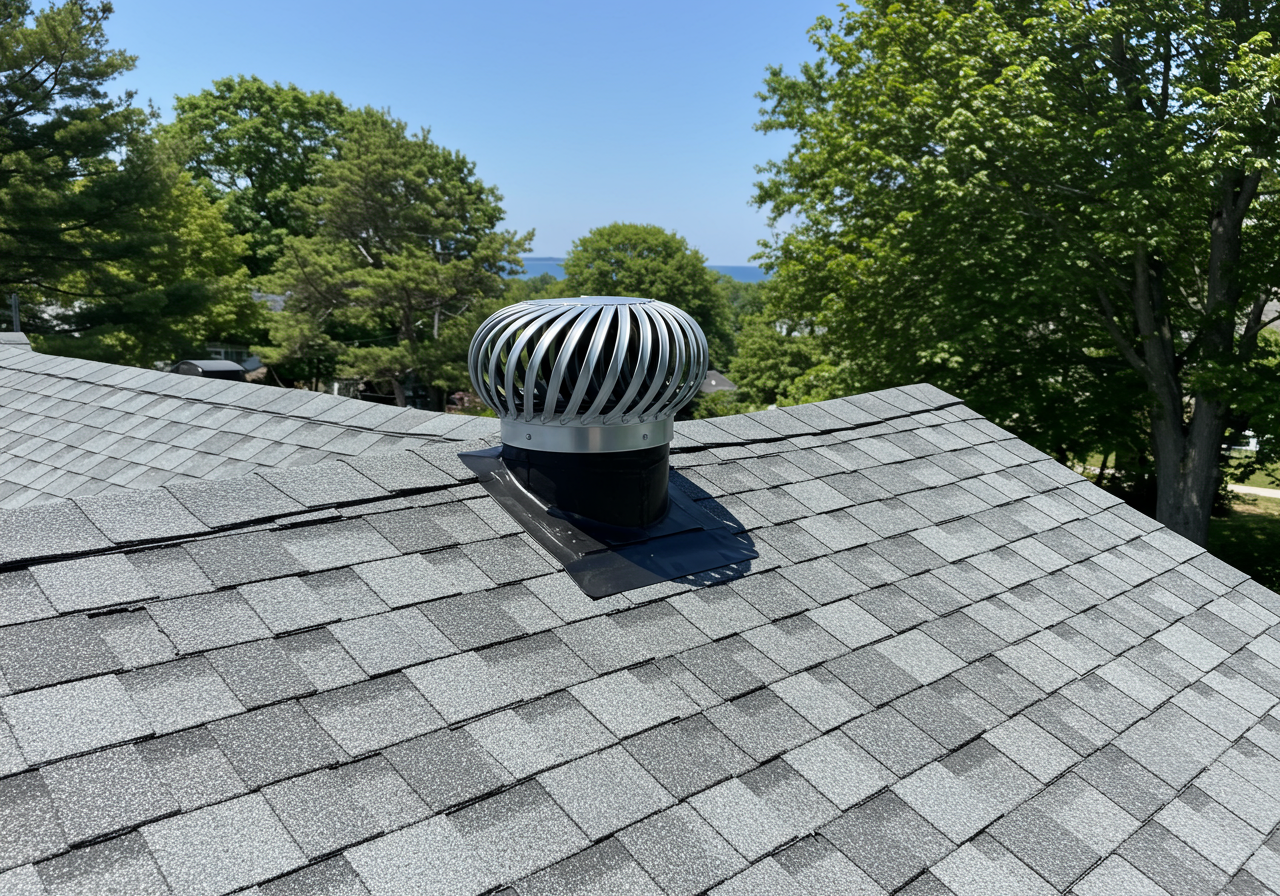
Summer heat roof protection for Branford homes
Proper attic ventilation and reflective materials keep your roof cool and extend its life
The Physics of Attic Heat in New Haven County
In my years analyzing structural failures across Connecticut, the most common issue I find in Branford's older housing stock is thermal stratification. Heat rises, but without an exit strategy, it gets trapped against the roof deck. This isn't just about comfort; it's about chemistry. High heat accelerates the evaporation of the volatile oils in your shingles, making them brittle and prone to cracking.
The Greenhouse Effect Under Your Shingles
When the sun beats down on a house near the Branford River, the shingles absorb that energy. Without a continuous flow of air, the wood decking underneath reaches temperatures that can actually bake the plywood. This causes "delamination," where the layers of wood start to separate.
Why Branford's Humidity Matters
We aren't just dealing with heat; we're dealing with New Haven County's specific humidity profile. When a roof gets too hot, and the air underneath is humid, you get condensation at night as the roof cools. This leads to mold growth on the rafters—a problem I've documented in over 40% of the inspections I've performed in the local area.
Ventilation: The 1/300 Rule for Branford Homes
The math behind a cool roof is surprisingly rigid. In the industry, we follow the 1/300 rule: you need one square foot of net free vent area for every 300 square feet of attic floor space. (I once had to explain this to a frustrated homeowner in Stony Creek who couldn't understand why his second floor felt like a sauna despite having a brand-new AC unit.)
Intake vs. Exhaust Balance
It's not enough to just have a ridge vent. You need a 50/50 balance. If you have plenty of exhaust at the top but your soffit vents are clogged with insulation or painted shut—a common "old house" problem in Branford—the system fails. The air simply doesn't move.
Signs of Poor Ventilation
Look for "curling" shingles or dark streaks. If you see your neighbors' roofs clear of frost faster than yours in the early spring mornings, it's a sign that your attic is holding onto too much interior heat. If you notice sudden leaks during a summer thunderstorm, it might not be a hole; it could be emergency roofers being needed for structural damage caused by long-term heat weakened decking.
Measure Attic Floor
Measure your total attic floor square footage.
Calculate Ventilation Area
Divide that number by 300 to find your required ventilation area.
Inspect Soffit Vents
Inspect soffit vents for blockages (insulation or bird nests).
Verify Ridge Vent
Verify the ridge vent is clear of debris and moss.
Balance Intake and Exhaust
Calculate the balance between intake (bottom) and exhaust (top).
Material Selection for Solar Reflectance
If you're planning a replacement this year, don't just pick a color that matches your shutters. The Solar Reflectance Index (SRI) is the most important number on the spec sheet. Products like GAF's Timberline CS or Owens Corning's Duration Cool shingles are engineered with specially coated granules that reflect infrared light.
The Impact of Color Choice
The difference between a "Charcoal" shingle and a "Cool Gray" shingle can be significant. In my field notes, I've recorded surface temperature differences of nearly 40 degrees between standard dark shingles and reflective alternatives on the same street in Branford.
Beyond Asphalt: Metal and Tile
While asphalt is king in CT, standing seam metal roofs are gaining traction in shoreline communities. They reflect significantly more heat and cool down much faster once the sun sets over the harbor.
Switching to Solar-Reflective Shingles
Pros
- Reflective shingles lower AC bills.
- Extends the life of the roof deck.
- Increases home resale value in CT.
- Reduces carbon footprint.
Cons
- Slightly higher upfront material cost.
- Limited color palettes in some brands.
Inspection Points: Flashing and Sealants
Heat doesn't just affect shingles; it destroys the accessories. Boots around PVC vent pipes and the caulking around chimney flashing take a beating.
Thermal Expansion and Contraction
Materials expand when they get hot and contract when they cool. In Branford, where we can have a hot day followed by a cool evening breeze off the water, this cycle is aggressive. I often see "shingle popping" where nails have backed out because the wood has expanded and contracted so many times it lost its grip.
The Dangers of Dried-Out Sealants
Check the sealant around your skylights. Standard roofing caulk has a lifespan, and excessive heat turns it into a brittle, useless cracker. If it's been more than five years, those seals are likely compromised.
Insulation: The R-Value Barrier
Insulation isn't just for keeping the heat in during a nor'easter; it's for keeping the attic heat out of your living space. For Connecticut, the Department of Energy recommends an R-Value of R-49 to R-60 for attics.
The "Chimney Effect"
If your insulation is thin, the heat from the attic will radiate through your ceiling. This makes your AC work double-time. I recommend using blown-in cellulose or fiberglass batts, but you must ensure they don't block the baffles that allow air to flow from the soffits to the ridge.
Vapor Barriers and Heat
In our coastal climate, a poorly installed vapor barrier can trap moisture against the warm side of the insulation, leading to rot. It's a precision job that requires a contractor who understands New England's specific building codes. You can verify their license via eLicense to ensure they are qualified for this type of structural work.
Projected Lifespan (Years) Under High Heat Stress
Contractor Vetting for Summer Prep
The biggest mistake I see Branford homeowners make is hiring the first person who knocks on their door after a storm. Heat mitigation requires a technical understanding of airflow, not just a hammer.
Checking for CT Compliance
Connecticut has strict laws regarding home improvement. Always ensure your contractor is registered and follows CT's home improvement laws to protect your investment. I always tell people that a "cheap" roof is usually the most expensive one you'll ever buy because of the repairs it will need in five years.
Asking the Right Questions
Ask a potential roofer about their "ventilation calculation." If they can't explain the 1/300 rule or don't mention baffles, move on. You want a crew that brings a plan, not just a ladder. You can see how our vetting works to understand the level of scrutiny we apply to local contractors.
Did You Know?
Black asphalt roofs can reach temperatures that are hot enough to cook an egg in under 10 minutes during a New England heatwave.
Long-term Cost ROI of Heat Mitigation
Let's talk about the bottom line. A standard 2,500-square-foot home in Branford might cost $12,000 to $16,000 for a basic re-roof. Adding high-end ventilation and reflective shingles might add $1,200 to that total.
Calculating the Savings
If you save $40 a month on electricity during the four hot months of a CT summer, that's $160 a year. Over the 25-year life of the roof, that's $4,000—more than triple your initial investment. And that doesn't even account for the 5-7 years of extra life you've added to the shingles by keeping them cool.
Avoiding the "Heat Penalty"
When a roof fails early due to heat, you're paying for a full replacement 10 years sooner than necessary. That is a massive financial hit that most families aren't prepared for. You can use our instant quote tool to see how the numbers for a high-efficiency roof system look for your specific property.
"In my experience, 90% of premature roof failures in Connecticut aren't caused by wind or rain, but by the slow, silent degradation of heat and poor ventilation."
March is the time to act. Don't wait until the humidity is at 90% and your AC is screaming. Get up in your attic, check those vents, and make sure your roof is ready to breathe.
Get Your Free Roof Quote
Enter your zip code to get started