"A roof isn't just a lid anymore; it's a power plant in waiting," a veteran project manager from New London County recently told me while we were inspecting a beautiful Victorian over on Washington Street. He's right. In Norwich, where our homes range from historic "Rose City" classics to mid-century ranches tucked into the hills, we're seeing a massive shift. Homeowners aren't just looking for leak protection; they're looking for a foundation that can support twenty-five years of clean energy.
March in Connecticut is that transitional stretch where we start eyeing our utility bills and planning for the thaw. If you're thinking about solar, the biggest mistake is focusing solely on the panels. The real magic happens underneath. Before you bolt heavy hardware onto your rafters, we need to talk about whether your current setup can handle the load or if a specific "solar-ready" material is a better long-term investment for your property.
Key Takeaways
- Architectural shingles provide a 25-year lifespan that matches standard solar panel warranties, making them a cost-effective base.
- Standing seam metal roofs are the gold standard for solar, allowing for clamp-on installations that don't penetrate the roof deck.
- Connecticut homeowners can currently utilize the 30% federal tax credit for integrated solar roofing (solar shingles).
- Structural reinforcement is often necessary for older Norwich homes before adding the 2-3 pounds per square foot that panels require.
The Foundation: Why Material Choice Dictates Your Solar Success
When we talk about being "solar-ready," we're really talking about timing and durability. I remember a neighbor near the Backus Hospital area who installed a brand-new solar array on a roof that already had twelve years of wear. Five years later, she had a leak and had to pay nearly $3,800 just to have the panels removed and reinstalled so the shingles could be replaced. It was a logistical nightmare that we want to help you avoid.
The goal is to match the life of the roof to the life of the solar system. Since most modern Tier 1 panels are warrantied for 25 to 30 years, your roofing material needs to be a "long-distance runner." If your current shingles are curling or showing their age, exploring a full roof replacement before the panels go up is the only move that makes financial sense.
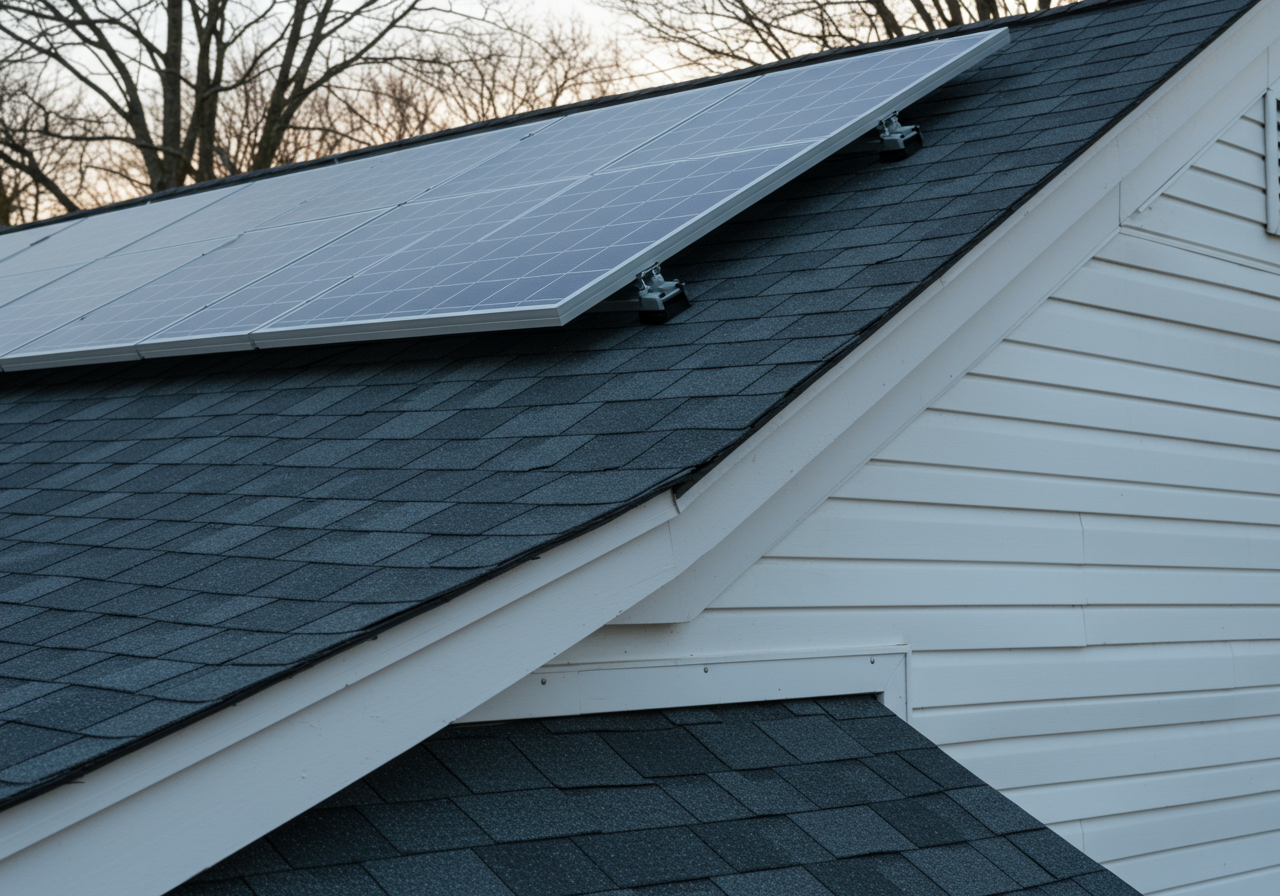
Standing Seam Metal Roof with Solar Panel Mounting
A modern standing seam metal roof in charcoal gray with solar panel mounting clips, installed on a Connecticut colonial home in Norwich.
Assessing Your Roof's Structural Integrity
Norwich is known for its hilly terrain, which means some of our homes catch a lot of wind coming off the Thames River. When you add solar panels, you're essentially adding "sails" to your roof. According to the International Code Council (ICC), roof decks must be able to support both the "dead load" (the weight of the materials) and the "live load" (wind and snow). For many of our older homes, this might mean adding some blocking or sistering rafters to ensure everything stays put during a heavy wet snowstorm in New London County.
Comparing the Contenders: Asphalt vs. Metal vs. Solar Shingles
Not all "solar-ready" paths are paved with the same materials. We usually look at three main categories for Norwich residents. Each has a different impact on your curb appeal and your wallet. Asphalt remains the king of the neighborhood for its price point, but metal is gaining ground for those who never want to worry about their roof again.
Solar-Ready Material Comparison
Pros
- Standing seam metal allows for 'no-hole' panel installation
- Architectural shingles offer the lowest upfront cost for solar prep
- Solar shingles (integrated) provide the cleanest aesthetic for historic districts
Cons
- Metal roofing can cost 2-3x more than asphalt initially
- Solar shingles currently have lower efficiency ratings than traditional panels
- Older asphalt roofs may require structural reinforcement
The Standing Seam Advantage
If you're a fan of "doing it once and doing it right," metal is the way to go. Because of the raised seams, contractors use specialized clamps to attach solar racks. This means zero penetrations through your actual roof surface. It's a design choice that keeps the water out and the energy flowing. Plus, according to the Energy Star guide on cool roofs, a reflective metal surface can actually keep your attic cooler, which helps those solar panels operate more efficiently (they actually lose efficiency as they get too hot!).
The Financial Reality of Upgrading in Norwich
Let's talk numbers, because that's where the rubber meets the road. Preparing for solar isn't just an expense; it's a value-add for your home's resale. In my experience, Norwich buyers are increasingly looking for "green-ready" homes. If you're trying to figure out how these upgrades fit into your 2026 budget, using a roofing cost calculator can give you a baseline for the different material tiers.
Estimated Lifespan of Solar-Ready Materials
Leveraging Tax Credits and Incentives
Don't overlook the paperwork! The federal government is still offering a significant carrot for these projects. Under the current guidelines in the IRS instructions for Form 5695, you may be able to claim a 30% credit on the "solar" portion of your roof installation. While it doesn't usually cover the entire roof replacement, if you opt for integrated solar shingles, a much larger chunk of the project cost could be eligible for that credit. It's always worth a chat with your tax pro to see how much of that $14,650 investment you can get back.
"In Norwich, we have to account for both the historic aesthetics of our downtown neighborhoods and the practical need for snow-shedding. A solar-ready roof handles both by balancing weight distribution with modern drainage."
Your Solar-Ready Roadmap: Steps to Take This Season
So, how do you actually get started? March is the perfect time for a "roof physical." You want to catch any lingering issues from the winter before the solar installers show up with their ladders. If you find a few missing shingles or some questionable flashing around the chimney, a quick roof repair now can save you thousands in future headaches.
Schedule a professional inspection
Verify the current roof's remaining lifespan and identify any underlying issues before committing to solar.
Obtain a structural report
If your Norwich home was built before 1970, get a structural assessment to ensure it can handle solar weight.
Choose your solar path
Decide between traditional panels (on metal or asphalt) or integrated solar shingles based on your budget and aesthetic goals.
Secure local permits
Obtain necessary permits through the Norwich Building Department before work begins.
Install and schedule
Complete your solar-ready roof installation and schedule the panel mounting within the same season.
Did You Know?
Integrated solar shingles are now available in textures that mimic slate and wood shake, allowing them to pass strict Historic District Commission reviews in many CT towns.
FAQ
Ready for a Solar-Ready Quote?
Get matched with a verified Norwich contractor who understands the specific needs of solar prep.
No credit card required • Free to use
Get Your Free Roof Quote
Enter your zip code to get started

About Sheri Wilde
Verified ExpertSheri Wilde is a Home Improvement Editor with a background in interior design and sustainable living. She helps Connecticut homeowners make informed decisions about their biggest investments.