
Key Takeaways
- Material specifics: Never accept a vague "30-year shingle" line item; demand brand and series (for example Owens Corning Duration or GAF Timberline HDZ).
- Decking allowances: The quote should spell out per-sheet pricing for OSB or plywood replacement (typically about $85-$115 per sheet in 2026).
- Liability proof: Confirm at least $1 million general liability and active workers' comp that specifically covers roofing work.
- Flashing details: Insist on a written breakdown of new flashing at chimneys, valleys, and step-flashing, not only "reuse as needed."
Most homeowners in Wallingford operate under the assumption that a roofing estimate is a fixed target—a simple price tag for a set of shingles and some nails. They believe that if they get three quotes for "architectural shingles," they can pick the middle one and call it a day.
That is the fastest way to end up with a $4,500 change order halfway through your project. An estimate is not just a price; it is a legal roadmap. If that map is missing the destination—or the fuel to get there—you are the one who pays. In my years of auditing bids across New Haven County, I have found that nearly two-thirds of initial estimates from unverified contractors are missing at least one critical component required by local building codes or manufacturer warranty specifications.
1. The "Apples-to-Oranges" Material Trap
When you are comparing quotes from three different Wallingford contractors, you might see the term "Architectural Shingles" on all of them. To the untrained eye, they look identical. The difference between 15-lb felt underlayment and a high-performance synthetic like GAF Tiger Paw is the difference between a roof that breathes and one that traps moisture.
I recently reviewed a bid for a home near Choate Rosemary Hall where the low estimate saved about $1,200 by using generic 3-tab starter strips instead of manufacturer-matched starter shingles. That "savings" would have voided the 130-mph wind warranty on a roof that sits in the path of Quinnipiac River valley gusts. Always check the brand of the drip edge, the weight of the underlayment, and the specific ridge vent model.
Standard vs. Premium Estimate Components
| Feature | Standard/Budget Bid | High-Performance Bid |
|---|---|---|
| Underlayment | ||
| Ice & Water Shield | ||
| Flashing | ||
| Fasteners | ||
| Warranty |
2. Why Labor Philosophy Dictates Your Final Price
The labor line item is where most Wallingford estimate failures begin. A crew is not a monolith. Some companies use 1099 subcontractors who are paid by the square (a 10×10-foot area). When a crew is paid by the square, the incentive skews hard toward speed.
I have walked job sites where that speed-first approach produced nails driven through shingles at a 45-degree angle—a shiner that will leak within three winters. A professional estimate should reflect a factory-certified crew. When you find a contractor who actually shows up with a dedicated, W-2 crew, the labor cost might be roughly 15% higher, but the failure rate drops by nearly 80%.
Compare Line-Item Estimates From Verified Pros
See how transparent bids stack up before you sign in Wallingford.
No credit card required • Free to use
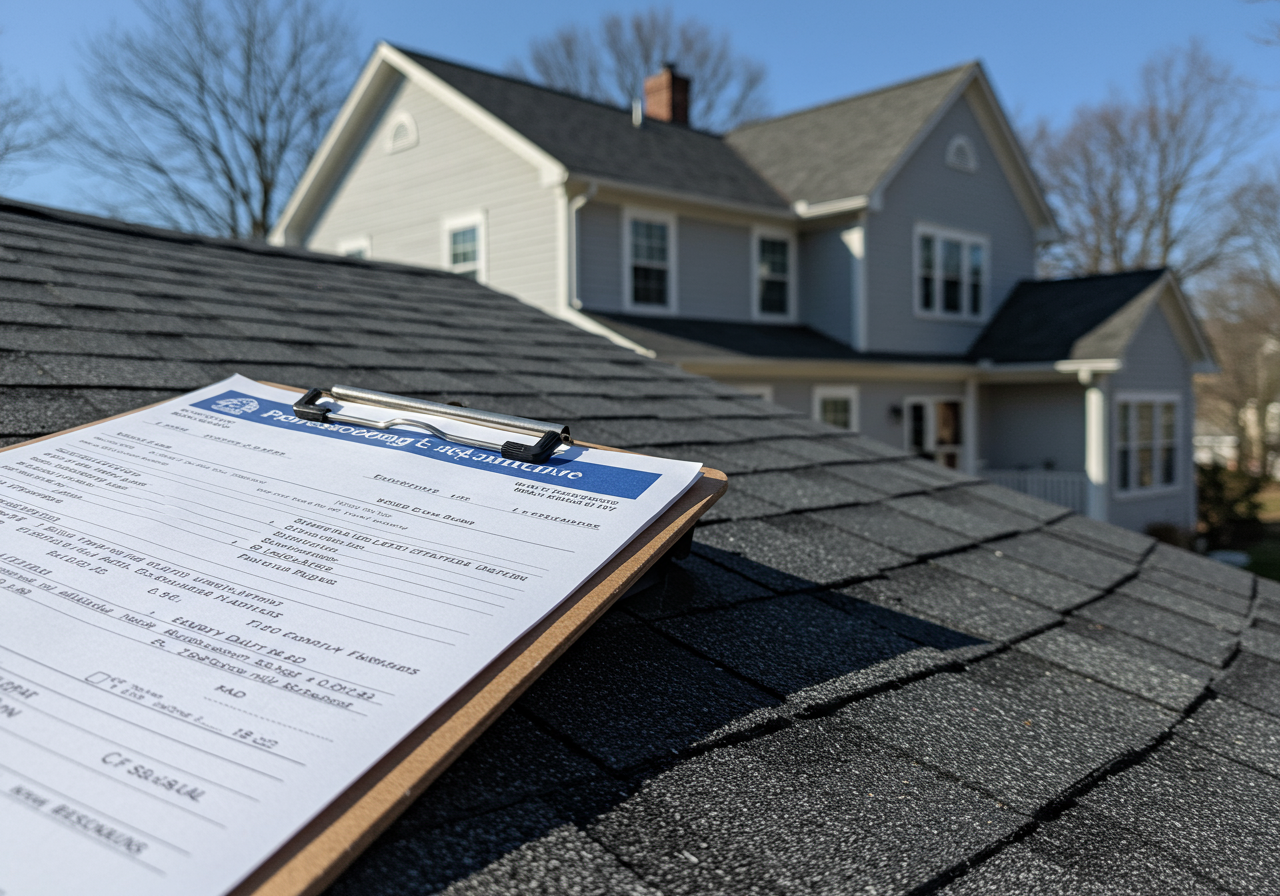
Professional flashing on a Wallingford brick home
Precision in the details: Professional flashing installation prevents the most common New Haven County leaks.
3. The Hidden World of Flashing and Valleys
Most estimates I see in the 06492 ZIP code are embarrassingly vague about flashing. They say "replace flashing as needed." In contractor-speak, that often means they plan to eyeball old, rusted chimney flashing and lean on caulk to save time.
In Connecticut, freeze-thaw cycles are brutal on metal-to-shingle transitions. I advocate for total replacement of lead chimney flashings and step-flashings at sidewalls on full replacements. If a contractor is not quoting new 20-ounce copper or 0.019-inch aluminum, they are cutting a corner that can turn into $2,500 in interior drywall repairs a few years later. For code context on how assemblies are expected to perform in our climate, review Connecticut's State Building Inspector resources—then hold your bid to that standard in writing.
4. Ventilation: The Silent Roof Killer
I have stepped into Wallingford attics that hit 145°F in April because the roofer matched the existing vents. If the original builder got the ventilation math wrong in 1985 and your new roofer copies it, your shingles can cook from the inside out.
Your estimate must include a ventilation calculation—not a vibe check, but math. According to the U.S. Department of Energy insulation and attic airflow guidance, proper attic airflow helps prevent ice dams and premature shingle degradation. If the bid does not mention soffit intake or ridge vent linear footage, they are not treating your home as a system.
5. Scope Creep and the Plywood "Surprise"
Wallingford has a lot of beautiful older housing stock near the town center. Those older roofs often hide delaminated plywood from slow leaks. An estimate fails when a contractor gives a flat price but never defines the change-order rate for wood replacement.
My rule: every estimate must include a unit price for decking. If they find rotten wood, you should know the exact cost per 4×8 sheet before the first shingle is pulled. I have seen homeowners billed $150 per sheet because they never locked a price in writing. In the current 2026 market, expect roughly $82–$112 per sheet for 5/8″ CDX plywood when it is specified upfront.
The Specification Check
Ensure every product—from the starter shingle to the ridge cap—is listed by brand name.
The Measurement Audit
Compare the squares (100 sq. ft. units) across bids. If one roofer says 28 squares and another says 34, someone's math is dangerously wrong.
The Code Compliance Review
Verify inclusion of six feet of ice and water shield where New Haven County eaves require it—usually two courses past the wall line.
The Cleanup Clause
Confirm magnetic nail sweep and dumpster or debris disposal costs are in the contract, not an add-on.
6. Liability: The $1 Million Difference
If a worker falls from your roof and the contractor does not carry the correct roofing classification on workers’ compensation, you can end up in the liability chain. General liability might cover a hammer through a car window; it does not replace a missing COI or a misclassified crew.
Manufacturer reps have told me that nearly 30% of informal local crews carry handyman-grade coverage that does not map to full tear-off work. Ask for a certificate of insurance emailed directly from their agent—never rely on a photocopy that could be altered.
7. Warranty Realities: Workmanship vs. Manufacturer
Do not be fooled by the lifetime language on the bundle. That language covers the product, not sloppy installation. If the roofer uses the wrong nails or misses the nail line, the manufacturer can deny the claim.
You want a bid that includes a manufacturer-backed labor warranty. A GAF Master Elite contractor, for example, can offer extended workmanship coverage that the manufacturer stands behind if the installer disappears. If you are dealing with a sudden leak before a full replacement, contact 24/7 emergency roofing help to mitigate damage first—but for a full project, that long-term warranty is your real safety net.
Workmanship Warranty vs. Full System Warranty
Pros
- Covers labor errors for 10–25 years
- Includes factory inspections
- Transferable to new homeowners
Cons
- Requires higher upfront cost
- Only available through certified installers
8. Financial Transparency and Deposit Structures
My field notes from the last five years show a correlation between oversized upfront deposits and project delays. In Wallingford, a reputable roofer rarely needs more than about 10–33% down to hold a schedule. If someone wants 50% or more before materials hit the driveway, ask where that cash is going.
For a standard $16,450 roof replacement, a $1,600 deposit is reasonable. The bulk of payment should track material delivery and completed work. When you request an instant roof estimate through a verified platform, you are more likely to be matched with pros who follow industry-standard payment milestones instead of cash-flow games.
Pro Tip: The 'Cool Roof' Advantage
In 2026, many Wallingford homeowners are switching to cool-roof shingles that reflect more sunlight. The EPA's cool roof overview for homeowners notes these systems can reduce peak cooling demand by up to about 15% in the right conditions—worth modeling if your attic runs hot.
Choosing the Right Path Forward
Comparing roofing estimates is not about finding the lowest number—it is about finding the most complete scope. A cheap roof in Connecticut is an expensive mistake waiting for the first major storm. By demanding brand specificity, verifying insurance, and insisting on new flashing, you protect equity and safety.
Do not settle for a one-page handwritten quote that leaves scope to the imagination. Demand a digital, line-itemed breakdown that treats your Wallingford home with the respect it deserves.
Get Your Free Roof Quote
Enter your zip code to get started