
Key Takeaways
- HOA bylaws in Ledyard are legally binding documents; ignoring them can result in forced removal of a new roof.
- Most local boards prioritize 'architectural harmony,' often limiting shingle colors to a pre-approved palette of grays and browns.
- Professional contractors rarely check your specific HOA's CC&Rs; that legal responsibility falls entirely on the homeowner.
- Approval timelines in New London County usually range from 14 to 30 days, so plan your project well before the spring rush.
In the quiet, wooded subdivisions of Ledyard, nearly 18% of homeowners in governed communities face a "cease and desist" or a formal violation notice during exterior renovations because they skipped a single signature. It's a gut-wrenching scenario: you've finally picked out a gorgeous slate-blue shingle, the crew is halfway through the tear-off on a Tuesday morning, and a member of the architectural review committee leaves a brightly colored envelope on your front door. Whether you're living in a planned development near the High School or one of the newer pockets toward the Thames, those Covenants, Conditions, and Restrictions (CC&Rs) are the silent partners in your project. I've seen neighbors treat these rules like casual suggestions, but in 2026, Ledyard boards are more protective than ever of neighborhood property values. We're going to walk through the reality of these requirements so you don't end up with a legal headache that costs more than the shingles themselves.
The Hidden Conflict Between Contractors and HOA Bylaws
Here is the cold, hard truth: most roofing sales reps in New London County are focused on the sale and the install, not your neighborhood's specific aesthetic handbook. When a roofer tells you, "Oh, everyone in Ledyard uses this shingle," they aren't looking at your specific deed restrictions. I remember helping a friend over on Gallup Hill Road who was told by a contractor that a certain architectural shingle was "HOA-approved" because they'd installed it three streets over. It wasn't. The board for her specific section required a specific weight of shingle to maintain a uniform look.
The liability for a non-compliant roof sits squarely on your shoulders, not the contractor's. If the board demands you tear it down, the contractor isn't going to do it for free. This is why finding a contractor who actually shows up and understands the importance of providing physical samples for board review is non-negotiable. Most boards won't accept a digital photo or a brochure; they want to see how that charcoal gray reflects the Ledyard sun against your actual siding.
Why "Architectural Harmony" is the Board's Favorite Weapon
If you read through the bylaws of most Ledyard associations, you'll see the phrase "architectural harmony" repeated until it loses all meaning. In plain English, this means they don't want your house to stand out. While you might want a vibrant terracotta or a modern metal roof to boost your curb appeal, the board is looking for a cohesive "Ledyard look"—usually traditional, muted tones that blend with the surrounding oak and maple trees.
I've sat in on enough committee meetings to know that "harmony" is subjective, which makes it dangerous for your budget. One board might allow a high-definition shingle with deep shadow lines, while another thinks it looks too "busy" for the street's colonial vibe. Before you commit to a specific material, look at the three houses to your left and the three to your right. If they all have weathered wood or pewter gray asphalt, your chances of getting a bright red metal roof approved are slim to none.
"The goal of an HOA isn't to stifle your creativity, but to protect the collective investment of the street. A roof that looks 'off' can actually drag down the appraised value of the three houses next to it."
Navigating the Ledyard Approval Timeline
January is actually the perfect time to start this dance because the approval process in Connecticut is notoriously slow. Most committees only meet once a month. If you miss the submission deadline for the February meeting, you're pushed to March. By the time you get the green light, your preferred roofer might be booked out until July.
Request the current 'Architectural Review Form'
Get the form from your HOA management portal. Don't use an old version—requirements change.
Collect a physical sample
Get a roughly 12x12 inch sample of your intended shingle. Digital photos won't cut it for most boards.
Take high-resolution photos
Document your current roof and the houses immediately adjacent to yours to show context.
Submit the formal application
Include the contractor's license and insurance info along with the form and samples.
Wait for written approval
Never allow materials to be delivered until you have the written 'Notice to Proceed' in hand.
The Cost of Compliance and Hidden Premium Fees
Sometimes, HOA requirements can force your hand into a higher price bracket. I once saw a homeowner who had budgeted for a standard 3-tab shingle, only to find their association mandated a "heavyweight laminated" shingle. This isn't just a design choice; it's a $2,500 to $4,200 difference depending on the square footage of your home.
Cost Increase for HOA-Mandated Premium Materials
When you're upgrading to a new roof system, you have to bake these mandated costs into your initial math. Don't forget that many associations also require specific ridge vent styles or even the color of the drip edge to match the trim exactly. These small "add-ons" can tack an extra $600 onto a quote quickly. To get a better sense of how these mandates affect your specific bottom line, use a Roofing Cost Calculator to run the numbers for both standard and premium options.
Legal Protections and the "Solar" Loophole
Here's something your HOA might not tell you: Connecticut state law provides some protections when it comes to energy efficiency. While an HOA can tell you what color your shingles are, they have a much harder time legally blocking solar installations or certain energy-saving materials thanks to state-level green energy mandates. However, they can still dictate the placement and style of those systems.
According to Connecticut's consumer protection laws, homeowners are protected from "unreasonable" restrictions that would effectively prevent the use of solar or energy-efficient upgrades. If your board is being particularly difficult about a cool-roof material that looks nearly identical to their approved palette, it might be time to gently remind them of the DOE Energy Saver guide standards for New England homes.
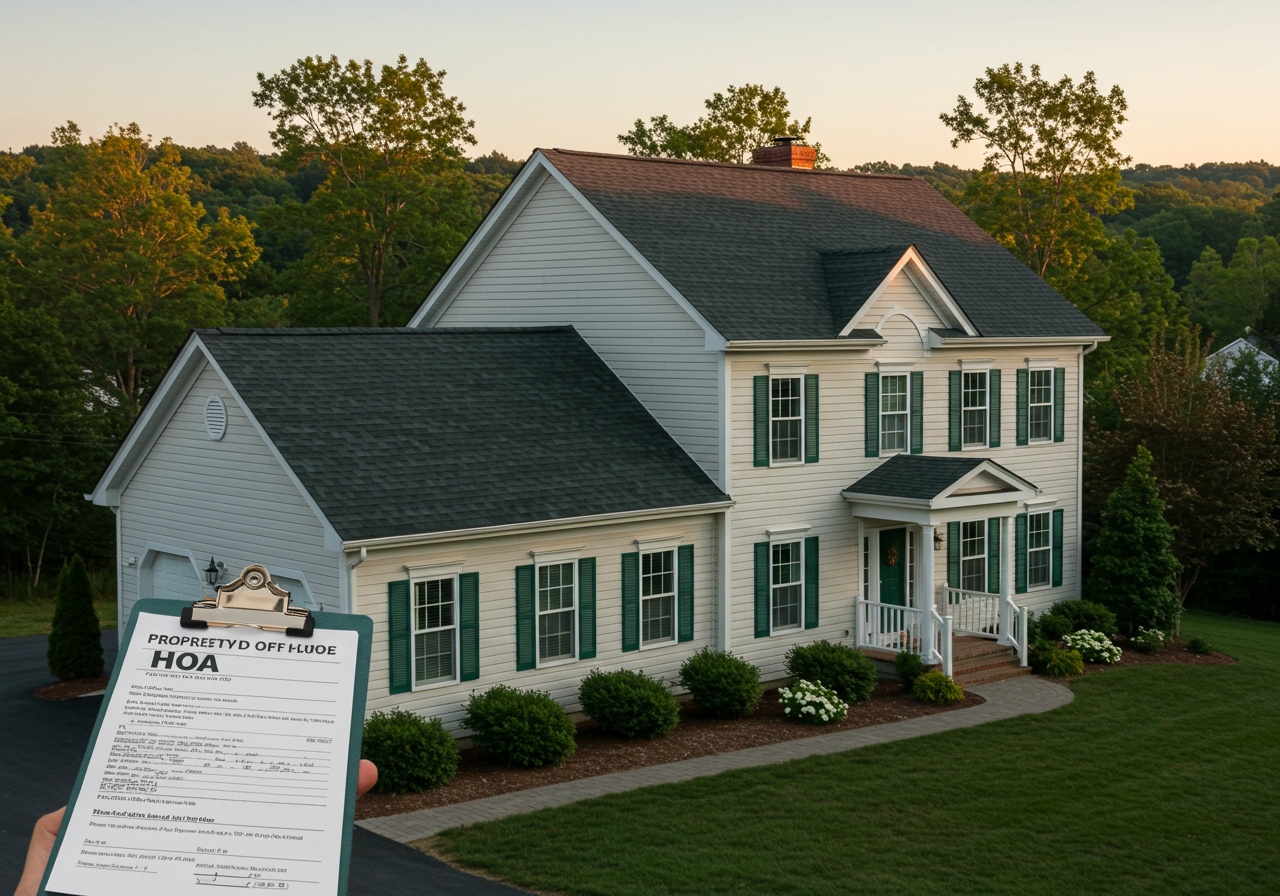
HOA architectural review process in Ledyard, Connecticut
Understanding the approval process for roofing materials in governed communities
When a Repair Becomes a Compliance Issue
I often get asked, "Sheri, I'm just fixing a leak, do I really need to call the board?" The answer in Ledyard is usually: if it's visible from the street, yes. If you're replacing more than a certain percentage of your roof (often 25%), most associations consider it a "major modification."
Even if you're just patching a small area, if the new shingles don't match the weathered ones perfectly, you might get a "maintenance violation" notice. This is the ultimate catch-22 of HOA living. If you're dealing with a sudden leak or storm damage, you might need emergency roofing services just to get a tarp up, but you still have to file the paperwork for the permanent fix. If you find yourself in a bind, you can check USA.gov's portal for home repair assistance to see if there are grants available for emergency compliance issues, though these are typically income-based.
Final Advice for a Smooth Ledyard Roof Replacement
The best way to handle a Ledyard HOA is with an "over-communication" strategy. Don't just send the form; send a polite email to the board president letting them know it's coming. Include a link to the manufacturer's gallery so they can see how the roof looks on finished homes. Most of these board members are just neighbors who want the street to look nice—they aren't out to get you, they're just following a dusty rulebook.
Did You Know?
Did you know that some Ledyard HOAs actually have 'approved contractor' lists? While they can't usually legally force you to use them, using someone they've worked with before can often fast-track your approval process by weeks.
By getting your ducks in a row in January, you'll be the first on the schedule when the Connecticut ground thaws. Treat the board like a partner, get everything in writing, and you'll have a roof that meets the sky—and the bylaws—perfectly.
Get Your Free Roof Quote
Enter your zip code to get started