February in Windham usually means one of two things: you're either clearing heavy snow off your car or watching ice dams creep up your gutters. While most people in the "Quiet Corner" are focused on heating bills right now, this is actually the most critical time to look at how your roof is handling the stress of a Connecticut winter. I spent yesterday morning near the Frog Bridge inspecting a Victorian-era roof that was literally buckling under the weight of three separate shingle layers—a blatant violation of the 2022 Connecticut State Building Code.
Understanding these codes isn't just for the guys in the high-vis vests. It's about your wallet. When a contractor ignores a specific flashing requirement or skips the ice barrier, you aren't just risking a leak; you're risking a failed inspection that can stall a home sale or void a manufacturer's warranty.
Key Takeaways
- The Two-Layer Limit: Connecticut law strictly prohibits more than two layers of roofing; a third layer requires a full tear-off to the deck.
- Ice Shield Mandate: Code requires ice and water protection to extend at least 24 inches inside the interior wall line.
- Drip Edge Necessity: Since the 2018 code update, drip edges are no longer optional—they are a mandatory structural requirement.
- Ventilation Math: Proper airflow must follow the 1/150 ratio to prevent attic heat buildup and premature shingle failure.
CT Roofing Code Compliance in Windham
Understanding Connecticut building requirements ensures your roof replacement meets safety standards and protects your investment.
1. The "Two-Layer" Rule: Why Your Third Layer is Illegal
Here is the reality: Connecticut building code (specifically R908.3.1.1) is very clear about roof recoveries. You can put a second layer of shingles over an existing one, but you cannot—under any circumstances—add a third. If you live in one of Windham's historic neighborhoods and haven't had a full replacement in thirty years, there's a high probability you're at the limit.
Look, I know the appeal of a "layover." It saves you about $1,400 to $2,300 in labor and disposal fees today. But the trade-off is brutal. A second layer traps heat, significantly shortening the lifespan of the new shingles by up to 30%. More importantly, we can't inspect the decking for rot if we don't peel back the old material. If your plywood is soft, those new nails won't hold during the next big nor'easter. When you're ready to move forward, upgrading to a new roof system that starts with a clean deck is the only way to ensure structural integrity.
Full Tear-Off vs. Second Layer Overlay
Pros
- Allows inspection of roof deck
- Maximum shingle lifespan
- Better wind resistance
- Full manufacturer warranty
Cons
- Higher upfront labor cost
- Increased disposal fees
- Longer project timeline
2. The 24-Inch Ice Barrier Requirement
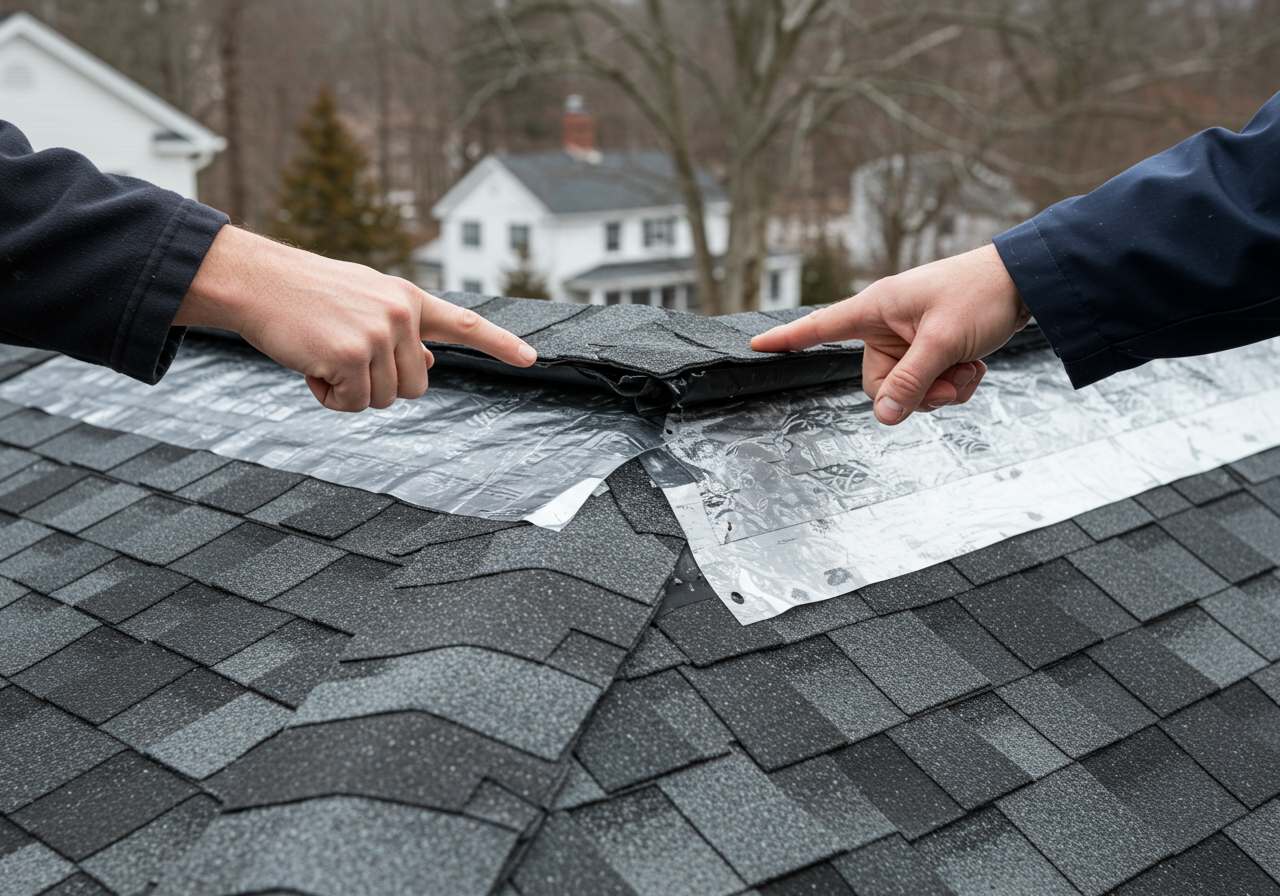
In Windham County, we deal with significantly more snow accumulation than the folks down in Fairfield. Because of this, the CT building code is strict about ice barriers (R905.1.2). The code requires a self-adhering polymer-modified bitumen sheet—most of us call it "Ice and Water Shield"—to be installed from the eave edge to a point at least 24 inches inside the exterior wall line.
(Note: That's 24 inches *past* the wall, not just 24 inches from the edge of the roof.) On homes with deep overhangs, this often requires two full courses of shield. I've seen dozens of "cheap" bids that only include one 36-inch roll. That might satisfy a lazy inspector, but it won't stop a January thaw from backing up under your shingles and ruining your living room ceiling.
3. Mandatory Drip Edges and Kick-out Flashing
One of the biggest changes in recent code cycles is the mandatory installation of drip edges. It used to be a "best practice," but now it's the law (R905.2.8.5). In Windham's older housing stock, especially around Eastern Connecticut State University, many roofs were originally built without them.
The drip edge ensures water is directed into the gutters rather than wicking back under the shingles and rotting the fascia board. Along with this, we look for kick-out flashing where a roof edge meets a vertical sidewall. Without that $15 piece of metal, water pours directly into your siding, leading to thousands of dollars in hidden structural rot. If you're spotting leaks near your chimneys or dormers, you might need professional roof repair services to bring those specific flashing points up to modern standards before the damage spreads.
4. The 1/150 Attic Ventilation Ratio
Your roof is a system, not just a lid. Code section R806.1 requires a specific amount of ventilation: typically 1 square foot of free vent area for every 150 square feet of attic floor. If you have a 1,500-square-foot attic, you need 10 square feet of ventilation, split evenly between intake (soffits) and exhaust (ridge vents).
In February, poor ventilation causes the "Quiet Corner" curse: ice dams. When heat stays trapped in your attic, it melts the snow on the roof, which then refreezes at the cold eaves. I always check the baffles in the attic—if your insulation is stuffed into the eaves, your "code-compliant" vents aren't doing a thing. According to the Department of Energy's insulation and roofing guide, maintaining this airflow is the single most effective way to lower cooling costs in the summer.
Average Lifespan: Code Minimum vs. Daniel's Recommended Specs
5. Permit and Inspection Realities in Windham
Don't let a contractor tell you that a permit isn't necessary for a "simple" shingle swap. In the Town of Windham, a building permit is required for any structural work, including roofing. This isn't just a tax; it's your protection. An inspector will verify that the materials used match the CT state requirements for wind resistance and fire rating.
If you're worried about the financial burden of a sudden, necessary repair to meet these codes, USA.gov provides resources for home repair assistance that many CT residents qualify for. Before you sign anything, you can use a roofing cost calculator to see how permit fees and code-mandated materials like ice shield impact your bottom line. It's better to know the $8,942 total now than to get hit with a "change order" halfway through the job.
Frequently Asked Questions
Expert Tip
Don't guess on your code compliance.
Get an instant, accurate estimate that factors in all Windham County building requirements today.
No credit card required • Free to use
Get Your Free Roof Quote
Enter your zip code to get started
I've seen too many Windham homeowners try to save a few hundred dollars by skipping the details, only to pay thousands more when their attic mold starts growing in March. The CT building code isn't a suggestion—it's the blueprint for a roof that actually lasts thirty years in our unpredictable climate. Stick to the specs, demand the permit, and your roof will take care of you.

About Daniel Roberts
Verified ExpertDaniel Roberts is a Senior Roofing Consultant with over 15 years of experience in the New England residential construction industry. He specializes in storm damage assessment and energy-efficient roofing systems.