
Key Takeaways
- Flashing failure causes nearly 90% of localized roof leaks in Northwest Connecticut.
- March freeze-thaw cycles are the primary catalyst for metal expansion and sealant failure.
- Professional flashing replacement usually costs between $450 and $1,200, compared to $10,000+ for interior damage.
- Always insist on "ice and watershield" membranes beneath new valley and chimney flashing.
In early March 2026, I stood in a drafty attic off Migeon Avenue in Torrington, watching a rhythmic drip-drop hit a plastic bucket. The homeowner, a retired shop teacher named Arthur, was convinced he needed a brand-new roof. He'd seen a dark stain blooming on his bedroom ceiling after a heavy afternoon of sleet and rain. But when we climbed up to the eaves, the shingles looked remarkably healthy for being twelve years old. The culprit wasn't the "skin" of the roof; it was the "connective tissue."
A single piece of step flashing near the chimney had pulled away just enough to let the Litchfield County wind drive moisture behind the siding. That tiny gap—barely wider than a credit card—was about to turn a simple afternoon fix into a major drywall renovation. This happens more often in Torrington than anywhere else in the state because our elevation and valley geography create a unique "pressure cooker" effect on metal roof components.
1. The Litchfield Hills Freeze-Thaw Gamble
The weather in Torrington doesn't just happen; it grinds. In March, we often see daytime highs that trick you into wearing a light jacket, followed by nights that plummet back into the teens. For your roof, this is a mechanical nightmare. Metal flashing—whether it's aluminum, copper, or galvanized steel—expands and contracts at a different rate than the wood and asphalt shingles surrounding it.
When water gets trapped behind a piece of loose flashing and freezes overnight, it acts like a slow-motion crowbar. It prys the metal further away from the chimney or the sidewall. By the time the next "Spring Sizzler" rainstorm hits, the path for water is already wide open. I've kept a log of service calls in the 06790 zip code for years, and the spike in "mystery leaks" always aligns with these specific temperature swings. It's why fixing a targeted leak early in the season is the smartest money you can spend.
2. Identifying the Three Weakest Links
If you're walking your property this weekend, don't just look for missing shingles. You need to look at the "joints." In my experience, Torrington homes—especially those beautiful older Victorians and mid-century ranches near Burr Pond—fail in three specific spots.
Chimneys and Masonry
Chimneys are the number one source of flashing headaches. Because a chimney is a heavy masonry structure, it settles differently than the rest of your house. If your contractor didn't use "counter-flashing" (where the metal is actually tucked into a groove in the brick), the caulk is eventually going to fail.
Roof Valleys
The valleys carry the highest volume of water on your roof. In our neck of the woods, these valleys also collect the most pine needles and oak leaves. This organic debris holds moisture against the metal, accelerating corrosion.
Step Flashing on Sidewalls
Wherever a roof slope meets a vertical wall (like a dormer), you have step flashing. These are individual L-shaped pieces tucked under every shingle. If one of these rusts through or slips, you won't see the leak on your roof; you'll see it inside your walls, often damaging your insulation. According to Department of Energy recommendations, wet insulation loses almost all its R-value, sending your heating bills through the roof.
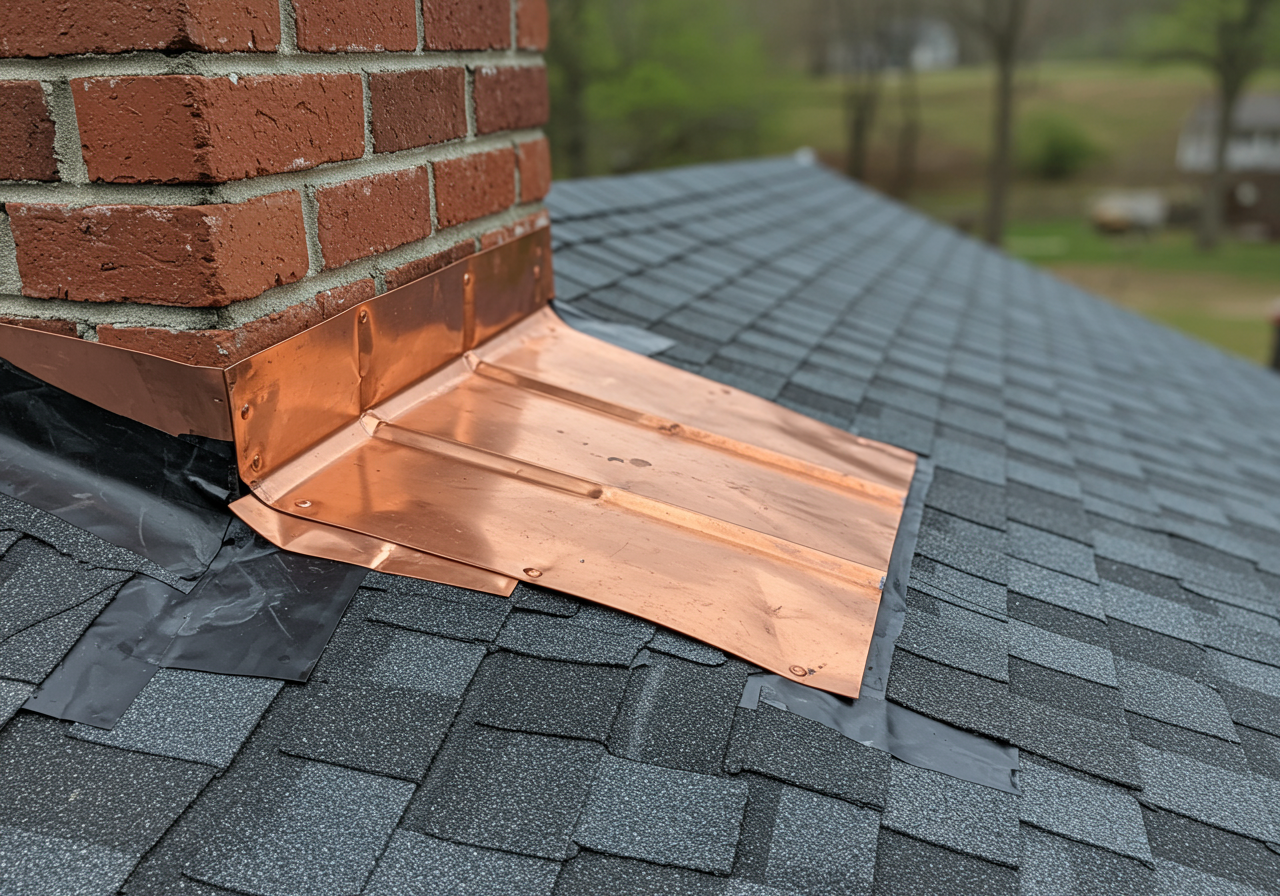
Torrington Flashing Inspection
Professional assessment of roof flashing integrity in Litchfield County
3. Material Selection: Copper vs. Aluminum
When you're looking at a repair, you'll likely be offered two main choices for materials. In Torrington's acidic rain environment (a byproduct of being downwind from certain industrial corridors), your choice matters for the long haul.
Copper is the gold standard. It lasts 50+ years and develops a patina that actually protects the metal. However, it's expensive. Aluminum is the most common choice; it's affordable and doesn't rust, though it can be more prone to wind fatigue. I often tell folks that if they plan on staying in their home for more than 15 years, copper in the valleys is worth the investment. If you're just looking to get the system back to "ship-shape," high-gauge aluminum with a baked-on enamel finish is a solid runner-up.
Flashing Material Lifespan vs. Cost
4. Why "Goop" Is Not a Long-Term Strategy
I can't tell you how many times I've climbed a ladder in Torrington only to find a chimney smothered in three inches of black roofing tar. This is what I call the "landlord special." It works for about six months.
The problem is that roofing cement is rigid. As we discussed, the weather here is anything but. The tar cracks, water gets in the cracks, freezes, and the cycle repeats. Proper flashing repair requires removing the old shingles, installing new metal, and integrating it with a high-quality underlayment.
"A tube of caulk is a maintenance tool, not a repair strategy. If your roofer isn't reaching for a tin snip, they aren't actually fixing the problem."
Before you commit to a major project, estimating the total project cost can help you decide if a repair is enough or if the flashing failure is a symptom of a roof that's simply reached the end of its life. Sometimes, the cost of labor to strip and re-flash an entire roof is so high that investing in a full system replacement becomes the more economical choice over a five-year window.
5. The Professional Checklist for Torrington Homeowners
When you're vetting a local contractor to handle your flashing, don't let them be vague. The Litchfield Hills demand specific techniques. For instance, FEMA's guide on wind mitigation highlights that proper flashing attachment is critical in areas prone to high-wind events—which describes a Torrington ridge-line perfectly.
Hiring a Specialist vs. General Handyman
Pros
- Understands local Litchfield building codes
- Offers warranties on leak-free performance
- Uses professional-grade metal bending equipment
Cons
- Higher upfront labor cost
- May have a longer waitlist during spring rush
Make sure they mention "kick-out flashing." This is a small, angled piece of metal at the end of a roof-to-wall intersection that directs water into the gutter and away from your siding. It's a $20 part that saves thousands in rot damage. If your contractor doesn't know what that is, keep looking.
Get Your Free Roof Quote
Enter your zip code to get started
Conclusion
March in Torrington is a season of transition, but it doesn't have to be a season of stress. If you catch a flashing issue now, you're preventing the heavy April rains from finding a way into your living room. Take a look at your chimney and your valleys. If you see rusted metal, cracked caulk, or shingles that seem to be "lifting" near the edges, it's time to act. A little bit of metal and some expert labor today is the best insurance policy against the unpredictable Connecticut climate.