
Key Takeaways
- Local Expertise Matters: Winsted's elevation and snow load requirements are significantly higher than coastal CT towns.
- Scope Transparency: A 'best' contractor provides a line-item breakdown including flashing, ventilation, and permit fees.
- Warranty Nuance: Distinguish between a 10-year workmanship warranty and a 50-year manufacturer material warranty.
- The 'ZikQuote' Advantage: Use automated matching to skip the sales pitch and jump straight to verified, local data.
There's a persistent myth floating around the Northwest Hills that every roofing quote is an "apples-to-apples" comparison. People think that if three different Winsted contractors bid on the same 2,400-square-foot colonial near Highland Lake, the only difference is the price tag at the bottom.
The reality? That's total nonsense.
I've spent a significant portion of my career performing forensic tear-offs—basically, I'm the guy who comes in after a "low-bid" roof fails in five years to figure out why. I can tell you that a $12,500 quote and a $17,800 quote are rarely for the same scope of work. One might be using 1-1/4 inch galvanized coil nails (the right way), while the other is stretching a budget with generic staples that won't hold up against a Litchfield County wind gust. (If you're wondering, yes, I've seen staples used on premium architectural shingles, and it's a disaster every time.) Finding a "best" contractor in Winsted isn't about finding the nicest guy with a truck; it's about finding the crew that respects the physics of a New England roofline.
1. The Winsted Standard: Identifying Qualified Northwest Hills Crews
When you're looking for a roofer in the 06098 ZIP code, you aren't just looking for someone who can swing a hammer. You need a team that understands the specific demands of the Litchfield Hills. We get more "frozen-thaw" cycles here than they do down in Milford or Norwalk. That means your contractor needs to be an expert in ice dam prevention, not just shingle slapping.
First, let's talk about credentials. I always tell homeowners to verify their contractor's license before they even let someone set up a ladder. In Connecticut, a Home Improvement Contractor (HIC) registration is the bare minimum, but for a high-performance roof, you want to see manufacturer-specific certifications (like GAF Master Elite or Owens Corning Platinum Preferred). These aren't just fancy stickers; they mean the manufacturer actually trusts that crew to install their products correctly—enough to back it with an extended warranty.
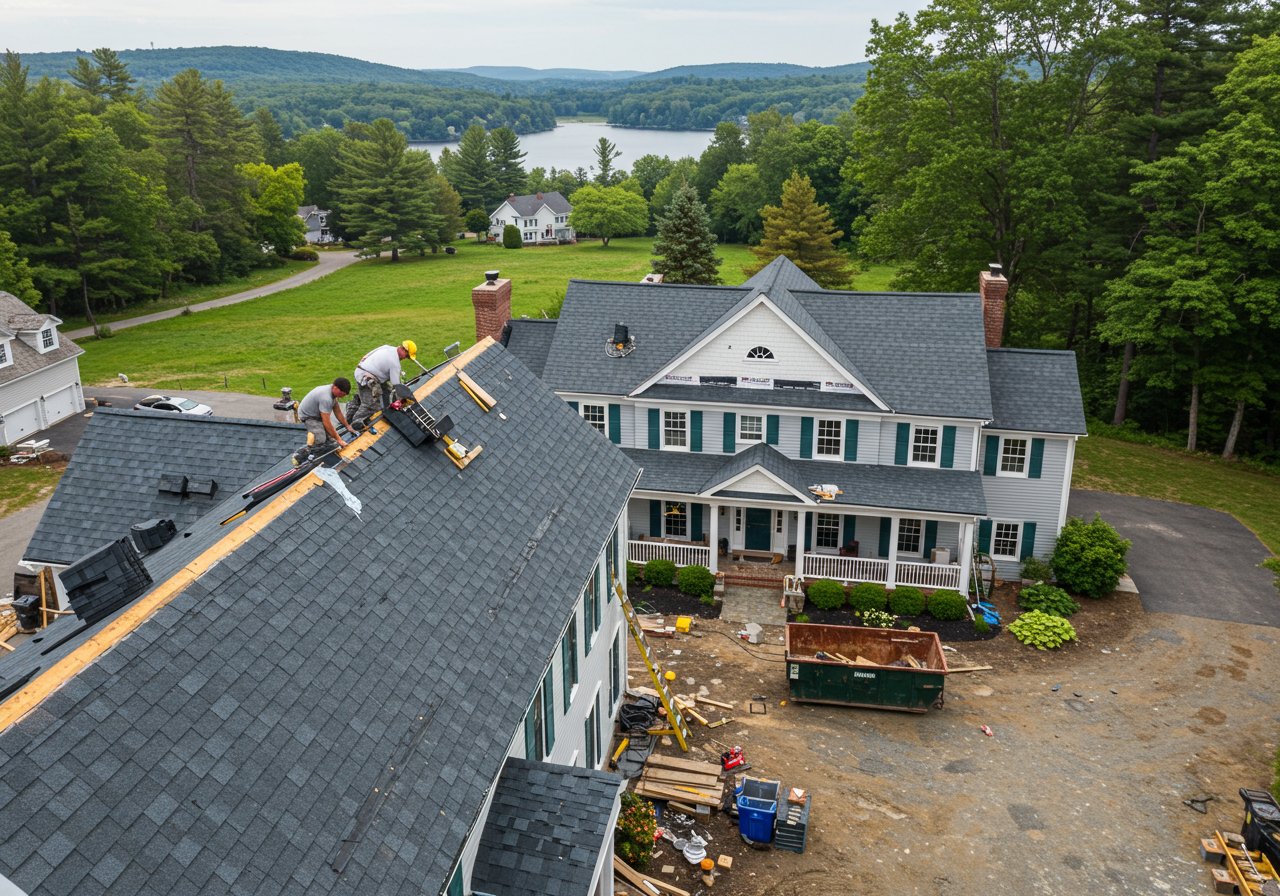
Professional roofing crew installing architectural shingles on a Winsted home
A qualified contractor uses proper techniques and materials to ensure long-lasting protection against Litchfield County weather.
The Importance of Local Portfolios
I've noticed a trend where "storm chasers" from out of state descend on Winsted after a heavy hail season. They might have a shiny truck, but they don't have a reputation to protect in our town. A true local "best" contractor should be able to point to a roof they did on Main Street or over near the Beardsley & Memorial Library five years ago.
Here's a technical detail I look for: How do they handle the valleys? In our region, I strongly recommend a "closed-cut" or "metal-lined" valley rather than an "open" valley for asphalt shingle installs. Why? Because the heavy ice buildup we get in Litchfield County can easily get under an open valley if the ice-and-water shield isn't meticulously lapped. If a contractor doesn't mention "ice-and-water shield" as a standard line item (usually two rows minimum at the eaves per CT code in high-snow areas), walk away.
Local vs. Out-of-State Contractor Comparison
Percentage scores showing local contractor advantages
Insurance and Liability Realities
Here is a data point that usually scares people: about 22% of small-scale roofers in rural CT are under-insured for the specific risks of roofing. They might have general liability, but does it cover "open roof" damage? If they pull your old roof off and a sudden March storm hits Winsted before the new shingles are on, you want to be 100% sure their policy covers your water-damaged interior. I've seen one homeowner get stuck with a $14,000 ceiling repair bill because they didn't ask for an updated ACORD certificate of insurance.
Never accept a 'handshake' on insurance
2. The Tech Specs: Material and Installation Benchmarks
The "best" roofing contractors in Winsted won't just tell you they use "good shingles." They will talk about "nominal thickness," "wind uplift ratings," and "granule adhesion." If they don't, they're probably just buying whatever is on sale at the big-box store that morning.
I personally prefer working with heavy-duty architectural shingles like the GAF Timberline UHDZ or CertainTeed Landmark series for this area. These materials have a higher profile and better shadow lines, but more importantly, they are heavy enough to resist the lifting forces we see during our nor'easters. According to FEMA's hurricane and high-wind mitigation guide, the way those shingles are fastened is just as critical as the material itself.
Ventilation: The Secret to Roof Longevity
I was inspecting a job near the Mad River last year where the shingles were curling after only seven years. The homeowner thought they got a "bad batch" of shingles. Nope. The attic was 145 degrees because the previous contractor blocked the soffit vents with insulation and didn't install enough ridge ventilation. They literally baked the roof from the inside out.
A top-tier contractor will perform a "ventilation calculation" (Net Free Area) to ensure your attic can breathe. This isn't just about the roof; it's about your heating bills too. The Department of Energy's guide on insulation and roofing highlights how proper attic airflow prevents moisture buildup that rots your rafters.
The 1/300 Rule
The Flashing Detail
Look, anyone can nail down a shingle. The difference between a master and an amateur is the flashing—the metal bits around chimneys, skylights, and dormers. I've seen guys use "caulk and pray" methods where they just glob roofing cement around a chimney. That will last two seasons. A pro will use "step flashing" and "counter-flashing" cut into the brick mortar. It takes an extra three hours of labor, but it's the difference between a dry house and a $5,000 leak.
Verify the contractor is licensed and carries valid workers' comp insurance.
Check their HIC registration and request an updated ACORD certificate of insurance.
Request a detailed estimate that includes specific brand names and material quantities.
A transparent quote lists every component: shingles, underlayment, flashing, ventilation, and permit fees.
Check for a local Litchfield County project history with at least 3 references.
Ask to see roofs they completed in Winsted or nearby towns within the last 5 years.
Review the proposed ventilation plan to ensure it meets the 1/300 NFA rule.
Proper attic ventilation prevents premature shingle failure and reduces energy costs.
Finalize the contract with a clear payment schedule—never pay more than 10-25% upfront.
A reputable contractor won't demand full payment before materials arrive or work begins.
3. Vetting the Quote: Line-Item Transparency and Warranties
When you finally get that folder of quotes, don't just flip to the back page. You need to scrutinize the middle. A "best" Winsted contractor won't give you a one-sentence quote like "Replace roof for $15,000."
You want to see every component. This is where understanding the matching process really helps. By using a service that vets contractors beforehand, you ensure you're getting professionals who speak the same technical language.
Warranty Nuances: Read the Fine Print
I often hear people say, "I got a lifetime warranty." Here's the catch: a "Lifetime" warranty usually only covers the shingles if they have a manufacturing defect. It doesn't cover the labor to replace them if the contractor installed them poorly. You want a "Workmanship Warranty" from the contractor themselves. A solid Winsted crew should offer at least 5 to 10 years of their own guarantee.
Roofing Warranty Comparison
| Feature | Standard Manufacturer | Extended Manufacturer | Workmanship |
|---|---|---|---|
| Material Defects | |||
| Labor Included | |||
| Transferable to New Owner | |||
| Covers Poor Installation |
Disposal and Logistics
Winsted isn't exactly a flat, open prairie. We have tight driveways, steep hills, and beautiful landscaping. A great contractor includes a "dumpster and disposal" fee in the quote. They should also mention "ground protection." If they aren't using plywood or tarps to protect your flower beds and "catch-all" systems to grab stray nails, your yard will be a minefield for years.
(I once found 47 roofing nails in a single flower bed after a 'budget' crew left—that's not an exaggeration, I actually counted them.)
High-Efficiency Options
If you're looking to reduce your energy footprint, ask about "cool roofs." Research from the EPA on cool roofs and heat islands shows that choosing a shingle with a higher Solar Reflectance Index (SRI) can actually lower your cooling costs by 10-15% during those humid Connecticut July weeks. In a town like Winsted, where many older homes have limited insulation, every bit of thermal reflection helps.
If you find yourself in a situation where a tree has fallen or a leak has suddenly appeared during a spring thaw, you may need emergency storm repair protocols rather than a full replacement. But if the deck is soft and the shingles are losing their granules, it's time to stop patching and start planning.
Did You Know?
In Winsted, if you have two layers of shingles already on your house, CT building code requires a full 'tear-off' before the new roof can be installed. You cannot legally add a third layer.
Get a Winsted Estimate in Seconds
Stop chasing contractors for callbacks. Get matched with verified local pros and see your real numbers today.
No credit card required • Free to use
Finding the "best" doesn't have to be a full-time job. It's about asking the right questions, looking for the technical details like flashing and ventilation, and refusing to settle for the "handshake" deal. I've seen enough failed roofs to know that the cheapest price is almost always the most expensive mistake you'll ever make.
Get Your Free Roof Quote
Enter your zip code to get started