If you've spent any time wandering through the historic district or driving past the "Pink House" (Roseland Cottage) here in Woodstock, you know we take our local charm seriously. Our corner of Connecticut—the lovely, winding Quiet Corner—is defined by a very specific look. It's a mix of colonial heritage and rural elegance. But when you live in one of our planned communities or a neighborhood governed by a Homeowners Association (HOA), that charm is often backed by a thick binder of rules. I recently spoke with a neighbor near the fairgrounds who was heartbroken because her heart was set on a modern, matte-black standing seam metal roof, only to find out her HOA bylaws strictly mandated "earth-toned asphalt shingles."
It's a common friction point. You want to protect your investment and express your personal style, but the board is focused on "aesthetic uniformity." As we move into March and the ground starts to thaw, many of you are likely looking up at your roof and seeing the wear and tear of a long New England winter. You're ready to call a contractor, but you're dreading the back-and-forth with a committee that only meets once a month. I've seen these situations go sideways more than a few times, and usually, it's because of a simple misunderstanding of what the board actually needs to see.
The reality is that your roof line is a design choice, not just a line item on a quote. It's a conversation with your block. If you're feeling stuck between a leaking roof and a rigid board, don't worry. We're going to walk through how to handle the most common hurdles Woodstock homeowners face so you can get your project moving before the spring rains really kick in.
Key Takeaways
- HOA rules are often vague—get the latest CC&Rs and don't rely on neighbor gossip.
- Approach the board as a partner: frame your request as enhancing neighborhood value.
- Physical shingle samples viewed at different times of day help you and the board approve the right color.
- Never start a tear-off without written HOA approval—verbal nods are not legally binding.
The Hidden Friction Between Individual Style and Board Rules
The biggest problem I see in Windham County isn't that the rules are impossible; it's that they are often vague. You might see a rule that says "roofing must be harmonious with the natural surroundings." What does that even mean? To you, it might mean a deep forest green. To the board president, it might mean "brown, and only brown." This ambiguity creates a massive headache when you are trying to plan a major renovation. I remember a couple over in the northern part of town who thought they were being helpful by picking a high-end synthetic slate. It looked gorgeous, but because it wasn't explicitly listed in the "approved materials" list from 1998, the board rejected it flat out.
This is why the first step is always to get your hands on the most recent version of the Covenants, Conditions, and Restrictions (CC&Rs). Don't rely on what your neighbor told you three years ago. Rules change. In some Woodstock developments, the board has actually become more flexible recently to allow for energy-efficient materials, but they haven't updated the public-facing website yet. If you are just getting a professional to patch a few shingles, you might not need a full board review, but any change in color or material is going to trigger a process.
I always suggest approaching the board as a partner rather than an adversary. I know, it's easier said than done when they are telling you what to do with your own house! But if you frame it as "I want to enhance the neighborhood's value with a premium product," you'll get much further than "Why can't I use the shingles I want?" Boards are terrified of one house looking completely out of place and dragging down the "comp" values for everyone else. Your goal is to prove that your choice is an upgrade, not a deviation.
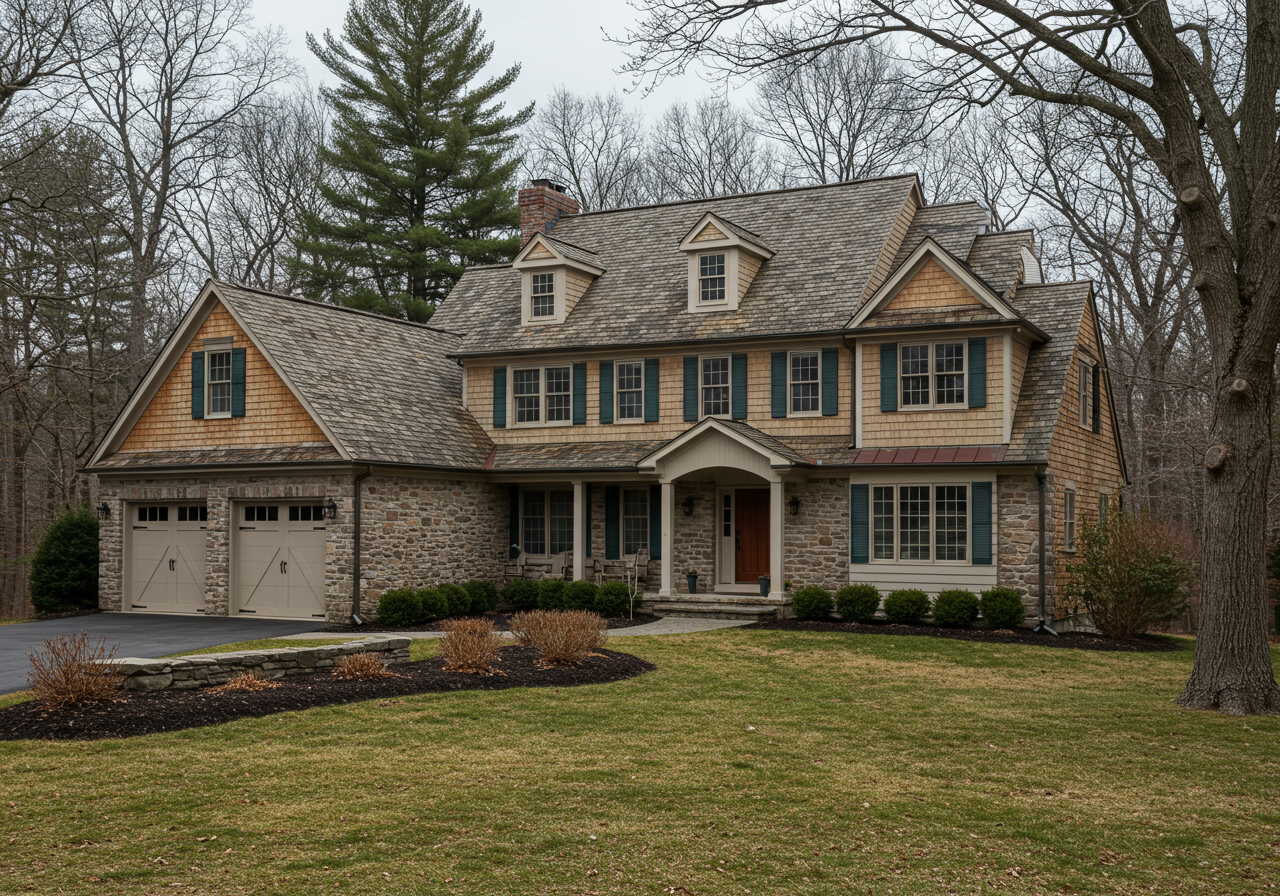
HOA Roofing in Woodstock's Quiet Corner
Understanding board requirements helps you get approval faster
Why Woodstock HOAs Obsess Over Shingle Color and Material
You might wonder why anyone cares if your roof is "Slatestone Gray" or "Pewter Gray." In a place like Woodstock, the visual continuity is what keeps the property values high. If every house has a different roof material—one metal, one cedar, one clay tile—the neighborhood starts to look like a patchwork quilt. Most HOAs here will mandate a specific weight of shingle, usually a "30-year architectural" or "lifetime" shingle. They want to see that heavy, dimensional shadow line because it looks more expensive than the flat, 3-tab shingles that were popular in the 80s.
When you start investing in a full architectural shingle system, you aren't just buying weather protection; you're buying into the neighborhood's long-term look. I've seen boards reject shingles simply because they were "too shiny." They prefer matte finishes that blend into the wooded landscape of the Quiet Corner. If you're looking at colors, "Weathered Wood" is the unofficial king of Woodstock HOAs. It's a mix of browns and grays that seems to please everyone.
However, don't just pick the first thing you see in a brochure. Colors look different when they are spread out over 2,500 square feet and hit by the late afternoon Connecticut sun. I always tell people to ask their roofer for three full-sized shingle samples. Prop them up against your siding and look at them at 10:00 AM, 2:00 PM, and sunset. The board will often require you to submit these physical samples anyway, so you might as well get ahead of it. According to professional safety standards outlined by OSHA, the crews working on these roofs must be fully trained, and many HOAs will even ask for the contractor's safety record before they allow them on-site. It's about protecting the association from liability just as much as it is about the "look."
HOA Standards vs. Standard Retail Options
| Feature | Basic 3-Tab | HOA-Approved Architectural |
|---|---|---|
| Wind Resistance | ||
| Dimensional Shadow Lines | ||
| Meets 30+ Year Standard | ||
| Property Value Impact |
Navigating the Approval Timeline Without Losing Your Sanity
The timeline is where most Woodstock roofing projects fall apart. You find a leak in March, you get a quote by April, but the board doesn't meet until the third Tuesday of the month. If you miss that window, you're looking at May or June before you even have permission to start. In the meantime, that leak is doing damage to your attic. It is incredibly frustrating to feel like your house is at the mercy of a volunteer committee.
I once worked with a homeowner who was so stressed about the wait that he almost signed a contract with a "fly-by-night" crew just to get it done quickly. I had to talk him down. If you install a roof without HOA approval, they can—and often will—force you to tear it off at your own expense. It sounds like a horror story, but it happens. Instead, the solution is "The Application Packet." Don't just send a one-sentence email. Provide a folder that includes:
- The contractor's license and insurance.
- A brochure of the specific shingle.
- Photos of other homes in the neighborhood with similar roofs.
- The estimated start and end date.
By being over-prepared, you show the board you are serious. Sometimes, if the request is for a "pre-approved" color, the property manager can sign off on it without waiting for the full board meeting. Always ask if there is an "expedited review" process for emergency repairs. If your roof is genuinely failing and the HOA is being bureaucratic, you might even look into federal repair assistance options if you qualify, as some programs provide documentation that can help emphasize the urgency to a slow-moving board.
Critical HOA Approval Warning
Budgeting for the "High-End" Requirements of Planned Communities
Let's talk about the elephant in the room: cost. HOA-mandated materials are almost always more expensive than the "budget" options. If the board requires a specific GAF Ultra HD or an Owens Corning Duration shingle, you're going to pay a premium for that thickness and the extended warranty. But there's a silver lining. These roofs last significantly longer and do a much better job of standing up to our Connecticut nor'easters.
When you are running the numbers on your specific square footage, you need to account for the "HOA Tax." This isn't a literal tax, but the extra cost of the premium materials and the potentially higher labor rates for contractors who are used to working within strict HOA guidelines. These contractors often have to take extra steps, like daily debris cleanup and specific parking rules for their trucks, which can add a bit to the labor cost.
If you're worried about the price tag, remember that an HOA-compliant roof is a major selling point. In Woodstock, buyers look for homes that are "move-in ready" with no looming maintenance battles. A roof that is already board-approved and under warranty is worth its weight in gold during a home inspection. Also, if you have a home with a modern addition—maybe a sunroom with a flat roof—make sure you check the FEMA guidelines for low-slope systems. HOAs can be especially picky about how these flat sections are finished because they are often visible from the street or second-story windows.
HOA-Mandated Premium Roofing
Pros
- Higher resale value
- Better storm resistance
- Unified neighborhood aesthetic
- Longer manufacturer warranties
Cons
- Higher initial investment
- Limited color palette
- Bureaucratic delays
Winning Over the Board with Professional Documentation
The secret to a "Yes" from the board is making it easy for them to agree with you. Most people on these boards are just your neighbors who want the neighborhood to look nice and the meetings to end early. If you come in with a confusing proposal, they'll table it for next month just to be safe. If you come in with a professional, clear, and visually appealing proposal, they'll usually stamp it and move on.
I always suggest including a "letter of intent." It doesn't have to be long. Just a few sentences explaining that you've chosen a material that exceeds the current neighborhood standards for durability while perfectly matching the existing color scheme. If you're trying to introduce a new material—like a high-quality synthetic wood shake—bring a sample board that the board members can actually touch. It's hard to argue with a product that looks identical to wood but has a Class A fire rating.
"The most successful homeowners don't just ask for permission; they provide a vision. Show the board how your new roof will make the whole street look better, and you'll find they become your biggest supporters."
At the end of the day, your home in Woodstock is your sanctuary. Whether you're looking out over the rolling hills of Windham County or enjoying a quiet morning in a cozy cul-de-sac, you deserve a roof that keeps you dry and makes you proud when you pull into the driveway. Don't let the HOA process intimidate you. It's just another step in the journey of homeownership—like raking leaves or clearing snow. With the right preparation and a bit of patience, you'll have that new roof on before the Woodstock Fair rolls around this summer.
Get Your Free Roof Quote
Enter your zip code to get started
Conclusion
Navigating HOA requirements doesn't have to be a battle. By understanding the "why" behind the rules—usually property value and aesthetic consistency—you can tailor your request to meet the board's needs while still getting a high-quality, beautiful roof. Remember to start early, get physical samples, and always, always get your approval in writing before the first shingle is pulled.
If you're ready to see what's possible for your home, I highly recommend getting a clear picture of the costs and options available in our area. You can estimate your project cost here to get a baseline before you even talk to the board. Your roof is the most important shield your home has against the elements; make sure it's a shield that both you and your neighbors can love.
FAQ

About Sheri Wilde
Verified ExpertSheri Wilde is a Home Improvement Editor with a background in interior design and sustainable living. She helps Connecticut homeowners make informed decisions about their biggest investments.