
Key Takeaways
- Skylights don't have a built-in expiration date—poor installation and neglected maintenance cause most leaks.
- About 8 out of 10 skylight leaks in the New Haven area aren't the skylight's fault; ice dams and worn shingles are common culprits.
- Flashing is the 85% culprit—check for pinholes and cracked sealant before assuming you need a full replacement.
- Proactive sealing can save you thousands: a $450 repair now beats a $5,800 mold and drywall project later.
There's a nagging rumor floating around New Haven County—and maybe even your specific block in West Haven—that says if you cut a hole in your roof for a skylight, you're essentially RSVPing for a water feature in your living room. Honestly? That's just not true. As someone who has looked at hundreds of rooflines from the curb, I've seen skylights that have stayed bone-dry for 28 years. The "inevitable leak" is a myth born from poor installations and neglected maintenance, not the product itself.
Whether you're living in a classic Cape near the high school or a modern build closer to the shore, your skylight doesn't have to be a liability. We often think of them as simple windows, but they are technically high-performance roofing components that have to withstand the same March wind gusts and heavy rain that the rest of your shingles do. If you're noticing a drip, don't panic and assume you need a whole new roof. It's usually a specific, fixable decision between targeted maintenance or a smart upgrade.
The "Inevitable" Myth: Why West Haven Skylights Don't Have to Leak
The biggest misconception I hear while chatting with neighbors is that skylights have a "built-in" expiration date that ends in a flood. The reality is that a high-quality unit installed with a proper flashing kit is as watertight as any other part of your home. The problems usually start when a "handyman" uses roofing cement (that black goop) instead of a proper metal flashing system.
In my experience, about 8 out of 10 leaks I investigate in the New Haven area aren't even the skylight's fault. They are often caused by ice dams or shingles that have reached the end of their life nearby. Before you decide to board up that beautiful source of natural light, it's worth addressing these minor seal issues early to see if a simple repair can buy you another decade of sunshine. If the frame is solid and the glass is clear, you're likely looking at a surface-level fix rather than a structural catastrophe.
Step 1: Evaluating the Flashing (The 85% Culprit)
If I had a dollar for every time a "leak" turned out to be a piece of bent aluminum, I'd probably be retired on a beach in Milford by now. Flashing is the metal "skirt" that directs water away from the skylight and onto the shingles. In West Haven, our proximity to the Sound means we get some unique wind patterns that can actually lift loose flashing over time.
When you're up there (or having a pro look for you), you're looking for "pinholes" in the metal or spots where the sealant has cracked. I remember helping a friend on Ocean Ave who was convinced her skylight was broken. It turned out a single roofing nail had backed out of the flashing, creating a tiny straw for rainwater to enter. A 10-minute fix saved her a $1,400 replacement bill. It's these small details—the way the metal tucks under the shingles—that make or break the system.
Step 2: Clearing the Debris "Moat" Around Your Glass
March in Connecticut is a messy time. We've got leftover oak leaves from the fall, pine needles, and those "helicopters" from maple trees all clogging up our gutters. But have you looked at the top edge of your skylight lately? Debris loves to collect right at the top header of the skylight frame, creating a literal dam.
When water hits that dam, it has nowhere to go but sideways or—worse—up and under your shingles. I've seen beautiful homes near the Allingtown area suffer interior ceiling damage simply because a handful of wet leaves stayed trapped against the skylight for three months.
Clear the channels
Clear all organic debris from the top and side channels of the skylight frame.
Inspect weep holes
Inspect the 'weep holes' at the bottom of the unit to ensure condensation can drain out.
Check for growth
Check for moss or lichen growth that might be lifting the edges of the flashing.
Flush the area
Gently flush the area with a garden hose to ensure water flows freely around the unit.
Step 3: Assessing the Seal Integrity and Glass Health
Sometimes the leak isn't coming from the roof at all. It might be coming from the unit itself. Modern skylights use double-paned glass filled with argon gas. When that seal fails, you'll see fog or "scum" between the panes. While this won't always cause a drip in your lap, it means the unit is no longer insulating your home.
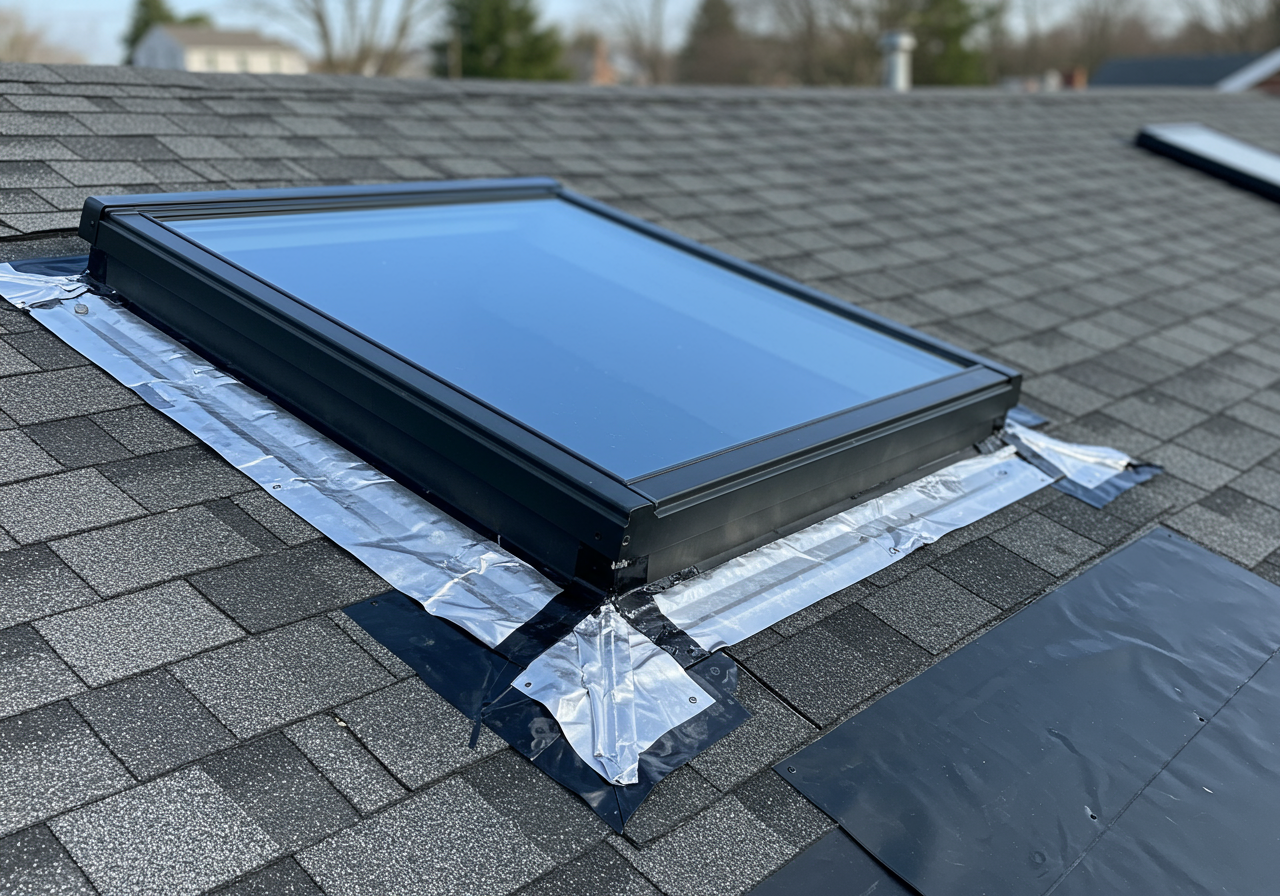
Professional skylight inspection in West Haven
A professional inspecting the rubber gaskets and glass seals of a deck-mounted skylight on a residential roof
However, if you see water dripping from the inside of the frame, check your humidity levels first. In many West Haven bathrooms, what looks like a skylight leak is actually just steam from the shower condensing on the cold glass and running down the drywall. If you're certain it's rain, the rubber gaskets around the glass might have dried out.
Structural Failure Warning
According to FEMA's guidelines for low-slope roof protection, ensuring that any roof penetration is sealed against wind-driven rain is the most effective way to prevent long-term mold issues.
The Cost of Proactive Sealing vs. Reactive Repair
Let's talk numbers, because I know that's what keeps us up at night. Ignoring a small damp spot on the ceiling for a year can turn a $450 flashing repair into a $5,800 project involving mold remediation and drywall replacement. I always tell my friends to treat a skylight like a car: you can pay for the oil change now, or the engine swap later.
In West Haven, the cost of a basic skylight "tune-up"—which includes cleaning the tracks, resealing the gaskets, and checking the flashing—is remarkably affordable compared to the alternative. If you're calculating the potential investment for a leak-free upgrade, remember to factor in the energy savings of a newer, better-insulated model. Modern units are significantly better at keeping your heat in during our CT winters.
Skylight Repair Cost Comparison (West Haven)
Why Local Coastal Context Matters for West Haven Installations
Living in West Haven means we aren't just dealing with rain; we're dealing with salt. If you're within a mile of the coast, the "life" of your skylight's exterior hardware is slightly shorter than someone living in, say, Orange or Woodbridge. The salt air is abrasive and can eat through low-grade fasteners over time.
When it's time to stop patching and start fresh, I highly recommend integrating new skylights during a full roof overhaul. It's the only way to ensure the new skylight is perfectly woven into the new shingle layers. Plus, choosing "cool" glass options can help with those humid July afternoons. I've been reading the EPA's research on cool roofing materials lately, and it's incredible how much a "Solar Powered" skylight with built-in shades can reduce your AC bill. Don't forget to check the Department of Energy's insulation standards to make sure your attic ventilation is supporting your new skylight, rather than fighting against it.
Sheri's Design Tip
Get Your Free Roof Quote
Enter your zip code to get started
Preventing a skylight leak in West Haven doesn't require a miracle—it just requires a little bit of attention before the spring rains really kick in. By checking your flashing, clearing away the winter's debris, and knowing when a unit has simply aged out of its usefulness, you can keep your home's "connection to the sky" a source of joy rather than stress. If you've got a spot on the ceiling that's worrying you, don't wait for the next nor'easter to see if it gets worse. A quick professional look now can save your living room (and your wallet) later this year.