
Key Takeaways
- Connecticut building code strictly limits roofs to two layers—adding a third can cause structural failure and cost $16,000+ to fix.
- The 24-inch ice shield requirement is often misunderstood; standard rolls only reach 18 inches past the wall, leaving you 6 inches short of code.
- Historic Washington homes may need structural reinforcement before upgrading to heavier modern shingles.
- Skipping permits can void insurance coverage—your adjuster will check for permits before approving storm damage claims.
Last October, a homeowner near Washington Depot called me in a panic. They had a beautiful 1920s Colonial and were trying to sell it. The buyer's inspector crawled into the attic and found that the roof had three distinct layers of shingles. In Connecticut, the building code is very clear: you cannot have more than two layers of roof covering. This isn't some bureaucratic suggestion; it's about weight. When you add a third layer, you're asking the rafters to support thousands of extra pounds they weren't designed for.
The Two-Layer Trap and the Hidden Cost of "Roof-Overs"
But here's the kicker for this Washington family: the "cheap" contractor they hired six years ago told them a roof-over would save them $4,500 in labor and disposal fees. Instead, to close the sale, they had to pay $16,850 to strip everything down to the deck and start over. They basically paid for the same roof twice.
The math of a "save now, pay later" roof-over just doesn't work. If a contractor suggests "just slapping another layer on" without checking the current layer count, they are setting you up for a code violation. In Washington, where we get significant snow accumulation in the Northwest Hills, that extra weight is a recipe for a sagging ridge beam. I've seen 100-year-old rafters literally crack under the combined weight of three layers of asphalt and eight inches of wet February snow.
"Code compliance isn't just about passing an inspection; it's about ensuring your home doesn't become a liability when it's time to sell or file an insurance claim."
If you're wondering if your current roof is up to snuff, the first step is getting a real look at the numbers before any shingles are pulled. Don't let a contractor "guestimate" the layers. Make them show you a core sample from the edge of the roof. If there are already two layers, a full tear-off is your only legal (and safe) option.
The 24-Inch Ice Dam Requirement Most Crews Ignore
In Litchfield County, we don't just get snow; we get cycles of freeze and thaw that turn roof edges into ice factories. The Connecticut State Building Code (specifically Section R905) requires an "ice barrier" for a reason. In Washington, this barrier must extend from the lowest edges of all roof surfaces to a point at least 24 inches inside the exterior wall line of the building.
I recently reviewed a contract for a property up near Lake Waramaug. The contractor had written "Install ice and water shield at eaves." That is dangerously vague. Why? Because the standard roll of ice and water shield is 36 inches wide. If your eaves (the overhang) are 18 inches deep, and the crew only installs one row, they are only reaching 18 inches past the wall. You are 6 inches short of code.
TIP
When the building inspector shows up (and in Washington, they do show up), they want to see that extra row of protection. If the contractor has already covered it with shingles, the inspector can technically make them tear it up to prove it's there. And who do you think pays for that delay? Usually the homeowner who didn't check the line items. You should always verify how your contractor handles permits to ensure they are actually coordinating these inspections properly.
Structural Loads: Why Washington's Old Homes Need More Than Just Shingles
Washington is famous for its historic architecture, but those 18th and 19th-century homes weren't built with modern 2x10 rafters. Many have "rafter tails" or wide-spaced beams that were meant for lightweight cedar shakes or very thin early shingles. If you decide to upgrade to a heavy-duty architectural shingle or, heaven forbid, a synthetic slate, you might be exceeding the structural load-bearing capacity of your roof deck.
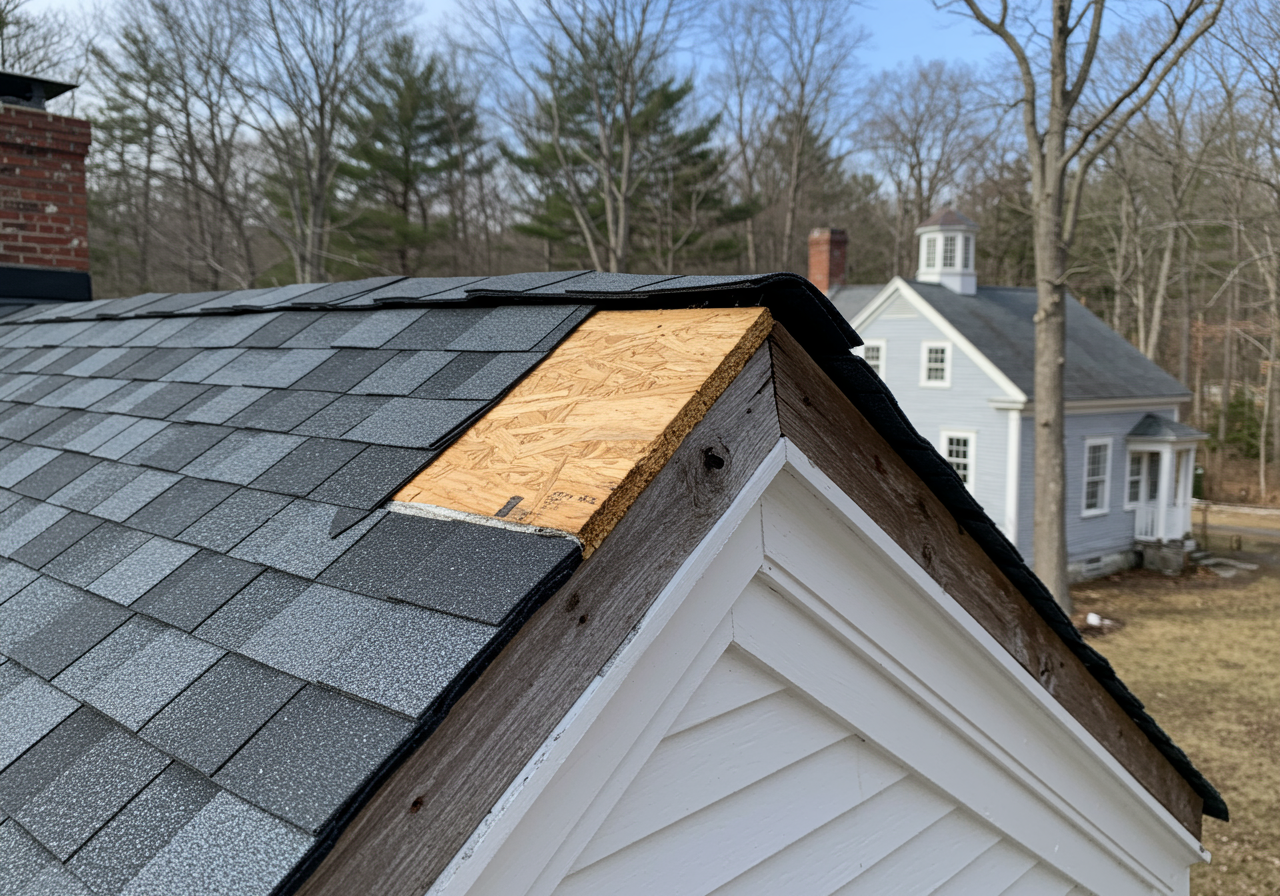
Historic Washington Home Roofing Considerations
Understanding structural requirements for older homes in Connecticut
I remember a project near the Washington Green where the owner wanted a "Grand Manor" style shingle—beautiful, thick, and heavy. The problem? The original 1790s structure had hand-hewn rafters that were starting to bow. Modern code requires that if you change the weight of the roofing material significantly, you must ensure the structure can support it. A "code-compliant" roofer in Connecticut should be looking at your attic before they even give you a quote.
If a contractor walks around the outside of your house and hands you a bid without sticking their head in the crawl space, walk away. They are ignoring the "Solution" part of the problem. They need to check for rot, sure, but they also need to check for "deck deflection." According to OSHA safety standards, a soft deck isn't just a code violation; it's a death trap for the crew.
Modern vs. Historic Code Considerations
| Feature | Standard Modern Roof | Washington Historic Home |
|---|---|---|
| Sheathing Requirement | ||
| Ventilation Style | ||
| Fastener Depth | ||
| Ice Shield |
Sheathing Requirement: Standard Modern Roof: 7/16" OSB or Plywood | Washington Historic Home: Often requires 5/8" or CDX for span
Ventilation Style: Standard Modern Roof: Standard Ridge Vents | Washington Historic Home: Often requires hidden or gable venting
Fastener Depth: Standard Modern Roof: 1-1/4" Nails | Washington Historic Home: Requires 1-1/2" to hit solid old-growth wood
Ice Shield: Standard Modern Roof: Standard 24" reach | Washington Historic Home: May require 36"+ due to deep soffits
The Permit Paper Trail and Your Insurance "Safety Net"
Some homeowners in Washington think that because they live on a private road or have a 10-acre lot, the building inspector will never know. "Why pay the $300 permit fee?" they ask. Here is the reality: Your insurance company cares way more about that permit than the town does.
If a major nor'easter rolls through Litchfield County—and you can check NOAA's historical storm database to see just how often that happens—and your roof fails, the first thing the adjuster will do is look for a permit. If they see a new roof was installed in 2026 but no permit was filed with the Town of Washington, they have a "get out of jail free" card to deny your claim. They can argue that because the roof wasn't inspected to code, they can't verify it was installed to resist the wind speeds that caused the damage.
Pros
- Ensures structural safety for your family
- Creates a legal record for home resale
- Guarantees insurance coverage for storm claims
- Holds contractor accountable to state standards
Cons
- Permit fee (usually based on project value)
- Small delay for the inspector's visit
In Connecticut, the Home Improvement Act is designed to protect you, but you lose much of that protection when you participate in "off-the-books" work. I always tell people: a contractor who wants to skip the permit is a contractor who isn't confident they can pass the inspection. That is a massive red flag.
Negotiation Scripts: How to Spot a "Code-Cutter"
When you're sitting across from a contractor at your kitchen table in Washington, don't just talk about the color of the shingles. Talk about the math. A professional will have no problem explaining how they meet the 2022 CT State Building Code. A "code-cutter" will start waving their hands and talking about "how we've always done it."
Here are three scripts you can use to smoke out the professionals:
Script 1: The Ice Shield Test
You: "I see you've quoted one row of ice and water shield. My eaves are 20 inches deep. Can you walk me through the math of how that row hits the 24-inch interior code requirement?"
The Right Answer: "You're right, one 36-inch roll won't cut it. We'll need to overlap a second row to reach 44 inches up, ensuring we're well past the code minimum."
Script 2: The Fastener Count
You: "Is this a four-nail or a six-nail installation? And does that meet the high-wind warranty for Washington's wind zone?"
The Right Answer: "We do a six-nail pattern here because the Northwest Hills get significant gusting. It's the difference between a 110mph and a 130mph wind rating."
Script 3: The Permit Line Item
You: "Will the permit be filed in my name or yours, and is the fee included in this quote or is it a separate line item?"
The Right Answer: "We file the permit under our license—which protects you—and the $285 fee is listed right here on line 4."
If you run into a situation where a storm has already caused damage and you need a code-compliant pro fast, you might need to look into emergency roofing services that understand the local Washington inspectors' expectations.
Get Your Free Roof Quote
Enter your zip code to get started
Conclusion
Building codes in Washington aren't just "suggestions" from the state; they are the baseline for a roof that actually protects your equity. Whether it's the 24-inch ice barrier rule or the strict two-layer limit, these regulations are designed to prevent the exact kind of $15,000 "surprises" that I see ruin home sales every year.
Don't let a contractor talk you into a "standard" installation that ignores the specific Northwest Hills requirements. Demand to see the math on the ice shield. Insist on a permit. And most importantly, make sure your contractor is looking at your home's structure from the inside out.
If you're ready to stop guessing and start getting real, code-compliant numbers, the best move is to match with verified local contractors who actually know the Washington building department by name. A solid roof starts with a solid contract—one that respects the code and your wallet.