Owning a home near the Long Island Sound in East Haven isn't just about the views; it's about managing a structure that is under constant chemical and physical assault. Most homeowners in the Momauguin area are sitting under a ticking financial clock because they've treated their roof replacement like a standard suburban project. The reality is that the salt spray coming off the water acts as a corrosive solvent, and the wind loads near Morgan Point don't care if you got a "great deal" on standard 3-tab shingles. If your estimate looks the same as a quote for a house in North Haven, you are already making a $4,000 mistake that will manifest as a leak within eight years. We are seeing a massive uptick in premature roof failures in East Haven precisely because contractors are cutting corners on the very components that make a coastal roof "coastal."
Key Takeaways
- Salt air in East Haven increases hardware corrosion by roughly 22% compared to inland New Haven County homes.
- Local building codes along Cosey Beach require shingles rated for 110-130 mph wind gusts.
- Using stainless steel fasteners adds about $640 to a standard project but prevents premature 'shingle-bleed' stains.
- Always demand a line-item breakdown for 'High Wind' starter strips and ridge vents to ensure you aren't paying for standard inland materials.
Did You Know?
In coastal zones like East Haven, standard galvanized roofing nails can begin to oxidize and lose structural integrity within 7 years, whereas stainless steel fasteners are designed to last the full 30-year lifespan of the shingle.
The Invisible Corrosive: Why Salt Air Is a Line-Item Issue
When I look at a roofing quote for an East Haven property, the first thing I search for isn't the total price—it's the hardware specification. Most contractors will default to galvanized steel nails because they're cheap and readily available at any big-box supplier. But if you live within a mile of the Sound, those nails are a liability. Salt air is hygroscopic; it pulls moisture out of the atmosphere and holds it against the metal. I've walked onto roofs in Mansfield Grove where the shingle heads were literally popping off because the nails underneath had rusted down to the size of a needle.
You need to ask your contractor to show you the box of fasteners they plan to use. If they aren't using 304 or 316-grade stainless steel, you are essentially paying for a temporary roof. The math is simple: a standard box of galvanized nails might cost $45, while stainless steel runs closer to $135. On a 2,500-square-foot roof, that's a difference of maybe $600 to $800 in material costs. If a contractor tells you it "doesn't matter," they are either lazy or trying to pad their margins at the expense of your home's safety. Demand that the fastener type sits on its own line item in the contract. If they won't put it in writing, don't sign the check.
I remember a homeowner on Silver Sands Road who saved $1,200 by going with a "budget" inland contractor. Three years later, every single shingle on the windward side of her house was loose because the galvanized nails had turned into rust-dust. She ended up paying $14,800 for a total replacement of a "new" roof. That $1,200 "saving" was actually a $13,600 penalty.
Wind Uplift and the Momauguin Pressure Trap
East Haven homeowners often forget that wind behaves differently when it hits a coastline. It doesn't just blow against your house; it creates a vacuum effect over the peak of your roof. This "uplift" is what rips shingles off, starting at the edges. If your roofer isn't using a six-nail pattern and specialized starter shingles, your roof is basically a sail waiting to catch a gust. According to the International Code Council (ICC), coastal zones require specific attachment methods that many "fly-by-night" crews simply ignore because they take 20% longer to install.
Never allow a contractor to use 'scraps' of shingles as a starter course in East Haven.
Standard installation usually involves four nails per shingle. In New Haven County coastal regions, I advocate for a mandatory six-nail pattern. This isn't just "Dana being picky"—it's about the physics of wind resistance. When a nor'easter rolls through in March, that extra $200 in labor and nails is the only thing keeping your attic dry. You should also verify that they are using high-wind rated ridge vents. I've seen standard plastic ridge vents literally shatter during high-wind events, allowing rain to be driven directly into the insulation. Before you commit to a crew, make sure you understand the vetted contractor matching process so you don't end up with a team that thinks East Haven is the same as Hartford.
The Flashing Failure: Copper vs. Aluminum in East Haven
If you have a chimney or a dormer, you have flashing. In most of Connecticut, aluminum flashing is the gold standard. It's light, it's cheap, and it lasts. But in East Haven, aluminum is a gamble. Salt spray causes "pitting" in aluminum. Over a decade, that pitting turns into pinholes. You won't see them from the ground, but your ceiling will eventually show the brown spots.
I'm a huge advocate for copper flashing on the shoreline, despite the "sticker shock." Yes, copper is going to add $1,500 to $3,200 to your quote depending on the complexity of your roofline. But copper doesn't just resist salt; it thrives in it. It develops a patina that actually protects the metal underneath. If you can't swing the cost of copper, at the very least, ensure you are using heavy-gauge, Kynar-coated aluminum or stainless steel.
I recently audited a quote for a couple near the East Haven Town Beach. The contractor had quoted "custom flashing" for $800. When I pushed for details, it turned out to be the thinnest grade of aluminum available. We negotiated that up to a proper 16-ounce copper installation for an additional $1,900. The homeowners were annoyed at first, but when they realized it meant they wouldn't have to touch that chimney for 50 years, the "math" finally made sense to them.
Comparing Coastal Material Lifespans
Choosing the right material for a coastal environment is a balance between your budget today and your maintenance costs tomorrow. Not all "30-year" shingles are created equal when you factor in the humidity and salt of New Haven County.
Coastal Material Durability Analysis
| Feature | Standard Asphalt | Architectural (High Wind) | Standing Seam Metal |
|---|---|---|---|
| Salt Corrosion Resistance | |||
| 110+ MPH Wind Rated | |||
| 30+ Year Real Lifespan | |||
| Fastener Protection |
While metal roofing is the clear winner for coastal durability, the upfront cost can be double that of asphalt. However, if you plan on staying in your East Haven home for more than 15 years, the metal roof usually ends up being the cheaper option on a "cost-per-year" basis. If you go with asphalt, you must insist on Algae-Resistant (AR) granules. The damp, salty air in East Haven is a breeding ground for Gloeocapsa Magma—that black streaking you see on older roofs. It's not just ugly; it's a fungus that eats the limestone filler in your shingles.
The Energy Efficiency Equation for Shoreline Homes
East Haven summers can be brutal, especially when the humidity kicks in. Your roof isn't just a rain shield; it's a thermal barrier. If your attic is hitting 140 degrees in July, your AC is working overtime, and your shingles are essentially being baked from both sides. This is where "Cool Roof" technology comes into play. By using shingles with reflective granules, you can bounce a significant portion of that solar radiation back into the atmosphere.
According to the Energy Star cool roofs guide, reflective roofing can reduce the peak cooling demand of a home by 10-15%. In a town like East Haven, where electricity rates are never what we'd call "friendly," that translates to real monthly savings.
The 'Dana' ROI Hack
Don't let a contractor tell you that "all shingles are the same." Ask for the spec sheet. If they can't give you the reflectance data, they aren't selling you a modern roof; they're selling you 1990s technology at 2026 prices.
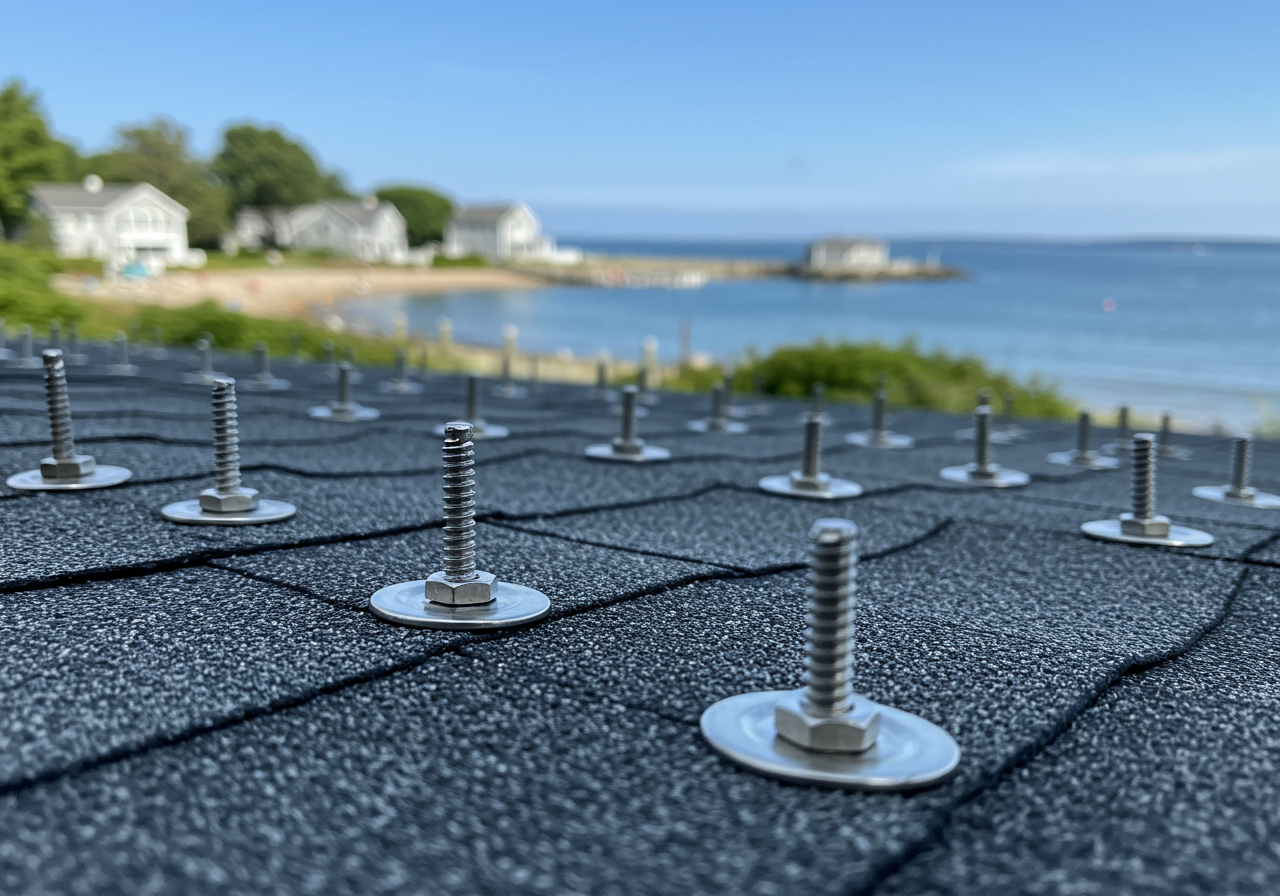
Coastal Protection in Action
A professionally installed architectural shingle roof in East Haven, featuring high-wind starter strips and salt-resistant flashing.
Financing, Tax Credits, and Line-Item Negotiation
Let's talk about the money. A proper coastal roof replacement in East Haven is going to run you anywhere from $12,400 to $28,700 depending on materials and square footage. When you see those 0% financing offers, remember my golden rule: Ask who pays for it. Most of the time, that "free" financing is bought by the contractor from the lender for a fee of 10-15% of the project cost. That fee is hidden in your labor or material markup.
I always tell homeowners to ask for the "cash price" first. Once you have that number, then talk financing. You might find that taking out a HELOC or using a personal loan is cheaper than the "0% deal" once you strip away the hidden markups. Furthermore, you should look into federal incentives. If you are installing certain energy-efficient shingles or solar-ready systems, you may qualify for a tax credit under the IRS Form 5695 instructions.
If you are dealing with a sudden leak or storm damage from a recent gale, don't wait for a slow quote. You need to address immediate storm repair needs before the salt water compromises your structural plywood. Waiting three weeks for a "preferred" contractor can lead to a $2,000 mold remediation bill on top of the roof cost.
Stop guessing what your East Haven roof should cost.
Get a real, data-backed estimate in seconds.
No credit card required • Free to use
The East Haven Maintenance Script: Protecting Your Investment
Once the new roof is on, your job isn't over. In East Haven, a "set it and forget it" mentality will cost you a decade of roof life. I tell my clients to perform a "post-winter audit" every March. You don't need to climb a ladder—a good pair of binoculars will do.
First, look at the flashing around the chimney. Is there any white powdering? That's oxidation. Second, check the gutters. In coastal CT, gutters don't just fill with leaves; they fill with "shingle grit" loosened by high winds and salt. If your gutters are heavy, they pull on the fascia, which opens up a gap for water to get behind your drip edge.
Third, look for "tabs" that are slightly lifted. If you catch a lifted shingle in March, a $15 tube of roofing cement can save you from a $500 "emergency" call-out in October. Being proactive isn't about being paranoid; it's about being the smartest person on your block with the lowest long-term housing costs.
Get Your Free Roof Quote
Enter your zip code to get started
In closing, your East Haven home deserves better than a "standard" roof. Don't let a contractor treat your coastal property like it's a hundred miles inland. Demand the stainless fasteners, insist on the high-wind attachment patterns, and never, ever accept a quote that doesn't break down the materials line by line. You've worked hard for your home; make sure your roof is working just as hard for you. If you're ready to see how the numbers look for your specific roofline, getting an instant estimate is the best way to start the conversation with the right data in hand.
FAQ

About Dana Jackson
Verified ExpertDana Jackson is a Homeowner Advocate & Cost Analyst who helps Connecticut families navigate the financial aspects of roofing projects. She specializes in finding the best value and avoiding common pricing pitfalls.