Key Takeaways
- Wet snow at 29°F can weigh up to 21 pounds per cubic foot, nearly triple the weight of dry powder.
- Homes built before the 1990s in Deep River may lack the hurricane clips and modern bracing required by current CT building codes.
- Ice dams, fueled by 90% humidity and freeze-thaw cycles, add localized 'point loads' that stress specific rafters more than uniform snow.
- Audible creaking or doors that suddenly stick are immediate red flags of structural roof stress.
"Most residential trusses in Connecticut are designed to handle a ground snow load of about 30 pounds per square foot, but that number is a ceiling, not a suggestion," a structural engineer once told me during a particularly nasty Middlesex County winter. He wasn't being dramatic. In Deep River, where the humidity off the Connecticut River often turns light flurries into heavy, saturated slush, that 30-pound limit is reached much faster than you'd think.
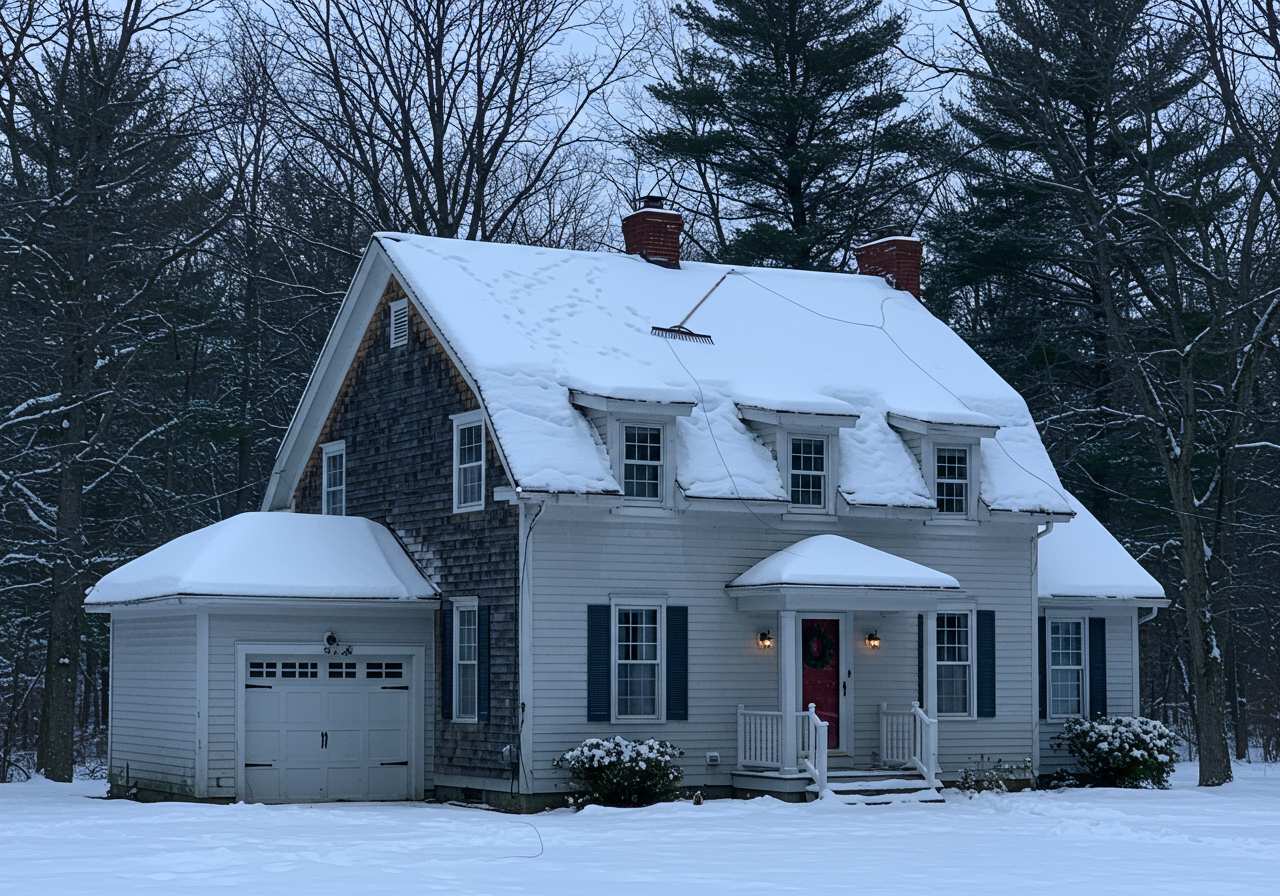
Snow Load Assessment for Deep River Homes
Understanding structural stress before it becomes a costly emergency.
The Physics of a Deep River Winter: Why 29°F Matters
Right now, the thermometer in Deep River is hovering at 29°F. To a casual observer, that's just "cold." To a roofing consultant, that's the danger zone. When the temperature sits just below freezing with 90% humidity, we aren't dealing with the fluffy "Champagne powder" you see in the Rockies. We're dealing with "heart attack snow."
Density and Weight Accumulation
Dry, new snow weighs roughly 7 pounds per cubic foot. However, the light snow showers we're seeing today, combined with the high moisture content from the Sound, create a much denser pack. Once that snow begins to settle and absorb rain or additional humidity, it can easily hit 20 or 21 pounds per cubic foot.
The Load Limit Calculation
If you have a 1,500-square-foot roof and six inches of that heavy, 21-pound snow, you're looking at over 15,000 pounds of additional weight sitting on your rafters. I've seen 19th-century Colonials near Main Street where the original hand-hewn rafters have started to check (split) under that kind of pressure because the wood has dried out over 120 years. According to the International Code Council, modern Connecticut homes are designed to handle these loads, but older structures may need reinforcement.
Structural Thresholds: Comparing Shingles to Metal
In my experience, the material you choose dictates how that snow load behaves. It's not just about what can hold the weight; it's about how the roof manages the shedding process.
Friction and Shedding Speed
Asphalt shingles are designed to be gritty. That's great for foot traffic during a repair, but it's a magnet for snow. Snow "grips" the granules, allowing it to stack higher and higher. Conversely, a standing seam metal roof has a much lower friction coefficient.
Snow Management: Shingles vs. Metal
| Feature | Asphalt Shingles | Standing Seam Metal |
|---|---|---|
| Snow Shedding | ||
| Ice Dam Risk | ||
| Weight (Material) | ||
| Structural Stress |
But here is the catch: when snow slides off a metal roof in Deep River, it comes down all at once. If you don't have snow guards installed, that 2,000-pound "roof avalanche" will take out your gutters, your bushes, or heaven forbid, your propane regulator.
Recognizing the Warning Signs of Roof Stress
Look, your house will usually tell you when it's hurting. You just have to know how to listen. I tell my clients to ignore the roof itself for a second and look at the interior of the home.
Interior Red Flags
If you notice new cracks in the drywall around your door frames, or if the door to your upstairs bathroom suddenly won't latch, that's often a sign that the roof load is compressing the wall studs. I once inspected a home near the Deep River Landing where the homeowner thought the house was "settling." In reality, the snow load on his low-slope addition was so great it was bowing the header over his sliding glass door.
Visual Cues from the Ground
Check your ridge line. Does it look like a straight edge, or is there a slight "swayback" appearance? Even a two-inch dip in the center of a roof can indicate that the internal bracing is failing. If you have a flat roof section, as noted in FEMA's low-slope protection guide, ponding water behind a snow bank is your number one enemy for structural collapse.
Never climb onto a snow-covered roof to shovel it yourself.
Mitigating Risk: Professional Clearing vs. Raking
When the snow hits the 12-inch mark, many Deep River residents reach for the roof rake. While raking the first three feet of the eaves can help prevent ice dams, it doesn't solve the structural load issue on the upper half of the roof.
The Problem with Uneven Loading
The biggest mistake I see is homeowners clearing only one side of the roof. This creates an "unbalanced load." Roof trusses are designed to handle weight evenly. When you clear the leeward side but leave two feet of snow on the windward side, you're putting massive torque on the peak of the roof.
Average Lifespan of CT Roof Materials
Why Professionals Matter
If you're worried about the weight, you need to connect with verified local contractors who understand how to clear a roof without damaging the shingles. One wrong move with a metal shovel can gouge your architectural shingles, leading to leaks the moment the thaw starts. Our contractor vetting process ensures you're matched with crews who carry the right insurance—which is vital, because if a "guy with a ladder" falls off your roof, that liability lands on your Deep River doorstep.
Ready to see where your roof stands?
Get an instant, honest estimate from local Deep River pros today.
No credit card required • Free to use
Long-term Structural Reinforcement and Assistance
If your roof is struggling every winter, it might be time to look at structural upgrades. This doesn't always mean a full replacement. Sometimes, it's about sistering rafters or adding collar ties in the attic to prevent the walls from spreading.
Get Your Free Roof Quote
Enter your zip code to get started
Preparing for 2026 and Beyond
The 29°F weather we're seeing today is just the beginning of the freeze-thaw cycle. With 90% humidity, that snow is going to turn into a block of ice by midnight. If you're lying in bed tonight listening to your rafters groan, don't wait for a ceiling crack to appear.
Final Verdict from the Field
Look, I've spent enough time in attics to know that a roof is a system, not just a layer of shingles. The interaction between the 5 mph winds we're seeing today and the way snow drifts into your roof valleys can create localized loads that no blueprint can perfectly predict. My advice? Document everything. Take photos of your roof before and after major storms. If you see something that looks off—a sagging gutter or a new interior crack—get a professional eyes on it immediately.
Deep River Snow Load FAQs

About Daniel Roberts
Verified ExpertDaniel Roberts is a Senior Roofing Consultant with over 15 years of experience in the New England residential construction industry. He specializes in storm damage assessment and energy-efficient roofing systems.