
Key Takeaways
- The Seasonal Premium: Booking during the "Spring Rush" (April–June) typically increases labor costs by 12-15% due to high demand in New Haven County.
- Thermal Sealing Threshold: Modern asphalt shingles require a consistent 40°F–45°F ground temperature to activate the adhesive strips properly.
- The March Advantage: Scheduling in early spring—like right now—often secures mid-season pricing before the post-tax-refund surge hits the market.
- Winter Hand-Sealing: While possible, roofing in temperatures below 35°F requires manual application of asphalt cement, which adds roughly $600–$900 in labor costs.
Most homeowners in the Elm City wait until they see a puddle in the attic or a neighbor's dumpster in the driveway before they start thinking about a replacement. That reactive mindset is exactly what leads to overpaying. The reality is that the "best" time to replace a roof in Connecticut isn't necessarily when the weather is at its peak, but when the intersection of material performance and contractor availability hits a sweet spot. In my experience auditing builds across Westville and East Rock, I've seen that timing the market can be just as important as choosing the right shingle. If you wait until the phones are ringing off the hook in May, you're not just fighting for a spot on the calendar; you're paying for the privilege of being there.
The Bottleneck Problem in New Haven County
Every year, like clockwork, the New Haven roofing market experiences a massive bottleneck between late April and early July. It's a combination of tax refund season and the first few heavy spring rains that expose the sins of a failing roof. When demand spikes, supply chain logic takes over—labor rates climb and the most reputable crews are booked out six to eight weeks. I've reviewed project files where the same 2,400-square-foot colonial in Hamden would cost $11,800 in March but jump to $13,400 by June.
The issue isn't just the price; it's the haste. When a crew is trying to knock out three roofs a week to keep up with a backlog, the small details—like the precise placement of a starter strip or the proper flashing around a chimney—can get rushed. I always tell people that finding a contractor who isn't overwhelmed is the best way to ensure your roof actually lasts the 25 years promised on the package. You want a team that isn't looking at their watch the entire time they're on your rafters.
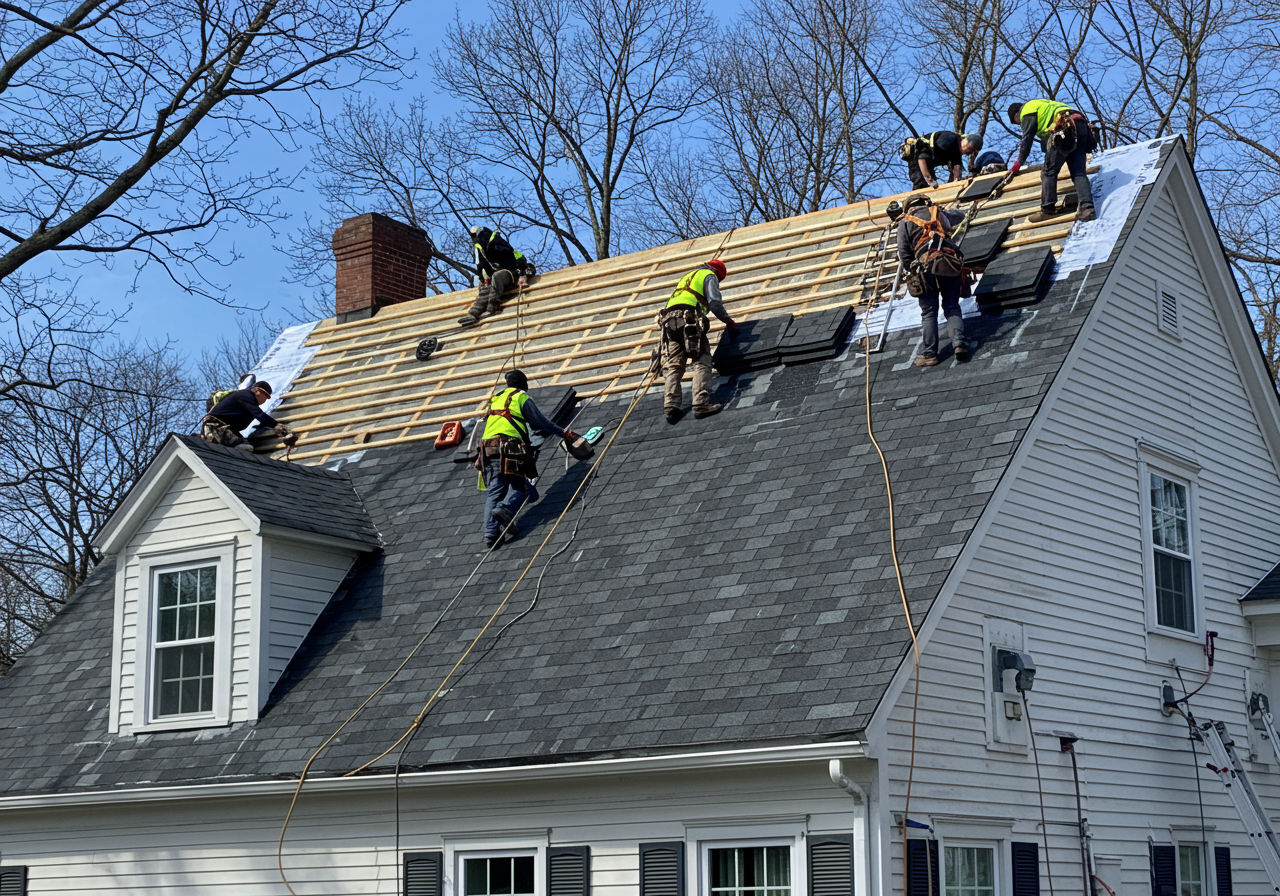
New Haven Roofing Timing Considerations
Understanding seasonal demand patterns can save homeowners thousands in labor costs
Why 40°F is the Magic Number for Asphalt
The physics of a roof depend heavily on ambient temperature. Most of the high-end architectural shingles we use in Connecticut—think GAF Timberline HDZ or CertainTeed Landmark—feature a self-sealing adhesive strip. This strip needs "thermal sealing" to bond the shingles together into a single, waterproof unit. Today's temperature in New Haven is 44°F, which is right on the edge of that functional window. If we install shingles when it's 25°F, they remain brittle and "unsealed" until the first warm week of spring.
The danger here is wind uplift. According to FEMA's hurricane mitigation guidelines, a shingle that hasn't properly bonded to the one beneath it is significantly more likely to tear away during high-wind events. With 68% humidity today and a light 5 mph breeze, the conditions are actually decent for a late-winter install, provided the sun is out to warm the shingle surface.
The Mid-March Sweet Spot
We are currently in what I call the "Shoulder Season." It's that period between the deep freeze of February and the chaos of April. For a New Haven homeowner, this is arguably the smartest time to pull the trigger. Contractors are looking to fill their early-season schedules, and material prices haven't yet seen their annual Q2 inflationary bump.
I recently consulted on a project near Lighthouse Point where the homeowner saved nearly $1,700 just by moving their start date from June to March. We didn't have to deal with the 90-degree heat that softens the asphalt and makes it prone to "scuffing" from the crew's boots. Plus, the lower humidity—unlike the swampy 90% we get in July—is much easier on the plywood decking if it's exposed for a few hours during the tear-off.
Pros and Cons of March Installations
Pros
- Lower labor costs due to off-peak demand
- Minimal risk of 'scuffing' shingles in high heat
- Faster project turnaround times
- Better attention to detail from non-rushed crews
Cons
- Occasional weather delays from spring rain
- Slower adhesive 'set' times compared to summer
- Potential for morning frost on steep pitches
Summer Risks: Heat, Humidity, and Scuffing
While summer is the most popular time for roofing, it's technically one of the most difficult environments for the materials. When the sun beats down on a charcoal-colored roof in July, the surface temperature can easily exceed 150°F. At that point, the asphalt becomes almost viscous. If a roofer pivots their foot too quickly, they can "scuff" the granules right off the shingle, shortening its lifespan before it's even day two.
Furthermore, high humidity can trap moisture in the attic space if the crew isn't careful about the timing of the ridge vent installation. Research highlighted by Energy Star's cool roof data suggests that proper ventilation and material handling in extreme heat are critical for long-term efficiency. If you must roof in the summer, I recommend ensuring the crew starts at 6:00 AM and wraps the heavy foot-traffic work by noon.
High Summer Temperature Risks
Winter Roofing: When You Can't Wait
Sometimes, you don't have the luxury of picking a season. If a limb from a New Haven oak tree comes down in January, you need emergency roofing services immediately. Can you roof in the winter? Yes, but it requires a different set of rules. I've overseen winter installs where we had to store the shingle bundles in a heated garage until the moment they went on the roof to keep them from cracking.
The big technical difference in winter is "hand-sealing." Since the sun won't melt the adhesive strips, each shingle needs two to four dabs of asphalt plastic cement applied manually. It's tedious work. If a contractor tells you they're doing a mid-January install and they aren't charging extra for hand-sealing, they're probably skipping that step—which means your shingles might blow into the neighbor's yard during the next nor'easter.
Relative Labor Demand & Cost (100 = Peak)
Making the Final Decision for 2026
If your roof is over 18 years old, you're playing a game of chicken with the Connecticut weather. My advice is to stop waiting for the "perfect" sunny week in June. The smartest move for your wallet is to aim for the windows where contractors are hungry—March, April, or late October. You'll get a more focused crew and likely a more competitive price.
To get a baseline of what you should be paying right now, I recommend getting an instant roofing quote that uses local New Haven data. It removes the guesswork and the "seasonal surge" pricing that some door-to-door sales guys try to bake in. Remember, a roof is a system, not just a shingle. Whether it's 44°F or 84°F, the quality of the installation is what determines if you'll be calling me again in ten years or thirty.
Get Your Free Roof Quote
Enter your zip code to get started