
Key Takeaways
- Synthetic materials like composite slate and shake offer a 50-year lifespan, nearly double that of high-end asphalt.
- These materials are significantly lighter than natural slate, often saving East Lyme homeowners $5,000+ in structural reinforcement costs.
- Class 4 impact ratings make synthetics ideal for coastal wind zones and potential hail during summer storms.
- Advanced UV inhibitors prevent the "fading" issues common in older plastic-based products from a decade ago.
There's a persistent whisper around Niantic Bay that if you aren't installing natural cedar or heavy, quarried slate, you're essentially putting a "fake" roof on your home. I've had neighbors in Black Point pull me aside, worried that choosing a synthetic material would make their beautiful coastal Colonial look like it was built from a kit. But here is the reality: modern composites are currently out-performing "the real deal" across New London County. The myth that synthetic means "cheap plastic" is a relic of the early 2000s. Today's materials are engineered to withstand the exact cocktail of salt air and January ice that East Lyme throws at us, often with a lifespan that leaves traditional asphalt in the dust.
1. Defining the Aesthetic: From Niantic to Flanders
When we talk about synthetic roofing, we're usually looking at two main contenders: composite slate and composite shake. For a town like East Lyme, where our architecture ranges from historic farmhouses near Flanders to sleek, modern coastal builds near the water, the choice is as much about the neighborhood's "feel" as it is about the price tag.
The "Faux" Factor and Curb Appeal
I remember visiting a project near Rocky Neck State Park last summer. The homeowners were torn between real cedar shakes and a synthetic alternative. They were terrified of that "shiny" look some older synthetics had. We looked at samples at sunset—the best time to judge texture—and you truly couldn't tell the difference from ten feet away. The deep shadow lines in modern molds capture the authentic "hand-split" look of wood without the inevitable silver-gray rot that sets in after a few damp Connecticut winters.
Matching Your Home's Personality
In East Lyme, we have a lot of Cape Cods and Colonials. A synthetic slate in a "multi-blend" charcoal or plum can give a modest Cape the gravity of a manor house. It's about how the roof meets the sky. Natural slate is gorgeous, but it's temperamental. Synthetics allow you to play with colors—greens, grays, and even earthy reds—that stay vibrant for decades.
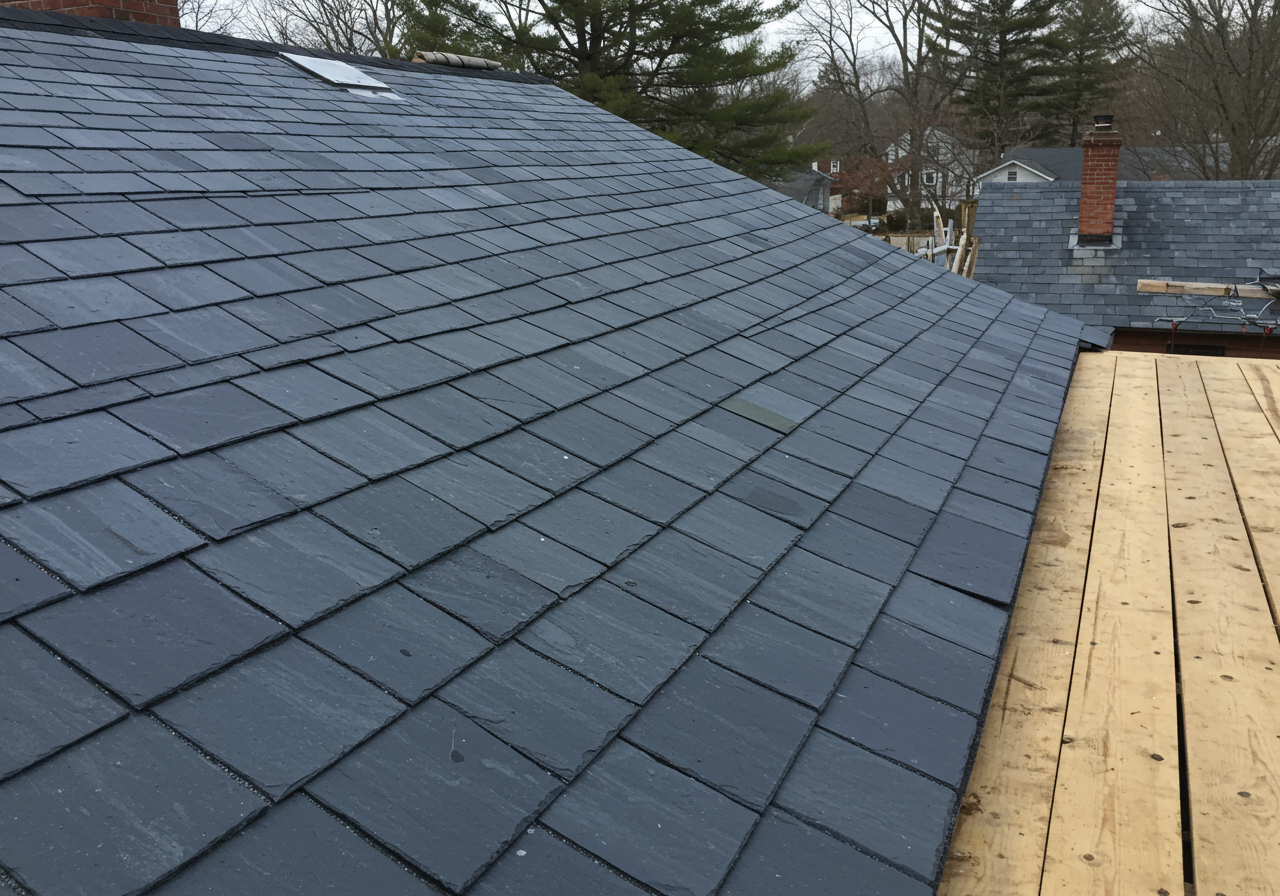
Modern Synthetic Roofing in East Lyme
Composite materials blend durability with authentic New England aesthetics
2. Durability Against the Long Island Sound
We aren't just choosing a roof for a sunny day in July; we're choosing it for the Nor'easters. The salt spray off the Sound is a quiet killer for traditional materials. It eats through the fasteners of real slate and accelerates the moss growth on cedar.
Salt and Wind Resistance
According to the Better Business Bureau's guidelines on home improvement, choosing materials rated for your specific climate is the first step in avoiding contract disputes later. For us, that means wind. Most high-end synthetics are tested for winds up to 110 or 130 mph. I've seen asphalt shingles peel back like a banana skin after a bad storm, but a properly locked-in composite tile stays put.
The Freeze-Thaw Cycle
January in East Lyme is a cycle of freezing and thawing. Natural stone can absorb microscopic amounts of water, which then expands and cracks the tile. Synthetics are non-porous. They don't absorb that moisture, meaning you won't find "shale" pieces in your flower beds after a particularly brutal winter.
3. The Weight Math: Saving Your Structure
This is the "boring" part of roofing that I actually find the most fascinating. If you wanted to put real slate on a house that was originally built for asphalt, you'd likely need an engineer to come in and tell you how to beef up your rafters. That is a massive hidden cost.
Skipping the Structural Overhaul
Natural slate can weigh 800 to 1,500 pounds per "square" (a 10x10 area). Synthetic slate usually weighs about 250 to 350 pounds. This is a game-changer for older homes in the East Lyme historic districts. You get the heavy-duty look without the heavy-duty weight.
Average Lifespan Comparison
Ease of Installation
Because they are lighter, they are easier for crews to handle. This doesn't just save time; it reduces the risk of accidents. When I'm looking at a job site, I always check if the crew is following OSHA fall protection standards because it's a sign of a professional operation. Lighter materials mean less fatigue for the installers, which generally leads to a much tighter, more precise fit around your chimneys and valleys.
4. Investment vs. Expense: The 2026 Price Reality
Let's be honest: synthetic roofing is an investment. It's going to cost more upfront than your standard architectural asphalt shingle. But if you're planning on staying in your East Lyme home for more than 15 years, the math starts to lean heavily in favor of composite.
Breaking Down the Quote
A typical asphalt roof in our area might cost between $12,000 and $18,000 depending on size. A synthetic roof could easily be $28,000 to $45,000. It's a jump, I know. But consider this: you will likely replace that asphalt roof twice in the time it takes for a synthetic roof to even start showing its age. Plus, you're adding significant resale value. I've seen buyers in the New London County market light up when they hear "50-year transferrable warranty."
The Energy Bonus
Learn more about proper insulation recommendations from the Department of Energy.
Finding the Right Team
You can't just hire anyone for this. Composite materials require specific flashing techniques and a different "feel" for the nail gun. This is why how our matching process works is so vital—we connect you with folks who actually have these specific materials in their portfolio, not just someone who says "yeah, I can probably do that."
Ready to see how synthetic slate or shake looks on your budget?
Get a real number from the pros who know East Lyme.
No credit card required • Free to use
5. Maintenance and Long-Term Care
One of my favorite things about synthetics is what you don't have to do. I spent years telling friends to treat their cedar roofs with preservatives or to be careful power-washing moss off their slate. With synthetics, your "maintenance" is basically a garden hose and a quick look-over once a year.
Keeping It Clean
Because the tiles are often made from recycled polymers and rubbers, they don't provide the organic "food" that moss and algae love. If you live in a heavily wooded part of East Lyme, like near the Pattagansett River, you know the green fuzz that takes over roofs. Synthetics stay much cleaner, much longer.
The Synthetic Trade-off
Pros
- Virtually zero maintenance required
- Highest fire and wind ratings
- Eco-friendly (often made from recycled materials)
- No structural reinforcement needed
Cons
- Higher initial cost than asphalt
- Requires specialized installation crews
- Long lead times for custom colors
The Final Walkthrough
Before you sign anything, I always tell people to ask for a "mock-up." Have the contractor lay out a square of the material on your actual roof deck. The way the light hits it at 4:00 PM in East Lyme is different than how it looks in a showroom in Hartford. It's your home's crown—make sure it shines the way you want it to.
Picking a roof is a big deal, and if you're feeling a bit overwhelmed by the choices, that's completely normal. Whether you're in a shoreline cottage or a sprawling colonial, the goal is a roof that lets you sleep through a storm without a second thought. If you're ready to move past the guesswork, you can connect with verified local contractors who specialize in high-durability materials and get a clear picture of what's possible for your home.
Frequently Asked Questions
Get Your Free Roof Quote
Enter your zip code to get started