
Key Takeaways
- Synthetic materials like polymer-based slate or cedar shakes can last 50+ years, nearly tripling the lifespan of standard asphalt.
- While the upfront cost is higher, the 'cost-per-year' is often lower due to minimal maintenance and zero rot risk.
- In Colchester's historic districts, synthetic slate offers a period-correct look without the massive weight of real stone.
- Proper installation requires specialized knowledge, making it vital to connect with crews experienced in composite materials.
Walking through the Colchester Town Green on a crisp January morning, I can't help but admire the character of the homes lining our historic district. There's a certain gravity to those old New England rooflines. Last year, a friend of mine near the Salmon River State Forest was agonizing over her roof. She loved the look of natural cedar shakes—that rustic, weathered charm—but she absolutely loathed the idea of moss, curling, and the constant fear of a stray chimney spark. We sat on her porch with mugs of coffee and looked at a sample of synthetic composite. I told her then what I'll tell you: we aren't just picking a shelter; we're choosing how much time we want to spend worrying about our house over the next three decades. Synthetic roofing is the ultimate "set it and forget it" design choice for our corner of Connecticut.
1. The Design Magic of Modern Composites
Most people hear "synthetic" and think of something cheap or plastic-looking. But honestly? The technology has leaped forward so fast that I've stood on driveways in Colchester and couldn't tell the difference between real Buckingham slate and a high-end polymer replica from ten feet away. For homeowners in New London County, this is a game-changer for curb appeal. If you have a stately Victorian or a sprawling Colonial, natural slate is often too heavy for the existing rafters to support without a $12,000 structural reinforcement.
Synthetics solve that. They are molded from actual pieces of slate and wood, capturing every cleft, grain, and imperfect edge. I always tell my neighbors to think of their roofline as a conversation with the rest of the block. You want to honor the neighborhood's history without being a slave to the maintenance schedules of the 19th century. Plus, these materials come in "cool roof" colors that help manage heat, which research from Energy Star shows can actually keep your attic temperatures more stable during those humid July stretches we get after the snow melts.
Material Comparison: Real vs. Synthetic
| Feature | Natural Slate | Synthetic Slate | Asphalt Shingles |
|---|---|---|---|
| Expected Lifespan | 75-100 Years | 50 Years | 15-25 Years |
| Weight per Square | 800-1,500 lbs | 250-350 lbs | 200-300 lbs |
| Initial Cost | Very High | Moderate-High | Low-Moderate |
| Maintenance | High (cracks) | Very Low | Moderate |
2. Standing Up to the Connecticut Freeze-Thaw
January in Colchester isn't just about the cold; it's about the constant fluctuation. One day it's 38 degrees and raining, the next it's 14 degrees and icing over. That cycle is brutal on natural materials. Real wood shakes soak up moisture, freeze, and then crack as they expand. Synthetic shingles, usually made from a mix of recycled poly-olefins and rubber, are essentially impervious to moisture. They don't "breath" in a way that allows rot to take hold.
I remember a project over on Old Hartford Road where the homeowner was tired of finding bits of gray asphalt grit in their downspouts every spring. That's the sign of a roof literally washing away. Synthetic tiles don't lose granules because the color and protection are baked into the entire thickness of the shingle. It's a level of durability that feels right for our climate. You won't be out there with a roof rake every time we get six inches of heavy, wet snow, worrying if a tile is going to snap under the weight.
"In my 17 years of inspecting New London County homes, the biggest shift I've seen is the move toward polymer-based materials. They handle the ice damming issues we see in Colchester much better than traditional materials because the surface is naturally more slick and resistant to water penetration."
3. The Real Math of a 50-Year Investment
Let's talk about the elephant in the room: the price tag. A synthetic roof in Connecticut usually costs about 2 to 3 times more than a standard architectural asphalt roof. If a basic roof is $11,400, a synthetic version might be $28,750. But here's the trick I used when helping my sister decide on her renovation: you have to look at the "replacement horizon." If you plan on staying in your home for more than 15 years, the synthetic roof is actually the cheaper option.
An asphalt roof is a "twice-in-a-lifetime" purchase for many. A synthetic roof is a "once-and-done." When you factor in the lack of repairs—no more replacing three blown-off shingles after a windstorm—the numbers start to lean in your favor. Plus, the resale value in a market like Colchester is significant. Buyers here are savvy; they know a 50-year roof means they won't have to deal with a massive capital expense for as long as they own the home. To see how these numbers fit your specific house, you can get an instant roof estimate to compare the tiers of materials.
Roofing Lifespan Comparison (Years)
4. Safety, Sustainability, and State Standards
I'm a bit of a stickler for the fine print. One of the things I love about synthetic roofing is the Class A fire rating. Natural cedar shakes are basically kindling if a neighboring chimney sends out a spark. Synthetics are engineered to be fire-retardant. It's a peace-of-mind factor that's hard to put a price on, especially if you live in more wooded areas near the state forest.
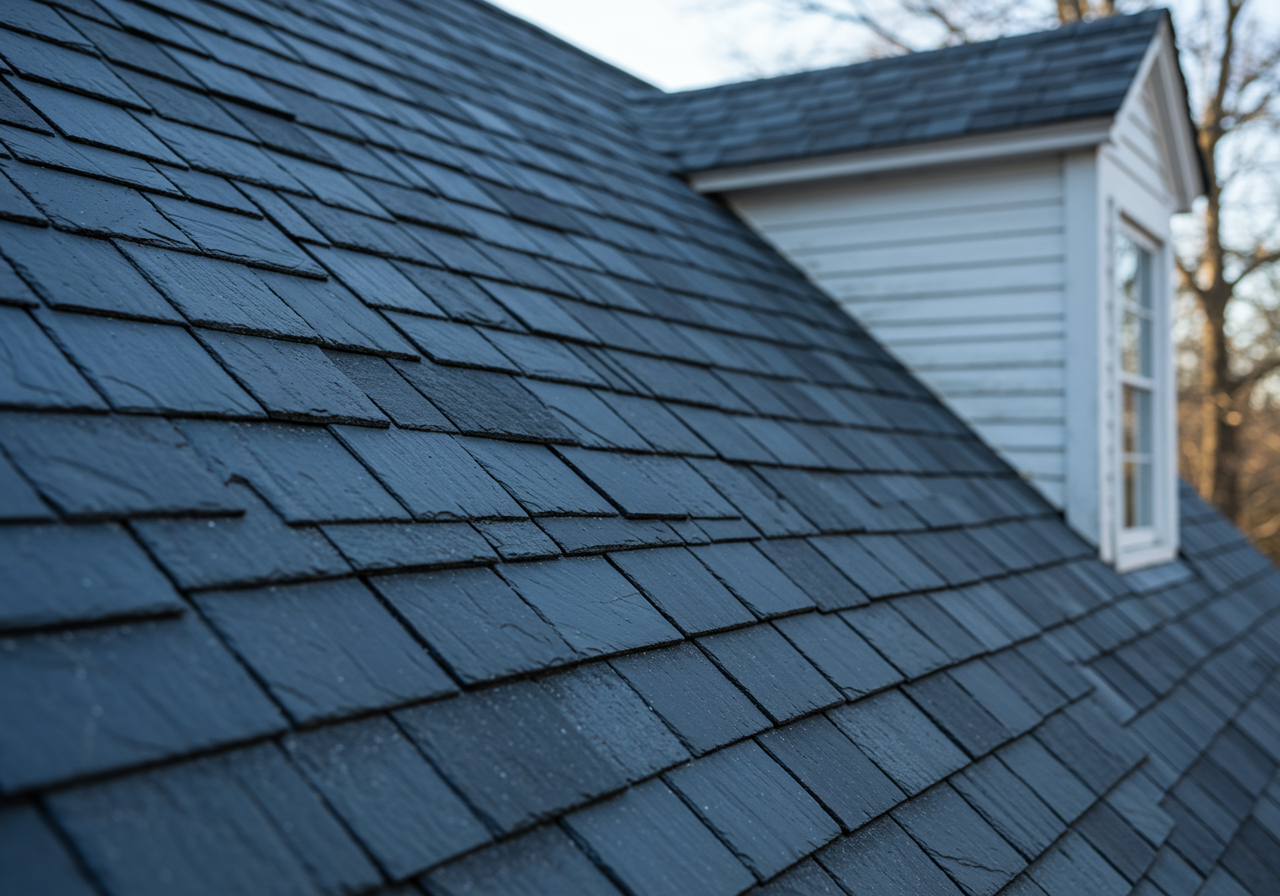
A close-up of charcoal gray synthetic slate tiles showing realistic texture and staggered edges
Modern synthetic slate offers the deep textures of natural stone without the structural burden.
Also, it's worth noting that Connecticut has some of the most robust consumer protections in the country. If you're hiring a crew to install these high-tech materials, they must be registered with the state. I always recommend checking the CT.gov Home Improvement laws to ensure your contractor is playing by the rules. Synthetic installation isn't the same as slapping down asphalt; it requires specific flashing techniques and a crew that understands how the material expands and contracts. Make sure they are following OSHA guidelines for safety, too—a professional crew is a safe crew.
5. Finding the Right Hands for the Job
I've seen too many homeowners buy top-tier materials only to have them ruined by a "jack-of-all-trades" who's never touched a composite shingle before. Synthetic tiles need to be spaced precisely to allow for thermal expansion. If they're nailed too tight, they'll buckle when the July sun hits them. If they're too loose, they won't create that watertight seal we need for those February northeasters.
When you're ready to move forward, don't just pick the first name in the phone book. You need someone who treats your roof like a specialized piece of engineering. I'm a big fan of how we do things at ZikQuote because we don't just give you a list of names; we match you with people who actually know these systems. You can learn how our matching process works to see why we're so picky about the contractors we let into the network. It's about making sure your 50-year roof actually lasts those 50 years.
Get Your Free Roof Quote
Enter your zip code to get started
In the end, choosing a roof in Colchester is about balancing that beautiful New England aesthetic with the reality of our weather and your long-term budget. Whether you go with a slate-look polymer or a cedar-style composite, you're making a choice that honors your home's design and your own peace of mind. Take your time, look at the samples in the natural light of your own driveway, and choose the one that makes you smile every time you pull into the garage.