
Did you catch the recent local news about the historic restoration project over near the West End? There was a bit of a buzz on the neighborhood boards because they chose a composite material for a home that traditionally would have required heavy, expensive slate. It's a conversation I'm having more and more often with friends and neighbors here in Hartford. We want that timeless, classic aesthetic that matches our historic streetscapes, but we're increasingly tired of the maintenance nightmares that come with 100-year-old material technology.
The reality is that our Connecticut weather is getting more unpredictable. Between the heavy dampness of our February thaws and the occasional battering from high-wind events, your roof is under constant siege. If you've been looking at your neighbors' gorgeous slate roofs with a mix of envy and "glad I don't have that repair bill," synthetic materials might be the middle ground you've been looking for. Honestly, the technology has come so far that even from the sidewalk, it's nearly impossible to tell the difference between a high-end polymer and the real thing.
Key Takeaways
- Synthetic roofing offers the look of heavy slate or cedar shake at roughly 25% of the structural weight.
- Most composite materials are rated for 50-year lifespans, making them a "one and done" investment for Hartford homeowners.
- Class 4 impact resistance is standard, providing a significant defense against the hail and wind debris common in Hartford County.
- Installation requires specific expertise to ensure the "staggered" look doesn't end up looking like a DIY plastic kit.
The Fragility of Tradition: Why Slate and Shake Falter
I recently walked a property with a homeowner whose beautiful cedar shake roof was literally curling at the edges like a burnt piece of toast. It was only 14 years old. In our climate, natural materials are beautiful, but they are high-maintenance. Real slate is stunning, but it's incredibly heavy—sometimes requiring extra structural bracing that can add thousands to a project. And cedar? If you aren't treating it regularly, the Hartford humidity will turn it into a moss garden before you've finished paying off the mortgage.
The problem isn't just the looks; it's the hidden failure points. Real slate can crack if a branch falls on it, and finding a matching replacement piece that isn't a different shade of gray is like looking for a needle in a haystack. For many of us living in older Hartford homes, the structural load of real slate (which can weigh 800 to 1,500 pounds per square) is simply too much for rafters that have already been supporting the house for 80 years.
"I've seen dozens of Hartford County homes where the original rafters have started to 'smile' or sag because they weren't built for the weight of genuine slate. Switching to a synthetic composite isn't just a design choice; it's a structural relief."
The Synthetic Solution: Modern Science Meets Hartford Curb Appeal
Enter the world of polymers and composites. These aren't the "plastic" roofs of thirty years ago. Most modern synthetics are made from a mix of recycled resins and limestone. They are molded from actual pieces of slate or hand-split cedar, capturing every ridge and imperfection. The goal is to provide that "Prospect Avenue" look without the "Prospect Avenue" maintenance budget.
What I love about these materials is their resilience. Most are rated for Class 4 impact—the highest rating available. This means when we get those weird spring hailstorms or flying debris from a summer nor'easter, your roof isn't just a pretty face; it's a shield. According to FEMA's hurricane mitigation guide, choosing impact-resistant materials is one of the smartest ways to reinforce a sloped roof against high winds.
Natural vs. Synthetic Roofing
| Feature | Natural Slate | Synthetic Composite |
|---|---|---|
| Lightweight | ||
| High Impact Resistance | ||
| Long Lifespan (50+ years) | ||
| Low Maintenance | ||
| High Recycled Content |
Structural Relief: Why Your Rafters Might Thank You
The biggest "aha!" moment for many Hartford homeowners happens when we talk about the weight. A typical asphalt shingle roof weighs about 230 pounds per square (a 10x10 area). Real slate can be five times that. Synthetic slate, however, usually clocks in around 280 to 350 pounds. This means you get the deep shadows and luxury texture of slate without having to hire an engineer to tell you if your attic is going to collapse.
I remember a project last year where the couple wanted that heavy, "old-world" look but their 1920s Tudor couldn't handle the load. By opting for a high-quality composite, they saved nearly $9,800 just in structural reinforcement costs. That's money that went straight back into their landscaping budget. If you're curious about how a lighter material might change your project's bottom line, finding a contractor who understands composite systems is the first step to getting an accurate assessment.
Material Lifespan in Connecticut Climate (Years)
Weathering the Connecticut "Mix": Wind and Ice Resilience
In Hartford, we don't just get snow; we get that heavy, wet "mix" that turns into an ice dam by morning. Synthetic materials are generally non-porous. Unlike real wood, which absorbs moisture and expands, or real slate, which can trap water in its layers and delaminate during a freeze-thaw cycle, composites stay stable. They don't absorb water, period.
This moisture resistance is also a win for energy efficiency. Some synthetic brands are specifically engineered to reflect heat, which is a blessing during those humid Hartford Julys. Research from the Energy Star cool roof consumer guide highlights how reflective surfaces can significantly lower the "heat island" effect in urban and suburban areas.
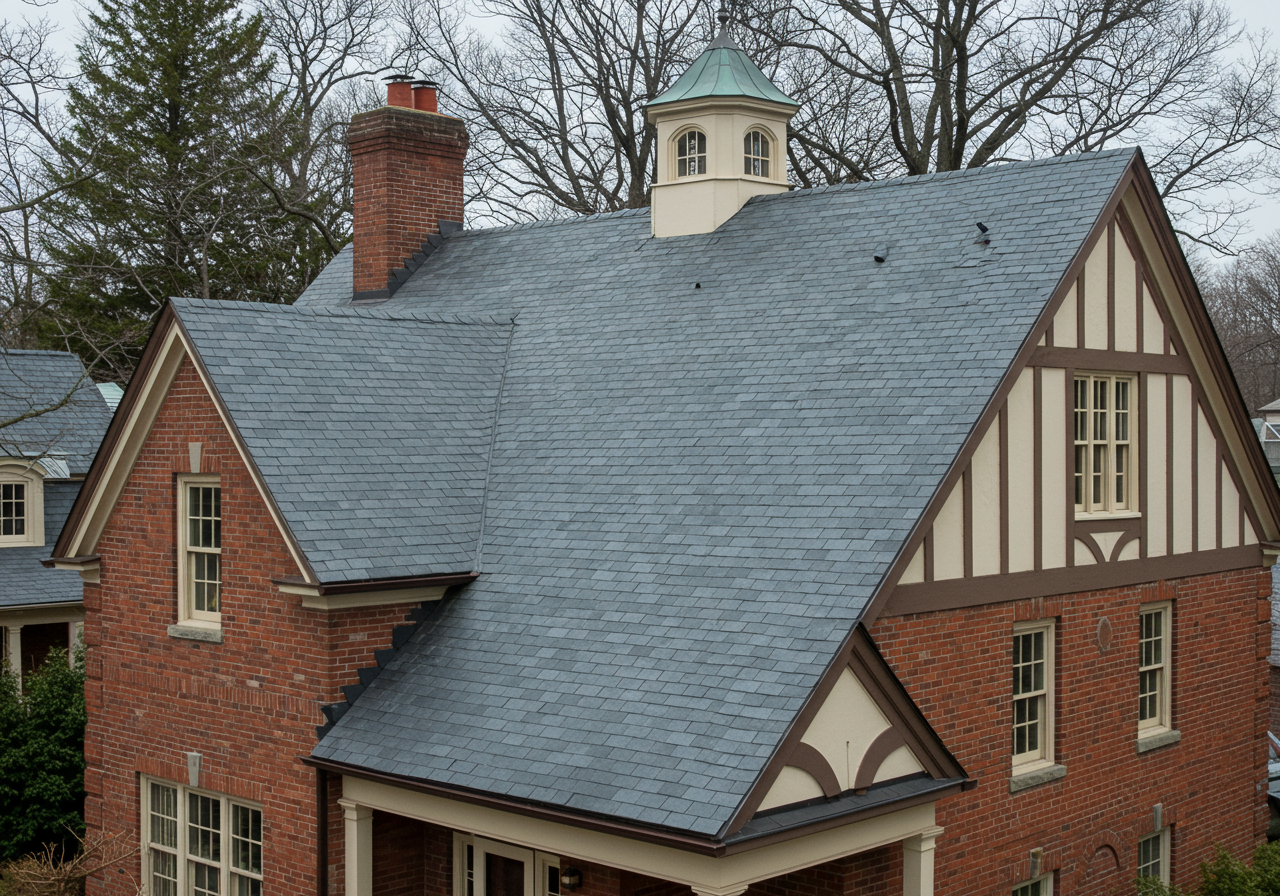
Synthetic Roofing in Hartford
Modern composite materials offer durability and classic aesthetics
The Design Conversation: Matching the Hartford Aesthetic
Let's talk curb appeal, because in neighborhoods like Elizabeth Park or Blue Back Square, the look matters. The "conversation with your block" is real. If you pick a roof that looks too modern or flat, it can clash with the historic charm of the neighborhood. Synthetic slate comes in a variety of widths and "chisel marks" that mimic the handcrafted look of the 19th century.
One thing I always tell my friends: don't just look at a single sample shingle. Ask the contractor to show you a "mock-up" or a photo of a full roof they've done locally. The way the light hits a synthetic roof at 4:00 PM in October is different than how it looks under a fluorescent light in a showroom. You want those deep shadow lines that define a high-end roof.
The 'Stagger' Secret
Breaking Down the $21,450+ Investment Reality
I won't sugarcoat it: synthetic roofing is an investment. It's significantly more expensive than standard asphalt shingles—often double or triple the cost. For a mid-sized home in Hartford County, you might be looking at a range between $21,450 and $44,800 depending on the pitch of your roof and the specific brand of composite you choose.
But you have to look at the "cost per year." If an asphalt roof lasts 20 years and costs $15,000, and a synthetic roof lasts 50 years and costs $30,000, the synthetic is actually the cheaper option over the long haul. Plus, many insurance companies in Connecticut offer premium discounts for Class 4 impact-rated roofs. It's worth a call to your agent once the job is done. If you're ready to see how the numbers look for your specific roofline, ZikQuote's instant estimate tool can give you a baseline without the high-pressure sales pitch.
Did You Know?
Many synthetic roofing tiles are made from up to 80% post-industrial recycled materials, like recycled tires and plastics, making them one of the most eco-friendly 'luxury' roofing choices on the market today.
Get a Price for Your Hartford Home
Stop guessing and start planning. Get a real estimate for synthetic roofing from vetted local pros who know how to handle high-end materials.
No credit card required • Free to use
Finding the Right Hands for Your Roof Line
The biggest risk with synthetic roofing isn't the material; it's the person holding the nail gun. Because these shingles are specialized, they have specific "expansion and contraction" requirements. If they are nailed too tight or too loose, the Connecticut seasons will cause them to buckle or gap. You need a crew that has been specifically trained by the manufacturer.
I always suggest checking if the contractor is a "Certified Installer" for brands like DaVinci or EcoStar. It usually means they've gone through the extra training to ensure the warranty stays valid. If you find yourself in a situation where a storm has exposed your current roof's weaknesses, don't rush into a quick fix. Even for high-end materials, starting with a verified local contractor ensures you aren't just getting a roof, but a long-term structural solution.
Get Your Free Roof Quote
Enter your zip code to get started
It's a big decision, I know. But every time I drive past a home with a perfectly executed synthetic slate roof, I'm reminded that we don't have to choose between history and technology. We can have the look of the past with the peace of mind that only modern engineering provides. Your home is likely your biggest investment; it deserves a roof that can go the distance.