Most Enfield homeowners I talk to think Energy Star labels are strictly for refrigerators and dishwashers. They see that little blue sticker and assume it means "plugs into a wall." That is a massive misconception that costs local families hundreds of dollars every single year in unnecessary cooling costs. When you're standing on Pearl Street looking at a beautiful row of colonial homes, you aren't thinking about "solar reflectance," but your roof certainly is.
Contrary to what the guy at the big-box store might tell you, an Energy Star rated roof isn't just about keeping a house cool in a Georgia heatwave. In our corner of Connecticut, where the March sun starts gaining strength even while there's still slush on the ground in Hazardville, these materials are about managing the thermal load of your entire attic space. It's not a gimmick; it's physics. And frankly, if you're replacing a roof in 2026 without looking at these standards, you're essentially building a giant heat-trap over your head.
Key Takeaways
- Energy Star shingles can reduce roof surface temperatures by up to 45°F during peak Connecticut summer days.
- Enfield residents may qualify for specific federal tax credits (like the 25C credit) when choosing certified reflective materials.
- Local climate data shows that "cool roofs" help extend the life of your HVAC system by reducing the attic heat load.
- Not all "white" roofs are Energy Star, and many modern "cool" shingles come in dark, aesthetically pleasing colors.
The Myth of the "Winter Penalty" in Hartford County
One of the biggest hurdles I encounter is the "winter penalty" theory. I've heard it at town meetings and local coffee shops from Scitico to Thompsonville: "Noah, won't a cool roof make my house freezing in January?" It sounds logical on the surface. If the roof reflects heat in the summer, won't it reflect the "good" heat from the sun in the winter?
The reality is far more lopsided. In Enfield, our winter sun is low on the horizon, the days are short, and—most importantly—your roof is often covered in a layer of snow. The amount of "passive solar heating" you get from a dark roof in a Connecticut December is negligible compared to the massive heat gain you suffer through in July and August. I've looked at the thermal imaging from homes near the Big Y on Palomba Drive; the heat trapped in a standard attic during a humid CT summer is enough to make an air conditioner cry for mercy.
But when you switch to a reflective shingle, you're tackling the season where your utility bills are most volatile. We're talking about a significant reduction in the "Urban Heat Island" effect, even in our smaller suburban pockets. And since we're seeing more humid, tropical-feeling summers lately, that reflectivity is your first line of defense.
Cool Roof Performance in Enfield
Reflective shingles cut summer attic heat load while Connecticut’s low winter sun and snow cover limit the so-called winter penalty.
Decoding the 2026 Energy Star Requirements
If you're diving into the technical specs, you'll see two main numbers: Solar Reflectance and Thermal Emittance. Don't let the jargon scare you off. Solar reflectance is simply how much of the sun's energy the roof bounces back into the sky (like wearing a white t-shirt). Thermal emittance is how quickly the roof sheds the heat it does absorb (like how a cast-iron skillet stays hot while a ceramic plate cools down).
Did You Know?
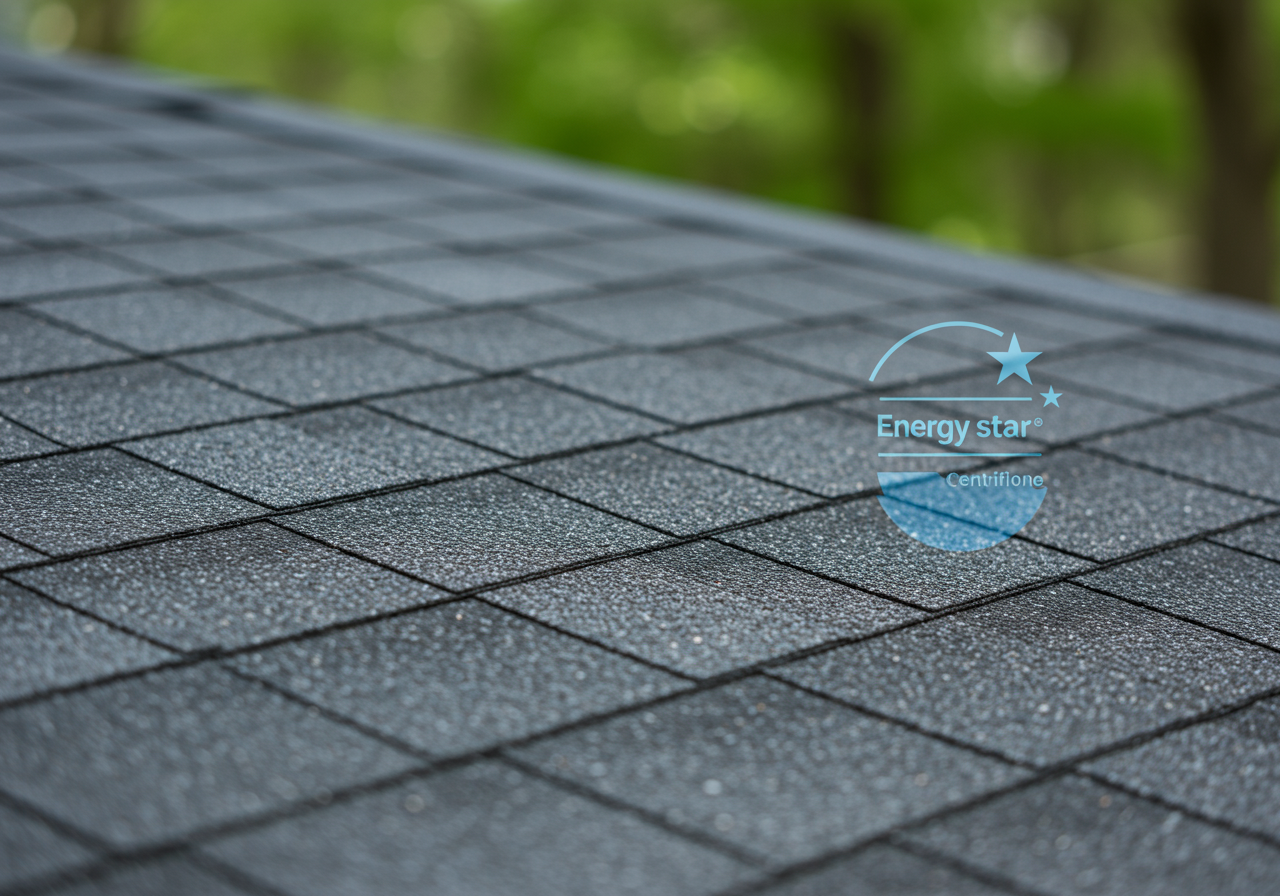
Modern Energy Star shingles use specially coated granules that reflect infrared light. This allows you to have a dark charcoal or 'Enfield Slate' look while still achieving high reflectivity. You no longer have to settle for a stark white roof to be energy efficient.
The standards for 2026 have tightened up. The International Code Council (ICC) publishes the I-Codes that drive higher efficiency expectations in residential zones, and Energy Star has followed suit. To get that label now, shingles have to maintain their reflectivity for years, not just when they're fresh out of the bundle. I always suggest that homeowners browse our long-form roofing guides and material explainers to see how these specific material changes impact the total cost of a project over twenty years.
Why March is the Critical Planning Month for Enfield
I've always said that the best time to think about your roof is when the ground is still waking up. In March, the contractors in Hartford County are starting to fill their summer calendars. If you wait until the first 90-degree day in June to realize your attic is a sauna, you'll be at the back of a very long line.
Planning an Energy Star upgrade now gives you time to vet the materials. You want to make sure your contractor isn't just upselling you on "fancy shingles" but is actually providing a certified product. I've seen cases where people paid a premium for "cool" shingles that weren't actually on the EPA's certified list. It's frustrating to watch a homeowner spend an extra $1,340 on a promise that doesn't show up on their electric bill.
"In Enfield, the difference between a standard asphalt roof and an Energy Star rated system can be the difference between an attic that hits 145°F and one that stays at 115°F. That 30-degree swing changes the lifespan of everything in your home, from your rafters to your AC compressor."
The Financial Breakdown: Rebates and Real Savings
Let's talk dollars. An Energy Star roof generally carries a premium—usually around 10% to 15% more than standard architectural shingles. For a typical 2,400-square-foot home in Enfield, that might look like an additional $945 to $1,580 in material costs.
But you have to look at the offsets. Between federal tax credits and the reduction in peak cooling loads, the "payback" period is often shorter than most people realize. In my experience, homeowners who switch to high-reflectivity shingles see a drop of about 7% to 12% in their summer electricity usage.
Standard vs. Energy Star Roofing in Enfield
| Feature | Standard Asphalt | Energy Star Shingles |
|---|---|---|
| Eligible for federal energy-efficiency tax credits when rules apply | ||
| Certified for elevated solar reflectance (Energy Star) | ||
| Designed to cut peak summer attic heat load vs typical dark asphalt |
| Feature | Standard Asphalt | Energy Star Shingles |
|---|---|---|
| Solar reflectance (typical range) | 10–15% | 25–65% |
| Attic temp reduction | Minimal | 20°F – 45°F |
| Expected lifespan (general band) | 20–25 years | 25–30 years |
And don't forget the "invisible" savings. A cooler roof doesn't just save on electricity; it prevents the shingles from "cooking" themselves. Heat is the primary cause of shingle degradation. By reflecting that energy, you're literally adding years to the life of the roof. If you want to see what others in the area are paying, you can read recent install experiences from Connecticut homeowners. It helps to have a baseline of real-world costs before you start signing checks.
Compare Energy Star Roof Quotes
Get aligned numbers from pros who install certified cool-roof systems.
No credit card required • Free to use
Finding a Contractor Who Actually Understands Enfield Codes
This is where things get tricky. Not every roofer in the Enfield area is well-versed in high-performance materials. Some old-school guys will tell you "a shingle is a shingle," and that's a red flag. You need someone who understands proper ventilation—because even the best Energy Star shingle will fail if your soffit and ridge vents aren't balanced.
Before you hire anyone, I cannot stress this enough: verify the contractor's license through Connecticut eLicense. It takes two minutes and saves a lifetime of headaches. In Enfield, we have specific wind-load requirements because of our position in the valley, and you want a pro who knows how to nail these shingles for high-wind performance as well as thermal efficiency.
I also recommend checking the Better Business Bureau home improvement listings to ensure the company has a track record of honoring warranties. Energy Star shingles often come with specific manufacturer warranties that require precise installation methods. If your roofer cuts corners, that "lifetime" warranty might be worthless. I always tell my neighbors to start with vetted, licensed Connecticut roofers and check references specifically for energy-efficient projects.
Pro Tip
The Long-Term Climate Strategy for Your Home
We're living in a time where the "standard" isn't enough anymore. The climate in Connecticut is shifting, and our homes need to keep up. Choosing an Energy Star roof in 2026 isn't just about being "green"—it's about building a resilient structure that can handle the intensifying summer heat without breaking your bank account.
When I look at the historical weather data for Hartford County, the trend is clear: we're seeing more days above 90°F than we did twenty years ago. A roof you install today needs to be ready for the weather of 2036 and 2046. By investing in reflectivity now, you're essentially future-proofing your property value.
And let's be honest, a home that stays naturally cooler is just more comfortable to live in. No one wants to spend their July weekends in a house where the upstairs feels like an oven. Take the time to do the research, get the right materials, and find a pro who understands the science.
Get Your Free Roof Quote
Enter your zip code to get started
Conclusion
Transitioning to an Energy Star rated roof is one of the smartest moves an Enfield homeowner can make in 2026. By debunking the "winter penalty" myth and focusing on the long-term cooling benefits, you're setting your home up for decades of efficiency. Remember to look for that Solar Reflectance Index (SRI) on the packaging, verify your contractor's credentials, and don't be afraid to ask for the data. If you're ready to stop the "attic bake" this summer, ZikQuote can help you get a straight answer on costs and match you with a verified pro who knows exactly how to handle high-performance materials.
FAQ

About Noah Knight
Verified ExpertNoah Knight is a Connecticut Weather & Climate Specialist who helps homeowners understand how New England's unique weather patterns affect their roofing systems. He combines meteorological knowledge with practical home maintenance advice.