
Key Takeaways
- Real cedar requires specific North Haven climate maintenance (moss and mold are the main enemies).
- Synthetic alternatives can offer 50-year lifespans with the same aesthetic 'silvering' effect.
- North Haven zoning and insurance premiums are shifting—always verify coverage for wood roofs.
- A localized contractor match is the only way to get a realistic estimate for specialty materials.
Imagine you're taking a stroll through the leafy streets near Ridge Road on a crisp January morning. You see it—that one house with the stunning, weathered cedar roof that looks like it belongs on the cover of a coastal magazine. It has that silvery-gray patina that only real wood can achieve, and for a second, you're ready to call a contractor. But then, you notice the slight curling on the edges of the shingles near the chimney, or perhaps a hint of green moss creeping up the North-facing slope where the oak trees hang heavy.
That's the "Cedar Conflict" so many of us in North Haven face. We want that organic, high-end texture that complements our New England architecture, but we live in a state where the damp winters and humid summers treat wood like a snack. This month, I've been looking into how we can keep the style we love without signing up for a maintenance nightmare.
The Weathering Reality of Wood in New Haven County
The first thing we have to talk about is how cedar actually behaves once it's on your rafters. Unlike asphalt shingles that pretty much look the same for a decade, cedar is a living material. It breathes. In our corner of Connecticut, a new cedar roof will transition from a warm honey-gold to a sophisticated gray within about 18 to 24 months.
The problem I often see in neighborhoods like Montowese is that this weathering isn't always uniform. If one side of your home is shaded by those beautiful North Haven maples while the other gets blasted by the afternoon sun, your roof is going to look like two different projects. Moisture trapped under the snow in January can lead to "cupping" or "splitting" if the shakes weren't installed with enough breathing room. I recently visited a friend who was frustrated because her five-year-old roof was already showing signs of rot in the valleys. It wasn't the wood's fault; it was a lack of airflow—a classic CT installation oversight.
The Moisture Trap
The Maintenance Burden Most Homeowners Underestimate
Let's be honest: most of us want a "set it and forget it" roof. Cedar is not that. To get the 25 to 30 years out of wood that you're paying for, you need a relationship with your roof. That means every few years, you're looking at professional cleaning to remove lichen and moss, and potentially a topical preservative treatment.
I've looked at the numbers for local upkeep, and for a standard 2,400-square-foot North Haven colonial, you might spend $740 to $1,200 every few seasons just on specialized debris removal and zinc strips to prevent algae. It's a design choice, yes, but it's also a line item in your annual budget. If you skip this, the cedar becomes brittle. And in Connecticut, a brittle roof is an open invitation for a heavy February ice dam to do some serious internal ceiling damage.
Expected Roof Lifespan in CT Climate
Navigating the Insurance and Fire Code Maze
Here is something a lot of people don't realize until they're deep in the process: insurance companies in New England are getting "picky" about wood. Because cedar is inherently combustible, some carriers are raising premiums or even refusing to cover homes with wood shakes unless they carry a Class A fire rating (which involves a very specific underlayment system).
Before you fall in love with a particular bundle of shingles at the lumber yard, check your policy. I spoke with a homeowner near Wharton Brook who was shocked to find her annual premium would jump by $640 just for switching from asphalt to cedar. It's vital to understand Connecticut home improvement protections when signing contracts for these specialty installs, as the requirements for fire-treated wood can change your bottom line by thousands.
The Modern Solution: Synthetic Cedar Alternatives
If you love the look but the maintenance makes your head spin, we need to talk about synthetics. Materials like DaVinci or Brava have come a long way. They are molded from real cedar pieces, so the grain looks authentic, but they're made of composite polymers.
From the curb, most of your neighbors won't be able to tell the difference. I recently saw a home in the Clintonville area that used a "multi-width" synthetic shake in a weathered gray. It looked spectacular. The best part? It has a Class 4 impact rating, meaning if we get a nasty spring hail storm, those shingles aren't going to crack like natural wood might. Plus, they often qualify for "cool roof" designations which, as Energy Star notes regarding reflective roofing, can help keep your attic temps down during those muggy July weeks.
The Architectural Impact of Texture
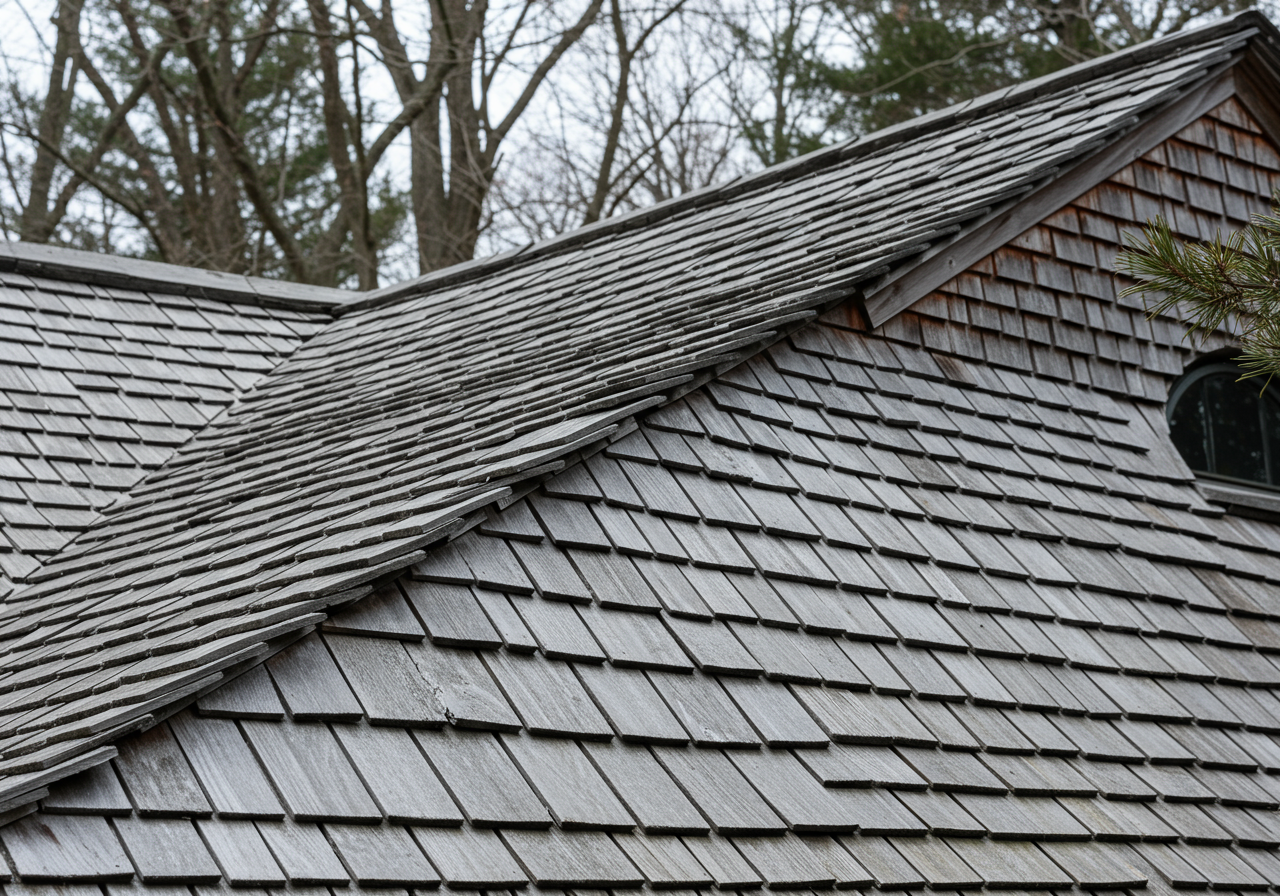
A North Haven home featuring deep-shadow wood shakes that highlight the roof's steep gables.
Preservation Techniques for the Cedar Purist
For some of us, only real wood will do. I get it. There is a smell and a "heft" to real cedar that plastic just can't replicate. If you're going the natural route, you must insist on certain installation standards.
First, specify "tapersawn" shakes over "perfections" if you want a more rugged, thicker shadow line. Second, make sure your contractor uses stainless steel fasteners. In our salty, humid air, galvanized nails will eventually bleed, leaving ugly black streaks down your beautiful wood. This is where learning how our matching process works becomes a lifesaver, as it connects you with pros who actually know the difference between a cedar shingle and a cedar shake—a distinction that matters for your roof's drainage.
Assess the shade and tree overhang on your lot.
Determine how many hours of direct sunlight your roof receives daily. Shaded areas require more aggressive maintenance schedules.
Consult your insurance agent about fire-rating requirements.
Verify that your policy covers wood roofs and understand any premium increases before committing to materials.
Choose between Western Red Cedar or Alaskan Yellow Cedar.
Western Red is more common and cost-effective, while Alaskan Yellow offers superior rot resistance but at a higher price point.
Verify the contractor uses stainless steel fasteners and breathable underlayment.
These details prevent premature failure and ensure your investment lasts as long as possible.
Finding a Specialist for North Haven Homes
Cedar isn't a "DIY" project, and it's not a job for a crew that spends 99% of their time on asphalt. The flashing needs to be copper or high-grade lead to match the lifespan of the wood, and the "weaving" of the corners requires an artistic eye.
When you're ready to see what this looks like for your specific rafters, don't just guess at the price. I always suggest that my neighbors get an instant roof estimate to see how cedar or its synthetic twins fit into their 2026 renovation plans. You want a crew that treats your roofline as a design choice, not just a square-footage problem.
"A cedar roof is like a fine wool coat; it looks better than anything else in the room, but you can't just throw it in the wash and expect it to survive."
Get Your Free Roof Quote
Enter your zip code to get started