
Key Takeaways
- Saturated 'heavy' snow can weigh 21.5 lbs per cubic foot—3.5x heavier than fresh powder—putting extreme stress on older North Haven homes.
- Multiple shingle layers add up to 500 lbs of 'dead load' before any snow falls, making older CT construction especially vulnerable.
- Warning signs like sticking doors, ceiling cracks, and attic groaning indicate immediate structural stress that requires professional assessment.
- Proactive reinforcement ($1,200-$1,500) can prevent $18,000+ emergency collapse repairs during Connecticut's harsh winter months.
Have you stepped outside lately and noticed how the snow in your yard isn't just fluffy powder anymore, but a dense, slushy mess? Many homeowners in North Haven—especially those in the older Capes near the Quinnipiac River—often ask me if they should be worried about their roof collapsing under that weight. It's a valid concern when you realize that just two feet of "heavy" snow can weigh as much as a mid-sized SUV parked on your shingles.
The real danger isn't always a sudden cave-in; it's the cumulative structural fatigue that weakens your rafters over a long New England January. I've spent 15 years assessing storm damage across Connecticut, and what I'm about to share could save your family from a nightmare scenario.
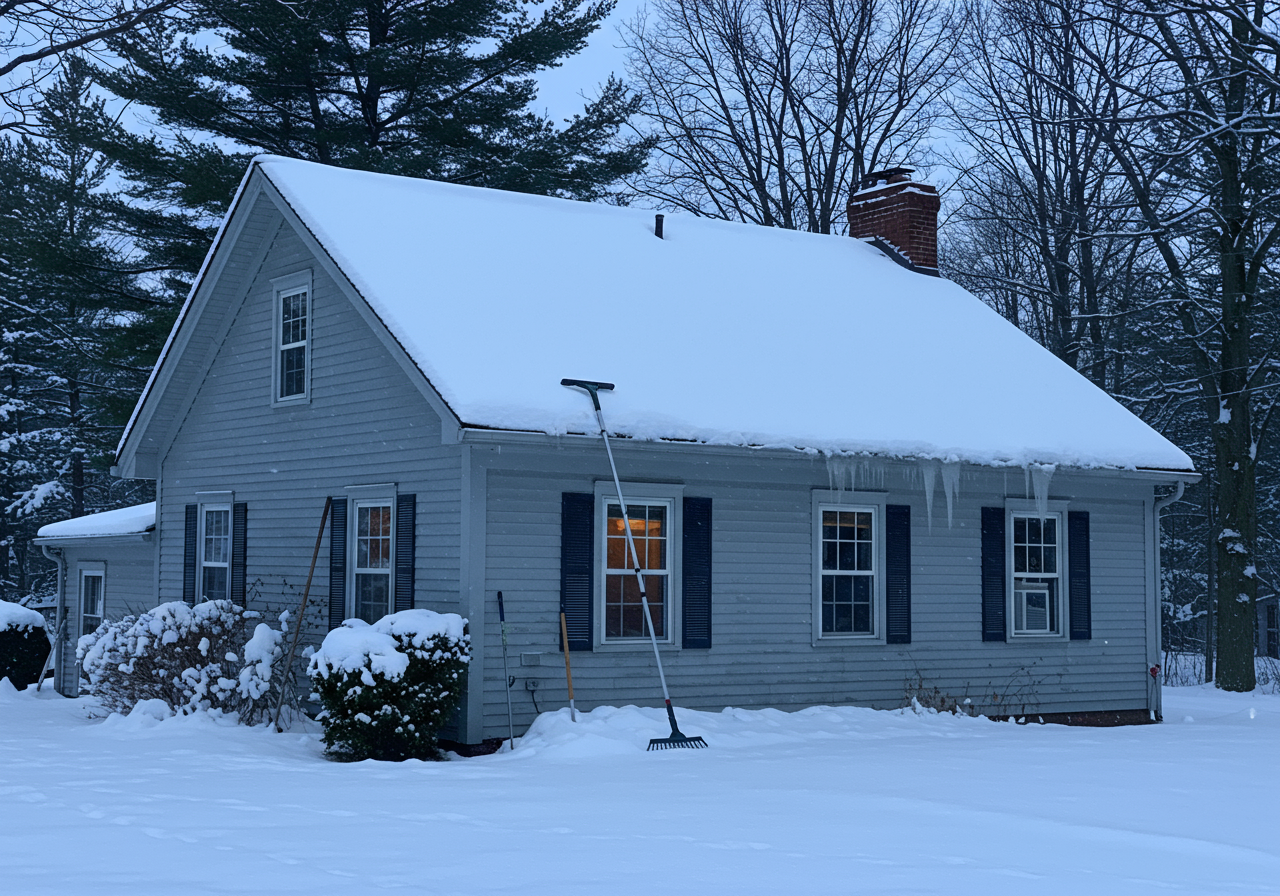
Heavy Snow Load on North Haven Roof
Dense, saturated snow creates extreme downward pressure on residential roof structures.
1. The Hidden Physics of Saturated Snow Loads
Most people think snow weight is uniform, but I've measured enough samples to tell you otherwise. Fresh, dry snow is relatively light, but as soon as the humidity rises or a light rain hits, that snow acts like a sponge. In New Haven County, we see a lot of "transition snow" that fluctuates between freezing and melting.
This saturated mass can reach a density of 22 pounds per cubic foot (standard building codes in CT typically design for a ground snow load of 30-40 pounds). If your roof has a low pitch, it isn't shedding that weight; it's storing it. I once inspected a ranch-style home near Ridge Road where the snow had compacted into an 8-inch layer of solid ice. The sheer downward pressure was enough to cause a 1/2-inch deflection in the ridge beam.
2. Why Multiple Shingle Layers Are a Structural Liability
The reality is that many North Haven homes built between 1950 and 1985 still have two or even three layers of shingles. While this was a common "cost-saving" measure decades ago, it's a massive risk during a heavy January. A single layer of architectural shingles weighs about 240 pounds per square (a 10x10 area). If you have two layers, you're already sitting at nearly 500 pounds of "dead load" before any snow even falls.
I've seen 2x6 rafters—common in older CT construction—literally begin to "sister" or twist under the combined weight of a double roof and a foot of wet snow. If you're unsure how many layers you have, you can connect with CT roofing contractors who can perform a core sample and check your structural integrity.
3. Identifying the Early Warning Signs of Roof Deflection
You don't need to be a structural engineer to spot a roof under duress, but you do need to know where to look. One of the first signs I tell my clients to watch for is the "sticking door" phenomenon. If your bedroom doors or attic access suddenly won't close smoothly, it's often because the roof load is compressing the wall frames below.
Look for fresh cracks in the drywall near the corners of your ceiling. These aren't just "settling" cracks; they are often the result of the roof rafters pushing outward on the exterior walls (a process we call "wall spreading"). I remember a job in the Montowese area where the homeowner thought they had a foundation issue, but it turned out the 19-inch snow load was actually bowing the top plates of their walls.
Listen for the House 'Groaning'
4. The Role of Insulation and the Ice Dam Connection
Snow load isn't just about weight; it's about how that weight is distributed. When your attic is poorly insulated, heat leaks out and melts the bottom layer of snow. That water runs down to the cold eaves and freezes, creating an ice dam. This doesn't just cause leaks; it creates a massive "ice ledge" that can weigh hundreds of pounds.
According to the Department of Energy insulation guides, maintaining a consistent "cold roof" temperature is the best way to prevent this uneven loading. I often suggest checking your R-value; if you have less than 15 inches of blown-in cellulose or fiberglass, you're essentially inviting ice dams to set up shop on your gutters.
5. Pitch and Geometry: Why Some Roofs Fail Faster
The steepness of your roof—the pitch—is your first line of defense. A 12:12 pitch (a 45-degree angle) sheds snow naturally. However, many North Haven additions or garages use a 4:12 pitch, which is just steep enough to catch snow but not steep enough to dump it.
If you have a low-slope roof, you are at a much higher risk for "ponding" if that snow turns to rain. For those with commercial properties or modern flat-roof homes in the area, following the FEMA flat roof drainage guidelines for maintenance is non-negotiable. I've seen flat roofs in New Haven County collapse not from snow, but from the 4 inches of water trapped behind a clogged scupper after a thaw.
6. The Dangers of DIY Snow Removal
Every January, I see homeowners on ladders with metal shovels, and it makes me cringe. Not only is it incredibly dangerous for you, but you're likely destroying your shingles. Granule loss is accelerated when you scrape a shovel across a frozen roof.
If you absolutely must remove snow, use a telescopic roof rake and stay on the ground. Only clear the bottom 3 to 4 feet. This allows the rest of the snow to slide off naturally once the weather breaks. I've seen "DIY-cleared" roofs where the homeowner accidentally gouged the flashing around the chimney, leading to a $2,400 leak repair come springtime.
Roof Raking vs. Professional Clearing
Pros
- Immediate weight relief for eaves
- Prevents ice dam formation
- Low cost tool investment
Cons
- Risk of hitting overhead power lines
- Can damage shingles if used aggressively
- Physical strain in cold weather
7. Structural Reinforcement: The Long-Term Solution
If your home was built before the 1970s, it might not meet current Connecticut building codes for snow loads. But you don't necessarily need a whole new roof. We often "sister" rafters—nailing a new piece of lumber alongside the old one—to double the load capacity. I also recommend installing collar ties or purlin braces in the attic.
These small additions (costing roughly $800 to $1,500 depending on attic size) can increase your roof's weight tolerance by nearly 30%. When I'm out on a site, I always use a Bosch laser level to check for sagging; if the ridge has more than a 3/4-inch dip, reinforcement isn't just a suggestion—it's a requirement. Learn more about how our matching process works to connect with structural specialists in your area.
8. Calculating the Cost of Neglect in North Haven
Let's talk numbers. A professional snow removal service might cost you $400 to $700. Structural reinforcement might run you $1,200. Compare that to the average cost of a partial roof collapse in Connecticut, which I've seen range from $16,000 to over $35,000 when you factor in interior water damage, ruined insulation, and emergency structural shoring.
Before the next nor'easter rolls through, North Haven residents should get your instant roof estimate to see if their current system is up to par. It's much cheaper to brace a roof in the fall than to replace a ceiling in the winter.
Winter Roof Protection Costs
Conclusion
Snow load is a silent stressor that doesn't always announce itself with a bang. In North Haven, the combination of older housing stock and heavy, wet coastal snow creates a specific set of risks that require a proactive approach. By monitoring your interior doors, managing your attic insulation, and ensuring your roof isn't overburdened with old layers of shingles, you can keep your home's structure sound for decades.
Don't wait until you see a dip in your roofline to take action. For additional information on building codes and snow load requirements in Connecticut, consult the CT Department of Administrative Services building codes. If you're concerned about your home's capacity to handle the next big storm, get connected with a verified pro who knows exactly what Connecticut winters demand.
Get Your Free Roof Quote
Enter your zip code to get started