
Key Takeaways
- Connecticut state law requires a building permit for any roof replacement involving structural work or multiple layers.
- New Britain permit fees are based on the value of the project, typically adding about $185 to $350 to a standard residential job.
- Skipping a permit can lead to insurance claim denials during future storm events or issues when trying to sell your home.
- Verified contractors usually handle the filing process, but the homeowner is ultimately responsible for ensuring it's done.
Most New Britain homeowners believe a roofing permit is just an optional city tax, but ignoring the building department is the fastest way to void your home insurance. As we sit here in February 2026, with the ground frozen solid and the wind whipping off the Hardware City streets, planning your spring renovation is a smart move. But before you pick out that perfect architectural shingle, you have to square things with the city. I've seen projects stalled halfway through because a neighbor called in a "no-permit" tip, leaving a roof exposed to a late-winter sleet storm. It isn't pretty.
The High Stakes of Skipping the Paperwork in New Britain
New Britain has a reputation for being a "tough" town, and that extends to the building department. I recall a project over by Stanley Quarter Park a few years back. The homeowner wanted to save a few hundred bucks and told the contractor to "just get it done" over a weekend. On Monday morning, a city inspector was on-site with a Stop Work Order. The shingles were half-off, and a February "clinger" storm—those heavy, wet snow events—was in the forecast for Tuesday night.
Because they didn't have the paperwork in order, they couldn't get the materials delivered legally to finish the job. They ended up paying $1,450 in "after-the-fact" penalties. It's a classic case of stepping over a dollar to pick up a dime. Beyond the fines, a permit ensures a third-party set of eyes (the inspector) verifies that the flashing and ice-and-water shield are installed correctly for our specific climate.
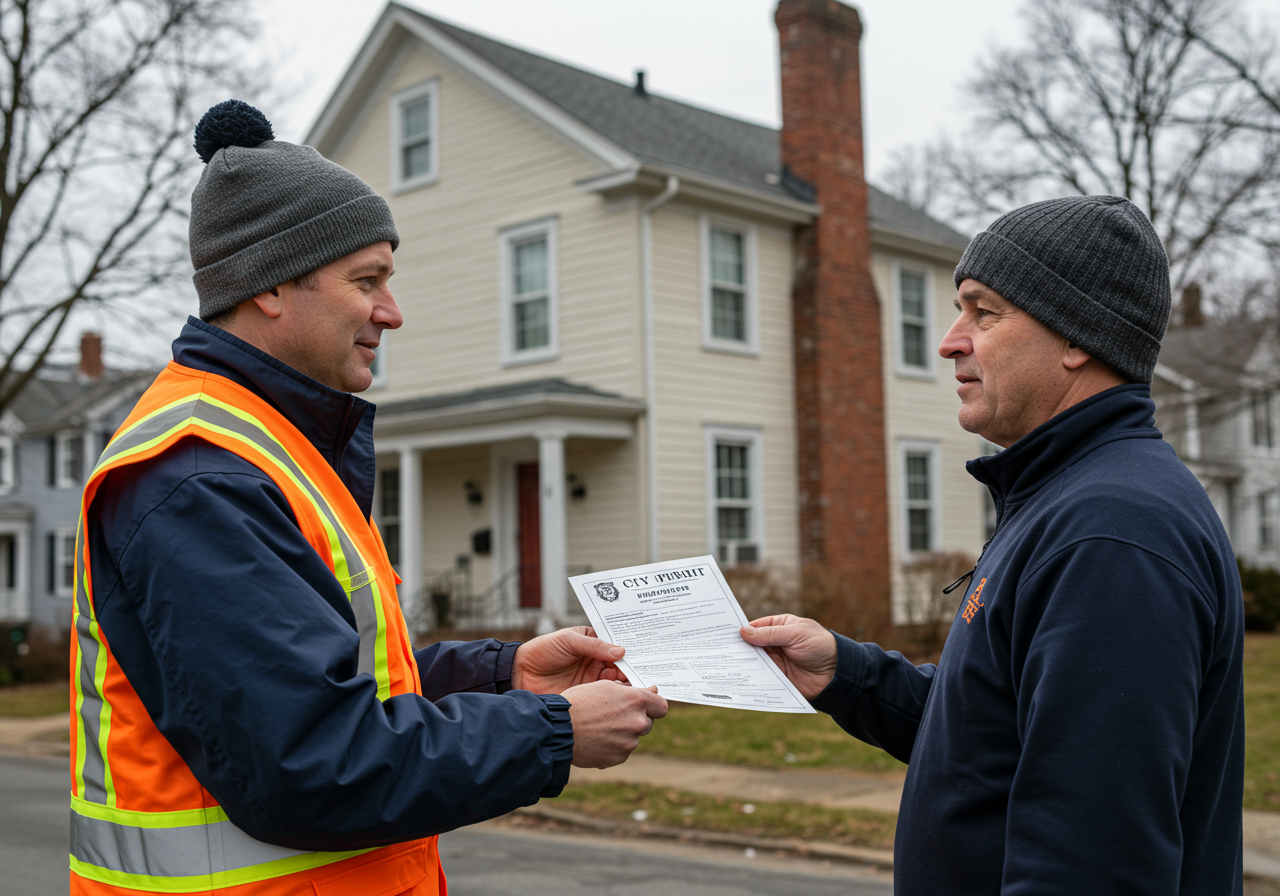
New Britain roofing permit inspection
A city inspector verifying proper installation during a permitted roof replacement
Why the Hardware City Cares About Your Shingles
The city isn't just looking for revenue. New Britain's housing stock is older and closer together than in the suburbs. If a roof is installed poorly and catches fire, or if shingles blow off during a high-wind event, it's a safety hazard for the entire neighborhood. When you verify their contractor's license, you're ensuring they know these local nuances.
Decoding the Connecticut State Building Code for 2026
Connecticut doesn't play around when it comes to the International Building Code (IBC) adaptations. As of 2026, the state has tightened requirements for attic ventilation and ice dam protection. If you're stripping your roof down to the deck, you are legally required to bring it up to the current code. This isn't just a suggestion; it's the law.
Pro Tip
When a Permit is Mandatory
Basically, if you are doing anything more than replacing a few blown-off shingles from a stray gust, you need a permit. This includes:
- Full roof replacements (re-roofs)
- Changing roofing materials (e.g., asphalt to metal)
- Any structural repair to the rafters or decking
- Installing new skylights
According to USA.gov's housing repair resources, keeping your home up to local code is a fundamental requirement for maintaining your property's legal standing and eligibility for federal aid in the event of a disaster.
The Cost of Compliance: New Britain's Permit Fee Structure
I often get asked if the cost of the permit is worth the hassle. In New Britain, the fee is generally calculated per $1,000 of the project's value. For a typical $14,000 roof replacement, you might be looking at a fee in the ballpark of $210 to $260. In the grand scheme of a five-figure investment, that's peanuts for the peace of mind it provides.
Cost Analysis: Permit Fees vs. Potential Penalties
Calculating Your Investment
Don't let a contractor tell you they "don't need" a permit because they are doing a "repair." If they are replacing the whole slope, they need it. If they refuse to pull one, it's a massive red flag that they might not be insured or licensed. I've seen this happen way too often in the Hartford County area. You can see what other CT homeowners experienced with contractors who do things by the book versus those who take shortcuts.
Why Your Insurance Carrier Cares More Than the City Does
Here is the secret most people miss: your insurance company loves permits. Why? Because a permit proves the roof was installed to code. If we get hit with a massive hailstorm or a freak February ice event, and you file a claim for $18,000 in damages, the first thing the adjuster might look for is the permit history.
If they see the roof was replaced three years ago without a permit, they can argue the installation was "non-compliant" and deny the claim. I've sat at kitchen tables with heartbroken families who realized their $15,000 "cheap" roof actually cost them their entire insurance payout.
The Resale Factor
Thinking of moving to a bigger place in Southington or Farmington in a few years? The buyer's home inspector will check the city's permit portal. If they see a brand-new roof but no record of a permit, it can kill a deal faster than a leaky basement. It suggests that the work was hidden from the city for a reason.
The Step-by-Step New Britain Permit Process
Getting a permit in New Britain isn't the bureaucratic nightmare people make it out to be, especially now that more systems are moving online. However, it does require some specific documentation that you'll want to have ready.
Who Should Pull the Permit?
Pros
- Contractor takes legal responsibility
- Ensures insurance coverage is active
- They handle the technical drawings
Cons
- Contractor may add a small admin fee
- Might add 2-3 days to the start date
Recommendation
From Application to Final Inspection
Contractor Selection
Choose a pro who understands Hartford County building codes.
Application Filing
The contractor submits the roof plan and proof of insurance to the New Britain Building Department.
The Wait
Typically, you'll get approval within 7 to 10 business days.
The Install
The work is done, and the permit is displayed in a window.
The Inspection
A city official comes by to verify the work. Don't skip this! The permit isn't 'closed' until that final sign-off.
For those considering more complex projects, like a flat roof addition, FEMA's guidelines on low-slope systems provide excellent technical context that your inspector will likely be looking for.
Making the Right Call for Your 2026 Project
As the dew point begins to shift and we move toward the rainy spring season, the pressure to get a roof done quickly increases. But rushing into a "handshake deal" without a permit is a gamble where the house (and your actual house) always wins.
Did You Know?
Did you know that New Britain now requires specific 'drip edge' flashing on all eaves to prevent water from wicking back into the fascia? A permitted inspection is the only way to guarantee your contractor didn't skip this $100 detail that saves thousands in rot repair.
If you want to dive deeper into the technical side of how your roof should be built, our blog library has guides on everything from ridge vents to the best shingles for Connecticut's wild temperature swings.
The bottom line is simple: a permit is your receipt of quality. It's the city's way of saying, "This roof won't blow into your neighbor's yard when the next Nor'easter rolls through." Don't let a fly-by-night contractor convince you otherwise.
Get Your Free Roof Quote
Enter your zip code to get started
I've spent years tracking how New Britain weather beats up local homes. The roofs that last 30 years aren't just made of good materials—they are installed by people who aren't afraid of a city inspector looking at their work.
Stay safe, stay dry, and keep that paperwork in order.