Key Takeaways
- Ice dams are caused by uneven roof temperatures, not just 'clogged gutters' or heavy snowfall.
- Stratford's coastal humidity and the 2026 late-winter freeze-thaw cycles accelerate shingle delamination.
- Proper attic insulation and baffles are more effective than heat cables or 'salt socks.'
- Permanent prevention requires a balance of R-60 insulation and unobstructed soffit-to-ridge airflow.
Stratford homeowners face a recurring nightmare every March: that rhythmic, sickening drip-drip-drip coming from inside a bedroom wall or through a window casing. It usually happens right after a decent snowfall followed by a sunny afternoon near the Housatonic River. While most people reach for the phone to call a gutter cleaner, they're usually addressing the symptom rather than the disease. The reality is that your roof is behaving like a giant, poorly regulated radiator, and that's a recipe for structural disaster.
I've spent a lot of time walking the neighborhoods near Lordship and up toward Paradise Green, and the story is always the same. A homeowner sees a mountain of ice on their eaves and assumes the gutters are just "full." But gutters don't cause ice dams; they just provide a convenient place for the ice to hang out once the damage is already done. The problem starts much higher up, in the dark, cramped spaces of your attic where heat is escaping faster than a Nor'easter blowing through the harbor.
The Stratford Freeze-Thaw Cycle (The Root Problem)
In our corner of Fairfield County, the weather is rarely consistent. We get these March days where the sun beats down on the shingles, but the air stays crisp. This creates a temperature imbalance. If your attic isn't properly "cold," the snow on the upper parts of the roof melts because of the heat leaking from your living room. As that meltwater runs down to the eaves—which are hanging out over the cold air and not over the heated house—it freezes instantly.
And that's the trap. Once that first layer of ice forms at the edge, it creates a reservoir. Every bit of snow that melts further up the roof gets backed up behind that icy wall. Eventually, the water finds its way under your shingles. I remember a case on Main Street where a beautiful 1920s Colonial had water backing up nearly 18 inches under the asphalt. By the time I got there, the homeowners were using three-gallon buckets to catch the ceiling leaks. It wasn't a "roof leak" in the traditional sense; it was a physics problem.
Did You Know?
Did you know that just a 5°F difference between your attic floor and the outside air can be enough to trigger the melting process that leads to a massive ice dam?
Thermal Bridging: The Invisible Heat Thief
The biggest culprit I see in Stratford homes is thermal bridging. This happens when heat travels through solid materials—like your wooden rafters—straight past your insulation. Even if you've got thick batts of fiberglass, if they aren't installed correctly around the edges, heat escapes right at the wall plate. This is exactly where the roof meets the exterior wall, and it's the primary "hot spot" that starts the melting process.
I've seen dozens of homes where the insulation was actually stuffed too tight into the corners. While it seems like you're doing a good job sealing the house, you're actually blocking the very air that needs to circulate to keep the roof deck cold. When the roof deck stays warm, the ice damming is inevitable. If you're curious about how these thermal issues impact your long-term budget, estimating your attic upgrade costs can help you decide if a quick fix or a total overhaul is the smarter move.
The Insulation Trap (Why 'More' Isn't Always Better)
A common mistake I see is the "more is better" approach to insulation. I've walked into attics near Boothe Memorial Park where homeowners had piled three layers of old insulation on top of each other. The problem? They covered the soffit vents. Without those vents, the attic becomes a pressurized box of hot air.
According to the International Code Council standards for attic ventilation, you need a specific ratio of intake to exhaust. In Stratford, where our humidity stays high because of the Sound, trapped air doesn't just cause ice dams; it rots your roof deck from the inside out. I once pulled up a shingle on a roof that was only 8 years old, and the plywood underneath was as soft as a wet sponge because the attic couldn't breathe.
"The goal isn't to keep the attic warm; it's to keep the attic the exact same temperature as the outside air. If your attic feels cozy in the winter, your roof is in trouble."
Gutter Myths vs. Eave Realities
Let's settle this once and for all: your gutters do not cause ice dams. However, they can make the damage worse. If they are sagging or improperly pitched, they hold more water, which turns into more ice. But even a perfectly clean gutter will fill with ice if the roof is shedding meltwater in freezing temperatures.
I've seen people spend $500 on "industrial strength" heat cables, only to find that the cables just create little tunnels in the ice while the rest of the dam remains intact. It's like trying to melt an iceberg with a hairdryer. Instead of band-aid solutions, you're better off patching existing leak damage properly and then addressing the insulation. Don't let a contractor tell you that "fancy gutters" will solve your ice problems—they won't.
Proper Attic Retrofitting vs. Temporary Fixes
Pros
- Permanently stops water infiltration
- Reduces winter heating bills by up to 15%
- Protects structural integrity of rafters
Cons
- Higher upfront cost than heat tape
- Requires professional attic assessment
- Can be difficult to install in low-slope roofs
A Step-by-Step Prevention Strategy
If you want to stop the cycle before next winter, you need a plan that goes beyond the hardware store. Every time I consult on a project in Fairfield County, I suggest a systematic approach. We don't just look at the shingles; we look at the entire "envelope" of the house.
Seal all 'air leaks'
Seal all 'air leaks' where wires and pipes enter the attic from the living space below.
Install high-quality rafter baffles
Install high-quality rafter baffles to ensure air flows from the soffits to the ridge.
Blow in cellulose or install mineral wool batts
Blow in cellulose or install mineral wool batts to reach an R-60 value.
Verify ridge vent
Verify that your ridge vent isn't clogged with debris or over-shingled.
Inspect ice and water shield
Inspect the 'ice and water shield' membrane during your next roof replacement.
But remember, any work you do should be documented. When you eventually sell your home, having proof that you addressed these issues is a huge selling point. I always recommend vetting local Fairfield County contractors through the BBB to ensure they understand the specific building codes in our area.
The Real Cost of Ignoring the Ridge
Ignoring a recurring ice dam isn't just about a few water stains on the ceiling. I've seen $3,875 repairs turn into $15,000 structural remediations because the water rotted out the headers over the windows. In our coastal environment, that moisture also invites mold growth that can spread through your HVAC system faster than you'd think.
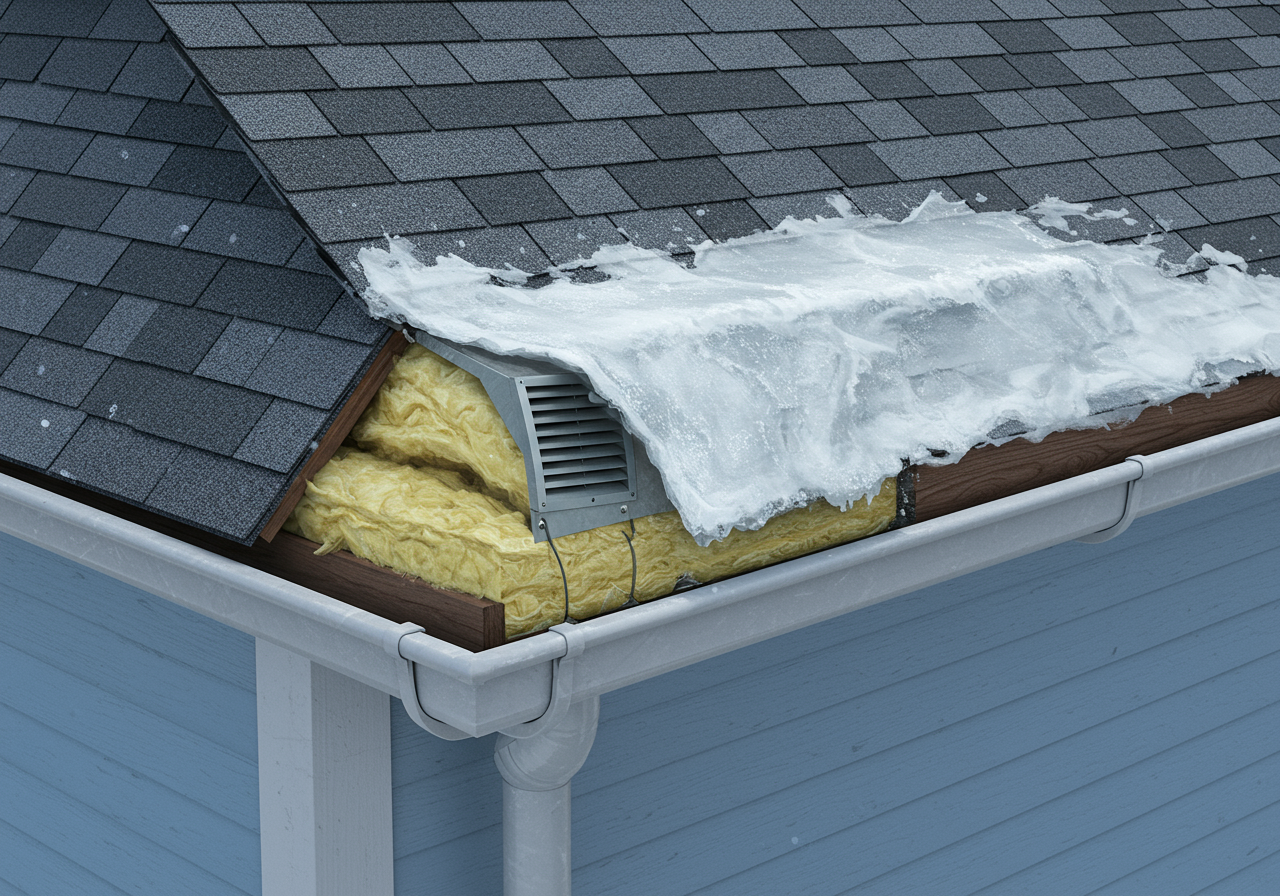
A detailed cross-section of a Stratford roof eave showing an ice dam forming over a soffit vent blocked by insulation
Close-up macro shot of the eave and gutter area during a March thaw
If your roof is already showing signs of age—curling shingles, grit in the gutters, or daylight visible from the attic—it might be time to stop the piecemeal repairs. Sometimes investing in a full weather-tight system is the only way to ensure your home survives the next decade of Connecticut winters. And with current federal tax credits for insulation, you might be able to offset a significant portion of the cost of making your home more energy-efficient.
Get Your Free Roof Quote
Enter your zip code to get started
In the end, Stratford's weather is going to do what it wants. We can't stop the March sun from melting the snow, but we can stop our homes from feeding that fire with wasted heat. Take a look in your attic this weekend. If you see frost on the nails or insulation covering your eaves, you've got work to do.
FAQ

About Noah Knight
Verified ExpertNoah Knight is a Connecticut Weather & Climate Specialist who helps homeowners understand how New England's unique weather patterns affect their roofing systems. He combines meteorological knowledge with practical home maintenance advice.