In Killingly, a staggering 84% of the "emergency" calls I see during the spring thaw have absolutely nothing to do with the shingles themselves. Most homeowners in the Quiet Corner assume a leak means the roof is shot, but more often than not, the culprit is a thin strip of metal tucked around the brickwork. Chimney flashing is the most overlooked component of a New England roof, yet it's the primary line of defense against the heavy, wet "heart-attack" snow we typically see as March 2026 rolls in. When that snow sits against your chimney and begins to melt, it finds every microscopic gap in the sealant.
Key Takeaways
- Chimney leaks often masquerade as shingle failure, but the metal-to-brick connection is usually the true weak point.
- March's freeze-thaw cycle in Windham County is particularly brutal on aged mortar and lead flashing.
- Proper flashing requires a two-part system: base/step flashing and counter-flashing embedded into the masonry.
- Addressing a $450 flashing issue today can prevent a $5,200 structural rot repair by mid-summer.
1. The March Thaw: Why Killingly Roofs Fail Now
The weather in Windham County during March is a unique beast. We aren't dealing with the deep-freeze of January anymore; instead, we're seeing temperatures swing across the freezing mark twice a day. This creates a "pumping" action. Water gets behind the metal, freezes at night to expand the gap, and then melts during the day to flow deeper into your attic. I've walked through neighborhoods near Alexander's Lake and seen dozens of homes with tell-tale water staining on the chimney stack—signs of a battle already being lost.
2. Spotting the "Quiet Corner" Leak Early
You don't need to climb a ladder to know you have a problem. In fact, I'd rather you didn't. Most flashing issues show their teeth inside the house first.
Check Your Attic Rafters
Grab a high-lumen flashlight and head into the attic. Look specifically at the wood framing that surrounds the chimney. If you see dark "tide marks" or white, crusty mineral deposits (efflorescence) on the brick, your flashing has already failed.
The "Binocular Inspection"
Stand in your driveway and look up. Are the metal strips around the chimney pulling away? Do you see gobs of black "roof tar" smeared everywhere? If a previous contractor used caulk as a primary defense instead of mechanical metalwork, it's only a matter of time before the Killingly wind peels it back.
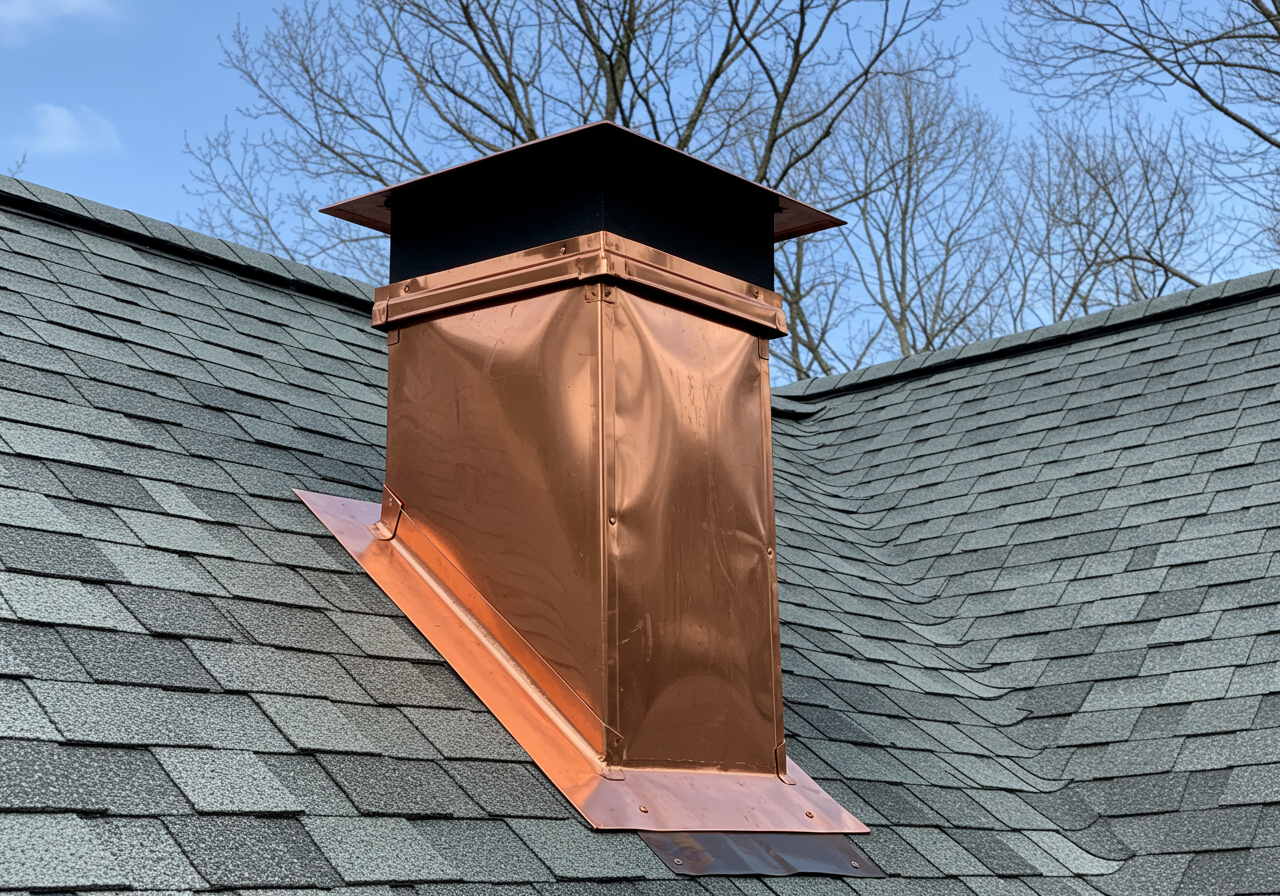
Chimney Flashing Inspection
Proper flashing installation prevents water intrusion during Connecticut's harsh winters
3. Material Selection: Lead vs. Copper in CT
In many of the older Colonials across Danielson and Dayville, lead was the standard. It's soft, easy to mold, and lasts a long time. However, it's not the gold standard anymore.
Why Copper Wins
Copper is the heavy hitter for Windham County. It doesn't just look better as it develops that classic green patina; it's far more durable against the acidic rain and heavy snow loads we face. According to Energy Star's cool roof specs, selecting materials that handle thermal expansion is critical for long-term efficiency and durability.
The Downside of Aluminum
Budget contractors often use aluminum because it's cheap. But here's the thing: aluminum and mortar don't play nice. The lime in the mortar can actually corrode the aluminum over time, leading to pinhole leaks that you won't see until your ceiling starts sagging.
4. The Anatomy of a Proper Flashing System
A chimney isn't just "wrapped" in metal. It's a complex layering system. If your contractor doesn't talk about these three components, they aren't doing it right.
Base and Step Flashing
These are the L-shaped pieces that go under the shingles and up the side of the chimney. They should be woven into every single course of shingles.
Counter-Flashing (The Pro Move)
This is where 90% of the mistakes happen. The counter-flashing must be "reglet-cut" or tucked into a groove in the mortar. If it's just nailed to the surface and caulked, it will fail within three years. Guaranteed.
Chimney Flashing Lifespan by Material
5. Why Roof Tar is a Red Flag
If you see a contractor walk toward your chimney with a bucket of "black jack" or roofing cement, stop them. Tar is a temporary patch, not a repair. It dries out, cracks under the New England sun, and traps water against the brick, which accelerates the rot. Real flashing repair involves metalwork and masonry, not a paintbrush. I always tell homeowners to verify their contractor's license and ask specifically if they use mechanical flashing or just "sealant."
"A chimney is a giant straw for water. If the flashing doesn't divert that water to the shingles, the masonry will eventually crumble from the inside out."
6. The Hidden Cost of Neglect
Ignoring a small leak at the chimney base is like ignoring a small hole in a boat. By the time you see a drip in the living room, the plywood decking around the chimney is likely soft enough to put a foot through.
Mold and Structural Rot
In Windham County's humid summers, that trapped moisture behind the flashing becomes a greenhouse for mold. I've seen remediation bills top $8,000 for a problem that could have been fixed with $400 worth of copper and a few hours of labor.
Resale Value
If you're planning to sell your home in Killingly, a home inspector will be all over that chimney. A messy, tar-covered flashing job is a massive red flag that suggests the rest of the roof was maintained with the same "band-aid" mentality. You can see what other Windham County neighbors are saying about their experiences with professional-grade repairs versus quick fixes.
Did You Know?
In Connecticut, certain energy-efficient roofing upgrades may qualify for tax credits. While flashing itself isn't the main driver, it's part of a 'sealed system' often referenced in IRS Form 5695 instructions for residential energy improvements.
7. DIY Temporary Fixes for March Emergencies
If it's currently raining and you have a leak, you can't do a permanent repair. But you can stop the bleeding.
Clear Snow and Ice
Clear away any standing snow or ice from around the chimney base using a plastic shovel (don't use metal!)
Identify the Gap
Identify the largest gap where the metal meets the brick.
Apply Temporary Sealant
Apply a high-grade polyurethane sealant—not tar—to the gap as a temporary bridge.
Call a Professional
Call a professional once the roof is dry for a permanent mechanical repair.
Never attempt to climb a roof that has ice or wet moss
8. Choosing the Right Contractor in Killingly
Don't hire a general "handyman" for chimney flashing. You need someone who understands both roofing and basic masonry. The interface between the two is a specialized skill. Look for contractors who provide a specific warranty for the flashing itself, not just the shingles.
When you're ready to get a real look at your roof's health, our roofing guide library offers deep dives into how Connecticut's climate specifically affects different materials. If you're worried about high winds, FEMA's hurricane mitigation guide provides excellent technical insights on how to secure roof attachments against the gusts we get in the Quiet Corner.
Is your chimney ready for the March melt?
Get an instant, local estimate for your roof repair today.
No credit card required • Free to use
Get Your Free Roof Quote
Enter your zip code to get started
In conclusion, your chimney is the most vulnerable part of your home this month. By catching those small gaps in the metal now, you're protecting your rafters, your drywall, and your wallet. Stay dry out there, Killingly.
FAQ

About Noah Knight
Verified ExpertNoah Knight is a Connecticut Weather & Climate Specialist who helps homeowners understand how New England's unique weather patterns affect their roofing systems. He combines meteorological knowledge with practical home maintenance advice.