Chaplin homeowners are currently facing that classic March dilemma: the snow has finally retreated from the shingles, but the spring rains are waiting in the wings to find every tiny gap. It's the season where a "small" leak on a Route 198 colonial suddenly feels like a ticking clock. You see a few granules in the gutter and think, I've got a weekend and a YouTube tutorial; how hard can it be? But the reality of DIY roofing in Windham County is rarely as smooth as the video makes it look. Between the sheer physical risk of our steep pitches and the technical precision required to keep a home watertight, that weekend project often morphs into a month-long headache. We're going to look at why the choice between your own hammer and a hired crew is about more than just the immediate invoice.
Key Takeaways
- Steep Chaplin pitches and long days on a ladder demand endurance and pro-grade safety—not just a taller extension ladder.
- Flashing, underlayment, and balanced ventilation are easy to botch; the first heavy rain often exposes what looked 'perfect' from the ground.
- Manufacturer warranties usually require certified installation; a few misplaced nails can void years of coverage.
- When you add dumpster fees, tool rentals, and lost weekends, DIY 'savings' shrink fast against a warrantied pro job.
1. The Physical Toll of the Quiet Corner Slopes
I remember talking to a homeowner near the Natchaug River last spring who was convinced he could "knock out" a rear-slope shingle replacement over a long weekend. By Sunday afternoon, he was halfway through the tear-off, his lower back was screaming, and a sudden March drizzle was soaking his exposed plywood. The physical demand of roofing isn't just about strength; it's about endurance on an incline. In Chaplin, where many of our beautiful homes feature steep 8/12 or 10/12 pitches, the gravity of the situation is literal.
Beyond the soreness, there's the equipment. A ladder that reaches your gutters isn't necessarily the ladder you need to safely move bundles of shingles. Professional crews use specialized hoists and roof jacks to maintain stability. When you bring in professional roof repair, you aren't just paying for the labor; you're paying for the insurance and safety protocols that keep a dangerous job from becoming a local news headline. Most of us aren't conditioned to spend eight hours a day balanced on a 35-degree angle, and that's when mistakes—or falls—happen.
Falls remain a leading risk
2. The Anatomy of a Leak Beyond the Surface
The biggest misconception I see is that roofing is just "nailing down pretty rectangles." It's actually a complex water-shedding system. Last year, I saw a DIY job in a nearby neighborhood where the owner had perfectly aligned his shingles but completely botched the valley flashing. He thought he'd saved $3,240, but the first heavy rain sent water straight into his attic insulation.
A professional eye catches the "invisible" problems, like compromised underlayment or soft spots in the decking that indicate rot. They also ensure the ventilation is balanced. If your roof can't breathe, your shingles will cook from the inside out. Research from the Department of Energy on attic insulation and roofing highlights how crucial that airflow is for the longevity of your home's structure. When you do it yourself, it's easy to accidentally block a soffit vent or overlook a rusted chimney cricket, leading to moisture traps that thrive in our humid Connecticut summers.
Did You Know?
In Windham County, the freeze-thaw cycle in late March can expand tiny gaps in DIY flashing by up to 15%, leading to significant leaks during spring thaws.
3. The Warranty Trap You Didn't See Coming
Here is the thing about those "50-year" or "Lifetime" shingle warranties: they are incredibly specific. Most major manufacturers, like GAF or Owens Corning, require the shingles to be installed by a certified contractor according to their exact specifications to honor the full warranty. If you nail a shingle a half-inch too high or use the wrong number of fasteners per shingle, that "lifetime" protection could vanish instantly.
I've had friends realize this too late when they tried to file a claim for premature shingle failure. The manufacturer sent an inspector, found that the DIYer hadn't used the required starter strips, and denied the claim. You might save on the initial labor, but a full roof replacement by a licensed crew often includes a workmanship warranty on top of the manufacturer's guarantee. It's that extra layer of sleep-at-night insurance that you simply can't provide for yourself.
DIY vs. professional installation
Relative scores by factor (0–100 scale for illustration)
4. Equipment Logistics in the Quiet Corner
Have you ever tried to dispose of three tons of asphalt shingles in rural Connecticut? It's not as simple as putting them in your weekly trash bin. A professional crew brings a dedicated dumpster and, more importantly, they take it with them when they leave. For a DIYer in Chaplin, you're looking at renting a container (likely $450 to $625), paying by the ton for disposal, and spending hours raking nails out of your lawn with a magnetic sweeper.
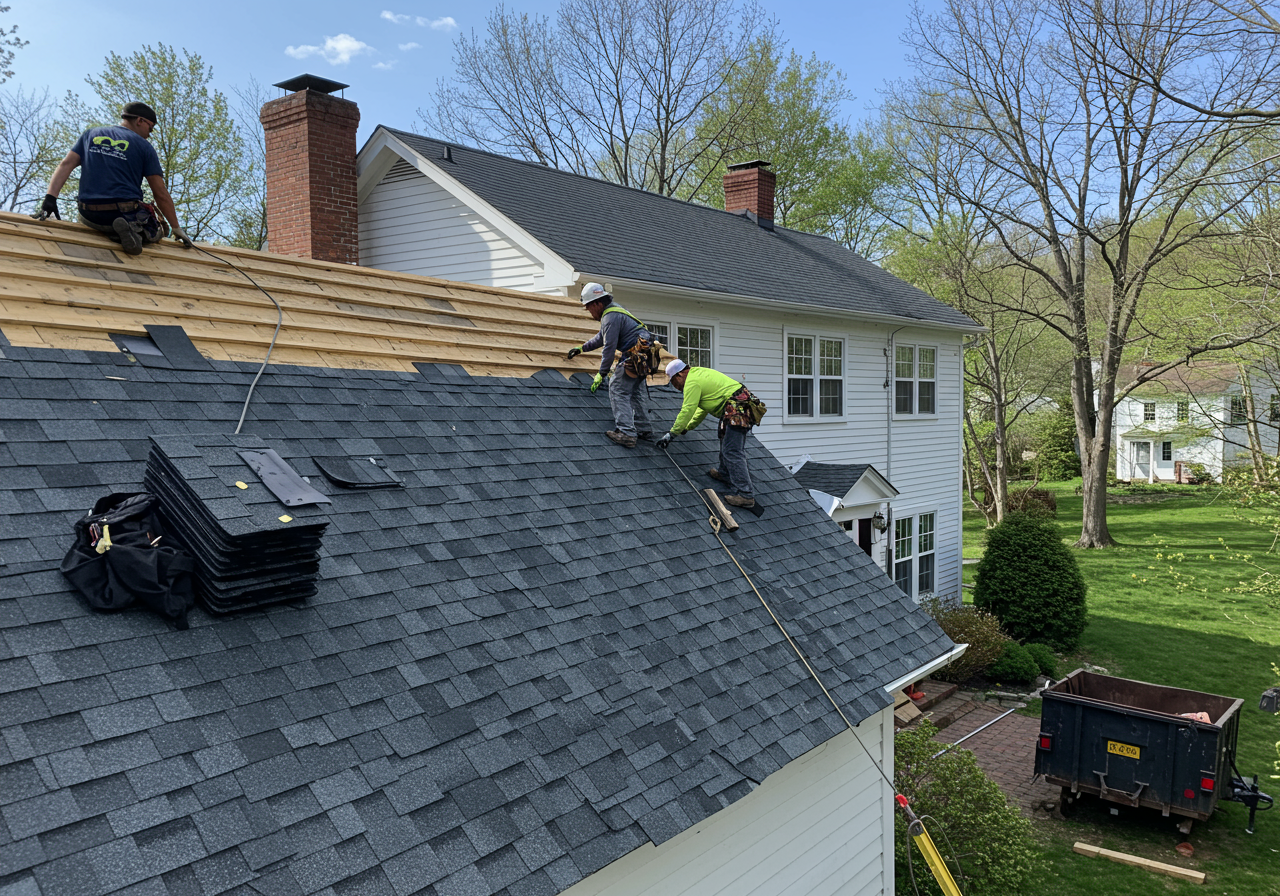
Debris, dumpsters, and nail cleanup
Professional crews handle heavy tear-off, hauling, and magnetic sweeps—logistics that often surprise first-time DIY roofers in rural Windham County.
Then there's the material delivery. Getting forty bundles of shingles onto your roof is a Herculean task if you don't have a boom truck. Most homeowners end up hauling them up a ladder one by one, which is a recipe for a blown-out shoulder. Before you commit to the "savings," I always suggest running the numbers on a roofing cost calculator to see the real-world difference. When you factor in tool rentals, disposal fees, and the value of three lost weekends, the "free" labor starts looking very expensive.
5. Resale Value and the Finish Line
As someone who obsesses over curb appeal, I can tell you that a DIY roof is often easy to spot from the street. Crooked courses, mismatched ridge caps, or slightly off-color flashing stand out to home inspectors and savvy buyers alike. Chaplin has such a distinct, historic charm, and a sloppy roof can detract from that neighborhood aesthetic.
Beyond the looks, a professional installation comes with a paper trail. When you go to sell your home, being able to produce a contract and a warranty from a licensed Connecticut roofer is a massive selling point. It tells the buyer the home has been cared for. Conversely, saying "I did it myself" often triggers a more rigorous (and expensive) home inspection. For those looking to maximize their home's thermal performance, following EPA guidance on cool roofing materials during a pro install can even help lower those summer cooling bills, adding another layer of value that a simple DIY patch job misses.
Professional shingle replacement
Pros
- Full manufacturer warranty coverage
- Completed in 1-2 days typically
- Expert structural inspection included
- Professional debris and nail cleanup
Cons
- Higher upfront labor cost
- Scheduling depends on contractor availability
See real numbers for your Chaplin roof
Compare transparent estimates from verified Connecticut roofers before you commit your weekends—or your safety—to a DIY tear-off.
No credit card required • Free to use
Conclusion
Deciding to tackle a shingle replacement yourself is a brave thought, but for most Chaplin homeowners, the risks to your safety and your home's long-term value far outweigh the initial savings. A roof is your home's first line of defense against our unpredictable New England weather. Getting it right the first time ensures you aren't spending the next five years chasing "mystery leaks" every time a storm rolls through Windham County. If you're ready to see how the numbers actually stack up for your specific home, getting a fast, transparent estimate is the best first step toward a dry, beautiful house.
Get Your Free Roof Quote
Enter your zip code to get started
FAQ

About Sheri Wilde
Verified ExpertSheri Wilde is a Home Improvement Editor with a background in interior design and sustainable living. She helps Connecticut homeowners make informed decisions about their biggest investments.