
Key Takeaways
- Thermal Stress: Shelton's rapid freeze-thaw cycles in January cause metal flashing to expand and contract, often pulling nails loose.
- Material Choice: Aluminum is common, but copper offers a 50+ year lifespan for high-end 'Gold Coast' homes.
- Maintenance: Clearing debris from 'dead valleys' prevents the standing water that eventually eats through sealants.
- Expert Siding: If your flashing is tucked behind siding, repair requires a specialist who understands both trades.
I spent three hours last Tuesday on a ladder in the White Hills neighborhood of Shelton, looking at a "mystery leak" for a homeowner named Greg. He was convinced he needed a brand-new roof. He'd seen water staining his guest room ceiling every time we got a mix of rain and slush. After pulling back a few shingles near his chimney, the culprit wasn't the asphalt—it was a piece of aluminum flashing that had backed out of the mortar by less than half an inch. That tiny gap was funneling gallons of meltwater directly onto his attic floor.
In Fairfield County, we see this constantly. Homeowners focus on the shingles because that's what they see from the driveway, but the flashing—the thin metal "bridge" that protects joints and transitions—is the real MVP of your home's weatherproofing. When it fails, it doesn't just drip; it destroys.
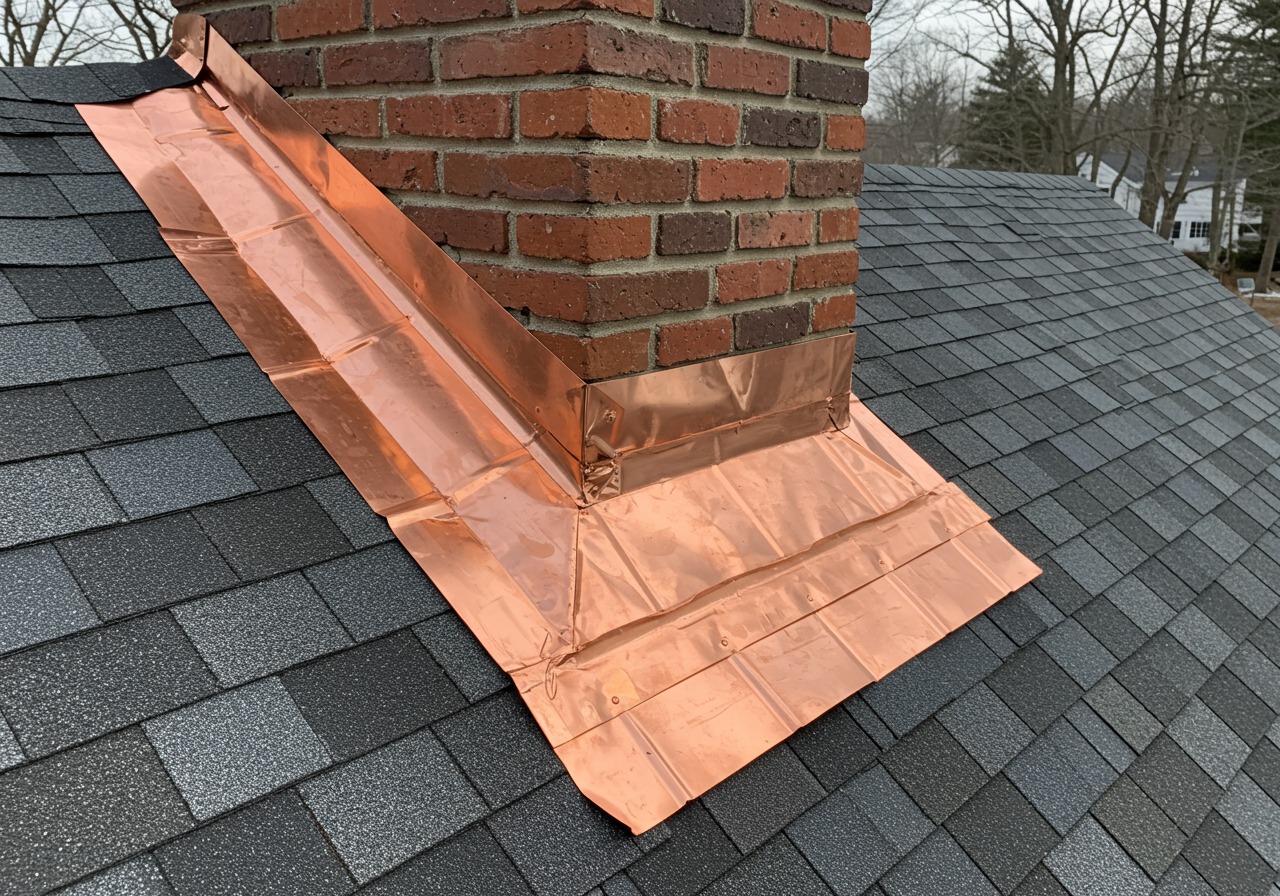
Roof flashing inspection in Shelton, Connecticut
A professional examining flashing integrity during a winter inspection
The Invisible Barrier: Why Standard Flashing Often Fails
Flashing is designed to be the "redirector." Its only job is to ensure that water running down a vertical surface (like a chimney or a dormer wall) gets kicked back out onto the shingles rather than slipping behind them. In Shelton, our homes often feature complex rooflines with multiple gables, which means more "critical points" where flashing must be perfect.
The Physics of January Failures
The reality is that metal and wood don't play well together when the temperature fluctuates. During a typical Connecticut January, the sun might hit your roof and warm the metal flashing to 55°F, only for it to plummet back to 20°F once the sun sets behind the trees. This constant movement puts immense stress on the fasteners. I've seen 14-year-old flashing where the nails have literally "walked" themselves out of the wood.
Common Failure Points in Shelton Homes
Most of the leaks I track in Fairfield County occur at the "kick-out" flashing. This is the piece at the very end of a roof-to-wall intersection. If it isn't angled correctly, water flows right into the side of your house, rotting the sheathing and potentially inviting mold into your walls. According to the International Code Council's building codes, these diversions are mandatory for a reason—they are the last line of defense for your structural framing.
Identify the Leak
Track water stains to the nearest chimney, dormer, or valley.
Inspect the Sealant
Check for dried, cracked, or missing solar-grade caulking around the metal edges.
Check the Fasteners
Look for 'popped' nails or metal that feels springy when pressed.
Evaluate the Metal
Search for pinholes or rust, especially in older galvanized steel systems.
Repair vs. Replacement: Making the Financial Call
When I'm walking a roof in the Huntington area, the first question is always: "Can we just patch it?" Sometimes, the answer is yes. A bit of high-quality flashing cement can buy you a season. But if the metal has oxidized or the original installation was botched, a patch is just a band-aid on a gunshot wound.
Weighing Your Options
If your roof is only 10 years old but the flashing was installed poorly, it's worth the $850 to $1,400 investment to do a surgical replacement of the metal. However, if you're approaching the 20-year mark, replacing the flashing usually involves tearing up enough shingles that you might as well look at the bigger picture. You can read testimonials from other Shelton residents who had to make this same choice—often, they regret waiting until the ceiling fell in.
Flashing Repair vs. Full Replacement
| Feature | Minor Repair | Full Replacement |
|---|---|---|
| Average Cost | ||
| Lifespan | ||
| Material Warranty | ||
| Labor Intensity |
Minor Repair: Average Cost: $450 - $950 | Lifespan: 2 - 5 years | Material Warranty: Rarely included | Labor Intensity: Low
Full Replacement: Average Cost: $2,500 - $5,000+ | Lifespan: 25 - 50 years | Material Warranty: Standard | Labor Intensity: High
The Cost of Procrastination
I once saw a home near Indian Well State Park where a $200 flashing fix was ignored for two winters. By the time they called me, the rot had spread to the rafters, and the repair bill had ballooned to $7,840. The humidity in our coastal-adjacent climate accelerates wood rot once the flashing barrier is breached. If you're seeing signs of trouble, getting professional roof repair estimates now will save you thousands by the time spring rains arrive.
The Shelton Winter Effect: Why January is Crucial
January in Connecticut isn't just about the cold; it's about the ice dams. When snow sits on your roof and melts from underneath, that water gets backed up. If your flashing isn't "shingled" correctly (meaning the pieces don't overlap like scales), that backed-up water will find the path of least resistance—which is usually right into your bedroom.
Ice Dams and Flashing Integrity
I've kept logs of Fairfield County storms for over a decade, and the worst damage always follows a "warm-up" day where the dew point rises and we get a heavy fog on top of snow. That moisture gets into the tiny cracks of old flashing sealant, freezes overnight, and expands the crack. It's a slow-motion crowbar prying your roof apart.
Why Surface Color Matters
While most flashing is chosen to match the trim, the thermal properties matter. Darker metals absorb more heat, which can actually help melt snow faster around critical joints. Energy Star cool roof recommendations often focus on the shingles, but the integration with your flashing determines the overall thermal efficiency of the system.
The 'Drip Edge' Trap
Choosing the Right Material for Fairfield County Homes
Shelton has a mix of everything from mid-century capes to massive new builds in the Gold Coast style. The material you choose for your flashing should reflect both the architecture and your long-term plans for the property.
Copper vs. Aluminum vs. Steel
Aluminum is the workhorse of the industry—it's cheap, doesn't rust, and is easy to form. However, for historic or high-value homes, copper is the gold standard. Copper develops a patina that is virtually indestructible in our salt-tinged air. If you want a "one and done" solution, copper is the answer.
Material Comparison: Copper vs. Aluminum
Pros
- Copper lasts 50+ years
- Copper is self-healing against small scratches
- Aluminum is budget-friendly
- Aluminum comes in many colors
Cons
- Copper is 3x more expensive
- Copper can stain light shingles
- Aluminum can corrode in salty air
- Aluminum is more prone to denting
Thinking About Efficiency
If you are looking to modernize your home's footprint, remember that even your flashing plays a role. Using reflective metals can contribute to the "cool roof" effect described in EPA's data on reflective surfaces. Every little bit helps when those July electric bills hit. For more technical deep dives on materials, our CT roofing insights library has everything you need to become a roof expert.
Don't Guess About Your Flashing
Shelton winters are hard on roofs. Get a precise, no-pressure estimate for your flashing repair or replacement today.
No credit card required • Free to use
Final Thoughts for Shelton Homeowners
Look, nobody gets excited about spending money on a few pieces of bent metal. But after years of watching Fairfield County weather batter these hills, I can tell you that flashing is the difference between a dry home and a total nightmare. If you notice a shingle that looks slightly "lifted" near a wall or a chimney, don't wait for the next nor'easter to confirm your fears. Take a look now, or have a pro do it. Your ceiling (and your wallet) will thank you when the February thaws arrive.
Get Your Free Roof Quote
Enter your zip code to get started