
Key Takeaways
- Salem's inland location doesn't exempt it from coastal-grade roofing requirements—salt air travels further than you think.
- Standard electro-galvanized nails can rust away in 12 years, causing premature shingle failure in Salem's salt-influenced environment.
- Coastal-spec shingles with polymer-modified bitumen stay flexible during March freeze-thaw cycles, preventing sealant failure.
- Full-deck synthetic underlayment prevents $10,000+ interior damage from wind-driven rain, despite costing $900-$1,400 more upfront.
March in Connecticut is a season of identity crisis. One afternoon you're clearing the last of the slush near Gardner Lake, and the next, a warm maritime front pushes up from the Long Island Sound, smelling of salt and damp earth. For a weather guy like me, this transition is fascinating, but for your roof, it's a grueling endurance test. Most Salem homeowners assume that because we aren't standing on a beach in Niantic, we don't need to worry about "coastal" roofing standards. That's a misconception that usually ends with a premature $18,000 bill.
The reality is that New London County's geography creates a "salt-air corridor." Wind currents carry corrosive particles further inland than you'd think, silently eating away at standard roofing components. When I look at the historical data, I see a clear pattern of roofs in our corner of the state failing years before their warranty suggests they should. It isn't usually the shingles that give up first—it's the hardware holding them down.
1. The "Invisible" Salt Spray Effect on Salem Fasteners
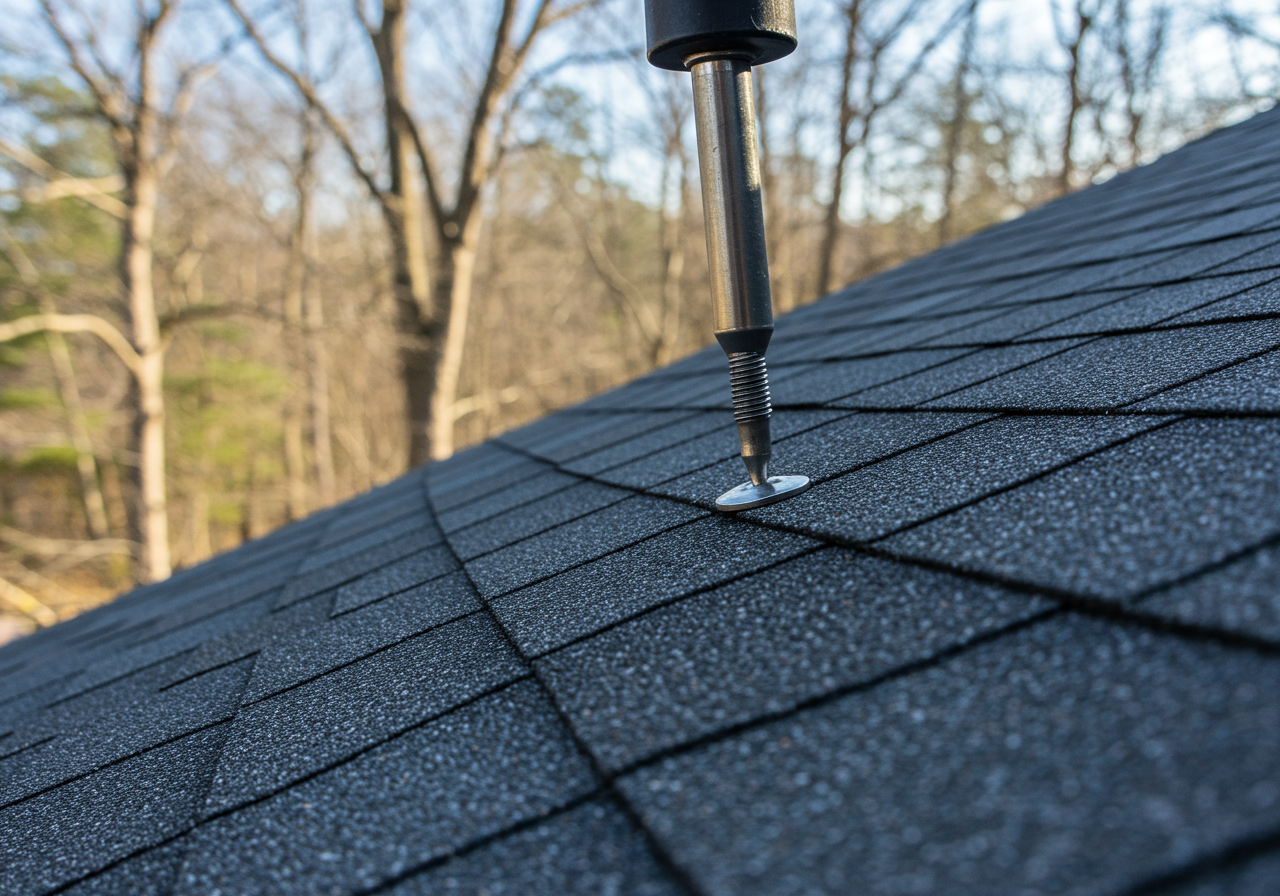
You don't have to see the ocean to be affected by it. In my years tracking CT climate patterns, I've noticed that homes around Salem—especially those with a bit of elevation—catch the brunt of the southwesterly winds. These winds carry microscopic salt crystals that settle into the crevices of your roof. If your contractor used standard electro-galvanized nails, you're on a countdown.
Salt air acts as a catalyst for oxidation. I've seen "30-year" roofs in Southeast CT start shedding shingles after just 12 years because the nail heads simply rusted away. This is why I always advocate for hot-dipped galvanized or, ideally, stainless steel fasteners. It sounds like a small detail, but it's the difference between a roof that survives a June microburst and one that ends up in your yard. Before you commit to a crew, I strongly suggest you verify their contractor's license to ensure they are familiar with the high-wind and corrosive-zone requirements of our specific region.
Standard roofing nails are often rated for inland environments
2. Why Shingle Sealants Fail During the March Thaw
March is when we see the "freeze-thaw-seal" cycle. During the day, the sun hits your roof, warming the asphalt; at night, the temperature drops back below freezing. Coastal-spec shingles are manufactured with higher-grade polymer-modified bitumen. This stuff stays flexible. Cheaper alternatives become brittle, and once that factory seal strip is compromised by a rogue gust of wind, it rarely reseals properly.
I've spent a lot of time looking at NWS historical storm events for New London County. We get these weird, high-velocity "gap winds" that funnel through the valleys of Salem. If your shingles aren't rated for 130 mph—even if that seems overkill—you're playing a dangerous game with the next nor'easter.
Standard vs. Coastal Shingle Specs
| Feature | Standard Grade | Coastal Grade |
|---|---|---|
| Wind Rating | ||
| Fastener Material | ||
| Sealant Tech | ||
| Salt Resistance |
3. The Underlayment "Double-Down" Strategy
If you were to peel back my roof right now, you'd see what I call the "belt and suspenders" approach. In Salem, the "ice and water shield" shouldn't just be a strip along the gutters. Because of our specific humidity levels and the way wind-driven rain hits the Southeast corner of the state, I recommend a full-deck waterproof underlayment.
In 2024, a series of storms proved that standard felt paper is about as useful as a screen door on a submarine when the wind gets over 50 mph. Water gets driven up under the shingles. A synthetic, coastal-grade underlayment acts as a secondary roof. It's a bit more expensive upfront—maybe $900 to $1,400 more for an average Salem home—but it prevents a $10,000 interior drywall disaster.
4. Flashing Materials: Beyond Basic Aluminum
Here's a Noah Knight hot take: if your roofer is using thin-gauge aluminum flashing on your chimney, fire them. In our climate, especially with the chemical cocktail of road salt being kicked up during winter and maritime air moving in, aluminum can pit and corrode.
I'm a big fan of copper or heavy-gauge lead-coated copper for Salem homes. Yes, the price of copper is enough to give anyone heart palpitations, but it lasts 75 years. If you're looking for a middle ground, Kynar-coated steel offers excellent corrosion resistance. I've found that seeing what other CT homeowners experienced with different materials can help you decide if the premium for copper is worth it for your specific neighborhood.
5. Managing the "Salem Microclimate" Attic Ventilation
Salem is unique because we have significant forest cover and several large water bodies like Fairy Lake. This keeps our local dew point higher than, say, Hartford. That moisture doesn't just sit on your shingles; it tries to get into your attic. Coastal roofing isn't just about the outside; it's about how the system breathes.
Standard ridge vents often get clogged with pine needles or fail during heavy wind-driven snow. I prefer "baffled" ridge vents for this area. They use the wind's own energy to pull hot, moist air out of your attic without letting rain in. I've seen attic temperatures in Salem hit 145°F in the summer because of poor venting, which literally "cooks" your shingles from the inside out.
High-Performance Baffled Ridge Vent Installation
A professional installation on a Salem home showing clean lines against architectural shingles, designed to handle New England's unique weather patterns
6. The March "Post-Winter" Roof Audit
Before the spring rains really kick in, you need to do a ground-level audit. Grab a pair of binoculars and look at your "valleys"—the places where two roof planes meet. In Salem, these valleys are magnet for damp leaves and debris that hold moisture against your shingles.
If you see any "granule loss"—it looks like dark sand in your gutters—that's a sign your shingles are losing their UV protection. This happens faster in coastal counties because the air is clearer and the UV index hits harder. Don't wait for a leak to start. According to Connecticut's consumer protection laws, you have the right to a clear, written estimate that details the specific materials being used. Make sure "Coastal Grade" isn't just a verbal promise.
If you're noticing missing shingles or those tell-tale grit piles in the downspouts, it's time to see what the actual cost of a local, weather-hardened replacement looks like.
Get Your Free Roof Quote
Enter your zip code to get started
I've spent years tracking how our local weather patterns interact with the "built environment." The takeaway is simple: Salem is close enough to the coast to require coastal toughness, but inland enough that people forget to plan for it. Don't be the homeowner who discovers their roof was built for Ohio while a New England gale is rattling the windows. If you want to see how these material choices impact long-term value, our blog library has more deep dives into the science of CT-specific roofing.