
Key Takeaways
- ACV vs. RCV: Know if your policy pays the full replacement cost or just a 'depreciated' value based on the age of your shingles.
- Maintenance Denials: Carriers often deny claims by blaming 'wear and tear' rather than storm damage, especially with ice damming.
- The 'Matching' Rule: Connecticut has specific regulations regarding matching shingles that can force an insurer to replace the whole roof instead of just a patch.
- Document Everything: Independent proof of the storm event and pre-loss condition is your only leverage in a dispute.
It's currently 2°F in Hampton, and that biting wind coming off the "Quiet Corner" hills isn't just making your coffee go cold—it's actively testing every seal on your roof. When the thermometer dips this low and stays there, while humidity hangs heavy at 81%, we aren't just talking about discomfort. We're talking about the specific recipe for ice dams that can turn a minor shingle gap into a $12,400 interior restoration nightmare.
Most homeowners here in Windham County assume that if they pay their premiums every month, the insurance company will simply "fix the roof" when things go sideways. But after years of auditing these line items, I can tell you that the gap between what you expect and what the adjuster writes down is often wide enough to drive a snowplow through. If you're filing a claim this January, you need to understand that insurance isn't a maintenance plan; it's a legal contract that adjusters are trained to interpret in the company's favor.
The Depreciation Trap: ACV vs. RCV Reality
The biggest shock for Hampton residents usually comes when they see the first check. I recently looked at a file for a colonial near the Hampton Reservoir where the homeowner thought they were "covered." They had an Actual Cash Value (ACV) policy. Because the roof was 17 years old, the insurance company subtracted 65% of the value for "depreciation."
Here's how the math actually breaks down. If a full replacement costs $18,000, and you have a $1,000 deductible, an ACV policy might only hand you a check for $5,300. You're left holding the bag for the remaining $12,700. Replacement Cost Value (RCV) policies are the gold standard because they eventually pay out that depreciation once the work is completed, but you still have to float the cash or find contractors who are licensed and insured to work within those insurance draws.
Understanding the Payout Tiers
Typical Insurance Payout Scenarios ($15k Roof)
Why the Deductible Isn't Just "Waived"
If a contractor tells you they can "waive your deductible," keep your hand on your wallet. That is insurance fraud in Connecticut. What they're actually doing is inflating the estimate or cutting corners on materials like underlayment or drip edge to hide the $1,000 or $2,000 cost. You want a line-item breakdown, not a "don't worry about it" handshake.
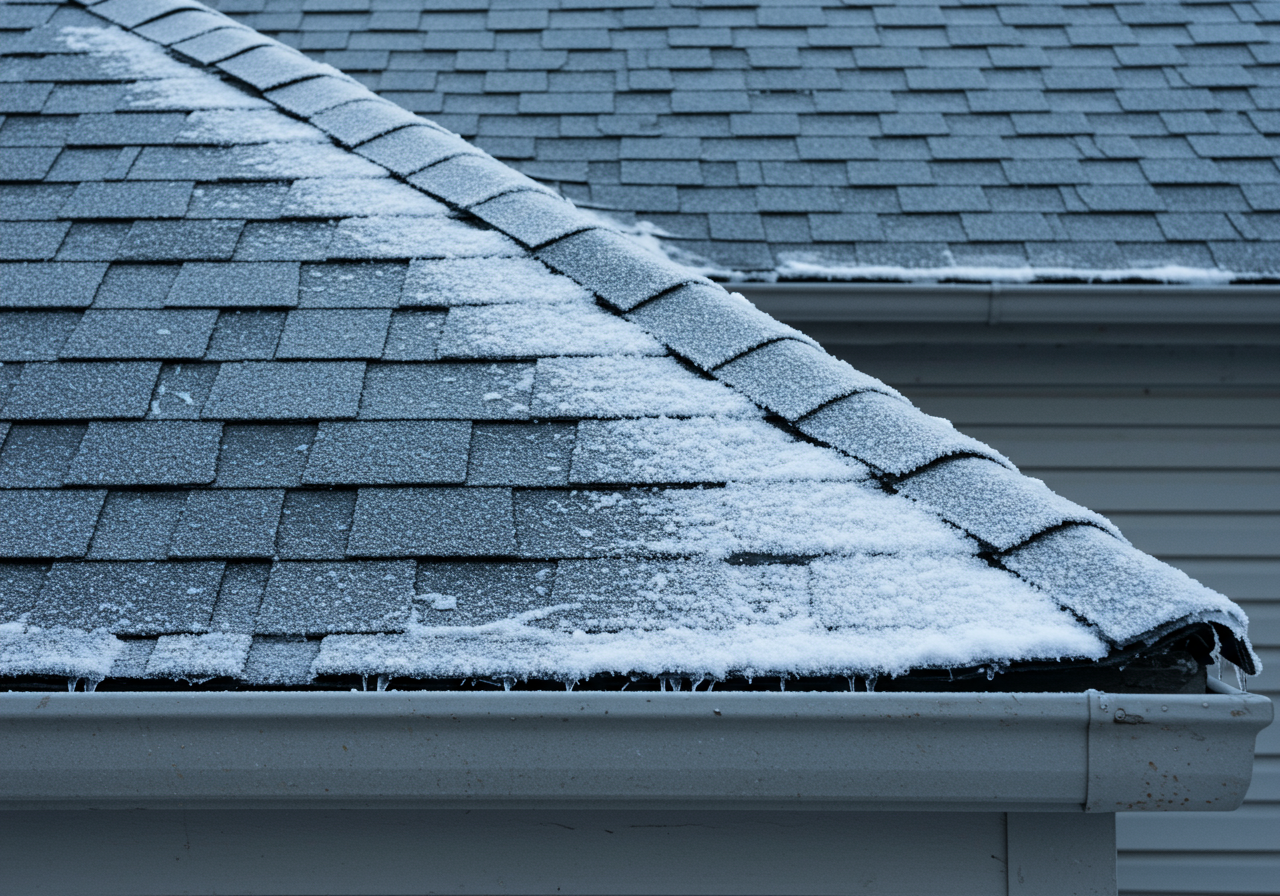
A snow-covered roof in Hampton, CT with visible ice damming along the eaves
A quiet residential street in Hampton during a January freeze
The "Wear and Tear" Wall: Why Claims Get Denied
With today's 2°F temperature, ice dams are the primary culprit for leaks. However, many adjusters will climb up, look at the granular loss on your shingles, and claim the leak happened because your roof was "past its useful life." They call this a maintenance issue, not an "occurrence."
I've seen claims denied because the homeowner didn't clear their gutters in the fall. The adjuster argued that the 81% humidity and trapped debris led to rot that wasn't "sudden and accidental." To fight this, you need proof of a specific event—like the 50 mph gusts we saw in the last nor'easter.
The CT Matching Law
Connecticut is a "matching state." This is your secret weapon. According to the Better Business Bureau's guidance on home contracts, contractors must follow state-specific standards. In CT, if the insurance company can't find a shingle that reasonably matches your existing roof in color and texture, they may be legally required to replace the entire slope—or even the entire roof—rather than leaving you with a "checkerboard" look.
Dana's Warning
Navigating the Adjustment Process Step-by-Step
When the adjuster arrives at your Hampton home, they aren't there as your friend. They are there to document the loss as narrowly as possible. I always tell people: be present, but don't volunteer information. If they ask, "How old is the roof?" and you say, "About 20 years," you just gave them a reason to depreciate the life out of your claim.
Document the damage
Take photos and video before touching anything. Capture the date and time, and include wide shots showing the overall condition.
File the claim immediately
Establish the date of loss right away. Delays can give the insurer reason to question whether the damage was truly 'sudden and accidental.'
Request the adjuster's report
Get a copy of the adjuster's summary report (the 'scope of work'). This is your baseline for negotiation.
Compare against real-world estimates
Have a local contractor provide an independent estimate. Compare line items—you'll often find missing items like ice and water shield or proper flashing.
Submit a supplement
If the contractor finds hidden damage like rotted decking, submit a 'Supplement' with photos and documentation. This is standard practice, not a red flag.
Using a Supplement to Fix the Gap
It's rare that an initial insurance check covers the whole job. Once the old shingles are ripped off, we often find "hidden" issues—water-damaged plywood or lack of ice and water shield. This is where your contractor submits a "supplemental claim." This is a standard part of the process, but you need to make sure your roofer knows how to speak the insurance language (using software like Xactimate).
The Hidden Cost of "Free" Inspections
In Hampton, we get "storm chasers" who show up after a hail event or a big wind storm. They offer a "free roof" and ask you to sign an "Assignment of Benefits" (AOB). Do not sign an AOB. This gives the contractor the right to your insurance money directly, and you lose all control over the project.
Instead, get your instant roof estimate first so you know the baseline cost of the project in the current Windham County market. Having a "real world" number in your pocket gives you the confidence to tell the insurance company when their $4,500 offer is insulting.
"The most expensive roof is the one you thought insurance was paying for, only to find out you're $8,000 short because of a 'wear and tear' clause you didn't read."
Protecting Your Investment from Future Storms
If you are replacing a roof due to wind damage, don't just put back what was there. Use this as an opportunity to upgrade. For example, FEMA's wind reinforcement standards suggest using ring-shank nails and specific patterns to prevent shingles from lifting in the future.
Material Comparison for Hampton Weather
Best Materials for Storm Resistance
| Feature | Architectural Shingle | Standing Seam Metal | 3-Tab Shingle |
|---|---|---|---|
| Wind Rating | |||
| Ice Dam Resistance | |||
| Relative Cost |
Architectural Shingle: 110-130 MPH wind rating, High ice dam resistance (with membrane), Moderate cost
Standing Seam Metal: 140+ MPH wind rating, Excellent ice dam resistance, High cost
3-Tab Shingle: 60-70 MPH wind rating, Low ice dam resistance, Budget cost
Get Your Free Roof Quote Today
Connect with verified CT pros who understand insurance documentation.
No credit card required • Free to use
Conclusion
Insurance claims in Hampton aren't a "set it and forget it" situation. You have to be the manager of your own recovery. This January, as the frost settles deep into the eaves, make sure you aren't just looking at the leak—look at your policy.
Before you sign any paperwork with an adjuster, connect with CT roofing contractors who understand how to document damage for insurance companies. A fair payout isn't a gift; it's what you've been paying for every month. Make them prove their math line by line.