
Key Takeaways
- Nearly 40% of Meriden housing predates 1940—original roofs were engineered for a cooler, drier climate than today's New Haven County summers.
- Layered shingles and trapped moisture often hide deck rot until snow load or wind exposes catastrophic failure.
- Synthetic slate and high-profile architectural shingles can preserve curb appeal without the weight penalty of natural slate.
- Box gutters and cornices demand roofing-and-carpentry expertise, not a quick rubber liner fix.
Did you know that nearly 39.4% of the housing stock in Meriden was built before 1940? That's a staggering amount of architecture—from Queen Annes near Hubbard Park to the brick industrials of the old "Silver City" era—that was designed for a Connecticut climate that simply doesn't exist anymore. Back then, we didn't have the same humidity spikes or the extreme "rain-on-snow" events that now plague New Haven County every March. These homes weren't just built differently; they were built with a completely different understanding of physics and moisture.
I've spent plenty of time walking the Westside and looking at those beautiful gables, but beneath the charm, many of these roofs are reaching a critical breaking point. If you own one of these legacy properties, you aren't just looking for a "shingle job." You're managing a structural artifact. In this guide, I'm going to break down why the rules of the game change when your rafters are older than the neighborhood's paved roads.
The Weight of History: Why Old Roofs Fail Differently
The most common issue I see in Meriden's older neighborhoods is structural fatigue. Modern asphalt shingles are relatively light, but many of our historic homes were originally designed to carry the massive weight of slate or thick cedar shakes. Over a century, those heavy timbers can begin to "memory-shape" or sag. I recently looked at a gorgeous Victorian near Castle Craig where the ridge beam had a four-inch dip because a previous owner had layered asphalt over old slate.
But weight isn't the only enemy. These older structures were often "breathable," meaning air moved freely through the attic and out the eaves. When we add modern insulation and airtight shingles, we often trap moisture that the original builders never intended to stay there. This leads to deck rot that stays hidden until a heavy March snow load causes a sudden, expensive failure. It's why verifying your contractor's license through Connecticut's eLicense portal is so vital; you need someone who understands the load-bearing limits of 19th-century oak.
The Hidden Danger of Multiple Shingle Layers
Walk down any street in the Hubbard Park area and you'll see "thick" roofs. In the mid-20th century, it was common practice in Connecticut to just slap a new layer of shingles over the old ones to save a buck. I've seen Meriden roofs with three or even four layers of material. Not only is this illegal under current building codes (which generally limit you to two layers), but it's a recipe for disaster during a Nor'easter.
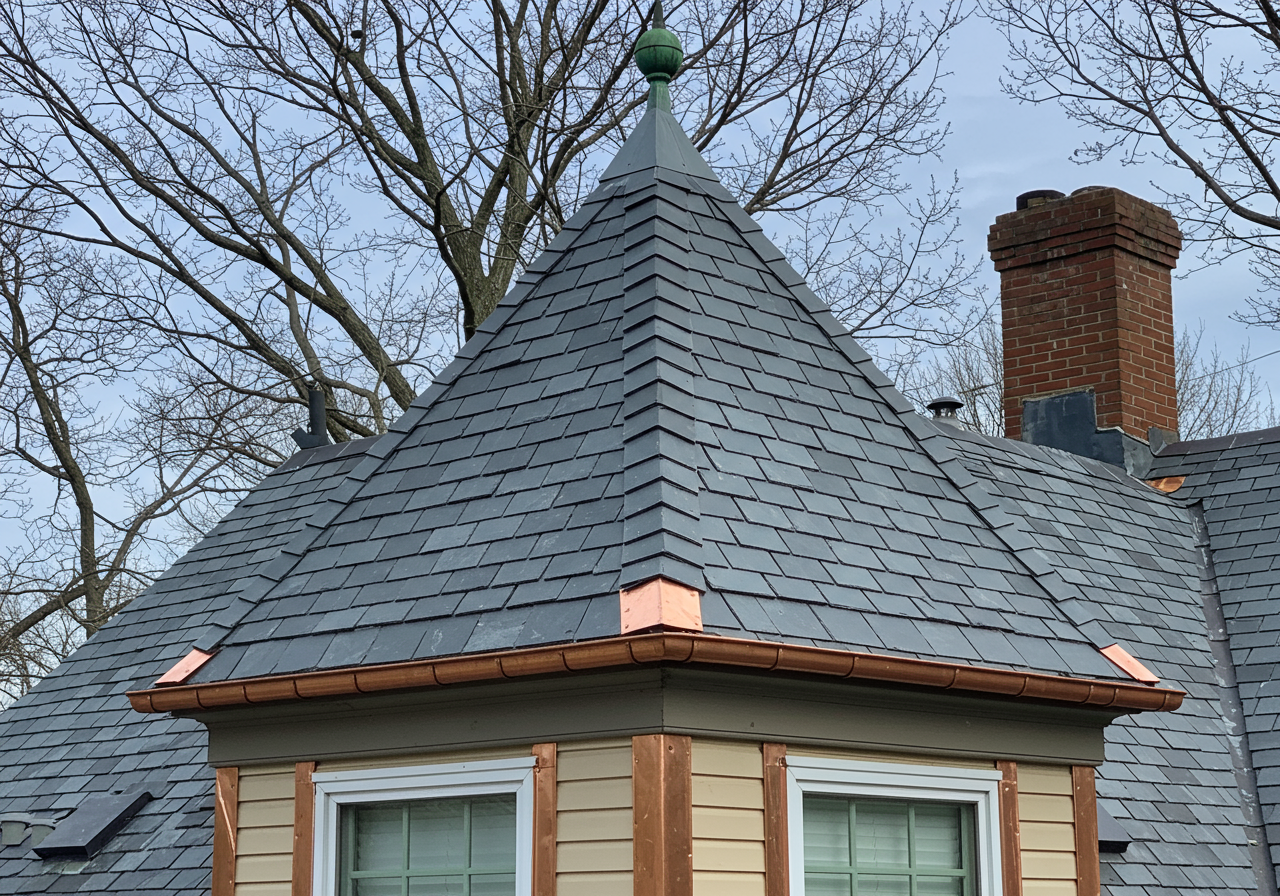
Layered Shingles on a Historic Meriden Roofline
Multiple courses trap heat, hide deck damage, and can lift in high winds—especially when tabs cannot seat flat.
When you have multiple layers, the shingles can't lay flat, which creates tiny air pockets. During high-wind events—which you can track through the NWS Storm Events database—those pockets act like sails. A single gust can peel back the entire "sandwich" of roofing. Plus, that extra weight can put over 4,000 extra pounds of stress on your rafters. If you're seeing a "stair-step" look at the edge of your roof, you're likely looking at a tear-off job that will cost about $2,300 more than a standard replacement just in disposal fees.
See what verified pros would charge for a full tear-off
Compare scope, not just price—especially when layers stack up.
No credit card required • Free to use
Restoring Slate and Cedar Without Breaking the Bank
If you're lucky enough to have an original slate roof, you know the "hundred-year" promise is real—but so is the five-figure repair bill. Slate is gorgeous, but the specialty labor required in New Haven County is becoming a lost art. I often tell homeowners that if more than 25% of your slates are flaking or "soft," it's time to look at alternatives.
Historic Roofing Materials Comparison
| Feature | Natural Slate | Synthetic Slate | Architectural Asphalt |
|---|---|---|---|
| Exceptional longevity (50+ years when properly maintained) | |||
| Light enough to avoid joist reinforcement on most homes | |||
| Lowest material cost for full replacement | |||
| Maintains historic streetscape character |
Synthetic slate has become a game-changer for Meriden's historic districts. It's made from recycled polymers but molded from actual 19th-century slate tiles. To the casual observer on the sidewalk, it looks identical. However, it weighs about 70% less, meaning you don't need to reinforce your attic joists. It's a smart way to find a contractor who actually shows up and knows how to handle specialty materials without the "historic" markup.
Did You Know?
Connecticut's March 'rain-on-snow' pattern pushes more moisture into undersized historic attics than many owners realize—ventilation plans should match how you actually live in the house, not a 1920s floor plan.
Ventilation Challenges in Meriden's Historic Attic Spaces
March in Connecticut is the season of "attic rain." This happens when warm, moist air from your bathroom or kitchen hits the cold underside of your roof deck. In a 1920s Colonial, you likely don't have a ridge vent. You might have small gable vents or nothing at all. I've seen attics in Meriden where the rafters were literally dripping wet, even though the roof wasn't leaking.
The problem is often "over-insulating" without adding airflow. If you stuff fiberglass into the eaves, you block the natural "stack effect" that keeps the wood dry. When I talk to homeowners, I suggest looking at solar-powered attic fans or specialized "smart" vents that can be tucked behind a fascia board to keep the historic profile clean while moving enough air to prevent mold. It's about managing the dew point, not just the temperature.
The Complexity of Box Gutters and Cornice Repairs
If your Meriden home has gutters that are actually built into the roofline (box gutters), you have my sympathy and my warning. These were popular in the late 1800s because they didn't clutter the ornate cornices. But they are notorious for leaking directly into the wall cavity.
The Box Gutter Warning
Repairing these requires a hybrid of roofing and fine carpentry. I once watched a crew try to "solve" a box gutter issue by nailing a standard K-style gutter over it. It looked terrible and, more importantly, it trapped water against the fascia, rotting out a 12-foot section of the roof's edge. This is where Connecticut's home improvement consumer protection rules really matter—ensure your contract specifies exactly how the drainage will be integrated into the historic trim.
Choosing Modern Materials That Respect the Past
You don't have to spend $40,000 to have a roof that looks period-correct. The technology in architectural shingles has improved dramatically. High-definition "shake" shingles can mimic the depth and shadow lines of hand-split cedar for a fraction of the price.
Assess the structural integrity of the existing rafters.
Look for sag, sistered members, and prior water staining before you lock in material weight.
Check for local historic district color and material restrictions.
Confirm what the commission will approve before you fall in love with a sample board.
Compare three quotes from contractors who have worked on pre-1940 homes.
Ask how they document tear-off depth, flashing, and ventilation—not just shingle brand.
Ensure the contract includes a full tear-off of all old layers.
Overlays on antique decks often hide decay and void manufacturer warranties.
Verify that new ventilation doesn't ruin the home's silhouette.
Low-profile intake and exhaust options can move air without crowning the ridge in a modern profile.
But here's the kicker: the color choice matters more than you think. In Meriden, the sun angle in late winter can actually help melt ice dams if you choose a slightly darker shingle that absorbs thermal energy. Just don't go too dark if your attic ventilation is poor, or you'll bake your shingles from the inside out during our humid July stretches. If you're ready to see how the numbers look for your specific roofline, getting an instant estimate can give you a baseline before you even talk to a salesperson.
Vetting Contractors for Sensitive Historic Projects
The biggest mistake I see Meriden owners make is hiring the "storm chaser" who just did a modern ranch down the street. Historic homes have "surprises"—horsehair plaster, hand-forged nails, and non-standard rafter spacing. You need a specialist.
I always tell people to ask for a "layer count" during the estimate. If a roofer doesn't climb a ladder to check how many layers are actually there, they're going to hit you with a $3,000 "unexpected" change order the moment they start the tear-off. You want a pro who looks at the chimney flashing and the valley tin—those are the spots where 100-year-old homes usually fail first. When wind peels flashing or ice drives water uphill, 24/7 emergency roofing help can stabilize the damage—but the long-term fix is still a scope built for an antique frame.
Get Your Free Roof Quote
Enter your zip code to get started
In the end, protecting a historic home in the Silver City is about more than just keeping the rain out. It's about stewardship. By making the right material choices today, you're ensuring that the next family to own that 1910 Colonial won't be dealing with the same structural headaches you are. It's an investment in Meriden's history, and your own peace of mind.