
Key Takeaways
- Connecticut's 2022 State Building Code adoption requires strict compliance with 2021 IRC standards.
- Monroe's proximity to the coast means stricter wind speed and ice shield requirements than inland towns.
- The 'two-layer' rule allows overlaying shingles, but it can reduce roof lifespan by 35% and void warranties.
- Permit fees in Monroe are based on project value, typically $200-$250 for a standard $16,400 roof replacement.
March in Monroe usually means two things: navigating the muddy ruts on some of our back roads near Wolfe Park and finally admitting that the ice dams from January did more than just look like pretty decorations. As we shake off the tail end of winter, my office phone starts ringing with homeowners who are ready to pull the trigger on a new roof. But here's the thing—many of them are still looking at quotes based on "the way we used to do it" back in 2018. Connecticut updated its building codes significantly with the 2022 State Building Code adoption, and if your contractor isn't talking about the 2021 International Residential Code (IRC) standards, you're likely headed for a failed inspection or a voided shingle warranty.
I've looked at dozens of "budget" estimates over the last year where the contractor conveniently forgot to include the mandatory $485 worth of drip edge or the specific ice shield requirements that Monroe inspectors look for. In Fairfield County, we play by a stricter set of rules because of our proximity to the coast and our specific snow load data. If you're sitting at your kitchen table trying to calculate your potential permit and material costs, you need to know exactly what the Town of Monroe expects before you sign a single document.
1. The "Two-Layer" Rule and the Hidden Cost of Weight
One of the most common questions I get from Monroe residents—especially those in the older colonials near the Stepney area—is whether they can just "nail over" their existing shingles to save a few thousand dollars. Technically, the Connecticut State Building Code allows for a maximum of two layers of asphalt shingles. However, just because the code says you can doesn't mean you should. I recently worked with a homeowner on Fan Hill Road who thought they were saving $2,840 by adding a second layer. Two years later, the added weight caused a structural sag that cost them over $7,200 to reinforce.
When you add a second layer, you are effectively trapping heat between the old and new shingles. This creates a "slow bake" effect that can reduce the lifespan of your new roof by 35% or more. Furthermore, most reputable manufacturers like GAF or CertainTeed will significantly limit their warranty coverage if the shingles aren't applied to a clean, inspected deck. If your contractor is pushing a "lay-over" without mentioning these risks, they aren't looking out for your wallet; they're looking for an afternoon off. In Monroe, where our late-winter winds can be unpredictable, having shingles nailed directly into a solid deck is the only way to ensure the fastener pattern actually holds.
Tear-Off vs. Nail-Over Reality
| Feature | Full Tear-Off | Second Layer Overlay |
|---|---|---|
| Deck Inspection | ||
| Manufacturer Warranty | ||
| Heat Dissipation | ||
| Initial Savings |
2. Ice and Water Shield Requirements for Fairfield County
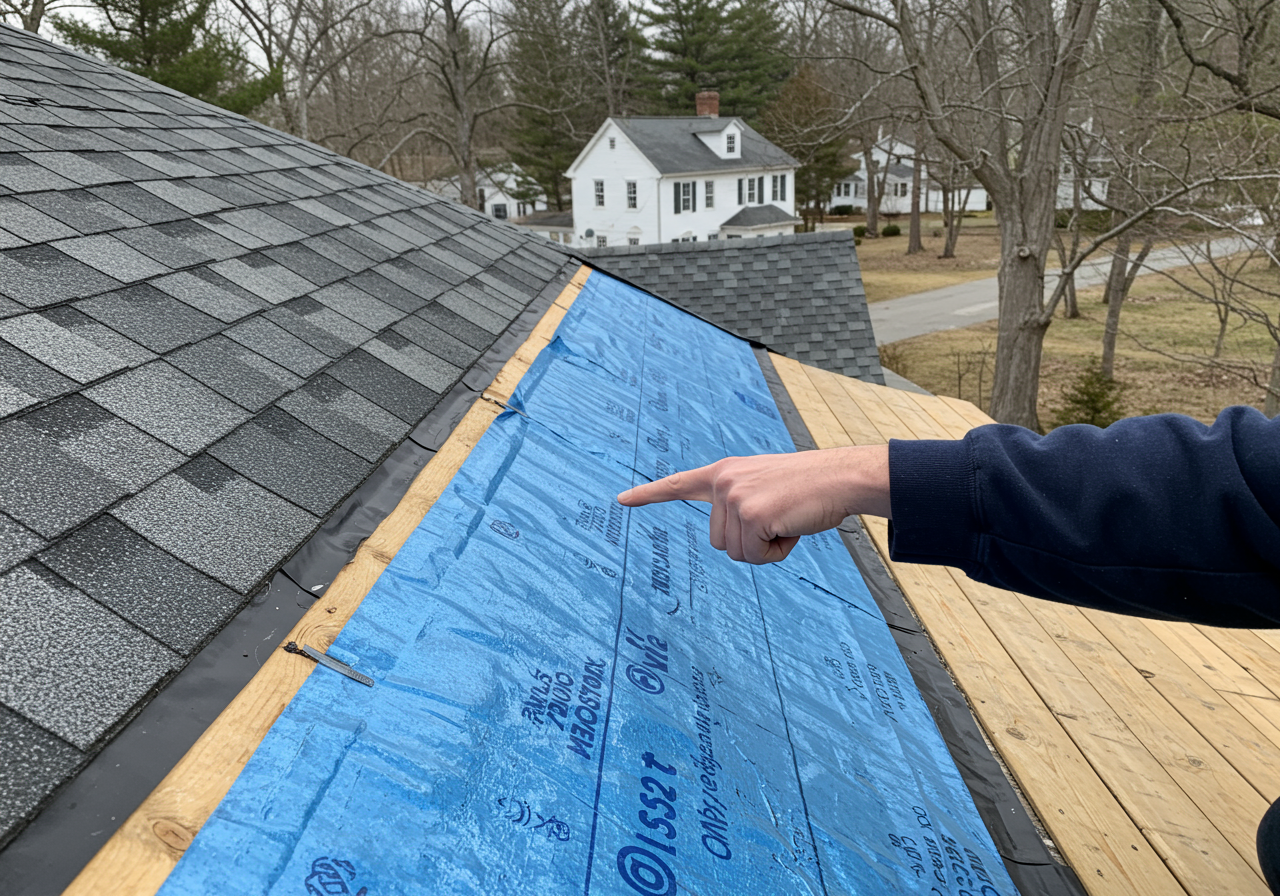
In Monroe, we deal with a specific type of winter weather—that annoying "Goldilocks" zone where it's just cold enough to snow but warm enough to melt and refreeze every 12 hours. This is the perfect recipe for ice dams. The state code is very specific here: you must install an ice and water shield membrane (a self-adhering polymer-modified bitumen sheet) from the lowest edges of all roof surfaces to a point at least 24 inches inside the exterior wall line.
I've seen "fly-by-night" crews try to skimp by only running one 36-inch roll of shield. On a standard Monroe home with a 12-inch overhang (soffit), one roll isn't enough to reach that "24 inches inside" requirement. You actually need two courses of shield to be fully compliant. I recall a project near Great Hollow Lake where the inspector made the crew strip off the first three rows of brand-new shingles because they hadn't overlapped the shield correctly. That's a $1,150 mistake that the homeowner shouldn't have to pay for, but guess who usually gets stuck with the bill if the contract isn't specific? Always check that your line items specify "two rows of ice and water shield" or "shield to code."
3. Wind Speed Ratings and Debris Protection
Because Monroe is part of Fairfield County, we are classified within a specific wind-speed map zone. While we aren't quite in the "High Velocity Hurricane Zone" like our neighbors in Bridgeport or Westport, we still have to account for significant gusts. The current code requires shingles to be tested and labeled for wind resistance. For most of Monroe, we are looking at a "Risk Category II" wind speed requirement, which generally translates to shingles that can withstand 115–125 mph gusts.
Proper Monroe Fastener Pattern
A close-up of a 6-nail fastener pattern required for high-wind compliance in Fairfield County.
It's not just about the shingle itself, though; it's about the fasteners. I always tell my clients to ask for a "6-nail pattern" rather than the standard 4-nail approach. It costs pennies more in nails but significantly increases the wind uplift rating. If you are planning a full tear-off and replacement, this is a non-negotiable point. I've seen shingles from a 2019 installation end up in a neighbor's yard during a freak March windstorm because the contractor used a "high-nailing" technique that missed the reinforced common bond area of the shingle. According to FEMA's technical guidelines for low-slope systems, which offer great insights even for steeper residential pitches, the mechanical attachment of every component is what prevents catastrophic failure during Fairfield County storms.
4. The Monroe Permit Office and the Paperwork Trail
Let's talk about 7 Fan Hill Road—the Monroe Town Hall. Navigating the Building Department is where a lot of "weekend warrior" contractors get tripped up. Monroe requires a building permit for any roofing project involving more than 25% of the total roof area. As of 2026, the permit fees are based on the total value of the work (labor and materials). For a typical $16,400 roof, you can expect the permit to cost somewhere in the neighborhood of $200–$250, plus a state education fee.
Obtain a copy of your contractor's CT license and proof of workers' comp insurance.
This is non-negotiable. The Building Department will verify these documents before issuing a permit.
Fill out the Monroe Building Permit application with a detailed scope of work.
Include material specifications, square footage, and any structural modifications.
Submit the application and pay the fee (calculated per $1,000 of project value).
Fees are typically $200-$250 for a standard roof replacement, plus state education fees.
Schedule the mid-project or final inspection as required by the Building Official.
Inspectors want to see ice shield and drip edge before shingles cover them up.
I once assisted a couple near the Trumbull border who hired a contractor who told them, "You don't need a permit for a simple shingle swap." Halfway through the job, the town's building official drove by, saw the dumpster, and issued a "Stop Work" order. The homeowner had to pay double the permit fee as a penalty, and the house sat under a tarp for four days during a rainy week. It was a mess. Always insist that the contractor pulls the permit in their name, not yours. If they ask you to pull it as a "homeowner-occupant," they are likely trying to hide the fact that they aren't properly licensed or insured in the state of Connecticut.
5. Ventilation and the New R-60 Insulation Standards
Roofing isn't just about what sits on top of your house; it's about how the whole system breathes. The 2022 CT code has significantly upped the ante for attic insulation and ventilation. If your contractor isn't talking about "intake" and "exhaust" balance, your new roof is going to fail prematurely. In Monroe, the standard for attic insulation has shifted toward R-60 in many scenarios. This means that if your roofers are tearing everything off, it is the perfect—and often legally required—time to address the insulation levels.
The Department of Energy's insulation standards highlight that a properly insulated attic can reduce your heating and cooling costs by up to 15%. In our climate, that's real money staying in your pocket every month. Furthermore, if you're looking into modern "cool roofs" to mitigate the summer heat we get in July and August, EPA's research on reflective roofing shows that choosing a shingle with a higher Solar Reflectance Index (SRI) can keep your attic significantly cooler, which in turn protects the shingles from cracking.
Warranty Warning
If you're currently dealing with a few missing shingles or a mystery drip in the spare bedroom, you might be looking for smaller-scale leak repairs instead of a full overhaul. Just be aware that even small repairs must use "compatible materials" under CT code. You can't just slap any old flashing onto a modern roof and expect it to pass muster.
Average Lifespan of Monroe Roofing Materials (Years)
When I analyze a quote for a Monroe homeowner, the first thing I do is look at the "fine print" regarding these code items. A contractor who lists "drip edge," "ice shield to 24 inches," and "permit fees included" is someone who knows the local landscape. A contractor who gives you a one-paragraph estimate on a napkin is someone you should run away from. The numbers on paper should tell a story of compliance and protection, not just a bottom-line price that looks too good to be true.
Get Your Free Roof Quote
Enter your zip code to get started
In the end, the building codes in Monroe aren't there to make your life difficult or more expensive. They are there to ensure that when the next nor'easter rolls through Fairfield County, you aren't chasing your shingles down Route 111. Take the time to ask your contractor to show you the math line by line. If they can't explain how they are meeting the 2022 CT code, they shouldn't be on your roof.