Key Takeaways
- March's false spring—sunny 45°F days and sub-20°F nights—creates the peak season for catastrophic ice dam leaks in Avon.
- 82% of ice dam leaks could be prevented with proper attic air sealing and R-60 insulation.
- Heat tracking (snow melt lines along rafters) is a red flag that your attic is leaking warm air.
- Never chip at ice dams with a hammer or shovel—hire a pro who uses low-pressure steam.
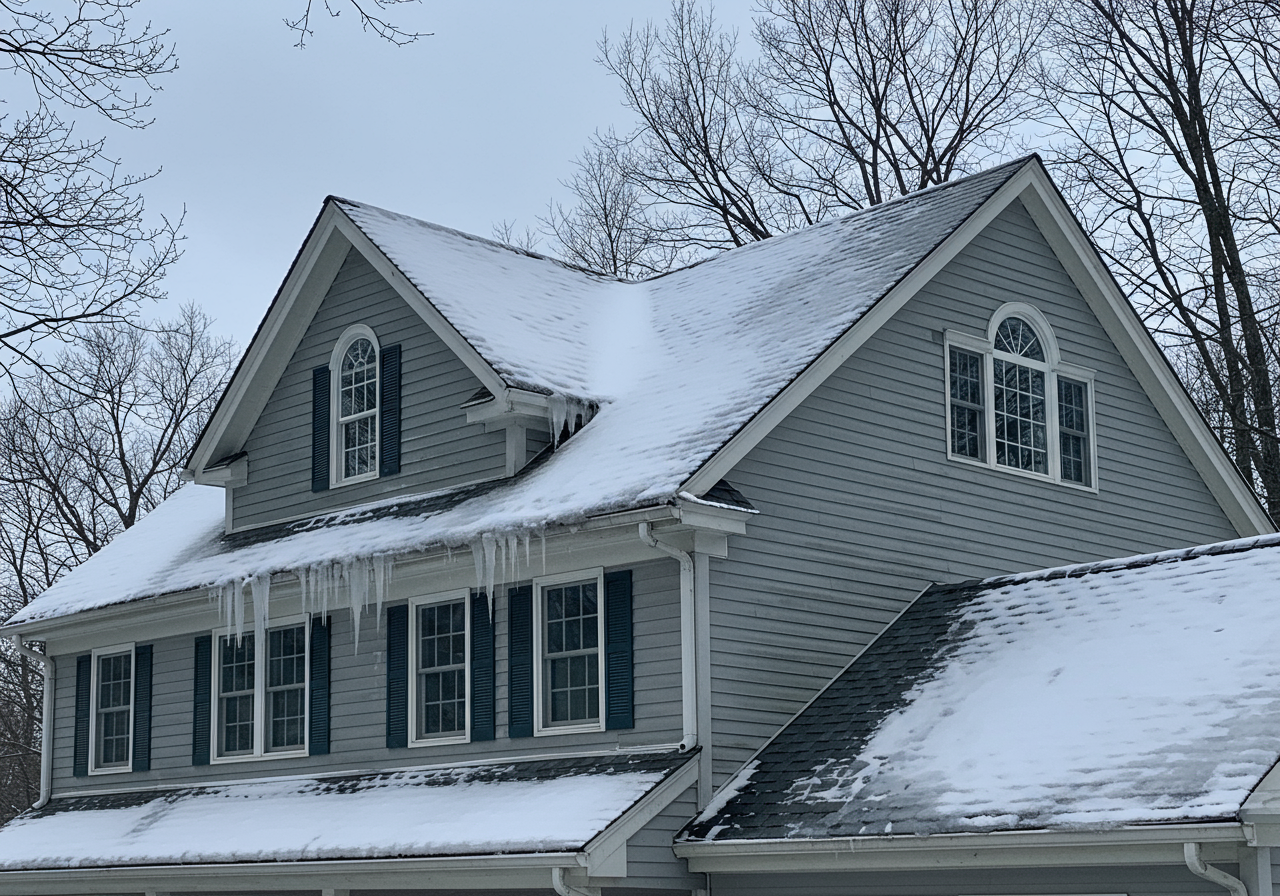
Most Avon homeowners assume that once we hit March, the threat of frozen water destroying their roof has melted away. The reality is that the "false spring" we see in the Farmington Valley—where sunny days hit 45°F and nights drop back into the teens—is actually the peak season for catastrophic ice dam leaks. If you see those thick, glassy daggers hanging off your gutters near West Avon Road, you aren't looking at a winter postcard; you're looking at a structural failure in progress. I've spent years tracking how our specific microclimate—that damp, heavy air that sits in the valley—interacts with the varied architecture of Hartford County. We have a mix of beautiful 19th-century colonials and sprawling modern builds, both of which face unique challenges when the snow starts to cycle through the freeze-thaw loop.
The Physics of the Ridge: Why Ice Dams Form
An ice dam isn't a "roofing" problem in the traditional sense; it's a heat management failure. It starts when the air in your attic gets too warm, usually because of bypasses—tiny gaps around recessed lights, plumbing stacks, or attic hatches. This warm air rises and heats the underside of your roof deck. The snow on top melts, the water trickles down to the eaves (which are colder because they overhang the house), and it freezes solid.
Before you know it, you have a literal dam of ice holding back a pool of liquid water. That water has nowhere to go but under your shingles. In my field notes from the heavy snow winters of the mid-2010s, the most severe interior damage didn't happen during the blizzards, but during the slow thaws that followed. If you want to understand how your specific roof slope handles these transitions, our blog library has several deep dives into CT-specific weather patterns and shingle resilience.
Avon's Architectural Risk: From Colonials to Contemporary
Avon has a very specific "roofing DNA." We have many homes built in the 1970s and 80s that were constructed before modern ventilation standards were fully understood. These houses often have "bottlenecked" eaves where the insulation has been stuffed so tight into the corners that it blocks the soffit vents. Without that intake of cold air, the attic becomes a furnace, accelerating the melting process on the roof.
I've walked through neighborhoods near the Golf Club of Avon where every third house had classic "icicle clustering." This happens when the complex rooflines—multiple gables and valleys—trap snow in pockets. According to the Better Business Bureau's guide to roofing projects, choosing a contractor who understands these regional architectural quirks is the difference between a temporary patch and a permanent fix. Older homes in our area often lack a continuous air barrier, meaning the heat you're paying for is literally rising through the ceiling and melting your shingles from the inside out.
Spotting the "Shadow Leak" Before the Ceiling Collapses
You don't need a ladder to know you're in trouble. The first sign is often "heat tracking." Look at your roof after a light dusting of snow; if you see the lines of your rafters clearly outlined because the snow has melted between them, your attic is leaking heat like a sieve. Another red flag is icicles that form behind the gutter or along the siding. This means the water has already bypassed the drainage system and is working its way into your soffits.
I remember visiting a client near Twin Meadow Lane who thought they were safe because they didn't see water dripping from the ceiling. But when we pulled back the drywall in the upstairs closet, the insulation was a sodden, moldy mess. That's the "shadow leak"—water that wicks into the wall cavity without ever making a visible puddle. This is why I always suggest that homeowners see what other CT homeowners experienced when dealing with late-season leaks; the stories are remarkably similar, involving hidden moisture that stays trapped until the humidity of June brings out the mold.
The Emergency Response: Saving Your Shingles Safely
If you currently have a two-foot block of ice on your eaves, do not—I repeat, do not—go out there with a hammer or a shovel. I have seen countless $15,000 roofs ruined in twenty minutes by a well-meaning homeowner or an amateur "handyman" chipping away at the ice. You will lose shingles, puncture the underlayment, and likely void any manufacturer warranty you have left.
Assess the Interior
Assess the interior walls for moisture or peeling paint to locate the leak source.
Hire a Professional
Hire a professional who uses low-pressure steam, not high-pressure power washers.
Clear Snow Safely
Clear only the bottom 3 feet of snow from the roof using a long-reach roof rake.
Verify Credentials
Verify the contractor's insurance and registration before they start.
The only "pro-approved" way to clear a dam is with low-pressure steam. It's gentle on the granules and melts the ice into manageable chunks. Before you hire anyone to climb onto your roof in icy conditions, make sure you verify their contractor's license through the state. Connecticut's home improvement laws are there to protect you, but they only work if you hire registered professionals. You can check any company name on the CT eLicense portal to ensure they are current with the Department of Consumer Protection.
Insulation and Air Sealing: The Real Long-Term Cure
To stop ice dams for good, you have to treat the disease, not just the symptoms. This means bringing your attic insulation up to at least R-60. But insulation alone won't do it. If you have fiberglass batts sitting over an open air leak (like an unsealed chimney chase), the insulation just acts as a filter for the warm air passing through it.
Effectiveness of Preventive Measures
In many Avon homes, the most effective fix is a combination of spray foam at the top plates and baffled vents that ensure air flows from the soffits all the way to the ridge. It's about creating a "cold roof" environment. When the temperature of your roof deck matches the temperature of the outside air, the snow stays frozen until the sun melts it naturally from the top down.
Low-pressure steam melting an ice dam on an Avon roof
Professional ice dam removal during a late winter thaw in Avon, Connecticut
Why Your Underlayment is the Last Line of Defense
Ultimately, weather happens. Even the best-ventilated attic can struggle during a freak Hartford County storm that dumps three feet of snow followed by a 40-degree rain. That's where your "Ice and Water Shield" comes in. This is a rubberized, self-healing membrane that is applied directly to the wood deck before the shingles go on.
Did You Know?
Connecticut building code requires ice and water shield to extend at least 24 inches inside the interior wall line, but in our valley climate, I always recommend going up at least two full courses (6 feet) for extra security.
Modern membranes are designed to seal around the shank of the roofing nails, creating a waterproof gasket. If a dam does form, the water can sit on that membrane without leaking into your rafters. When you're looking at estimates, don't just look at the shingle brand. Look at the perimeter protection. If a contractor tries to skimp on the underlayment to lower the bid, they are setting you up for a disaster five years down the road.
Get Your Free Roof Quote
Enter your zip code to get started
Solving the ice dam puzzle in Avon requires a bit of detective work and a commitment to doing things the right way. It's not about the flashiest shingles; it's about the science happening underneath them. If you take care of the airflow and the seals now, you can spend those March thaws enjoying the view of the Farmington River instead of emptying buckets in your attic.
FAQ

About Noah Knight
Verified ExpertNoah Knight is a Connecticut Weather & Climate Specialist who helps homeowners understand how New England's unique weather patterns affect their roofing systems. He combines meteorological knowledge with practical home maintenance advice.