
Key Takeaways
- Ledyard's unique topography near the Thames River creates localized 'wind tunnels' that require specific shingle fastening patterns.
- Secondary water barriers are no longer optional for Connecticut homes; they are the final line of defense against wind-driven rain.
- The transition from February's freeze-thaw cycles to spring prep is the most cost-effective time to schedule a professional inspection.
- Ledyard building codes have evolved, but older homes near Route 117 often require retrofitting to meet modern uplift standards.
"The wind doesn't care that you're five miles from the Long Island Sound; it just cares that your roof is acting like a giant sail." This insight, shared with me years ago by a former Ledyard Emergency Management official, captures the unique reality of living in this corner of New London County. While our neighbors down in Mystic or Groton get the brunt of the storm surge, Ledyard homeowners deal with a different beast: topographic acceleration. Between the rolling hills near Ledyard High School and the way wind funnels up the Thames River, our roofs take a beating that "inland" statistics don't always account for.
As we navigate this February, it's the perfect time to look at your home from a climate perspective. We aren't just looking for leaks; we're looking for structural resilience. Preparing your roof for hurricane season isn't a weekend DIY project—it's a multi-year strategy to ensure your biggest investment doesn't end up in your neighbor's yard during the next big blow.
The Reality of Ledyard's "Inland" Hurricane Risk
Many people in town assume that because we don't have beachfront property, we are safe from the worst of a tropical system. But if you look back at the historical tracks of storms that have raked across New London County, you'll see that Ledyard's elevation actually works against it. When a hurricane moves north, the friction of the land usually slows it down, but our ridges can actually cause wind speeds to "compress" and accelerate over the crests of hills.
I've walked through neighborhoods in Gales Ferry after minor nor'easters and seen shingles stripped from roofs that were supposedly "rated" for the wind. The problem usually isn't the shingle itself; it's how it was installed relative to the local terrain. If your house sits on a high point, your roof experiences significantly more uplift than a house tucked down in a valley.
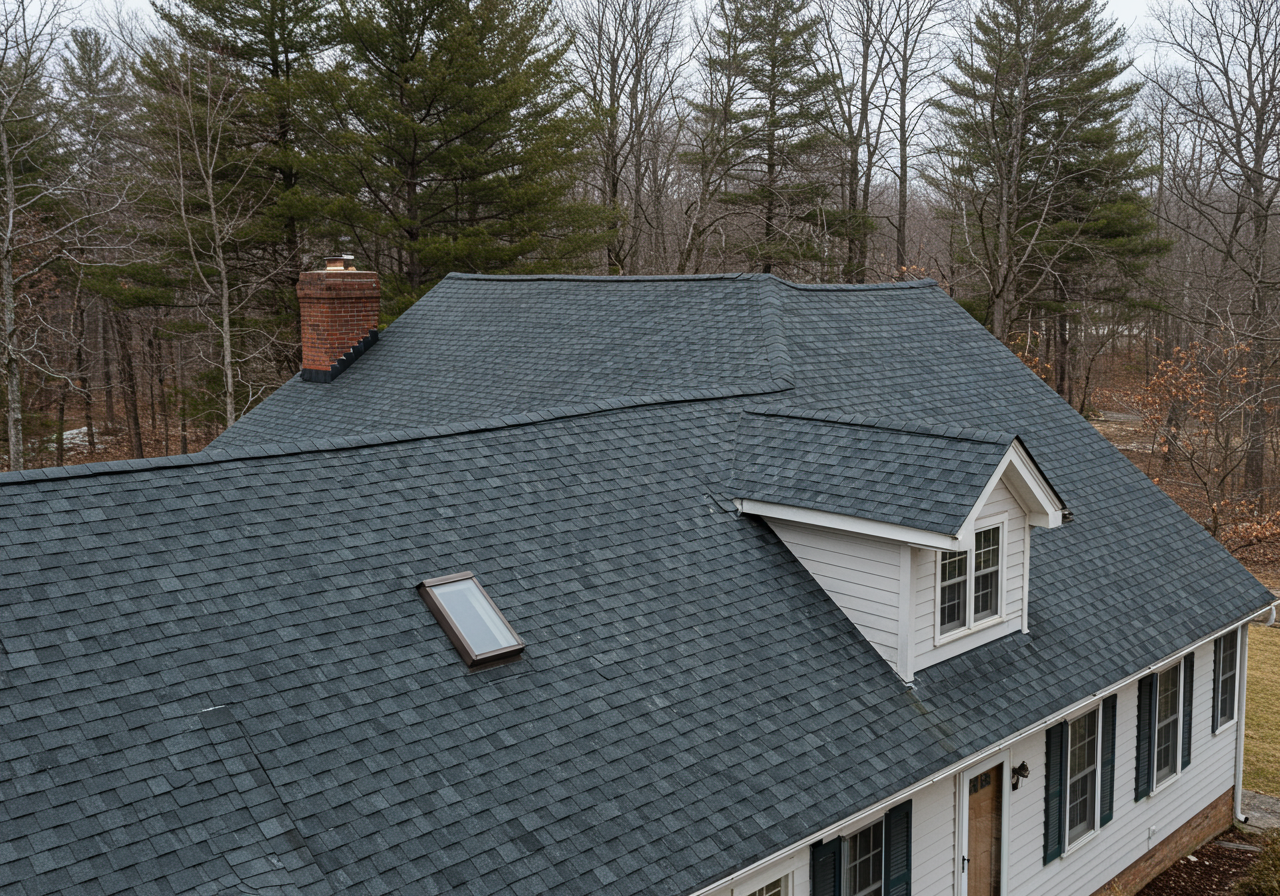
Local topography in Ledyard can turn a standard storm into a high-uplift event for hilltop homes.
A close-up of a reinforced roof ridge showing hurricane-rated shingles and heavy-duty flashing, set against a backdrop of Ledyard's wooded hills.
Fortifying the Deck: Why Attachment Points Matter
When a hurricane hits, the wind creates a vacuum effect. It's trying to lift your roof deck right off the rafters. Most older homes in Ledyard were built with 8d common nails, which were standard at the time but often lack the "grip" needed for 100+ mph gusts.
During a re-roofing project, the smartest move you can make is ensuring the contractor uses ring-shank nails. These have small ridges that lock into the wood fibers, making them nearly impossible to pull out. According to FEMA's guide on hurricane mitigation for sloped roofs, proper roof-to-wall connections and deck attachment are the most critical factors in preventing total roof failure.
The "Staple" Problem
If you're living in a home built during the late 80s or early 90s, there's a chance your roof deck was attached with staples. I've seen these pull out like they were stuck in butter during high-wind events. If you're planning a replacement, verify your contractor's methods and insist on a specific nailing pattern.
Shingle Selection for High-Velocity Winds
Not all shingles are created equal, especially when you're dealing with the humidity and wind profiles of Southeast Connecticut. In Ledyard, we need materials that can handle the salt-tinged air from the coast while resisting the mechanical stress of wind.
Modern architectural shingles often come with a "high-wind" warranty, but those warranties are usually only valid if a specific number of nails are used per shingle. In standard conditions, four nails might suffice. For a hurricane-ready roof in a place like Ledyard, we're looking at six nails per shingle, plus starter strips that are fully adhered at the eaves.
Estimated Lifespan of Roofing Materials in CT Storm Conditions
The Vulnerability of Gable Ends and Overhangs
If your Ledyard home has a gable roof—the classic "A-frame" look—you have a potential weak point. During a hurricane, the flat face of that gable catches a tremendous amount of wind pressure. If the gable wall isn't braced properly to the attic floor and rafters, the whole thing can collapse inward or get sucked outward.
I remember inspecting a home near the Foxwoods vicinity after a particularly nasty storm. The shingles were fine, but the wind had gotten under the large soffit overhangs and lifted the edge of the roof like a soda tab. Reducing overhangs or ensuring they are properly closed and braced is a technical detail that many generic quotes miss. If you want to see how these details affect long-term performance, our roofing blog has several deep dives into structural failures and how to avoid them.
Did You Know?
Homes in Ledyard located within 1,500 feet of the Thames River are often subjected to higher 'Exposure Category' wind loads, requiring specialized installation techniques compared to homes further inland.
Secondary Water Barriers: The Unsung Heroes
Even if your shingles stay on, a hurricane will find a way to push water uphill and under your roofing material. This is where the secondary water barrier comes in. In the old days, we just used felt paper. Today, we use "ice and water shield" or synthetic underlayments that self-seal around nail penetrations.
This isn't just about preventing leaks; it's about saving your interior. If a few shingles blow off, a high-quality underlayment can keep your house dry for days until repairs can be made. Since roofing and insulation are so closely linked in terms of home protection, the Department of Energy's guide on attic insulation and sealing is a great resource for understanding how to keep your attic environment stable during extreme weather.
The 2026 Maintenance Checklist for Ledyard Storms
Waiting until a tropical storm is named in the Atlantic is too late. In Ledyard, our "storm season" effectively begins the moment the ground thaws in the spring. February is when I recommend homeowners do a "ground-up" binocular inspection. Look for "tabs" that are slightly lifted—these are the first things the wind will grab.
I've found that Ledyard homeowners who stay on top of minor repairs every 3-4 years end up spending significantly less than those who wait for a catastrophic failure. It's about maintaining the "seal" of the roof. When the sealant strip on a shingle fails due to age or debris, it's no longer a roof; it's a deck of cards waiting for a breeze.
Conduct a binocular inspection
Inspect all ridges and eaves from the ground using binoculars to spot lifted tabs or damaged shingles.
Clear overhanging tree limbs
Remove branches from oaks and maples common in Ledyard that could fall on your roof during high winds.
Check attic rafters
Look for light peeking through or water stains that indicate potential entry points for wind-driven rain.
Verify gutter attachments
Ensure gutters are securely fastened to prevent them from catching wind and causing damage.
Schedule a professional tune-up
Have a contractor re-seal any loose flashing and address minor issues before they become major problems.
Choosing Local Contractors Who Understand the Terrain
The most important part of the "Hurricane Journey" is who you trust to do the work. There are plenty of crews that roll through New London County after a storm, but they don't always understand the specific building codes or the weather patterns that hit Ledyard. You want someone who knows that a roof on Geer Mountain Road needs different treatment than one in a sheltered valley.
I always tell people: don't just look at the price. Look at the methodology. Are they using "cool roof" tech to prevent shingle brittleness? EPA data on cool roofing materials shows that keeping shingles cooler can actually extend their flexibility, making them less likely to crack under wind stress. Don't just take a salesman's word for it; see what other CT homeowners experienced when their roofs were tested by actual weather events.
Get Your Free Roof Quote
Enter your zip code to get started
It's easy to be complacent in February when the air is still and the ground is frozen. But the "Ledyard Hurricane Journey" is about foresight. By reinforcing your roof deck, choosing the right shingles, and ensuring your water barriers are robust, you're not just buying a roof—you're buying peace of mind for the next decade of Connecticut weather.
Stay weather-wise, Ledyard.