
Key Takeaways
- Thermal Expansion: Metal roofs in New Britain can expand and contract up to an inch over a 30-foot span during a 40-degree temperature swing.
- Fastener Fatigue: Using "fixed" screws instead of sliding clips is the #1 cause of premature metal roof failure in Connecticut.
- Ice Shedding: Metal clears snow quickly, but without snow guards, "roof avalanches" can destroy New Britain gutters and landscaping.
- Lifespan Reality: A properly installed standing seam system can realistically last 47 years in the Hartford climate, compared to 16-19 years for basic shingles.
If you've spent any time walking through the historic West End or near Walnut Hill Park this February, you've likely noticed the architectural variety that defines New Britain. From Victorian multi-families to sturdy post-war capes, our local housing stock is resilient, but it faces a unique atmospheric challenge right now. While most of us are thinking about the groundhog or the basketball season at CCSU, your roof is performing a high-stakes physics experiment.
The air in Hartford County during February is notoriously indecisive. We get those bright, sun-soaked afternoons followed by bone-chilling nights where the moisture in the air just seems to vanish. For a standard asphalt roof, this is just another Tuesday. But for metal roofing, these temperature swings trigger a massive amount of physical movement. If your system wasn't designed for this specific "flex," you're headed for a very expensive headache that usually stays hidden until the first big spring rain.
1. The Physics of the "New Britain Creak"
When I'm out reviewing properties in the Hardware City, homeowners often mention a strange "popping" sound coming from their attics on sunny winter afternoons. That's not a ghost; it's the sound of thousands of pounds of steel or aluminum growing in the sun. In our corner of Connecticut, we see some of the most dramatic diurnal temperature shifts in the Northeast.
The Problem with Tight Fastening
Most of the "hidden" problems I see stem from installers who treat metal like wood. They screw the panels down tight to the deck. When the sun hits that dark bronze or charcoal metal, it expands. If it has nowhere to go, it "oil cans" (waves) or, worse, pulls the screws right out of the wood. This creates a "wall" of tiny holes where water eventually finds its way to your rafters.
The Floating Solution
To survive New Britain's climate, you need a "floating" system. This uses hidden clips that allow the metal panels to slide back and forth as the temperature changes. It's the difference between a bridge that has expansion joints and one that cracks the first time the mercury drops.
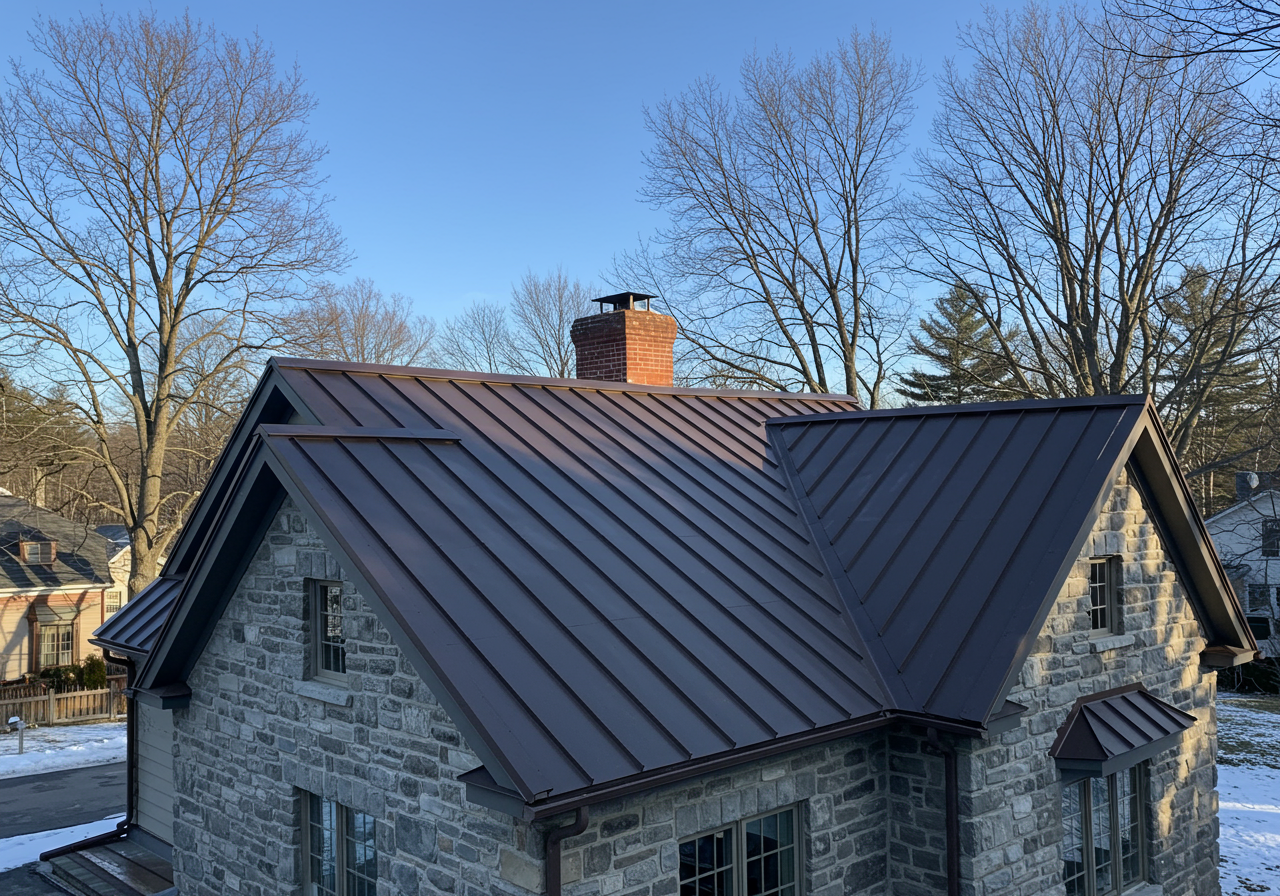
A modern standing seam metal roof in New Britain
Designed with hidden fasteners to handle Connecticut's extreme thermal cycles.
2. Why "Ag-Panel" is a Trap for Hartford County
I often see New Britain homeowners trying to save money by opting for "Ag-panels" or "R-panels"—the kind of corrugated metal you see on barns in the valley. While these are $4,000 to $7,000 cheaper than standing seam, they are a nightmare for residential homes in our zip code.
The Exposed Fastener Risk
Ag-panels rely on thousands of exposed screws with rubber washers. Every single one of those washers will dry out and crack under the intense UV we get during our clear New England winters. In a town like New Britain, where many homes are two or three stories tall, you don't want to be climbing up there in ten years to replace 2,500 washers.
Standing Seam: The Gold Standard
Standing seam metal roofing hides all the fasteners under the ribs. Nothing is exposed to the ice, sleet, or sun. If you want to dive deeper into specific metal gauges and paint finishes, our blog library has detailed guides that break down the technical specs of these high-end systems.
Noah's Weather Watch: The Dew Point Factor
3. Comparing Lifespan in the CT Climate
I've tracked roof performance across Hartford County for over 14 years, and the data is clear: metal is a marathon runner while asphalt is a sprinter. In our humid summers and salty, slushy winters, materials age faster than the national average.
Real-World Lifespan in New Britain (Years)
While the upfront cost of metal might be $18,600 compared to $9,200 for shingles, you have to look at the "cost per year of service." Metal wins every time, especially if you plan on staying in your home long enough to see your kids graduate from the local schools.
4. The "Roof Avalanche" Hazard
One thing New Britain residents don't expect is the speed at which snow leaves a metal roof. On a steep Victorian home near Central Park, five inches of heavy, wet February snow can slide off all at once. I've seen this rip gutters clean off the eaves and crush expensive boxwood hedges.
The Necessity of Snow Guards
If you're switching to metal, snow guards are not optional; they are a safety requirement. These small "breaks" installed on the roof hold the snow in place, allowing it to melt slowly or fall in small, harmless chunks. I always tell homeowners to see what other CT homeowners experienced with their metal installs—most will tell you the snow guards were the best $800 they spent on the project.
Did You Know?
Metal roofs are actually quieter than asphalt during a rainstorm if they are installed with proper solid sheathing and attic insulation. The 'drum effect' only happens on barns or sheds without insulation.
5. Vetting the Right New Britain Contractor
Installing a metal roof requires a completely different skill set than shingles. It's more like being a tinsmith than a traditional roofer. I've seen some "shingle-only" crews try to tackle metal jobs in the winter, and the results are usually leaky valleys and crimped edges that look terrible.
Checking the Credentials
Before you sign anything, you need to verify that the crew has specific certification from the metal manufacturer (like Drexel or Sheffield Metals). I always tell homeowners to verify their contractor's license through the state's eLicense portal before they let anyone step on a ladder. It's the only way to ensure they are registered to do business in Connecticut.
Beyond the license, Connecticut's consumer protection laws require a written contract for any work over $200. Make sure your metal roof contract specifies the gauge of the steel (24-gauge is best for our wind loads) and the type of paint finish (look for Kynar 500).
Stop Guessing on Metal Costs
New Britain roofs vary wildly. Get a precise, automated estimate matched with vetted local metal specialists in seconds.
No credit card required • Free to use
6. ROI and Resale in the Hartford Market
Does a metal roof actually help you sell your house in New Britain? According to local real estate data I've reviewed, homes with metal roofs often sell 12% faster in the Hartford suburbs. Buyers in 2026 are increasingly "risk-averse" when it comes to climate change. They want a roof that can handle a freak October nor'easter or a June hailstorm without losing half its granules.
Energy Efficiency in the Summer
While we're currently worried about February's cold, metal roofs provide a "cool roof" effect in July. They reflect solar radiant heat, which can lower your A/C bills by about 18% during those humid New Britain summers. It's one of the few home improvements that pays you back every month.
Get Your Free Roof Quote
Enter your zip code to get started
The bottom line is that metal is a superior material for the Connecticut climate, but only if you respect the physics of thermal movement. Don't let a "low-ball" bid from a contractor who uses exposed fasteners ruin your investment.