
Key Takeaways
- Connecticut's shoreline humidity accelerates shingle decay through algae and moisture absorption.
- February nor'easters expose installation failures when cold shingles don't thermally seal properly.
- Architectural shingles last 25 years vs. 15 years for 3-tab, making them a better long-term value.
- Proper installation with Class H wind rating and ice/water shield is critical for East Haddam homes.
Picture this: You're looking out your window in East Haddam, perhaps catching a glimpse of the Connecticut River or just the quiet woods near Devil's Hopyard. It's mid-February, and after that last nor'easter rattled the gutters, you notice a single, grit-covered rectangle sitting on your lawn. It's an asphalt shingle. Your heart sinks because you know that one shingle is likely the first of many. This isn't just about a hole in your roof; it's the start of a moisture battle that East Haddam homes, with our unique mix of shoreline humidity and valley winds, are prone to losing if the wrong materials are in play. You're not alone in this—many of your neighbors are realizing that the "standard" roof they bought ten years ago wasn't built for the specific atmospheric quirks of Middlesex County.
The Shoreline Humidity Trap and Shingle Decay
In my years of tracking how Connecticut's micro-climates affect building envelopes, I've noticed a recurring pattern in East Haddam. We aren't quite "coastal" like Old Saybrook, but we aren't "inland" like Hartford either. We sit in this humid transition zone. The problem with standard asphalt shingles here is that they often act as a literal sponge for moisture if the attic isn't breathing. I once visited a colonial over near Mount Parnassus where the shingles looked perfect from the street. But up on the ladder, the granules were shedding like a husky in July. The "hidden" problem was the river mist settling every night, coupled with a lack of ridge vents.
The humidity feeds organic growth—algae and lichen—which roots into the limestone filler of cheaper shingles. If you're seeing black streaks on your roof, that's Gloeocapsa magma. It's not just an eyesore; it's eating the very thing meant to protect you. For homeowners in this area, the "con" of asphalt is its vulnerability to this biological decay. However, the "pro" is that modern architectural shingles are now treated with copper granules to fight this. If you're wondering how much a full replacement with these upgraded materials might cost, this interactive cost calculator can give you a ballpark for East Haddam zip codes.
The Asphalt Reality for East Haddam
Pros
- Lowest upfront cost in CT
- Massive variety of colors/styles
- Easiest material to repair quickly
Cons
- Shorter lifespan than metal or slate
- Susceptible to algae in river valleys
- Can blow off in high shoreline winds
Why February nor'easters Expose Installation Failures
East Haddam is no stranger to wind. Between the gusts coming off the Salmon River and the broader storms that track up the coast, your roof takes a beating. According to the NWS Historical Storm Events Database, Middlesex County has seen a significant uptick in localized high-wind events that don't always make the national news but definitely make the local roofers busy. This is where the "con" of asphalt really shows its face: wind uplift.
The "hidden" problem isn't always the shingle itself; it's the sealant strip. In the middle of February, asphalt shingles are stiff. They don't have the sun's heat to activate the adhesive that bonds one shingle to the next. If your roof was installed during a cold snap without "hand-tabbing" (applying manual spots of roofing cement), a stiff wind can get under the edge and peel your roof back like a banana skin. I've seen entire slopes of shingles displaced because the installer treated a February job like a June job. The solution is finding a pro who understands thermal bonding. The key isn't just the brand of shingle, but finding a contractor who actually shows up to handle these seasonal nuances correctly.
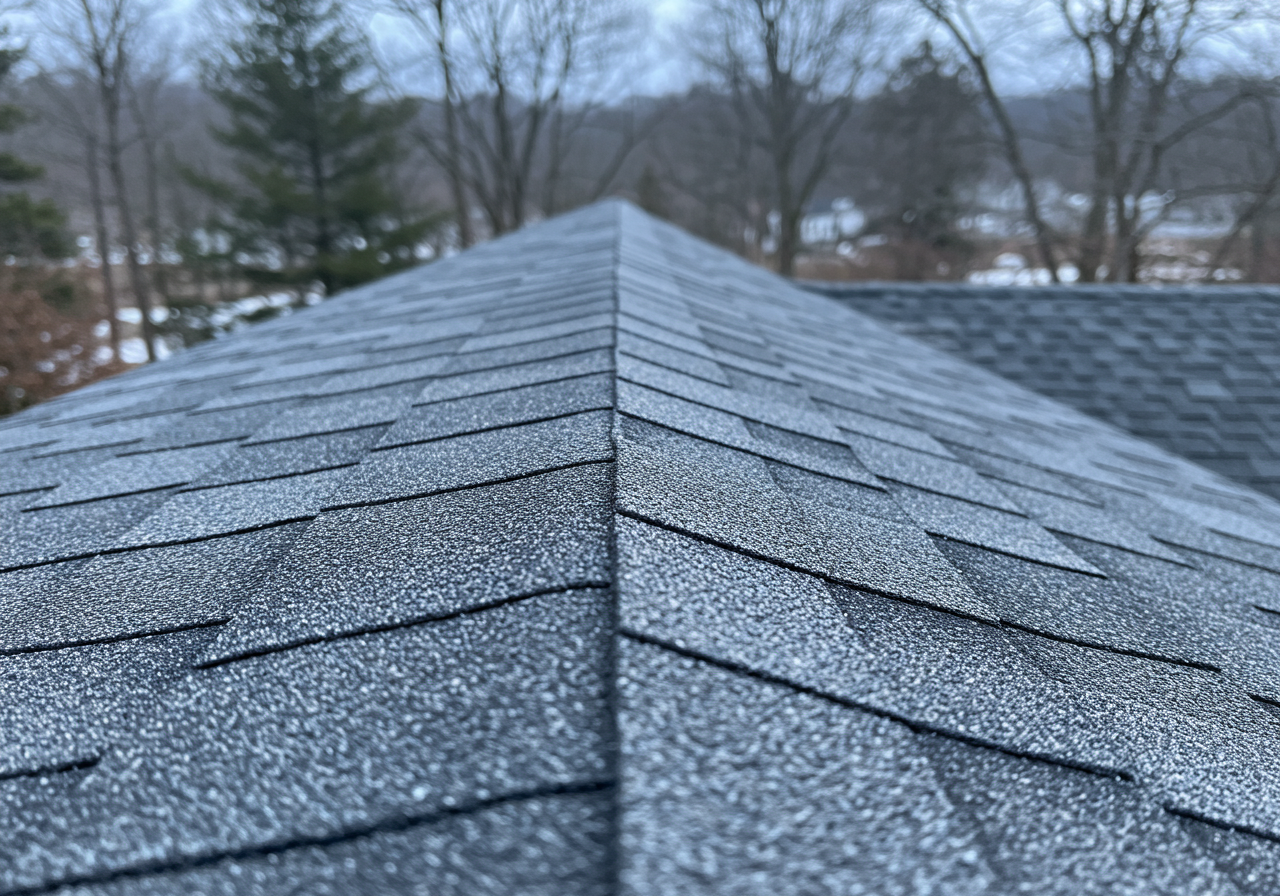
Asphalt Shingle Installation in East Haddam
Proper installation techniques are critical for asphalt shingles to withstand Connecticut's unique weather patterns.
The Financial Tug-of-War: Upfront Savings vs. Lifespan
Let's talk dollars and cents, because that's usually where the asphalt conversation starts. For many families in East Haddam, asphalt is the only viable option because it's roughly one-third the cost of metal or synthetic slate. That is a massive "pro." It allows you to keep your home dry without taking out a second mortgage. But the "hidden" problem is the "Cost Per Year" trap. If a cheap asphalt roof lasts 12 years before the East Haddam weather wins, but a premium architectural roof lasts 25, the cheaper roof is actually twice as expensive over time.
I always tell people to look at the "Total Cost of Ownership." In our climate, a "standard" 3-tab shingle is a mistake. It's too thin for our ice damming cycles. The solution is the architectural (or dimensional) shingle. It's thicker, handles the weight of February snow better, and carries a much better warranty. But even the best shingle is a waste of money if the person swinging the hammer isn't licensed. Before you sign anything, check the CT eLicense portal to ensure your contractor is actually registered with the state. It's a five-minute check that can save you $15,000 in legal headaches later.
Expected Lifespan in Years (CT Climate)
Navigating the Path to a Resilient East Haddam Roof
So, how do you win the asphalt game in East Haddam? It comes down to a specific "Shoreline-Ready" installation strategy. You can't just slap shingles on and hope for the best. You need a system that accounts for the fact that we get heavy snow, freezing rain, and high humidity all in the same month. In cases where a winter storm has already done its worst and that missing shingle has turned into a midnight waterfall, you'll need emergency roofing services to tarp things off before your interior ceilings are ruined.
The real solution is a three-part approach: high-grade architectural shingles, a heavy-duty ice and water shield (at least 6 feet up from the eaves to combat our local ice damming), and a contractor who doesn't cut corners on the flashing. Connecticut has specific laws to protect you in this process. Familiarizing yourself with the CT.gov Home Improvement Consumer Protection guidelines will give you the leverage you need to ensure the contract is fair and the work is up to code.
Inspect for 'granule loss' or curling after winter storms
Check your gutters and lawn for shingle granules. Curling edges indicate age and moisture damage.
Verify contractor license and Middlesex County references
Always check the CT eLicense portal and ask for local references from East Haddam or nearby towns.
Request 'Class H' wind-rated shingles for shoreline protection
Class H shingles are rated for winds up to 110 mph, essential for Connecticut River valley homes.
Ensure the contract includes a dedicated ice and water shield
At least 6 feet up from the eaves to prevent ice dam damage common in our climate.
"In East Haddam, we don't just build for the rain; we build for the humidity and the wind-driven snow that finds every gap in a cheap roof."
As we move toward the spring thaw, take a walk around your yard. Look for those "grit-covered rectangles" on the grass. If you find them, don't panic, but don't wait. Our February weather is the ultimate stress test, and your roof is telling you exactly where its weaknesses are. Addressing a few loose shingles now is much cheaper than replacing the plywood decking later this summer.
Get Your Free Roof Quote
Enter your zip code to get started