
January in Brooklyn usually means looking out toward the fairgrounds and thinking about snow loads, not solar reflectance. But here's the thing—roofing decisions made in the dead of winter are what determine whether your AC unit screams for mercy come July. Most folks I talk to around Route 6 think "Energy Star" is just a sticker on a dishwasher. When it comes to a 2,500-square-foot roof, that sticker represents a fundamental shift in how your home handles thermal energy. I've crawled through enough suffocating attics in the "Quiet Corner" to know that a standard asphalt shingle acts like a giant radiator, and in a town where we have some beautiful, unshaded historical lots, that heat has nowhere to go but down.
Key Takeaways
- Energy Star roofs can reduce attic temperatures by 22°F to 38°F, significantly lowering cooling costs.
- The $2,185 savings combines a 30% federal tax credit with three-year energy savings for average Brooklyn homes.
- Proper ventilation is critical—even the best Energy Star shingles won't perform if attic airflow is blocked.
- Modern cool roofs come in dark colors too, using infrared-reflective granules to meet Energy Star standards.
The Misconception of the New England "Cool Roof"
Look, there's a persistent myth that reflective roofing is only for places like Phoenix or Miami. In Connecticut, we deal with a "mixed climate," which means we pay a premium for both heating and cooling. I recently looked at a project on Prince Hill Road where the homeowner was convinced that a dark roof was "helping" them stay warm in the winter. Mathematically, that's a losing game. The "heat gain" you get from a dark roof in January is negligible because the sun is low and the days are short—plus, if there's snow on the roof, the color doesn't matter anyway.
The real problem is the summer. A standard dark gray shingle can reach 155°F on a clear afternoon. An Energy Star certified roof (often using specialized granules) might stay 45°F cooler. When your attic is 130°F instead of 155°F, your ductwork isn't fighting a losing battle. If you're finding a vetted crew to swap your old 3-tab for something modern, ignoring the Solar Reflectance Index (SRI) is a missed opportunity for your wallet.
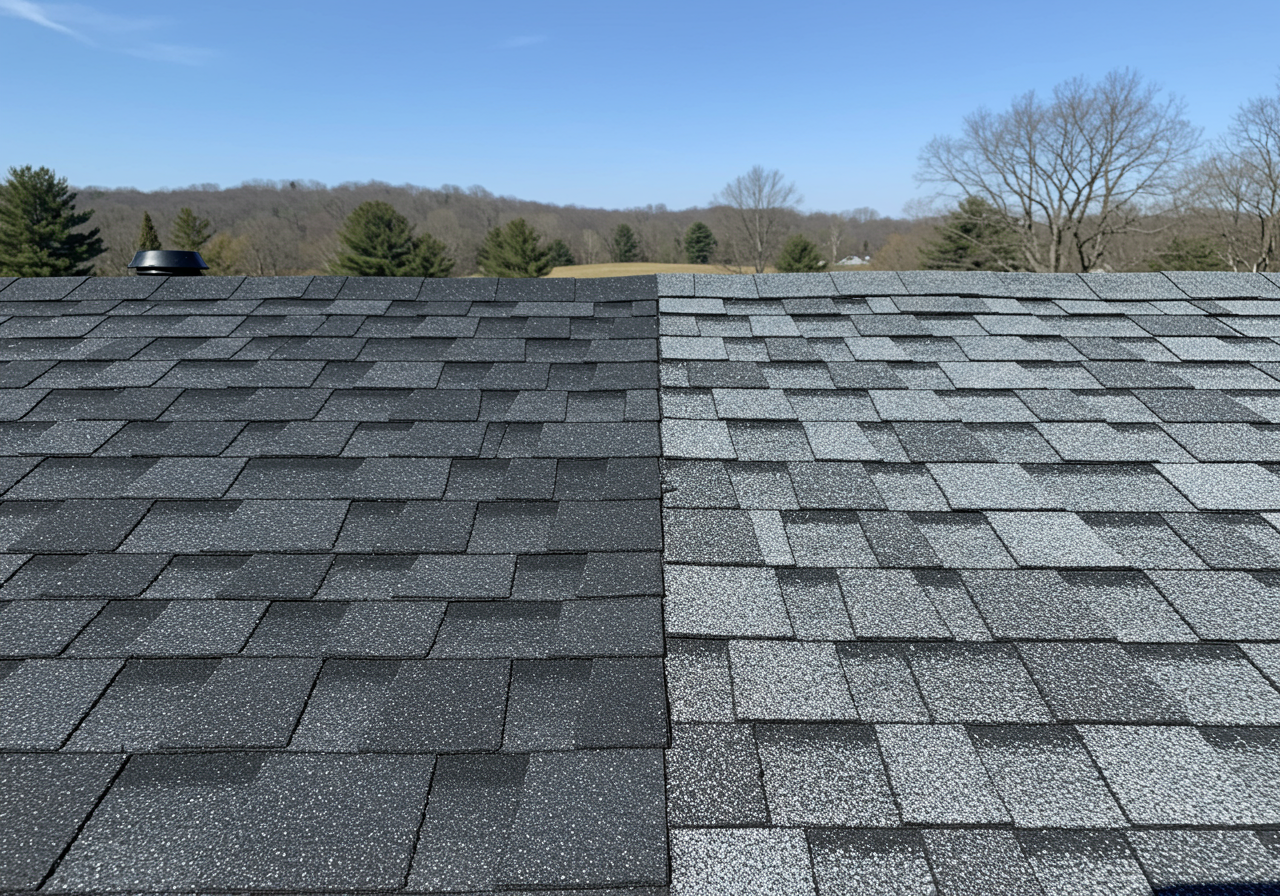
Energy Star Roofing Performance in Brooklyn
Cool roof technology can significantly reduce attic temperatures and cooling costs during Connecticut summers.
The Emissivity Equation: Why Standard Shingles Bake Your Attic
When we talk about Energy Star roofing, we're looking at two technical metrics: solar reflectance and thermal emittance. Reflectance is how much light bounces off; emittance is how quickly the material sheds the heat it does soak up. Most old-school shingles are great at soaking up heat but terrible at letting it go.
I've seen dozens of roofs in Brooklyn where the shingles are "cooked" from the inside out. When the roof can't shed heat, the asphalt oils migrate and the granules start shedding prematurely. Research from Energy Star shows that cool roofs can lower the roof surface temperature significantly, which doesn't just save on electricity—it actually preserves the structural integrity of the roof deck. I keep field notes from every nor'easter repair, and I've noticed that roofs that stayed cooler in the summer tend to be less brittle when we have to navigate them for winter emergency repairs.
Standard vs. Energy Star Shingle Performance
| Feature | Standard Architectural | Energy Star Certified |
|---|---|---|
| Solar Reflectance | 5% - 10% | 25% - 65% |
| Attic Temp Variance | Baseline | -22°F to -38°F |
| Surface Temp (July) | 150°F+ | Approx. 105°F - 115°F |
| Estimated Cooling Savings | 0% | 7% - 15% |
The $2,185 Financial Breakdown: Credits and Realized Savings
Let's talk about the number in the title. Where does $2,185 come from? It's a combination of the immediate federal tax credit and the projected three-year energy savings for an average 2,200 sq. ft. Brooklyn home. Under the current tax code, specifically IRS Form 5695, homeowners can claim a credit for 30% of the cost of energy-efficient home improvements. For roofing, this specifically applies to metal roofs and asphalt shingles with cooling granules that meet Energy Star requirements.
While the "weatherization" cap for things like insulation is often $1,200 annually, the way you stage a roofing project matters. If you're doing a $18,400 roof replacement, that 30% credit is a massive lever. Combine that with an average cooling bill reduction of $280 per year (very common for 1980s-era builds in Windham County), and the "premium" you paid for the better shingles is usually erased by year three.
Timing Your Tax Credit
Material Selection: What Actually Works in the 06234 Zip Code
In Brooklyn, we aren't just fighting heat; we're fighting moisture and high winds. I generally steer my clients toward one of two options. First, there are the highly reflective asphalt shingles like GAF's Timberline CS or Owens Corning's Duration Cool. These look like "normal" shingles but use a specially engineered granule.
The second, and arguably better, option for the Quiet Corner is a standing-seam metal roof. Metal has a naturally high emissivity. I've seen metal roofs installed on colonial farmhouses out toward Pomfret that have lasted 55 years and still look pristine. They reflect a massive amount of solar energy, and because they don't have the "thermal mass" of heavy asphalt, they cool down the second the sun goes behind a cloud.
Why Ventilation Must Come Before Shingle Selection
Manufacturer reps hate when I say this out loud: a fancy Energy Star shingle won't do a lick of good if your soffit vents are stuffed with old fiberglass insulation. I've walked onto job sites where a contractor is upselling a "cool roof" but hasn't even checked if the ridge vent is actually cut open.
In many of Brooklyn's older homes, the attic ventilation is subpar. If we put a reflective roof on top but the hot air is still trapped in the attic because of poor airflow, you're just putting a band-aid on a broken leg. When you connect with a professional, make sure they're doing a full attic bypass and ventilation audit. You want a balanced system—intake at the eaves, exhaust at the peak.
Don't Guess on Your Energy Savings
Get matched with Connecticut roofing specialists who understand the 2026 tax credits and local climate needs. Stop overpaying for a roof that cooks your home.
No credit card required • Free to use
Implementation: Ensuring the Installation Matches the Spec
If a spec isn't written down, it doesn't count. When you're looking at your contract, ensure the specific Energy Star SKU is listed. Don't just accept "Cool Gray" as a color choice; you need the manufacturer's certification of the SRI value to claim your tax credit.
I've torn apart roofs after storms to see what failed, and it's rarely the material—it's the shortcuts. For an Energy Star roof to perform, it needs the right underlayment. Using a cheap, non-breathable felt under a high-tech shingle is a recipe for condensation issues in our humid Connecticut summers. My crews use synthetic underlayment that acts as a secondary thermal barrier. It's a bit more expensive—maybe $420 extra for the whole house—but it protects the deck from the "sweating" that happens when a cool roof meets a humid attic.
Get Your Free Roof Quote
Enter your zip code to get started
Thinking ahead for your Brooklyn home means looking past the initial price tag. Whether you're near the Quinebaug or up on the hills, the math on energy efficiency is shifting. By the time the 2026 cooling season hits, you'll either be glad you invested in a roof that works with the sun, or you'll be writing a bigger check to Eversource.