
Look, I was standing on a roof near the Quinebaug River last Tuesday—one of those classic 19th-century farmhouses that make Brooklyn so distinctive—and the homeowner asked me if "going green" was actually worth the markup. It's a fair question. In my 15 years in the field, I've seen plenty of trends come and go, but sustainable roofing isn't just a buzzword anymore; it's a mathematical necessity for anyone planning to stay in their home for more than 7 years. Between the rising Eversource rates we're all dealing with and the increasingly erratic New England winters, the data clearly shows that traditional asphalt is no longer the "budget" choice it used to be when you factor in lifecycle costs.
Key Takeaways
- Metal Roofing ROI: While the upfront cost is higher, a 24-gauge standing seam metal roof can save a Brooklyn homeowner roughly $14,200 over 30 years compared to two asphalt replacements.
- Federal Incentives: The Residential Energy Clean Property Credit can offset 30% of the cost for solar-integrated roofing systems.
- Energy Efficiency: Switching to Energy Star-rated 'cool' shingles can reduce peak cooling demand by up to 14% during our humid Connecticut summers.
The ROI of Reflective "Cool" Roofs in Windham County
What most homeowners don't realize is that your roof is essentially a giant radiator. In the summer, a standard dark asphalt shingle can reach temperatures of 155°F, radiating that heat directly into your attic and forcing your AC to work overtime. From a technical standpoint, "cool roofs" use specially designed granules that reflect solar energy back into the atmosphere.
Solar Reflectance and Your Electric Bill
The Energy Star guide on cool roofs notes that reflective materials can lower roof surface temperatures by up to 50°F. In Brooklyn, where we have a mix of shaded wooded lots and open fields, this transition is huge. If you're living in one of the newer developments off Route 6 with little tree cover, you're likely spending an extra $280 to $415 per year just to combat "attic bake."
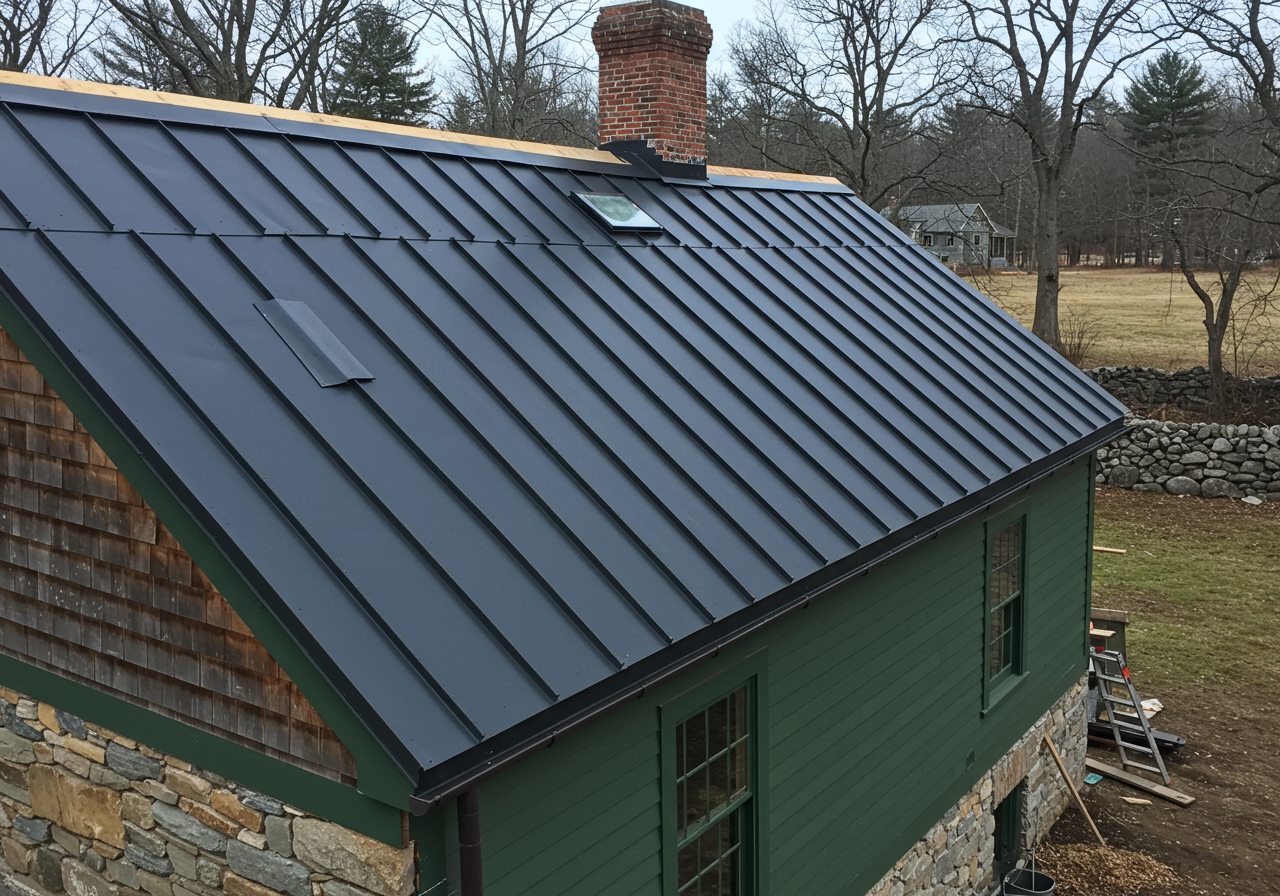
Sustainable Roofing Options for Brooklyn Homes
Energy-efficient roofing materials can significantly reduce cooling costs and provide long-term savings.
Material Lifespans in the Quiet Corner
I always tell clients: don't look at the price tag; look at the "cost per year of service." A standard 3-tab shingle might last 16 years in our climate before the edges start curling from the freeze-thaw cycles.
Expected Lifespan by Material (Years)
Metal Roofing: The 50-Year Solution for the Quiet Corner
Metal is the "gold standard" for sustainability in New England. It's typically made from 25% to 95% recycled content and is 100% recyclable at the end of its life. But beyond the eco-credentials, it's the durability that wins.
Why Standing Seam Wins Over Corrugated
Look, if you're going to invest in metal, go with standing seam. I've seen too many DIY or "budget" corrugated metal jobs in Windham County fail because the exposed fasteners backed out after a few heavy snowfalls. Standing seam hides the fasteners under the metal panels, meaning there are zero holes for water to find.
Handling the Brooklyn Snow Load
Our 2026 winter hasn't been the worst on record, but we still get those heavy, wet "heart attack" snows. Metal roofs allow snow to slide off safely (provided you have snow guards installed over your entryways), preventing the ice dams that plague older homes near the Brooklyn Fairgrounds.
"In my 15 years in the field, I've never seen a well-installed 24-gauge metal roof fail due to Connecticut weather. It's a 'buy once, cry once' investment that actually pays for itself via home equity."
The Hidden Math of Solar Shingles (GAF Timberline Solar)
Gone are the days of clunky solar panels bolted onto your roof. We're now seeing massive adoption of Integrated Solar Roofing (BIPV). I recently oversaw an installation of the GAF Timberline Solar system on a ranch-style home near Pierce Memorial Park.
Aesthetics Meet Efficiency
What's great about these is that they're nailed down just like regular shingles. They provide a water-tight seal while generating electricity. From a technical standpoint, the efficiency is slightly lower than traditional racked panels, but the curb appeal is significantly higher.
Calculating the Payback Period
Here's what the manufacturers don't tell you: your payback period depends heavily on your roof's orientation. If you have a south-facing roof with a 32-degree pitch, you're looking at a 9-year break-even point in CT. For a north-facing roof shaded by oaks? Don't even bother. You can connect with verified contractors through our system to get an honest assessment of your roof's solar potential.
Recycled Composite Slate: Luxury Look, Eco-Friendly Footprint
If you love the look of the historic stone buildings in downtown Brooklyn but don't want the $45,000 price tag of real slate, composites are the answer. Brands like DaVinci Roofscapes use recycled polymers to create shingles that are virtually indistinguishable from the real thing.
Weight and Structural Integrity
Real slate is incredibly heavy (sometimes 1,000 lbs per square). Most Brooklyn homes built after 1950 aren't framed to handle that load. Composite slate weighs about the same as an architectural shingle, meaning you don't need to spend $3,400 on structural reinforcements.
Impact Resistance and Insurance Savings
These materials often carry a Class 4 impact rating. I've spoken with several local insurance agents who offer a 7% to 12% discount on homeowners' premiums for installing Class 4 materials. Over 20 years, that's another $2,100 back in your pocket.
Pros
- Uses 90%+ recycled materials
- Class 4 impact rating
- Lasts 50 years
- No structural reinforcement needed
Cons
- Higher upfront cost than asphalt
- Requires specialized installation knowledge
- Material lead times can be 4-6 weeks
Insulation and Ventilation: The "Sustainable" Partners
You can put the most expensive "green" roof on your house, but if your attic insulation is trashed, you're still burning money. The Department of Energy recommends an R-value of R-49 to R-60 for Connecticut attics.
The Stack Effect
In the winter, heat rises. If you have gaps in your floor joists, that heat escapes into the attic, melts the snow on your roof, and creates ice dams. I've seen this happen on beautiful new roofs in Brooklyn because the contractor didn't bother to check the baffles.
Proper Venting Ratios
You need a balance of intake (soffit) and exhaust (ridge) vents. For every 300 square feet of attic space, you need 1 square foot of net free vent area. If your roofer isn't measuring this, they aren't doing their job.
Attic Audit
Measure existing insulation and check for light leaks from the living space.
Material Selection
Choose between metal, solar, or high-reflectivity shingles based on ROI.
Contractor Vetting
Ensure the crew is certified by the manufacturer (e.g., GAF Master Elite).
Incentive Filing
Keep all receipts and manufacturer certifications for your IRS Form 5695.
Local Brooklyn Incentives and Federal Tax Credits
Don't leave money on the table. The federal government is practically begging you to upgrade your home's efficiency. According to the IRS instructions for Form 5695, certain metal and asphalt roofs with pigmented coatings used to qualify for smaller credits, but the big money is now in solar-integrated systems.
The 2026 Tax Landscape
While some state-level rebates for Brooklyn residents fluctuate, the federal 30% credit for solar roofing is stable through the end of the decade. On a $32,000 solar roof, that's a $9,600 tax credit. (But check with your CPA—I'm a roofer, not a tax pro).
Local Utility Programs
Check with Energize Connecticut. They often have low-interest financing or small rebates for high-efficiency upgrades that coincide with a roof replacement, like adding blown-in cellulose insulation while the roof deck is exposed.
The 'Hidden' Savings
Get Your Free Roof Quote Today
Connect with verified CT pros in minutes.
No credit card required • Free to use
Choosing the Right Brooklyn Contractor for Eco-Friendly Tech
Look, sustainable materials require a different skillset. You can't just hire a crew that's used to banging out three asphalt jobs a day. Metal expansion and contraction rates are different. Solar shingle wiring requires coordination with an electrician.
Asking the Right Questions
When you get a quote from a local pro, ask them specifically about their experience with high-reflectivity materials. Have they worked with the specific brand you're considering? Can they show you a project they did three towns over in Pomfret or Killingly?
The Importance of Local Knowledge
A contractor from outside the area might not understand the specific wind patterns we get in the "Quiet Corner" or how our humidity affects certain recycled composites. You want someone who lives here and knows the local building codes.
Get Your Free Roof Quote
Enter your zip code to get started
Sustainable roofing isn't just about saving the planet—it's about protecting your bank account from the "hidden taxes" of energy waste and frequent repairs. If you're ready to stop the cycle of 15-year asphalt replacements, consider the long-term math of metal or composite. The upfront cost might be a bit more of a pill to swallow, but the $14,200 you'll save over the next three decades makes it a very smart move for any Brooklyn homeowner.
Ready to see what a green roof would cost for your specific home? You can get a free quote from a verified local roofer through ZikQuote today.