Most folks in the Northwest Hills think we're safe once the March slush melts and the mud season begins. There's a persistent myth that Lakeville's lush tree canopy and higher elevation somehow protect our shingles from the summer sun. I've looked at the "cook-off" data from various Litchfield Hills weather stations over the last decade, and it tells a far more aggressive story. Just because you're catching a nice breeze off Lake Wononscopomuc doesn't mean your attic isn't hitting triple digits. That trapped heat doesn't just make your AC hum all night; it literally bakes the life out of your asphalt shingles from the inside out. If you think a few degrees of mountain air saves your roof, you're looking at a $14,000 replacement much sooner than you'd like.
Key Takeaways
- Attic ventilation is the primary defense against "shingle baking" in Northwest Connecticut.
- Reflective "cool roof" shingles can reduce roof surface temperatures by over 45°F.
- March is the ideal window to inspect for UV-induced cracking before the humid summer cycle starts.
- Federal tax credits may cover a portion of energy-efficient roofing upgrades in 2026.
The Attic "Oven Effect" in Litchfield County
The reality is that your roof is a massive solar collector. Even on a pleasant 75°F day in Lakeville, the surface of a dark asphalt shingle can easily soar past 150°F. Without proper airflow, that heat migrates into your attic and stays there. I remember inspecting a beautiful colonial near the Salisbury School a few years back where the homeowner couldn't figure out why their upstairs bedrooms felt like a sauna. The culprit? Bird nests and years of dust had completely choked the soffit vents.
The Balance of Intake and Exhaust
To keep your roof from cooking, you need a balanced system. Air should enter at the eaves (soffits) and exit at the ridge. When this balance is off, heat becomes stagnant. I've seen shingles in Lakeville that looked thirty years old after only twelve years because the attic was essentially a slow cooker.
Thermal Shock Risks
We get those sudden, heavy afternoon thunderstorms in the Litchfield Hills. When cold rain hits a roof that's been baking in the sun for eight hours, the materials contract rapidly. This "thermal shock" can lead to granule loss and hairline cracks. A well-ventilated attic minimizes the temperature delta, keeping your shingles more stable.
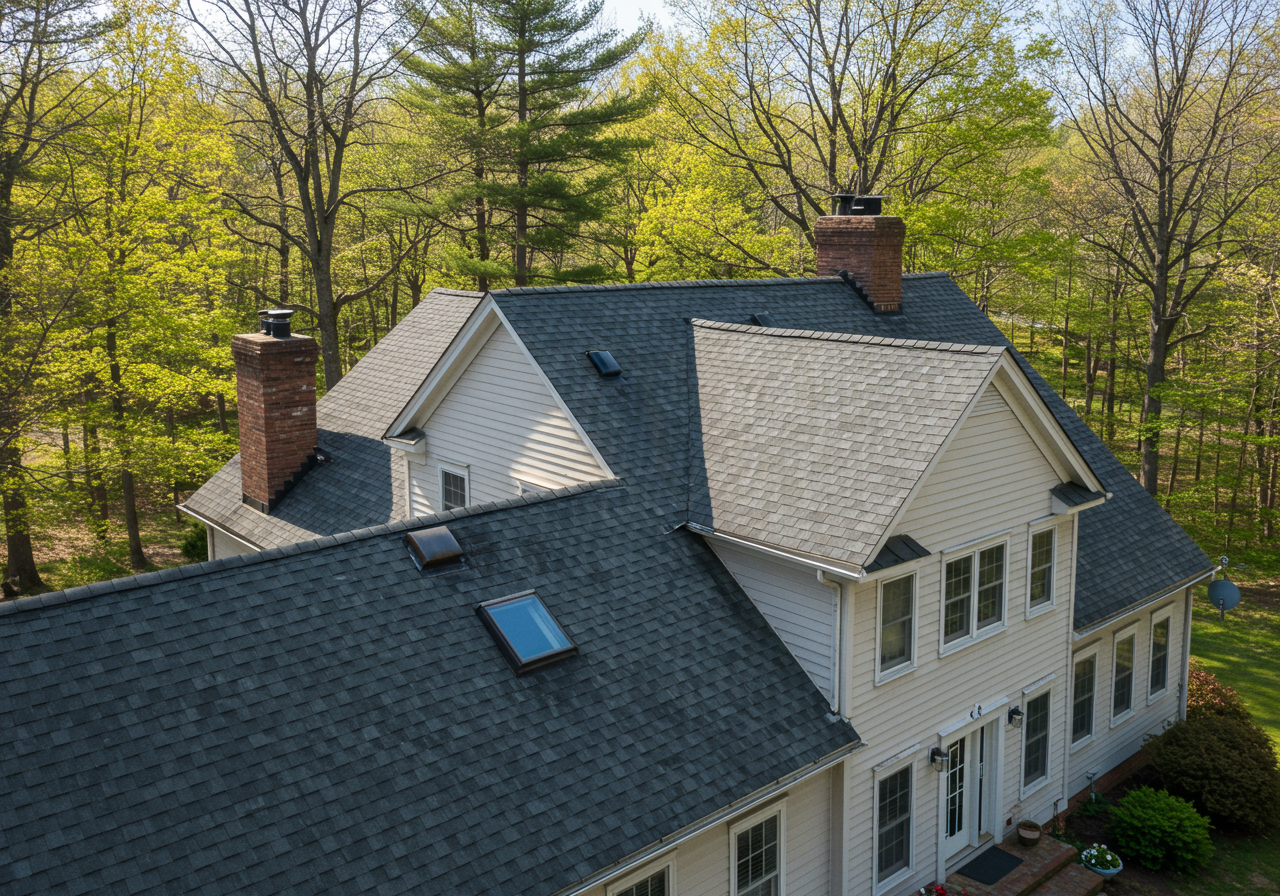
Summer Heat Protection for Lakeville Roofs
Understanding how to protect your Northwest Hills roof from UV damage and heat buildup
Material Matters: Reflective Shingles vs. Standard Asphalt
Not all shingles are created equal when it comes to the sun. Traditional shingles absorb the vast majority of solar radiation. However, modern "cool roof" technology uses specialized granules that reflect infrared light. If you are planning a replacement this year, connecting with a vetted local pro who understands these material differences is a smart move.
Understanding Solar Reflectance Index (SRI)
The SRI measures a roof's ability to reject solar heat. According to the Energy Star guide to cool roofing, a high SRI can significantly lower the demand on your air conditioning. In our climate, this isn't just about comfort; it's about preventing the plywood decking underneath your shingles from delaminating due to extreme heat cycles.
Roofing Material Heat Performance
| Feature | Standard Asphalt | Cool Roof Asphalt | Standing Seam Metal |
|---|---|---|---|
| Heat Reflection | |||
| Durability | |||
| Lakeville Suitability |
The Metal Alternative
Metal roofing is becoming more popular in Lakeville, and for good reason. Beyond shedding snow, metal is naturally reflective. A light-colored metal roof can reflect up to 70% of solar radiation. While the upfront cost is higher, the lifespan often doubles that of asphalt.
Insulation: The Silent Partner in Heat Defense
While ventilation moves the heat out, insulation prevents it from entering your living space. Many older homes in Lakeville are woefully under-insulated. I've crawled through enough Litchfield County attics to know that "builder grade" from the 1990s doesn't cut it by 2026 standards.
R-Value Requirements for CT Homes
The International Code Council's guidelines specify minimum R-values for attic insulation. In Connecticut, we should be aiming for R-49 to R-60. If you can see your floor joists in the attic, you don't have enough. Adding a layer of blown-in cellulose or fiberglass batts can save you roughly $380 a year in Lakeville energy costs.
Don't Block Your Vents
Tax Credits and Incentives
Upgrading your insulation or choosing certain reflective roofing materials can qualify you for federal incentives. I always suggest homeowners check the IRS Form 5695 instructions for the Residential Energy Efficient Property Credit. It's essentially the government helping you pay for a more resilient home.
"In Lakeville, we focus so much on the weight of the snow that we forget the weight of the sun. UV rays are the slow-motion storm that never stops hitting your roof."
The Solar Attic Fan Controversy
I get asked about attic fans more than almost any other roofing accessory. Some pros love them; others think they're a waste of electricity. In my experience, a solar-powered attic fan can be a game-changer for Lakeville homes with complex rooflines where natural ridge venting isn't sufficient.
Why Solar Fans Work in Lakeville
Avoiding the "Vacuum" Effect
The danger with any powered fan is that it can pull conditioned air from your house through small gaps in your ceiling (like recessed lights). This is why a professional audit is necessary. You want to pull air from the outside, not from your living room. You can see how other Lakeville residents have handled these upgrades in our customer success stories.
Pre-Summer Inspection Checklist
Before the humidity of a Connecticut summer settles into the valley, you need to know where you stand. March is the time to get on a ladder—or hire someone to do it—and look for the "sun-scorched" signs.
Identifying UV Degradation
Look for shingles that are curling at the edges or "balding" (losing their granules). If your gutters look like they're filled with sand, that's your roof's UV protection washing away. I've documented hundreds of cases where a simple $500 repair in the spring saved a $15,000 disaster in August.
Inspect attic for light peeking through
Signs of gaps indicate potential heat entry points.
Check soffit vents for blockages
Debris or nests can completely choke airflow.
Evaluate shingle granule loss
Check gutters for sandy granules—signs of UV damage.
Verify insulation depth
Should be at least 15 inches for proper R-value.
Schedule professional thermal scan
If cooling costs are spiking, a thermal scan can identify hot spots.
The Professional Advantage
Getting an honest look at your roof shouldn't be a headache. I've spent years tracking which materials hold up best against the Lakeville sun. For a deeper dive into material lifespans, browse our archived CT maintenance guides.
Get Your Free Roof Quote
Enter your zip code to get started
The goal isn't just to keep the rain out; it's to keep the heat from ruining your investment. Lakeville is a beautiful place to live, but our weather is a constant test for any home. Passing that test starts with a roof that can breathe.

About Noah Knight
Verified ExpertNoah Knight is a Connecticut Weather & Climate Specialist who helps homeowners understand how New England's unique weather patterns affect their roofing systems. He combines meteorological knowledge with practical home maintenance advice.