
Key Takeaways
- High-30s °F and a warm attic are the classic Salisbury setup: snow melts over heated space, refreezes at cold eaves, and backs up under shingles.
- Salt pucks and heat cables treat symptoms; R-60 insulation, airflow, and ice-and-water shield address the physics that create dams.
- Emergency steam removal often runs hundreds of dollars—and dams can return within days if attic heat loss is unchanged.
- March humidity and April rains compound winter damage; acting while dam evidence is fresh can prevent ceiling stains and rot.
Right now in Salisbury, the thermometer is hovering at a deceptive 38°F. Under these cloudy skies, it feels like the worst of winter is behind us, but for your roof, this is actually the "danger zone." When the air hits that high-30s mark, the snowpack on your shingles starts to compress and saturate. If your attic is leaking heat—even just a little—that 38°F outside air isn't enough to keep the eaves frozen, yet it's warm enough to turn the base layer of snow into a steady stream of meltwater that has nowhere to go but under your shingles.
I've spent years tracking how Litchfield County's unique microclimates affect home longevity. We get more snow than the coast, and our "mud season" thaws are often slower and more jagged. I remember looking at a colonial over near the Salisbury School last season; the owner had spent thousands on fancy heat cables, yet water was still pouring through his living room crown molding. He fell into the same trap many Northwest Hills residents do: treating the ice rather than the temperature of the roof deck.
The Thermal Physics Behind Salisbury's Frozen Gutters
The "failure" in most ice dam prevention strategies starts with a misunderstanding of how a roof is supposed to work in the Northwest Hills. We aren't in Fairfield; our snow stays longer and gets heavier. When your attic isn't properly sealed, heat from your furnace migrates upward. This creates a "hot" roof deck. As the snow melts over the heated living space, it runs down to the eaves—the part of the roof that hangs over the edge of the house. Because the eaves aren't over a heated room, they stay at the ambient 38°F or lower. The water hits that cold edge and flash-freezes.
This creates a literal dam of ice. Behind that dam, a pool of liquid water builds up. Shingles are designed to shed water running downward, not to act as a pool liner for standing water. Eventually, that water finds a nail hole or a gap in the plywood and begins its journey into your drywall. According to the Department of Energy's insulation guidelines, most older homes in our area are under-insulated by at least 40%, which is the primary driver of this thermal imbalance.
Why Temporary Fixes and "Salt Saws" Are Failing You
If you've spent the last few weeks tossing salt pucks onto your roof or poking at icicles with a rake, you're fighting a losing battle. I see it every March: homeowners try to "melt" their way out of the problem. The issue with salt pucks (calcium chloride) is that they are corrosive. They eat away at your aluminum gutters and can actually degrade the asphalt in your shingles over time. Heat tape is another culprit; it creates narrow "tunnels" in the ice, but if the power goes out during one of our Litchfield County wind events—like the 8 mph gusts we're seeing today—the ice just closes right back up.
The reality is that patching a leak after ice has already backed up under the roof is three times more expensive than addressing the root cause. I've seen homeowners spend upwards of $840 on emergency steam removal services, only to have the dam reform three days later because the attic was still 65°F. You have to stop the heat from reaching the shingles in the first place.
Years of Effectiveness for Prevention Methods
The Three-Pillar Defense: Insulation, Ventilation, and Membrane
To truly stop an ice dam from returning to your Salisbury home, you need a system, not a gadget. First, you need R-60 insulation in the attic. This keeps the heat where you pay for it—in your bedrooms—and keeps the roof deck cold. Second, you need baffling. These are plastic channels that ensure air from your soffit vents can reach the ridge vent without being blocked by insulation. If that air doesn't move, the attic becomes a heat trap.
Finally, when it's time for a larger project, you need a high-quality ice and water shield. This is a rubberized membrane that goes under the shingles. Even if a dam forms, this membrane acts as a waterproof barrier that prevents the pooled water from entering the house. When I look at durable full roof replacement strategies for the Northwest Hills, I always insist on double-height protection—meaning the shield extends at least six feet up from the eave, rather than the standard three. This accounts for our heavier snow loads and the "back-up" effect we see during prolonged freezes.
Conduct a thermal attic bypass inspection
Map where warm air slips into the attic from the living space—top plates, penetrations, and hatch gaps are common culprits in older colonials.
Seal air leaks around recessed lights and chimneys
Fire-rated foam, blocking, stem coverage, and proper flashing details cut convective heat loss that warms the deck unevenly.
Install R-60 blown-in cellulose or fiberglass batts
Target DOE Zone 5 recommendations; in Salisbury, R-60 reduces the deck temperature delta that drives melt-refreeze cycles.
Ensure soffit-to-ridge airflow is unobstructed
Use baffles so insulation does not smother soffit intakes; stagnant attics hold heat and shorten shingle life.
Upgrade ice and water shield on the next reroof
Extend membrane well past code minimum at eaves and valleys as insurance when a dam or wind-driven rain overwhelms shingles.
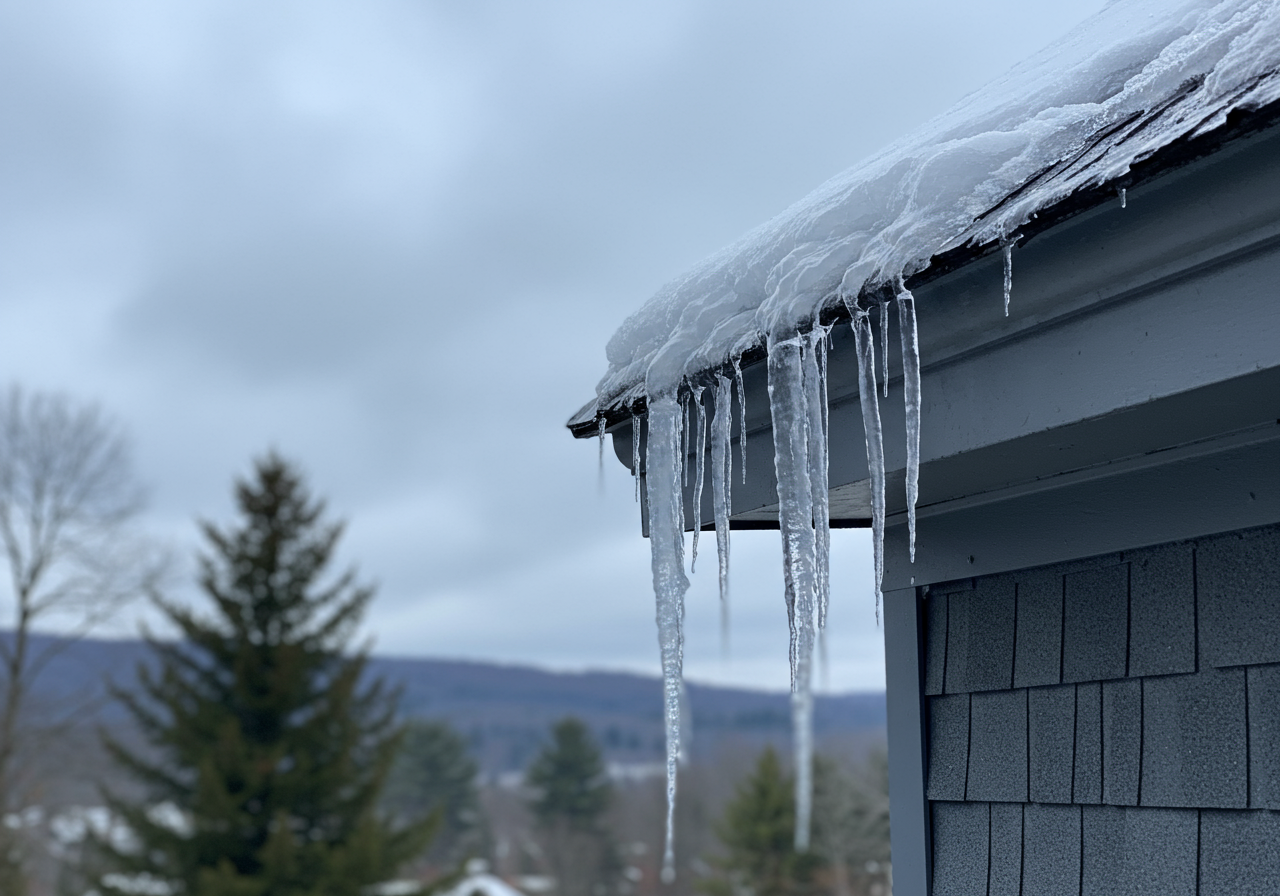
Ice Dam Risk on a Northwest Hills Roof
Melting snow over a warm deck refreezing at cold eaves—the pattern behind interior leaks and gutter damage in Salisbury.
Timing Your Move Before the April Deluge
March is the transition month. While the 68% humidity today makes the air feel heavy, it's also a reminder that the spring rains are just a few weeks away. A roof weakened by ice dams in February will almost certainly fail when the April downpours hit. If you noticed large icicles (anything thicker than a soda can) or saw "ice layering" on your gutters this winter, your roof system has already been compromised.
Don't wait until you see a brown spot on the ceiling to act. The best time to get an estimate is while the evidence of the dams is still visible or the memory of them is fresh. Using a roofing cost calculator for your project size can give you a baseline of what a permanent fix might cost, allowing you to budget before the summer roofing rush begins. Remember, a cool roof deck isn't just about winter; as the EPA explains on cool roofing benefits, keeping your roof temperature steadier can also trim cooling loads when July heat arrives. Before the next storm line, glance at National Weather Service radar and forecasts so you aren't surprised by warm rain on a snow-loaded deck.
Noah's Pro Tip
Stop guessing about your roof's health
Get an instant, local Salisbury estimate and match with a verified pro today.
No credit card required • Free to use
Get Your Free Roof Quote
Enter your zip code to get started
In conclusion, Salisbury's weather demands a more robust approach than the rest of the state. If you're tired of the "bucket-under-the-ceiling" routine every March, it's time to stop treating the ice and start treating the attic. Stay dry, keep your eaves cold, and watch the radar—spring is coming, but your roof needs to be ready for it.