
Key Takeaways
- Manchester requires a building permit for any roofing project involving more than 25% of the roof area.
- Skipping permits can void your homeowner's insurance and complicate future home sales in Hartford County.
- Contractors who ask you to pull the permit yourself are often trying to dodge licensing or insurance requirements.
- The local building office in Manchester has specific ice dam protection requirements that must be verified during inspection.
Let's talk about a homeowner I'll call "Mark" from the North End of Manchester. Last March, Mark decided to save a few bucks on a roof replacement by hiring a crew that "didn't need all that red tape." Halfway through the tear-off, a town vehicle pulled up to the curb. The inspector didn't see a permit in the window. By noon, Mark had a "Stop Work" order taped to his front door, a $2,450 fine on his kitchen table, and a roof that was half-exposed to the unpredictable Connecticut spring. It took three weeks to get the paperwork sorted, during which time a heavy rain soaked his rafters. That "cheap" roof ended up costing him double.
The Manchester Building Office Reality Check
If you think the town hall is just looking for a "tax" on your home improvement, you're missing the point. In Manchester, the building department acts as your final line of defense against shoddy workmanship. When a contractor tries to talk you out of a permit, they aren't doing you a favor. They're trying to avoid having a third party—an expert who knows the 2022 Connecticut State Building Code—look at their work.
Every year, I see homeowners get lured into "handshake deals" near the Buckland Hills area. The pitch is always the same: "The permit takes too long, and it's just extra money for the town." Here is the math: A roofing permit in Manchester usually costs around $15 for the first $1,000 of value and roughly $12 to $15 for every $1,000 after that. On a $14,600 roof, you're looking at about $210 to $225 in permit fees. Compare that to the thousands of dollars you'll spend if your insurance company denies a claim because the roof wasn't installed to code. If you want to see how these numbers shake out for different styles, our local roofing guides offer deeper dives into specific material costs.
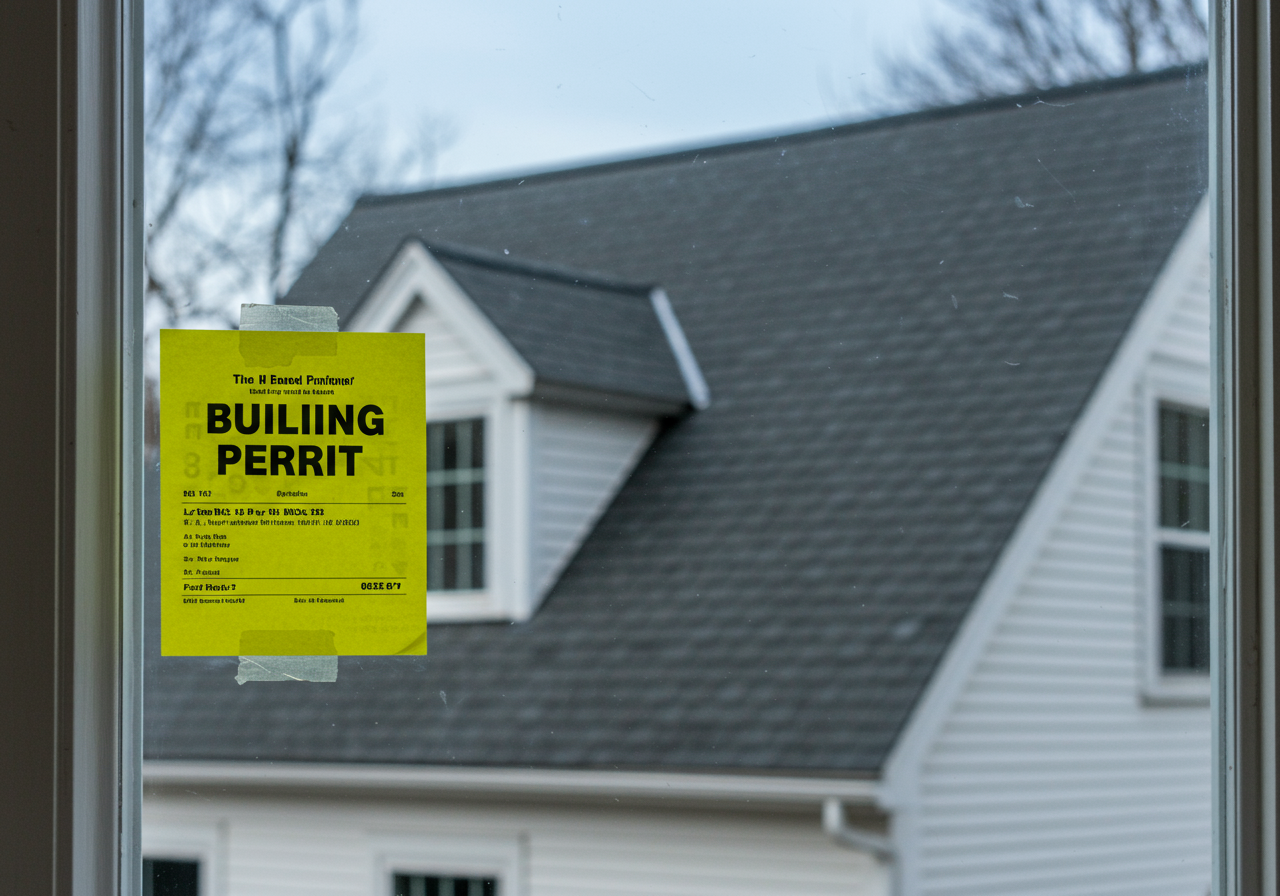
Manchester roofing permit requirements
Understanding the permit process protects your investment and ensures code compliance
Why the Town Hall Paperwork Matters
In Hartford County, we deal with specific climate pressures—heavy snow loads and the occasional hurricane-force wind gust. The permit process ensures that your contractor is using the correct drip edge, the right amount of ice and water shield (usually 36 inches past the interior wall line in CT), and the proper nailing pattern. Without that inspection, you're essentially just taking a stranger's word that your house won't leak when the next nor'easter hits.
Cost Comparison: Permitted vs. "Under the Radar" Roofing
I've spent a lot of time looking at line-item quotes from contractors across Connecticut. There is a massive "risk tax" associated with unpermitted work that most people don't account for until it's too late. When you skip the permit, you aren't just skipping a fee; you're opting out of consumer protection.
Permit vs. No Permit: The Financial Reality
| Feature | Permitted Project | Unpermitted Project |
|---|---|---|
| Manufacturer Warranty Valid | ||
| Insurance Claim Protection | ||
| Verified Code Compliance | ||
| Code Compliance Verified | ||
| No Risk of Fines |
Cost Reality: Permitted projects average $14,800 upfront, while unpermitted projects may start at $13,200 but face potential fines of $2,500+ and voided warranties.
Dana's Data Point
Managing the Manchester Permit Process: A 5-Step Checklist
Don't let the bureaucracy intimidate you. Most of the heavy lifting should be done by the person you hire, but you need to know what the process looks like so you aren't left in the dark. If a contractor asks you to pull the permit as a "homeowner-occupant," red flags should be flying. This often means they aren't properly registered with the CT Department of Consumer Protection.
Verify the contractor's HIC (Home Improvement Contractor) license is active in CT.
Check their license number through the CT Department of Consumer Protection website before signing any contract.
Request a copy of their Certificate of Insurance (General Liability and Workers' Comp).
This protects you if someone gets injured on your property during the project.
Confirm the contractor will file the permit application with the Manchester Building Department.
The contractor should handle all paperwork—you shouldn't have to visit town hall yourself.
Ensure the physical permit is posted in a visible window before the first shingle is removed.
The permit card must be visible from the street so inspectors can verify it during drive-bys.
Schedule the final inspection once the work is complete to close out the permit.
Don't let the contractor leave until the inspector signs off. An open permit can cause problems during a future home sale.
I always tell homeowners to check their credentials through a verified network before signing anything. It's the easiest way to ensure you aren't dealing with a "storm chaser" who will be three states away by the time your permit expires.
When Things Go South: Inspections and Violations
The most common point of failure I see in Manchester isn't actually the shingles; it's the ventilation and insulation. If a contractor replaces your roof but ignores the attic airflow, your new shingles will bake from the inside out. According to DOE insulation standards, proper attic health is vital to the longevity of your roof deck. An inspector will check for baffle installation and ridge vent functionality—things a "budget" contractor might skip to save $400 in materials.
Hiring a Permit-Handling Pro vs. 'The Cheap Guy'
Pros
- Automatic warranty registration
- Professional liability coverage
- Passed inspections included in contract
- Zero risk of town fines
Cons
- Higher initial quote ($1,200 - $2,000 more)
- Requires 1-week lead time for paperwork
But let's be real: paying $1,500 more now is better than paying $15,000 for a structural failure later. Following FEMA's guidance on roof protection is especially important if you have a contemporary home with flat or low-slope sections, which are common in some of the mid-century neighborhoods around Manchester. Those systems require even stricter permit oversight because of drainage issues.
Did You Know?
Did you know that Manchester requires a 'mid-roof' inspection if the contractor is replacing more than 3 sheets of plywood? It ensures the structural decking is sound before the shingles go on.
Beyond the Paperwork: Protecting Your Investment
At the end of the day, a permit is a receipt of quality. It proves to future buyers, your insurance company, and the town that you cared enough about your home to do the job right. If you're feeling overwhelmed by the technical jargon, don't just take my word for it— see what other CT homeowners experienced when they navigated these same decisions.
There are even programs for those who might struggle with the costs of these essential repairs. You can explore USA.gov's repair assistance portal for information on federal grants or loans that might be available for critical home improvements in 2026.
Get Your Free Roof Quote
Enter your zip code to get started
Don't let a contractor pressure you into skipping the legal steps. Put the numbers on paper, ask for the license number, and ensure that the Manchester Building Department is involved from day one. Your bank account—and your peace of mind—will thank you when the next big storm rolls through Hartford County.