I was sitting at the Riverview Marketplace in Putnam last Tuesday, nursing a lukewarm coffee, when I overheard a conversation that made my blood boil. A couple—let's call them the Millers—were stressing over a $23,412 roofing quote. The contractor had offered them "easy monthly payments" of $295. Sounds reasonable, right?
But when I did the math on the back of a napkin (and yes, I'm that person), I realized that over the 12-year term they were discussing, they'd end up paying over $42,000 for that roof. That's nearly $19,000 in interest alone. It's predatory, it's common, and it's exactly why I do what I do.
Listen, I've spent years as a homeowner advocate in Connecticut, and if there's one thing I've learned, it's that the way you pay for your roof is just as important as the shingles you choose. In the Quiet Corner, we don't like to throw money away. Whether you're living in a classic Victorian near the Cargill Falls or a modest ranch over by the middle school, a new roof is likely the biggest check you'll write this decade.
January 2026 has been a bit of a reality check for many Putnam families. Between holiday bills and the realization that the roof isn't getting any younger, financing is the hot topic. But before you sign that "0% down" contract, we need to talk about what's actually happening behind the scenes.
Key Takeaways
- Beware the 'Dealer Fee': Contractor-offered financing often includes a hidden 10% to 15% surcharge added to the base price of the roof.
- Local Credit Unions Rule: Institutions in Windham County often beat national 'big box' roofing lenders by 3-4 percentage points.
- Energy Credits are Real: High-efficiency shingles can qualify for federal tax credits, effectively shaving thousands off the total cost.
- Cash is Still King: Even if you can't pay the whole bill, a larger down payment dramatically changes your negotiation leverage.
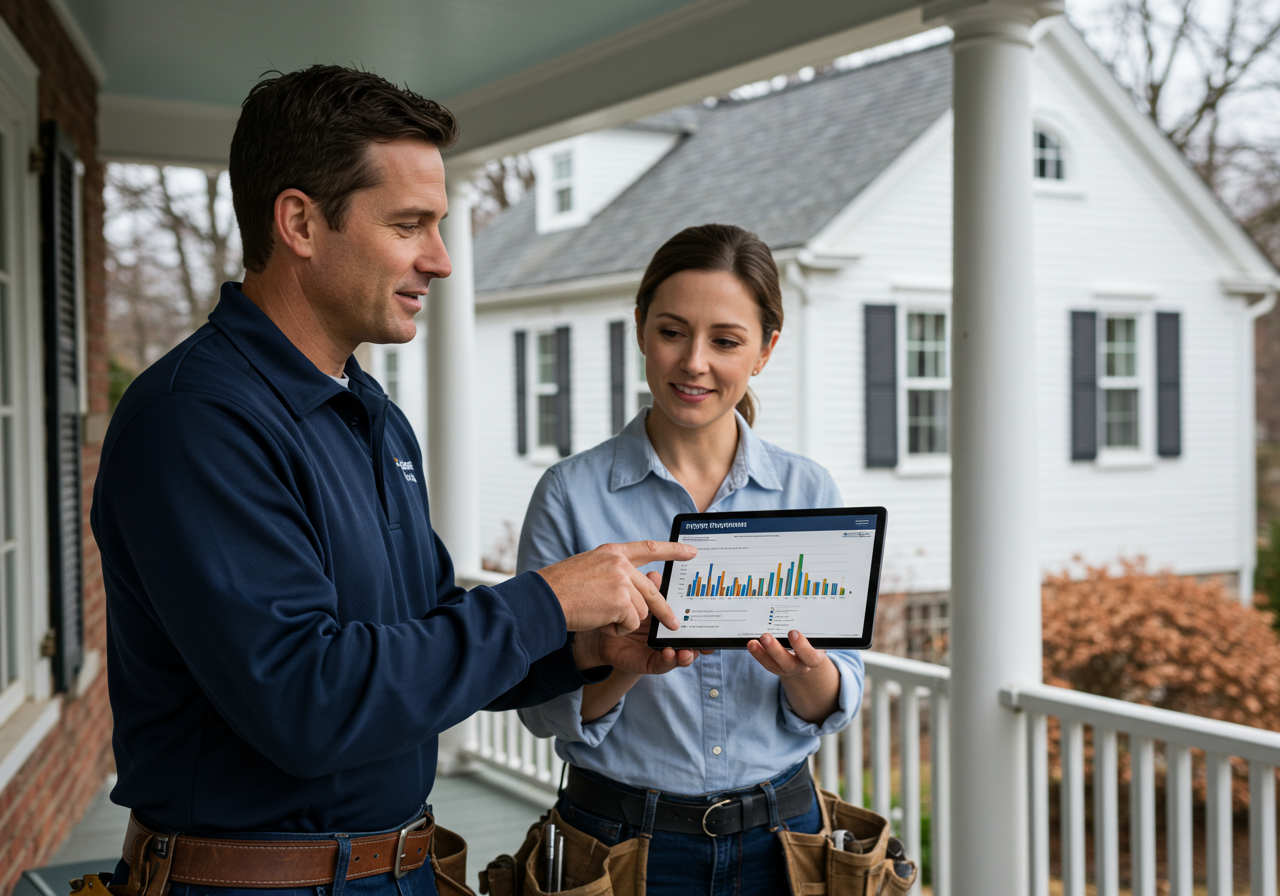
Understanding Roof Financing Options in Putnam
Don't let hidden fees and interest traps drain your bank account—know your options before you sign.
The "Same as Cash" Mirage: What Contractors Don't Want You to Know
You've seen the flyers. "No interest, no payments for 18 months!" It sounds like a gift from the gods when your attic is leaking and the bank account is looking thin. But here's the reality: that "free" money costs the contractor a lot of money. The lending company charges the roofer a "dealer fee" to offer those terms, sometimes as high as 12.5%.
The Hidden Markup
How does the contractor cover that fee? They don't just eat it. They bake it into your quote. If a roofer gives you a quote for $19,650 with "0% financing," I can almost guarantee you that same roof would cost $17,200 if you were paying cash. They are effectively charging you the interest upfront, they just aren't calling it interest.
I've seen too many families overpay for "convenience" because they didn't ask for the cash price first. When you get that quote, ask about the "cash discount." If the price drops by more than $1,500, you know exactly how much that "0% loan" is actually costing you.
The Deferred Interest Trap
Then there's the "deferred interest" clause. This is the real killer. If you don't pay off the entire balance by the 18th month—even if you're off by just $5.42—some of these lenders will back-charge you interest for the entire 18-month period at a rate of 26.99%. It's a financial landmine. I've helped homeowners in Putnam who thought they were doing great, only to get hit with a $4,800 interest charge on month 19.
The Fine Print Warning
Local Putnam Options vs. The Big Banks
When you're looking for local roofing contractors, you should also be looking for local money. I'm a big fan of using our Windham County credit unions. Why? Because they live here. They know the property values on Church St and Liberty Way.
Why Credit Unions Often Win
National lenders treat you like a credit score on a spreadsheet. A local credit union often looks at the equity in your home more favorably. For a $21,000 roofing project, a personal loan from a local institution might come in at 7.4% APR, while the "standard" contractor financing (not the 0% promo) might be sitting at 11.9% or higher.
Let's look at the real numbers for a $20,840 roof over 5 years:
Financing $20,840 Roof (5-Year Term)
| Source | APR | Monthly Payment | Total Interest Paid |
|---|---|---|---|
| Local Credit Union | 7.25% | $414 | $4,000 |
| Contractor Standard | 11.99% | $463 | $6,940 |
| High-Interest Credit Card | 24.99% | $612 | $15,880 |
The Personal Loan Shortcut
If you have a credit score north of 715, an unsecured personal loan is often the cleanest way to go. You get the cash in your account, you pay the contractor their "cash price" (saving that 10-12% markup), and you own the roof outright. It's cleaner, simpler, and usually thousands of dollars cheaper in the long run.
Tapping Into Home Equity: HELOCs and Home Equity Loans
For a major project like a full tear-off and replacement—especially if you're looking at premium materials like metal or high-end architectural shingles—your home's equity is your best friend. Since property values in Putnam have stayed relatively steady, many of you are sitting on more "roof money" than you realize.
HELOC vs. Home Equity Loan
People get these confused all the time. A Home Equity Line of Credit (HELOC) is like a credit card tied to your house. You only pay for what you use. If your roof ends up costing $18,432 instead of the estimated $20,000, you only pay interest on the $18,432.
A Home Equity Loan, on the other hand, is a lump sum. You get the whole check at once at a fixed rate. If you're the type of person who wants to know exactly what your payment is every month for the next 10 years, this is your winner.
The Tax Advantage (Sometimes)
One of the perks of using home equity is that, in some cases, the interest may be tax-deductible if the funds are used for "substantial home improvements." Now, I'm an advocate, not a CPA, so you've got to check with your tax pro on that one. But it's a potential win that contractor financing simply doesn't offer.
I once worked with a homeowner near Quinebaug Lake who used a HELOC to fund a $24,000 roof and siding project. By using the equity, she saved about $115 a month compared to the financing the exterior company was pushing. Over 7 years, that's almost $10,000 staying in her pocket.
Estimated Roof Cost by Home Type in Putnam
The Green Path: Saving Money with Energy Incentives
This is the part that usually surprises Putnam homeowners. You can actually get the government to help pay for your roof. No, they won't send you a check for the whole thing, but the incentives are better than they've been in years.
IRS Form 5695 and You
According to the IRS instructions for Form 5695, certain energy-efficient improvements qualify for the Residential Clean Energy Credit. While standard asphalt shingles usually don't qualify, if you're installing solar shingles or certain metal roofs that meet pigmented coating requirements, you could be looking at a massive credit.
I'm talking 30% of the cost of the solar portion. For a $35,000 solar-integrated roof, that's over $10,000 back in your pocket at tax time. Even for non-solar roofs, "cool roofs" designed to reflect sunlight can lower your attic temperature significantly. Research from Energy Star shows that these materials can reduce peak cooling demand by 10-15%.
Energize Connecticut Programs
Don't overlook the local stuff. Connecticut state regulations often provide low-interest financing for energy-efficiency upgrades. I've seen homeowners qualify for 0.99% or 2.99% financing through Smart-E loans for projects that include high-efficiency roofing components or improved attic insulation installed alongside the roof.
If you're already tearing the "lid" off your house, it is the absolute best time to address insulation. It's way cheaper to blow in extra cellulose when the roofers are already there than it is to do it later.
Dana's Negotiation Playbook: How to Talk Financing
I promised you scripts, and I'm a woman of my word. When you connect with CT roofing contractors, you need to come prepared. Don't let them lead the dance.
The "Cash vs. Finance" Comparison
The first question out of your mouth after they give you the quote should be: "What is the price difference if I secure my own financing and pay you in cash?"
If they hesitate or say "it's the same," they aren't being honest. There is always a cost for them to process third-party financing. If they refuse to budge, it might be time to find a contractor who is more transparent.
The "Multiple Quotes" Leverage
I recommend getting at least three quotes. But don't just compare the total price; compare the financing terms.
Script for Contractor B: "I really like your company's reputation, but Contractor A is offering a 5.9% APR for 60 months. Can you match that rate, or can you drop your labor price by $1,200 to offset the interest I'll be paying elsewhere?"
You'd be amazed how often a contractor will suddenly "find" a discount when they realize you're comparing more than just the color of the shingles.
Check Your Equity
Call your local bank and ask for a quick HELOC estimate. Know your limit before you talk to a roofer.
Get the Cash Price
Always ask for the 'out of pocket' cost first to avoid hidden dealer fees.
Check the Credit Union
See if CorePlus or local Putnam lenders have 'Home Improvement' specials.
Verify Tax Credits
Ask the contractor for the manufacturer's certification statement for energy-efficient materials.
Negotiate the Gap
Use your bank's rate as a bargaining chip against the contractor's financing offer.
The "Hidden Cost" That Catches Most Homeowners
Here's a Dana Jackson original: the "permit and disposal" shuffle. Sometimes, contractors will offer great financing on the roof, but then ask for "cash only" for the dumpster and the Putnam building permits. This is a red flag. It usually means they are trying to keep part of the job off the books or they're cash-strapped.
A professional quote should be all-inclusive. If you're financing $18,743, that should include every single nail, the dumpster sitting in your driveway, and the permit hanging in your window. Don't let them nickel and dime you for "extra" cash after you've already signed a financing agreement.
Get Your Free Roof Quote
Enter your zip code to get started
Putting it All Together
Putting a new roof on your home in Putnam shouldn't feel like walking into a trap. Whether you're over on Woodstock Ave or tucked away in a quiet corner of Windham County, you deserve a fair price and honest terms.
Remember, the goal isn't just to get a roof; it's to keep your home's equity working for you, not for some national lending conglomerate. Take the time to look at the local bank options, ask the tough questions about "dealer fees," and always, always read the fine print on those 0% interest offers.
I've seen too many families overpay for what should have been a straightforward home improvement. If a deal looks too good to be true—like a 0% loan for 10 years with no down payment—it usually is. Somewhere in that contract, the money is being made up.
If you're ready to start the process and want to see what real, local professionals are quoting, you can get your free roofing quote through our matched network. We vet these guys so you don't have to deal with the sharks.
Stay savvy, Putnam. Don't let a leaky roof drain your bank account more than it has to.
Frequently Asked Questions

About Dana Jackson
Verified ExpertDana Jackson is a Homeowner Advocate & Cost Analyst who helps Connecticut families navigate the financial aspects of roofing projects. She specializes in finding the best value and avoiding common pricing pitfalls.