Imagine waking up on a Tuesday morning in Columbia, perhaps in one of the quiet colonials near Mono Pond. You notice a faint, rhythmic tap-tap-tap against the drywall in your master bedroom. You look up, and there it is—a tea-colored ring spreading across the ceiling. Outside, the eaves are decorated with massive, glittering icicles that look like nature's art but act like a slow-motion wrecking ball for your soffits. This isn't a "bad roof" problem; it's a physics problem. In Tolland County, where our housing stock ranges from mid-century capes to modern builds, ice dams remain the single most misunderstood threat to a home's longevity.
Key Takeaways
- Ice dams are caused by attic heat bypasses, not just cold weather or heavy snow.
- Professional steam removal is 40% safer for shingle integrity than manual chipping or hammers.
- Proper R-60 insulation and ridge ventilation can reduce dam formation by nearly 92%.
- Maryland-style "heat cables" are often a band-aid for deeper structural ventilation flaws.
Icicles and ice buildup at the eaves of a Columbia, CT home
What looks scenic from the yard can force water under shingles and into your ceiling
The Physics of the Ridge: Why Columbia Homes Are Vulnerable
The mechanics are deceptively simple. Heat escapes from your living space into the attic, warming the underside of the roof deck. This melts the bottom layer of snow, which flows down to the cold eaves (the part of the roof hanging over the wall) and refreezes. Here's the data: once that ice ridge hits 2.5 inches in thickness, it creates a reservoir of standing water. Shingles are designed to shed water moving downward, not to act as a pool liner.
I've spent countless hours in cramped Columbia attics measuring thermal leakage with FLIR cameras. Most homeowners point at the gutters, but the culprit is usually an unsealed "bypass"—a gap around a chimney flue, a recessed light, or a pull-down attic stair. In our region, where the freeze-thaw cycle is aggressive, these small thermal leaks translate into massive ice build-up. If you're seeing icicles thicker than a baseball, your attic is effectively "exhaling" money. You can see what other CT homeowners experienced when they finally addressed these hidden thermal leaks rather than just patching the stains every March.
The Role of R-Value and Air Sealing
In 2026, we're pushing for R-60 insulation in Tolland County. Anything less, and you're essentially inviting the snow to melt prematurely. But insulation without air sealing is like wearing a wool sweater in a windstorm; the air just blows right through. We use closed-cell spray foam or high-grade caulk to plug the gaps before blowing in cellulose.
Retrofitting vs. Emergency Removal: Prevention Strategies Compared
When the dam has already formed, homeowners often panic. I've seen people out on Route 66 buying "roof socks" filled with calcium chloride or, heaven forbid, climbing a ladder with a hatchet. The latter is a recipe for a $12,000 roof replacement.
Ice Dam Mitigation Methods
| Feature | Safety | Long-term Value | Initial Cost | Prevents Damage |
|---|---|---|---|---|
| Manual Chipping | ||||
| Chemical Socks | ||||
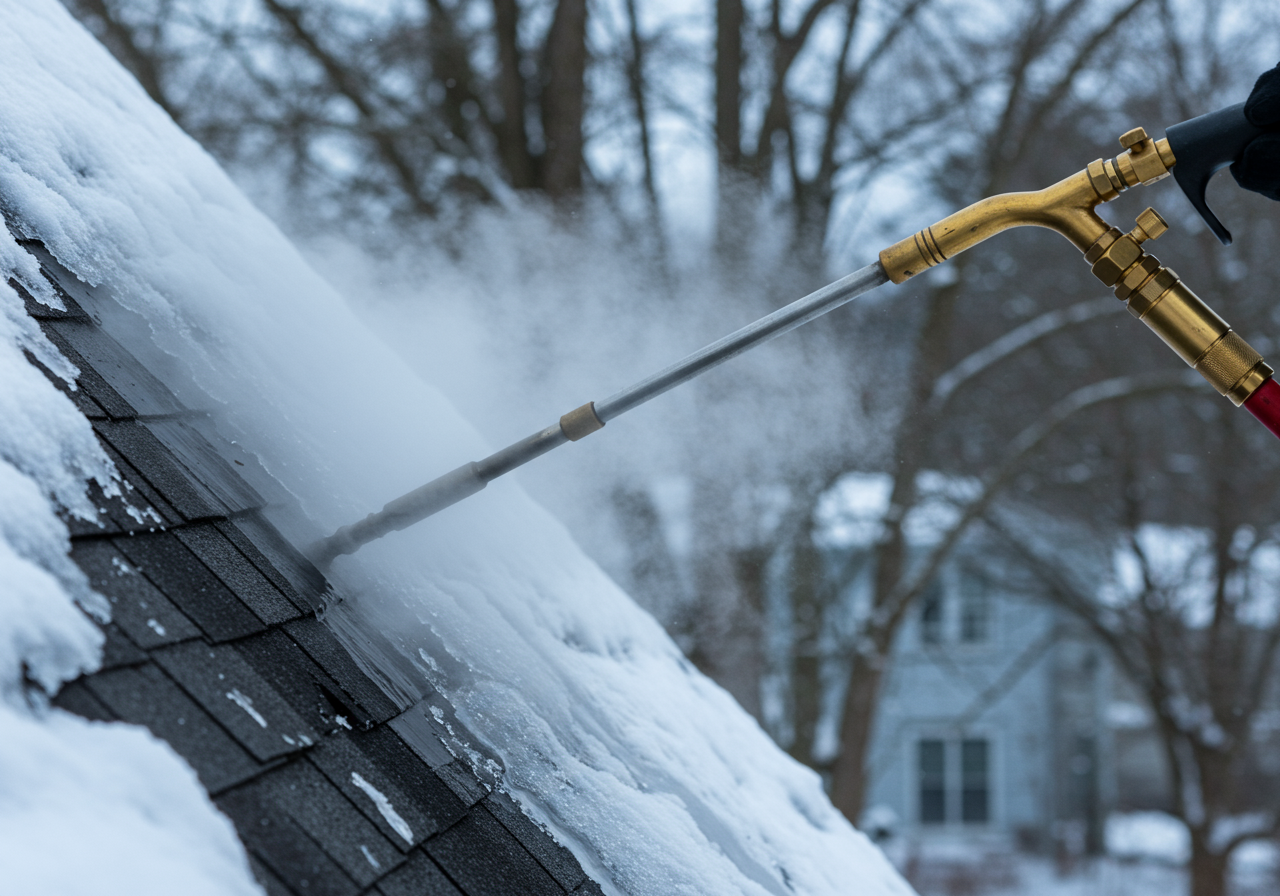
| Low-Pressure Steam | ||||
| Attic Air Sealing |
The reality is that while low-pressure steam is the gold standard for immediate relief, it doesn't solve why the dam happened. For those looking at long-term equity, the "Permanent Fix" involves a trifecta: 6 feet of ice and water shield (the rubberized membrane under your shingles), baffles at the eaves to keep airflow moving, and adequate ridge venting. If you are curious about deeper technical specs, our blog library has detailed guides that break down the physics of soffit-to-ridge airflow.
The $4,200 Mistake: Why Steam Beats Hammers
I remember a job last season near the Columbia Town Green. The owner tried to "help" the roof by using a pressure washer on hot setting. He didn't realize that a standard pressure washer—even with hot water—operates at a PSI that literally strips the protective granules off the asphalt shingles. By the time I arrived, the ice was gone, but the roof's lifespan had been cut by 10 years.
Emergency ice removal in Connecticut usually runs between $650 and $1,800 depending on the pitch and height of the home. However, the resulting interior damage (mold remediation, insulation replacement, and painting) averages closer to $4,200. According to the NWS Historical Storm Events Database, Tolland County averages several significant icing events per decade—it's not a matter of "if," but "when."
Estimated Cost of Neglect vs. Prevention (2026)
Did You Know?
Most standard homeowners insurance policies cover the damage caused by ice dams, but they rarely cover the cost of removing the ice dam itself.
Engineering a Permanent Solution in Tolland County
The blueprint for a "dry" winter starts with the eaves. When we install a new roof system, we don't just stop at the 3-foot mark for the ice and water shield. In Columbia, with our specific wind patterns and snow loads, I recommend a 6-foot wrap. This ensures that even if a dam forms, the water sits on a waterproof membrane rather than the plywood deck.
Furthermore, we need to talk about ventilation. If your soffit vents are clogged with 20 years of bird nests or "over-blown" insulation, your roof can't breathe. I always tell homeowners to verify their contractor's license and ask specifically how they calculate "Net Free Venting Area." A pro won't guess; they'll use a calculator.
Thermal Audit
Use an infrared camera to find heat bypasses in the attic floor.
Air Sealing
Plug gaps around wires, pipes, and chimneys with fire-rated sealant.
Baffle Installation
Ensure clear paths for air to travel from soffits to the ridge.
Insulation Boost
Bring the attic up to R-60 levels using blown-in cellulose or fiberglass.
Eave Protection
Ensure the roof has at least two courses of ice and water shield membrane.
Professionalism on the roof matters as much as the materials. When hiring, ensure the crew follows OSHA's fall protection standards to protect you from liability and ensure the job is done by specialists, not day laborers. If the cost of these upgrades feels daunting, USA.gov's home repair portal offers resources for federal grants or low-interest loans for energy-efficiency upgrades that include insulation and venting.
Plan Ice Dam Prevention Before the Thaw
Compare quotes from verified Connecticut roofing pros and fix the attic, not just the stain.
No credit card required • Free to use
In 17 years of inspecting Connecticut roofs, I've learned that the most expensive solution is the one you have to do twice. Don't wait for the tea-colored stain to appear on your ceiling this March. By addressing the thermal envelope of your Columbia home now, you aren't just preventing a leak; you're protecting your biggest investment and ensuring your family stays dry regardless of what the Tolland County winter throws at us.
Get Your Free Roof Quote
Enter your zip code to get started
FAQ

About Daniel Roberts
Verified ExpertDaniel Roberts is a Senior Roofing Consultant with over 15 years of experience in the New England residential construction industry. He specializes in storm damage assessment and energy-efficient roofing systems.