Most Newington homeowners assume the town building inspector is the final authority on their roof, but if you live in a community like Cedar Village or any of the developments tucked behind the Berlin Turnpike, your real "boss" is the HOA board. In Connecticut, these associations don't just care if your roof leaks; they care if your shingle shade of "Weathered Wood" matches the neighbor's house three doors down. March is typically when these boards wake up from their winter slumber and start reviewing architectural applications, and if you haven't done your homework, you're looking at a summer of red tape instead of a new roof.
Key Takeaways
- HOA architectural reviews in Hartford County often take 30-45 days, so starting your application in March is vital for a late spring install.
- Many Newington HOAs mandate specific shingle weights and wind ratings that exceed standard CT building codes.
- Failing to get a "Notice to Proceed" from your board can result in fines that often exceed $150 per day until the roof is replaced.
- Local contractors who understand Newington-specific bylaws can often fast-track the approval process by providing pre-vetted material samples.
The Reality of "Architectural Uniformity" in Hartford County
I've spent a lot of time looking at satellite imagery of Newington neighborhoods, and you can practically see the boundaries of HOA-governed land from space. The roofs are identical. While that might feel restrictive, there's a climate-driven reason for some of these rules. After the heavy ice damming seasons we saw a few years back, many local boards began requiring specific underlayment specs that go beyond what the International Code Council (ICC) model codes mandate for residential zones.
A friend of mine over near Mill Pond Park learned this the hard way. He tried to install a high-end metal roof on his colonial-style condo. It was objectively a better roof—fire-resistant, energy-efficient, and likely to last 50 years. But because the bylaws specified "architectural asphalt shingles in slate gray," the board issued a cease-and-desist order the morning the crew started tearing off the old shingles. It cost him $4,200 in restocking fees and lost labor. The lesson? The board's aesthetic vision usually trumps your desire for technical upgrades.
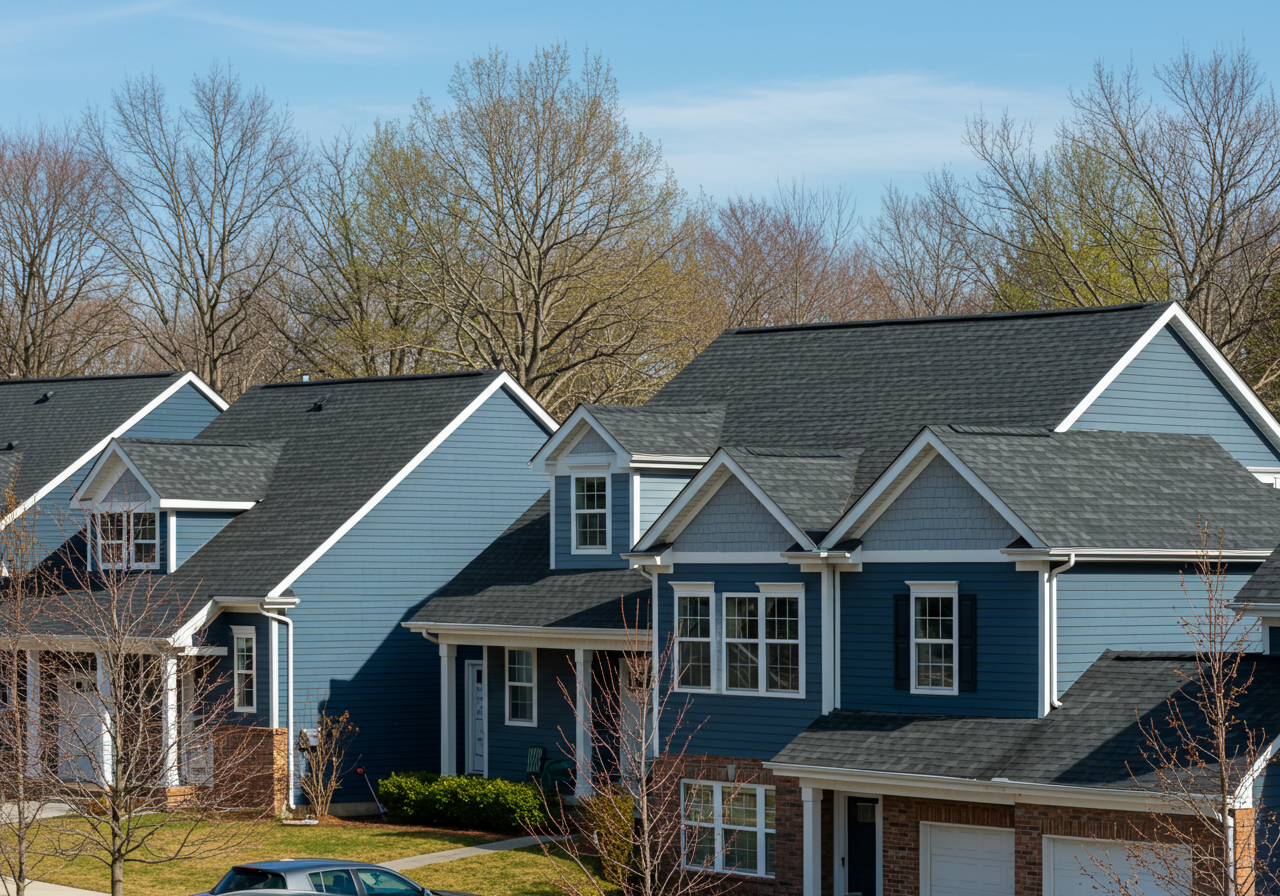
When the HOA palette matters more than the pitch
Uniform roofing in Newington developments often reflects ARC rules written for curb appeal—and storm resilience.
Why Specific Colors Matter to Your Board
It isn't just about being picky. HOAs maintain property values by ensuring a cohesive look. In Newington, where many developments were built in the 1980s and 90s, the boards are often trying to preserve a specific "New England" aesthetic. If you're looking to upgrade, you need to find a contractor who brings a physical sample board to your walkthrough, not just a digital PDF, because the way a shingle looks under the Hartford sun is what the board will judge.
Navigating the Material List Without Going Crazy
Most associations keep a "Pre-Approved Materials" list. If you stay within those lines, the approval process is usually a rubber stamp. However, these lists are often outdated. I recently reviewed a list for a Newington development that still recommended a shingle line that was discontinued in 2019. This is where you have to be proactive.
Before you submit your paperwork, check the Better Business Bureau's home improvement planning resources to see what modern equivalents exist for those old specs. You want to present the board with a solution, not a problem. Tell them, "Brand X is discontinued, but Brand Y has the same solar reflectance and color profile."
Did You Know?
Some Connecticut HOAs are now legally required to allow solar-reflective "cool roofs" even if they vary slightly in color, thanks to state-level energy efficiency pushes.
Vetting Your Newington Contractor
Don't trust a "handyman" with an HOA project. You need someone who understands that the paperwork is just as important as the hammers. I always suggest that homeowners verify a contractor's license through Connecticut's eLicense portal before even asking for a quote. An unlicensed contractor won't have the professional liability insurance that most HOAs require to even step foot on the property.
"We don't want to be the bad guys, but if a homeowner installs an unapproved 'Midnight Black' roof in a sea of 'Autumn Harvest' brown, it creates a legal nightmare for the whole association."
The Financial Trade-offs of HOA Compliance
Following the rules isn't just about avoiding fines; it's about long-term ROI. While an HOA-mandated shingle might be more expensive than the bargain-bin option at a big-box store, the uniformity helps maintain a higher resale value for the entire street. I've seen data suggesting that homes in well-regulated Newington communities sell for about 8% more than those in similar non-HOA neighborhoods where roofs are a hodgepodge of styles and conditions.
Illustrative project cost: standard vs. HOA-specified tier
However, the "cons" are real. You might be forced to use a more expensive heavy-weight shingle that requires reinforced decking. If your roof deck needs work to meet these weight requirements, the price tag can jump quickly. This is why getting an accurate, line-item roof estimate before you file ARC paperwork is so helpful—you need to know if the HOA's "dream roof" fits your actual budget.
Protect yourself before you sign
Compare real numbers before the ARC meeting
See what verified Connecticut crews typically charge for HOA-specified systems.
No credit card required • Free to use
Timing Your Project: Why March is the Moving Month
In the climate world, we call March the "Great Transition." The ground is thawing, the Nor'easters are (hopefully) behind us, and the humidity hasn't yet hit that summer peak. It's the perfect time for roofing adhesives to seal properly. But more importantly, it's the peak season for HOA board meetings.
If you submit your application by March 15th, you're usually on the agenda for the April meeting. That puts your project on the calendar for May or June—prime roofing weather in Connecticut. Wait until May to ask for permission, and you'll be fighting for a contractor's time in the middle of a July heatwave.
The HOA Roofing Trade-off
Pros
- Maintains community property values
- Ensures high-quality material standards
- Often includes higher wind-resistance requirements
Cons
- Higher upfront material costs
- Lengthy approval timelines (30+ days)
- Limited color and style choices
If you find yourself in a situation where a spring leak turns into a flood, don't wait for a board meeting. You should look into emergency roofing help that can stabilize the roof while ARC review continues. Most HOAs have "emergency repair" clauses that allow for immediate functional fixes (like tarping or minor shingle replacement) before the full aesthetic approval is granted.
Get Your Free Roof Quote
Enter your zip code to get started
Strategic Steps for Newington Homeowners
- Request the "Blue Book": Get the latest version of the Architectural Review Committee (ARC) guidelines.
- Collect Samples: Don't just show a picture; get the actual physical shingles.
- Draft the Narrative: Explain how the new materials meet or exceed the old standards for Connecticut weather.
- Notify the Neighbors: Some HOAs require signatures from adjacent homeowners. Do this over a coffee before the formal meeting.
Managing an HOA roof replacement is 60% diplomacy and 40% construction. By starting in March and using the right data to back up your material choices, you can ensure your home stays dry and your relationship with the board stays sunny.
Frequently Asked Questions

About Noah Knight
Verified ExpertNoah Knight is a Connecticut Weather & Climate Specialist who helps homeowners understand how New England's unique weather patterns affect their roofing systems. He combines meteorological knowledge with practical home maintenance advice.