Key Takeaways
- Hail damage often goes unnoticed until leaks appear, costing homeowners $12,000+ in preventable repairs.
- Shingle bruising—dark spots where granules are knocked off—is the most common sign of hail damage.
- Professional inspections are essential after any hailstorm, especially in Cromwell's variable weather patterns.
- Early detection and repair can prevent water intrusion, mold, and structural damage that multiplies costs.
Last spring, I inspected a Cromwell home where the owner thought they had dodged a bullet. The hailstorm had passed, and from the ground, their roof looked fine. But when I climbed up there, I found over 200 shingles with "bruising"—those telltale dark spots where protective granules had been knocked away. Six months later, they were dealing with a $12,400 insurance claim because water had been slowly infiltrating the roof system.
This is the reality of hail damage in Connecticut: it's often invisible until it's expensive. Those small stones that bounce off your car windshield? They're doing real damage to your roof's protective layer. In Cromwell, where we get our share of spring and summer storms, homeowners need to know what to look for and when to call in a professional.
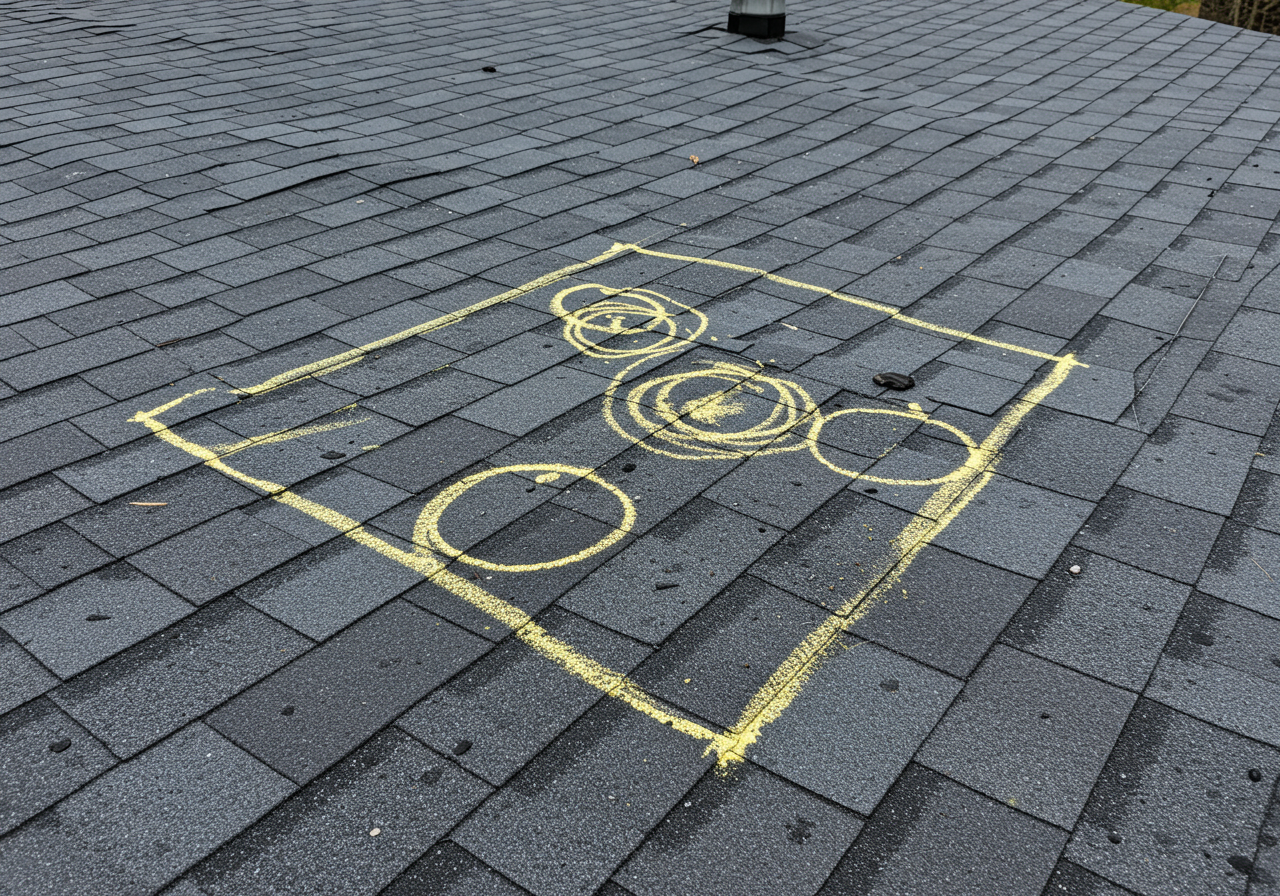
Hail damage inspection on a Cromwell roof
Professional roof inspections can identify subtle hail damage that may not be visible from the ground, preventing costly water damage later.
The Hidden Threat: Why Small Hail Causes Big Problems
Most homeowners underestimate hail damage because they're looking for obvious signs: missing shingles, visible dents, or gaping holes. But the real damage happens at a microscopic level. When hail strikes a shingle, it knocks off the protective granules—those tiny ceramic-coated stones that shield the asphalt from UV rays and water.
Once those granules are gone, the shingle's lifespan drops dramatically. The exposed asphalt degrades faster in Connecticut's freeze-thaw cycles, and micro-fractures allow water to seep underneath. You might not see a leak for months, but by then, the damage has spread to your decking, insulation, and even your home's structure.
Did You Know?
According to the Insurance Information Institute, hail damage accounts for over $1 billion in insured losses annually in the United States, with Connecticut experiencing some of the highest claim frequencies in the Northeast.
For more detailed statistics on hail damage and insurance claims, visit the Insurance Information Institute's hail damage facts and statistics.
Understanding Shingle Bruising
"Shingle bruising" is the industry term for those dark, circular spots you'll see after a hailstorm. They occur when hail impacts knock off the granules, exposing the darker asphalt underneath. From the ground, these bruises can look like shadows or natural shingle variation, but up close, they're clear indicators of impact damage.
The severity depends on several factors: hail size, wind speed, roof pitch, and shingle age. Older shingles are more brittle and show damage more easily, while newer architectural shingles can sometimes absorb impacts better. However, even newer roofs aren't immune—I've seen significant bruising on roofs less than two years old.
Spotting Hail Damage: What to Look For
While a professional inspection is always recommended, there are signs you can check yourself after a storm. Start with a visual inspection from the ground using binoculars, then look for these key indicators:
Check Your Gutters and Downspouts
After a hailstorm, check your gutters for an accumulation of granules. A small amount is normal, but if you see piles of sandy material, it's a sign that shingles have been damaged. This is often the first visible sign of hail impact.
Look for Dents in Metal Components
Metal flashing, gutters, and vents are excellent indicators of hail impact. Dents in these components confirm that hail fell and likely hit your shingles as well. Take photos of any dents you find.
Examine Shingles from Different Angles
Use binoculars to look for dark spots, cracks, or missing pieces on your shingles. Pay special attention to the edges and corners, which are more vulnerable to impact damage.
Check for Soft Spots
If you can safely access your roof, gently press on shingles. Soft spots indicate underlying damage where the shingle has been compromised. Never walk on a roof after a storm without proper safety equipment.
Look for Exposed Underlayment
Missing shingles or exposed underlayment are obvious signs of damage. Even if only a few shingles are affected, the surrounding area may have hidden bruising that needs attention.
Safety First
The Professional Inspection Process
A thorough hail damage inspection involves more than just looking at shingles. A qualified contractor will examine every component of your roof system and provide documentation that's essential for insurance claims. Here's what you should expect:
What's Included in a Professional Hail Damage Inspection
| Feature | Basic Inspection | Professional Inspection |
|---|---|---|
| Visual shingle examination | ||
| Granule loss assessment | ||
| Metal component inspection | ||
| Underlayment check | ||
| Documentation with photos | ||
| Written damage report | ||
| Insurance claim assistance |
When choosing an inspector, look for someone who is licensed, insured, and has experience with insurance claims. Be wary of "storm chasers" who show up uninvited after storms—they often use high-pressure tactics and may not be properly licensed in Connecticut. Instead, find a contractor who actually shows up through reputable sources and verify their credentials with the Connecticut Department of Consumer Protection.
"The difference between a quick visual check and a thorough inspection can be thousands of dollars. A professional will document every impact point, measure granule loss, and provide the evidence your insurance company needs."
Navigating Insurance Claims in Connecticut
Filing an insurance claim for hail damage can be straightforward if you have proper documentation, but many homeowners struggle because they don't understand the process or their policy limitations. In Connecticut, most homeowners policies cover hail damage, but there are important details to know.
Understanding Your Policy
The key to a successful claim is documentation. Take photos immediately after the storm (if safe to do so), document any visible damage, and keep records of all inspections and estimates. Your insurance company will send their own adjuster, but having a professional inspection report strengthens your position.
Timeline Considerations
Most insurance policies require you to report damage within a reasonable time—typically within one year of the storm. However, the sooner you file, the better. Delays can complicate the claims process, and some evidence of damage may deteriorate over time. If you suspect hail damage, don't wait—schedule an inspection and file your claim promptly.
Need a Professional Hail Damage Inspection?
Connect with verified Connecticut roofing professionals who can assess your roof and help with insurance claims.
No credit card required • Free to use
Repair vs. Replace: Making the Right Decision
Not all hail damage requires a full roof replacement. The decision depends on several factors: the extent of damage, your roof's age, the type of shingles, and your insurance coverage. Here's how to think through the decision:
Repair vs. Replacement Decision Matrix
| Feature | Repair | Replace |
|---|---|---|
| Damage affects <10% of roof | ||
| Shingles are under 10 years old | ||
| No underlying decking damage | ||
| Granule loss is minimal | ||
| Insurance covers replacement |
Generally, if damage is isolated to a small area and your roof is relatively new, targeted repairs make sense. However, if you have widespread bruising, significant granule loss, or your roof is already showing signs of age, replacement may be the better long-term investment. Your contractor and insurance adjuster can help you weigh the options.
Average Cost Comparison: Repair vs. Replace (2,000 sq ft home)
Prevention and Protection Strategies
While you can't prevent hailstorms, you can take steps to minimize damage and ensure your roof is in the best condition to withstand impacts. Regular maintenance and choosing the right materials can make a significant difference.
Pros
- Impact-resistant shingles (Class 4 rating) can reduce damage from smaller hailstones.
- Regular maintenance keeps shingles flexible and better able to absorb impacts.
- Proper attic ventilation prevents moisture buildup that can worsen hail damage.
- Quality installation with proper nailing reduces shingle vulnerability.
Cons
- Impact-resistant shingles cost 10-15% more than standard shingles.
- No shingle is completely hail-proof—large stones can damage any material.
- Older roofs are more vulnerable regardless of maintenance.
- Some insurance discounts for impact-resistant materials may not offset the cost difference.
If you're in the market for a new roof or considering an upgrade, discuss impact-resistant options with your contractor. These shingles are tested and rated for their ability to withstand hail impacts, and some insurance companies offer discounts for homes with Class 4 rated shingles. However, weigh the cost against the likelihood of hail in your area—Cromwell does experience hailstorms, but they're not as frequent as in some other regions.
Regular roof maintenance is your best defense. Keep trees trimmed away from your roof, clean gutters regularly to prevent water backup, and have annual inspections to catch small issues before they become big problems. If you need help finding qualified contractors for maintenance or repairs, get instant roof estimates from verified contractors who understand Connecticut's unique roofing challenges.
Get Your Free Roof Quote
Enter your zip code to get started
Frequently Asked Questions

About Daniel Roberts
Verified ExpertDaniel Roberts is a Senior Roofing Consultant with over 15 years of experience in the New England residential construction industry. He specializes in storm damage assessment and energy-efficient roofing systems.