Last week, I got a call from a Guilford homeowner who'd been promised a "free roof" through tax credits. She'd already signed a contract for $18,000, thinking the government would cover it all. When I explained that the maximum credit is $1,200—not $18,000—she was devastated. This isn't the first time I've seen this happen, and it won't be the last.
The truth is, energy tax credits can help offset your roofing costs, but they're not a magic solution. In Guilford, where many homes need roof replacements due to coastal weather and aging infrastructure, understanding what actually qualifies—and what doesn't—can save you thousands of dollars and prevent costly mistakes.
Key Takeaways
- The maximum energy tax credit for 2026 is $1,200 per year, not a percentage of your entire roof cost.
- Only ENERGY STAR-rated roofing materials and qualifying energy improvements count toward the credit.
- Repairs don't qualify—you must install new energy-efficient materials or make qualifying improvements.
- Proper documentation is critical: keep receipts, product certifications, and file IRS Form 5695.
The "Free Roof" Myth: What Contractors Don't Tell You
I've reviewed dozens of roofing contracts in Guilford over the past year, and the pattern is clear: contractors are using tax credits as a sales tool, often exaggerating what homeowners can actually claim. The reality? Energy tax credits are a nice bonus, but they won't cover your entire roof replacement.
The $1,200 Cap Reality Check
Here's what's happening: contractors are telling homeowners they can claim 30% of their roof cost, which sounds great until you realize that 30% is capped at $1,200 total. So if you spend $4,000 on qualifying materials, you'd get $1,200 back (30% of $4,000 = $1,200). But if you spend $20,000, you still only get $1,200 back—not $6,000.
Before you sign any contract, make sure you're working with a contractor who understands these limits. I always recommend getting multiple quotes from licensed professionals who can break down exactly what qualifies and what doesn't. Don't let a sales pitch about "free money" rush you into a decision.
Understanding 2026 Energy Tax Credits
The Inflation Reduction Act extended and modified energy tax credits through 2032, but the rules changed significantly. For Guilford homeowners planning roof work in 2026, here's what you need to know:
What Qualifies vs. What Doesn't
| Feature | Qualifies | Doesn't Qualify |
|---|---|---|
| ENERGY STAR Rated Shingles | ||
| Standard Asphalt Shingles | ||
| Qualifying Insulation | ||
| Roof Repairs Only | ||
| Solar-Ready Components | ||
| Gutter Replacement |
The key distinction is between repairs and improvements. If you're just fixing leaks or replacing damaged shingles, that doesn't qualify. But if you're installing new ENERGY STAR-rated roofing materials, adding qualifying insulation, or installing solar-ready components, those costs can count toward your credit.
ENERGY STAR Requirements
What Actually Qualifies for the Credit
Not all roofing work qualifies for energy tax credits. Here's the breakdown of what counts and what doesn't:
Average Credit Value by Improvement Type
The important thing to remember is that these are all subject to the same $1,200 annual cap. You can't claim $1,200 for roofing and another $1,200 for insulation in the same year—it's $1,200 total for all qualifying improvements combined.
Energy Tax Credit Pros and Cons
Pros
- ENERGY STAR-rated roofing materials reduce cooling costs by reflecting sunlight.
- Qualifying insulation improves energy efficiency year-round.
- Solar-ready components prepare your roof for future solar installation.
- Credit can be claimed on your tax return, reducing your tax liability.
Cons
- Only materials, not labor, typically count toward the credit.
- Must meet specific ENERGY STAR or federal efficiency standards.
- Annual $1,200 cap applies to all improvements combined.
- Requires proper documentation and IRS Form 5695 filing.
When planning your roof project, work with a contractor who understands these requirements. They should be able to provide product certifications and help you understand which costs qualify. You can also use our roofing cost calculator to estimate your total project costs before deciding how to maximize your tax credit.
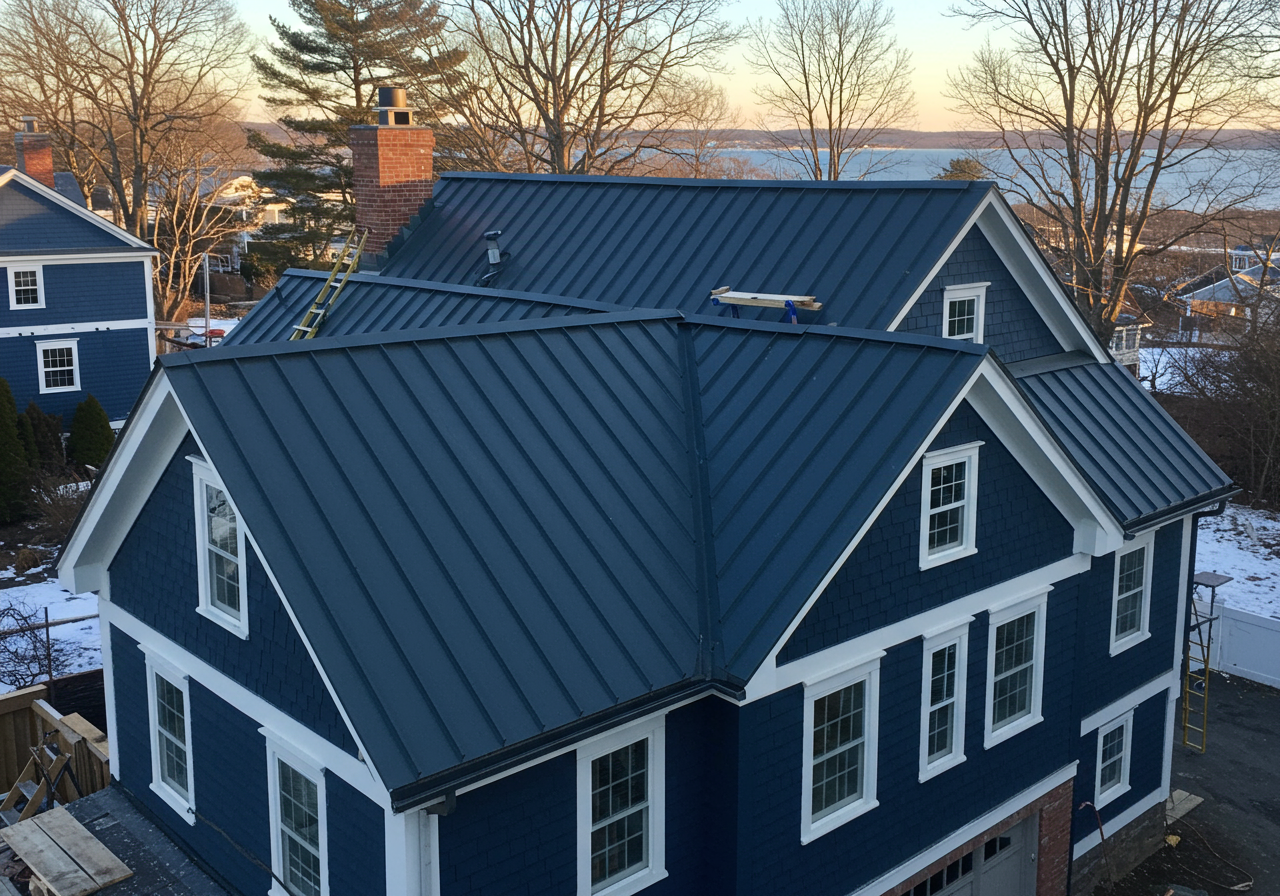
Energy-Efficient Roofing in Guilford
Understanding which roofing materials and improvements qualify for federal energy tax credits can help you maximize your savings.
Your Pre-Installation Checklist
Before you start your roofing project, use this checklist to ensure you're maximizing your tax credit potential:
Verify ENERGY STAR Certification
Confirm that the roofing materials you're purchasing have ENERGY STAR certification. Ask your contractor for product labels or manufacturer certifications. Keep copies of these documents for your tax records.
Separate Material Costs from Labor
Only material costs typically qualify for the credit, not labor. Make sure your contract clearly separates these costs so you know exactly what you can claim. Some contractors will help you identify qualifying expenses.
Check Annual Credit Limits
Remember the $1,200 annual cap applies to all energy-efficient improvements combined. If you've already claimed credits for windows or insulation this year, factor that into your roofing credit calculation.
Plan Your Timing
The credit is claimed in the tax year when the work is completed. If you start work in December but finish in January, you'll claim the credit for the year it's completed, not started.
Gather Documentation
Keep all receipts, product certifications, and contractor invoices. You'll need these when filing IRS Form 5695. Store them in a safe place for at least 3 years after filing.
"The biggest mistake I see is homeowners assuming their entire roof cost qualifies. The reality is, only specific materials count, and there's a hard cap. Don't let a contractor's sales pitch about 'free money' cloud your judgment—do the math yourself."
How to Claim Your $1,200 Credit
Claiming the energy tax credit isn't complicated, but it does require attention to detail. Here's the step-by-step process:
First, make sure you have all your documentation in order. You'll need receipts showing the cost of qualifying materials, proof that materials meet ENERGY STAR requirements (product labels or manufacturer certifications), and your contractor invoices. The IRS may ask for these documents if your return is audited.
When filing your taxes, you'll use IRS Form 5695 (Residential Energy Credits). This form walks you through calculating your credit based on your qualifying expenses. Remember, the credit is 30% of qualified expenses, up to the $1,200 annual limit.
Pro Tip: Spread Out Improvements
The credit reduces your tax liability dollar-for-dollar. So if you owe $3,000 in taxes and claim a $1,200 credit, you'll only owe $1,800. However, the credit is non-refundable, meaning it can't reduce your tax liability below zero. If you don't owe taxes, you can't get a refund from this credit.
For more detailed information about federal energy tax credits, visit the U.S. Department of Energy's tax credit guide. They provide updated information about qualifying products and requirements.
Get Your Free Roof Quote Today
Connect with verified CT pros who understand energy tax credits.
No credit card required • Free to use
Common Pitfalls That Cost Guilford Homeowners
I've seen too many Guilford homeowners make expensive mistakes when it comes to energy tax credits. Here are the most common pitfalls to avoid:
Assuming Labor Counts
Only material costs typically qualify, not contractor labor. Don't base your credit calculation on your total contract price.
Missing Documentation
Without proper receipts and product certifications, you can't claim the credit. Keep everything organized from day one.
Confusing Repairs with Improvements
Fixing leaks doesn't qualify. You need new energy-efficient materials or qualifying improvements to claim the credit.
Another common mistake is assuming all roofing materials qualify. Just because a contractor says something is "energy-efficient" doesn't mean it meets ENERGY STAR requirements. Always verify certification before making your purchase decision.
Did You Know?
According to IRS data, roofing-related energy tax credit claims increased 45% in Connecticut between 2023 and 2025, but many homeowners are still leaving money on the table due to documentation errors.
The best way to avoid these pitfalls is to work with a contractor who understands tax credit requirements and can help you navigate the process. Look for contractors who provide detailed invoices separating material and labor costs, and who can provide product certifications for ENERGY STAR-rated materials.
If you're planning a roof replacement, make sure you're getting accurate cost estimates. Use our roof repair and replacement services to connect with contractors who can help you understand both your project costs and potential tax credit savings.
Get Your Free Roof Quote
Enter your zip code to get started
Conclusion
Energy tax credits can help offset your roofing costs, but they're not a magic solution. The $1,200 annual cap means you'll still be paying the majority of your roof replacement costs out of pocket. However, by understanding what qualifies, keeping proper documentation, and working with knowledgeable contractors, you can maximize your savings and avoid costly mistakes.
Don't fall for the "free roof" myth. Do your research, ask questions, and make sure you understand exactly what you're getting into before signing any contract. If you're ready to start planning your roofing project, ZikQuote can connect you with verified Connecticut professionals who understand both roofing and tax credit requirements.
FAQ

About Dana Jackson
Verified ExpertDana Jackson is a Homeowner Advocate & Cost Analyst who helps Connecticut families navigate the financial aspects of roofing projects. She specializes in finding the best value and avoiding common pricing pitfalls.