
Key Takeaways
- Connecticut's freeze-thaw cycles cause 40% of roof failures.
- Most asphalt roofs in CT last 15-20 years, not the advertised 30.
- Early repairs can save $10,000+ vs full replacement.
- Ice dams are preventable with proper insulation.
Groton homeowners face a unique, recurring nightmare this time of year: the "mystery drip" that only appears when the wind whips off the Thames River or after a heavy February slush. It's frustrating because you might have looked at your shingles last fall and thought everything was fine. But Connecticut winters don't play by the rules, and our corner of New London County—with its mix of salt air and fluctuating humidity—is particularly hard on aging roofing systems. When you're dealing with a leak, the goal shouldn't just be to stop the water; it should be to address the underlying climate-driven cause so you aren't chasing the same damp spot again next season.
The Hidden Impact of the February Freeze-Thaw Cycle
In Groton, we often deal with "sneaky" leaks caused by ice dams. This isn't just a matter of snow sitting on your roof; it's a thermodynamic failure. When heat escapes your attic, it melts the bottom layer of snow on your roof. That water runs down to the cold eaves and refreezes, creating a literal dam of ice. I've seen cases near the Gold Star Bridge where a single bad week of fluctuating temperatures caused water to back up under three rows of shingles.
The fix isn't just hacking away at the ice with a shovel—which usually results in more damage. The real strategy involves improving attic insulation and ventilation. By keeping the roof deck at a consistent temperature, you prevent the melt-refreeze cycle from starting. If you're seeing these dams every year, our expert roofing guides offer deeper dives into how proper airflow can save your plywood from rotting from the inside out.
Expert Insight
Coastal Wind and Shingle Lift Near the Sound
Living near the water means dealing with wind speeds that inland towns like Hartford rarely see. In Groton Long Point and the areas surrounding the Sub Base, I've documented shingles that look perfectly fine from the ground but have actually "unzipped" from their adhesive strips. Once a shingle lifts, wind-driven rain can be forced underneath the lap, finding its way into your home even during a relatively short storm.
I always suggest homeowners look for "tabs" that are standing slightly taller than the rest of the roofline after a heavy gale. According to FEMA's hurricane and wind mitigation guidelines, ensuring your shingles are rated for high-wind zones is the only way to prevent this repetitive lifting. If your roof is more than 15 years old, those factory adhesive strips have likely lost their "tack," making your home vulnerable to every nor'easter that rolls up the coast.
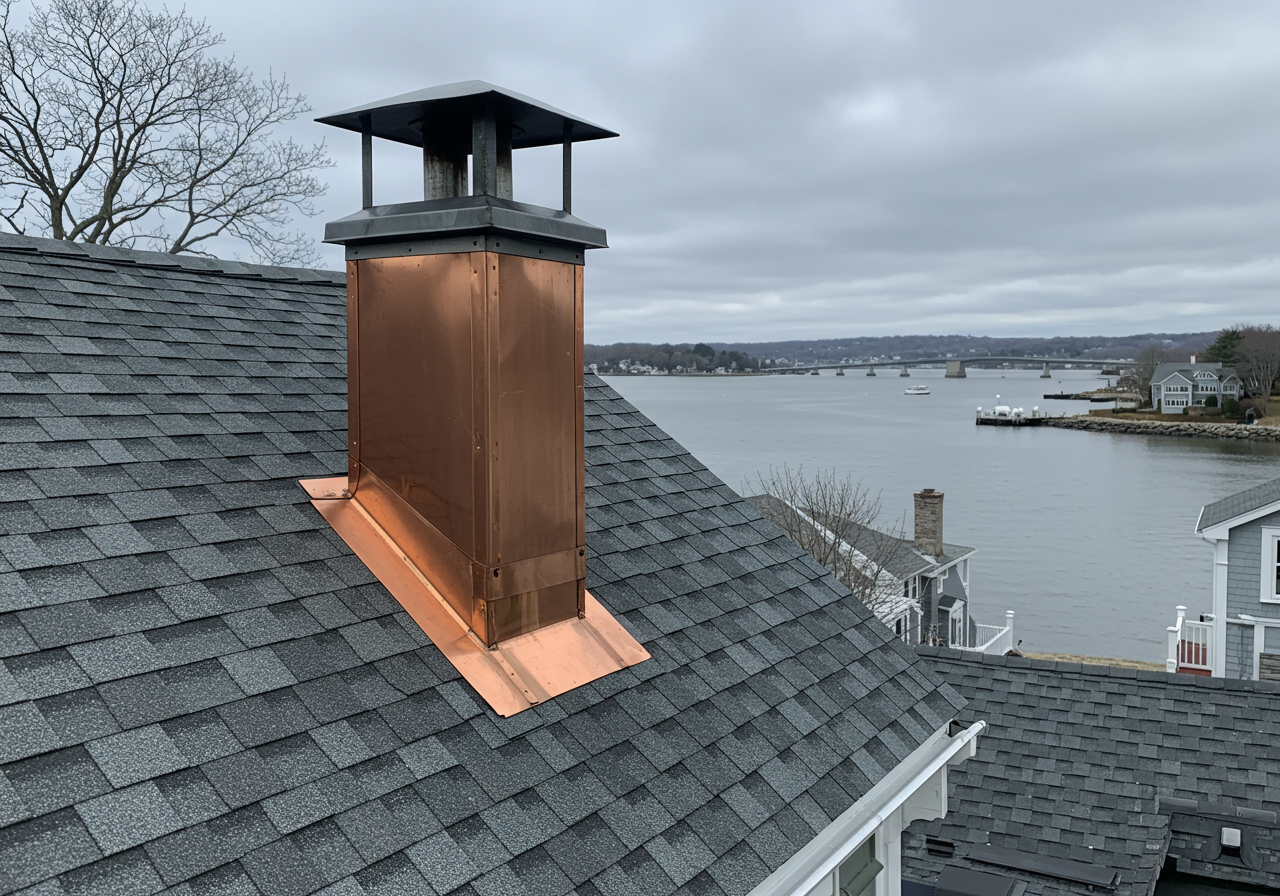
Coastal Wind Damage in Groton
Wind-driven rain can force water under lifted shingles, causing leaks that aren't visible from ground level.
Flashing Failures Around Chimneys and Dormers
Most leaks in Groton don't actually start in the middle of a shingle field; they start at the intersections. Whether it's a brick chimney on a historic colonial or a dormer on a modern cape, the flashing (the metal transition material) is the most common point of failure. The salt air in New London County is particularly aggressive, often causing older galvanized flashing to pit and corrode faster than it would in the Litchfield Hills.
I once climbed a roof in Noank where the homeowner swore they needed a whole new roof. It turned out the lead flashing around the chimney had simply pulled away because of the house's natural settling. A simple resealing and counter-flashing fix saved them thousands. Before you assume the worst, have a professional verify their contractor's license and check the "valleys" and "walls" of your roof. These are the high-stress areas where water likes to congregate.
Gutter Backups and the "Splashback" Problem
We have a lot of mature oak and maple trees in this part of Connecticut. If you didn't get your gutters cleaned out after the last of the leaves fell in December, you're likely sitting on a ticking time bomb. When a gutter is clogged, water doesn't just spill over the front; it often wicks backward, soaking into the fascia board and eventually finding a path behind your siding.
I've seen "roof leaks" that were actually just gutter failures. The water enters at the eave line and travels down the interior of the wall, making it look like a shingle problem. Keeping those channels clear is the cheapest insurance policy you can buy. If you're tired of the ladder work, consider a high-quality guard system, which can be part of a larger energy-efficient roof upgrade that improves your home's overall moisture management.
Identifying the Interior Warning Signs Before They Escalate
By the time you see a drip, the damage is already well underway. I tell my neighbors to keep an eye out for the "tea stain"—that faint, yellowish ring on the drywall. If the spot is damp to the touch during a storm but dries out quickly, you're likely dealing with a flashing or wind-lift issue. If it stays damp for days after the rain stops, you probably have a saturated layer of insulation or a slow-moving leak that's trapped in the attic.
Don't ignore mold or mildew smells in the upper floors of your home. In our humid coastal climate, a small leak can turn into a major air quality issue in just a few weeks. I've walked into attics in Groton where the underside of the roof deck was covered in black spots because a tiny leak had been feeding on the humidity for months. Catching it early is the difference between a $500 repair and a $5,000 mold remediation bill.
Minor Repair vs. Major Fix Comparison
| Feature | Minor Repair (Sealant/Shingles) | Major Fix (Flashing/Ventilation) |
|---|---|---|
| Cost Range | $300 - $850 | $1,200 - $3,400 |
| Durability | 1-3 Years | 10+ Years |
| DIY Friendly | No | No |
| Stops Ice Dams | No | Yes |
Why Professional Inspection Trumps DIY Patchwork
I'm all for a Saturday project, but roofing is where I draw the line—especially in February. Not only is it dangerous (black ice on a roof is no joke), but a "patch" often hides the real problem. Slapping a tub of roofing cement over a leak might stop the drip for a month, but if you don't address the rotted wood underneath, you're just trapping moisture.
The strategy that maximizes value is finding a crew that understands Groton's specific building codes and weather patterns. You want someone who won't just replace the shingle but will look at the underlayment and the drip edge. Don't just take my word for it— see what other Connecticut homeowners experienced when they moved from temporary patches to permanent solutions. A professional repair should come with a warranty that gives you peace of mind during the next hurricane season.
"In Groton, we don't just build for rain; we build for sideways rain. If your contractor isn't talking about ice and water shield at the eaves and valleys, they aren't building for a Connecticut winter."
Preventive Maintenance: Your Long-Term Savings Strategy
The best way to "fix" a leak is to prevent it from ever happening. Every spring and fall, I take a pair of binoculars and scan my roof from the driveway. I'm looking for cracked boots around the plumbing vents and any shingles that look "bald" (missing their granules). If your roof is reaching the end of its life, consider upgrading to materials that meet Energy Star's cool roof standards, which can actually lower your cooling costs during those humid Groton summers.
Maximizing value means thinking about the "whole house" system. A new roof isn't just about the shingles; it's about the ventilation, the gutters, and the insulation. When you address all three, you stop the leaks and start saving on your monthly utilities. It's a holistic approach that pays for itself over the life of the home.
Stop the Drip Today
Don't let a small leak become a structural disaster. Get a precise, automated estimate for your Groton roof repair and match with a local pro who knows our coastal weather.
No credit card required • Free to use
Get Your Free Roof Quote
Enter your zip code to get started
The reality of living in Groton is that our roofs work harder than almost anywhere else in the state. Between the salt spray, the wind off the Sound, and the heavy snow loads, your shingles are in a constant battle with the elements. By identifying the specific causes of leaks—like ice dams or coastal wind lift—you can move away from reactive "panic fixes" and toward a strategy that preserves your home's value for decades. Take a look at your attic today; a little vigilance now saves a lot of stress when the next storm rolls in.