
Key Takeaways
- Flashings are the Culprit: Nearly 90% of skylight leaks in Thompson stem from improper flashing rather than the glass itself.
- Condensation is a Trickster: Many 'leaks' are actually interior moisture hitting cold glass—a common January issue in CT.
- Timing is Everything: Sealing repairs should happen during dry spells; applying sealants on damp shingles is a recipe for failure.
- Local Load Matters: Thompson's heavy snow accumulation requires specific ice-and-water shield barriers around all roof penetrations.
Driving past the old Thompson Speedway or through the quiet stretches of the Quinebaug River woods, you see a lot of classic New England architecture. But here's the thing about our beautiful Thompson homes: they weren't exactly designed for the modern "hole in the roof" we call a skylight. In my years tracking the way weather patterns batter Windham County, I've noticed a trend. The "Quiet Corner" gets a specific brand of moisture—heavy, wet snow that sits and lingers—and that is exactly what makes a skylight go from a luxury to a living room waterfall.
If you're reading this while a bucket sits on your hardwood floor, don't panic. Most skylight issues in our corner of Connecticut are predictable, preventable, and often easier to fix than a full roof replacement.
Skylight Leak Prevention in Thompson
Understanding how Windham County's unique weather patterns affect skylight performance and what homeowners can do to prevent leaks.
The Windham County Winter Test
Thompson doesn't get the salt-heavy air of the coast, but we get the brunt of the interior "snow belt" effects. When a nor'easter rolls through, the snow piles up against the uphill side of your skylight. As the heat from your home escapes through the glass, it creates a micro-climate of melting and refreezing.
Why Thompson's Terrain Matters
If you live up on the hills near the Tri-State Marker, your roof faces higher wind loads than those down in the valley. This wind can actually drive rain *upward* under the shingles surrounding your skylight. I've seen skylights that were perfectly dry for five years suddenly fail because a storm hit from an unusual northeast angle that the original installer didn't account for.
The Seasonal Pressure Cooker
January is the ultimate stress test. The constant cycle of freezing at night and slightly thawing during the day (even in the shade) forces water into the smallest cracks. If your sealant has lost its elasticity, that water will find its way into your drywall.
Anatomy of a Skylight Failure
To fix a leak, you have to understand that a skylight isn't just one piece of equipment. It's an assembly. You have the glazing (the glass), the frame, and the flashing. In my experience, the glass almost never leaks unless a stray branch from a Thompson oak tree has done some damage.
The Frame Seal
The rubber gaskets that hold the glass in place eventually dry out. Think of it like the weatherstripping on your car door. In the harsh Connecticut sun of July and the deep freeze of January, that rubber becomes brittle. If you see water coming from the very top of the frame inside, the gasket is likely the "whoopsie."
Weep Holes
Most modern skylights have tiny "weep holes" designed to let interior condensation drain out. If these get clogged with dust or pine needles—common if you're tucked into the Thompson woods—the water backs up and spills over the interior frame.
Flashings: The First Line of Defense
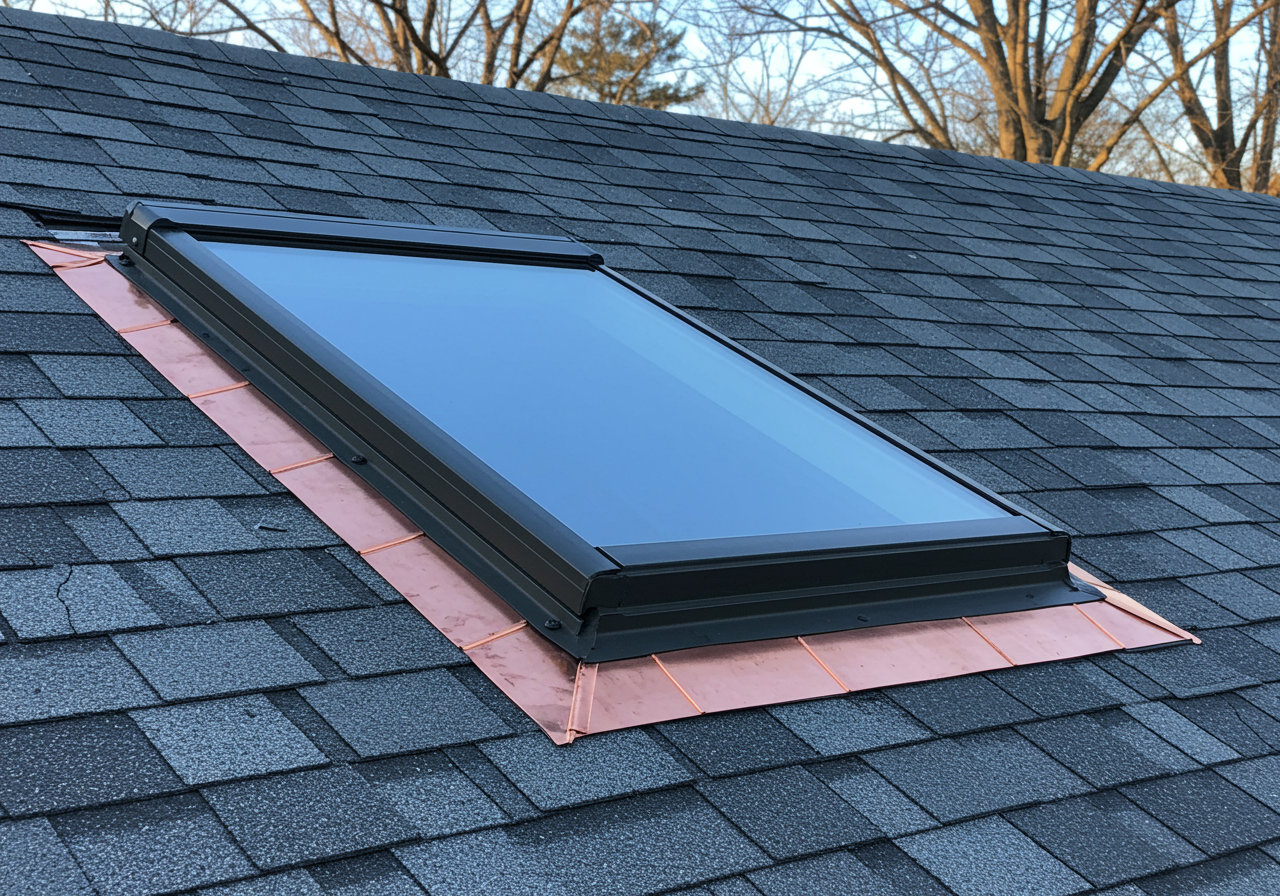
This is where the magic happens—or the tragedy. Flashing is the metal "skirt" that weaves between your shingles and the skylight frame. In Thompson, we see a lot of "step flashing" which is the gold standard.
Why "Caulk-Only" is a Mistake
I've walked onto many roofs in the Quiet Corner and seen a homeowner (or a cheap contractor) just globbing roofing cement around the edges. That's a temporary bandage, not a fix. As the temperature shifts, your roof expands and contracts. Hardened caulk will crack within one season. You need a mechanical barrier, not just a chemical one.
Proper Integration
The flashing must be tucked *under* the shingles on the high side and *over* the shingles on the low side. It sounds simple, but you'd be surprised how many "pros" get this backward. If you're unsure about your current setup, it's worth a look at some expert roofing guides to see how proper layering should look.
Condensation vs. Real Leaks
Before you call in the cavalry, make sure you actually have a leak. In January, Thompson homes are buttoned up tight. We're boiling pasta, taking hot showers, and running humidifiers. That warm, moist air loves to hit the cold surface of a skylight and turn into water droplets.
Identifying the Difference
If it only "leaks" when it's 15 degrees outside but bone dry, it's condensation. If it drips during a soaking rain or as snow melts, it's a leak. Improving your attic's thermal performance can help; the DOE insulation guide is a great resource for understanding how to keep that warm air away from cold roof surfaces.
"I've seen homeowners ready to tear out a perfectly good skylight when all they really needed was a better bathroom exhaust fan and a bit of attic air-sealing."
Professional Sealing Standards in Connecticut
When it's time to call in a pro, you need to know what to ask for. Don't just hire the first guy with a ladder. In a town like Thompson, word of mouth is big, but technical specs are bigger.
High-Performance Underlayment
Any repair should involve stripping back the shingles and installing a "peel-and-stick" ice and water protector. This creates a secondary waterproof seal directly to the roof deck. It's a requirement by most CT building codes now, but older homes in the area often lack it.
Finding Vetted Help
If you're looking for someone who actually knows the difference between a curb-mounted and a deck-mounted unit, make sure you verify their contractor's background. You want someone who has handled the specific snow loads we see in Windham County.
The Ice Dam Connection
Thompson gets some serious snow, and skylights are prime real estate for ice dams. An ice dam forms when snow melts on the upper part of the roof and freezes again at the cold eaves—or against the curb of a skylight.
The Backyard Effect
If your skylight is on a north-facing slope, it might stay frozen for weeks. The water pools behind the ice and gets "wicked" up under the shingles. This is why I always recommend checking the National Weather Service storm database to see the history of heavy snow events in Windham County; it helps justify why you might need a more robust ice-shielding strategy.
Clearing the Path
After a big Thompson snowstorm, if you can safely reach it with a roof rake, clearing the snow from the *bottom* side of the skylight can prevent the pooling that leads to leaks. Just be careful not to scratch the glass or tear the shingles.
When to Repair vs. Replace
Sometimes, a tube of high-grade silicone isn't going to cut it. If your skylight is over 15 or 20 years old, the seals inside the double-pane glass might have failed. If you see "fogging" or "bubbling" between the panes, the unit is spent.
Typical Thompson Skylight Costs (2026 Estimate)
The 20-Year Rule
If your roof is nearing the end of its life, replace the skylight at the same time. Doing a new roof around an old skylight is like putting a new engine in a car with bald tires. Don't just take my word for it—see what other CT homeowners say about the regret of skipping a skylight replacement during a re-roof.
Proactive Maintenance Schedule
You don't want to be thinking about your skylight only when it's dripping on your head. A little bit of "Quiet Corner" common sense goes a long way.
Inspect the exterior frame every spring after the last frost
Check for cracked gaskets and any signs of wear around the perimeter.
Clear debris like pine needles and oak leaves
Keep the perimeter clear to ensure weep holes stay open and water can drain properly.
Check the interior drywall for 'ghosting' or staining
These subtle signs indicate a slow, hidden leak that needs attention before it becomes a major problem.
Schedule a professional inspection if you notice fogging
Fogging between the glass panes indicates seal failure and likely requires replacement.
Check your attic insulation levels
Proper insulation reduces heat-loss that causes ice dams and condensation issues.
Summer Sun Prep
In Thompson, we get some humid, hot summers. This is when the UV rays do the most damage to your seals. A quick visual check from a ladder in July can save you a massive headache in January. Look for any "gapping" where the metal meets the glass.
Think your skylight might be failing?
Get a real-world estimate for a repair or replacement from local Thompson experts.
No credit card required • Free to use
Summary of Action Items
If you're dealing with a skylight issue in Thompson, start by determining if it's truly a leak or just condensation. If it's a leak, check the flashing first. Always prioritize mechanical fixes over "goop" and caulk. And remember, in the Quiet Corner, our weather is patient—if there's a weakness in your roof, the winter will eventually find it.
Get Your Free Roof Quote
Enter your zip code to get started