A few winters back, I was standing on a ladder in a driveway over by Silver Sands State Park. The homeowner, a sharp guy who kept a spreadsheet of every BTU his furnace burned, was adamant about installing "cool roofing" shingles he'd seen on a West Coast home improvement show. He was convinced that the Energy Star label was the only thing standing between him and a $400 monthly utility bill.
Here's the thing: while he wasn't wrong about the technology, he was miscalculating the geography. In Milford, we don't just deal with the July sun beating down on the Sound; we deal with February's freezing dampness and the "heating penalty." If you install a roof that reflects too much heat in the winter, your furnace has to work harder to compensate for the loss of passive solar gain. I spent forty minutes showing him my field notes from a similar Cape-style home where we'd tracked attic temperatures over two seasons. The data proved that a "one-size-fits-all" efficiency label doesn't always account for the 14% increase in heating load some Connecticut homes face when their roof is too reflective in the winter.
Key Takeaways
- The Heating Penalty: Highly reflective 'cool roofs' can actually increase heating costs in CT during winter months.
- Ventilation is King: A standard shingle with superior attic ventilation often outperforms a high-efficiency shingle on an unventilated deck.
- Material Lifespan: Stone-coated steel and composite slates offer better thermal resistance and 50-year durability compared to standard asphalt.
- Tax Incentives: Federal credits for energy-efficient roofing are specific; you must verify the latest IRS Form 5695 instructions before purchasing.
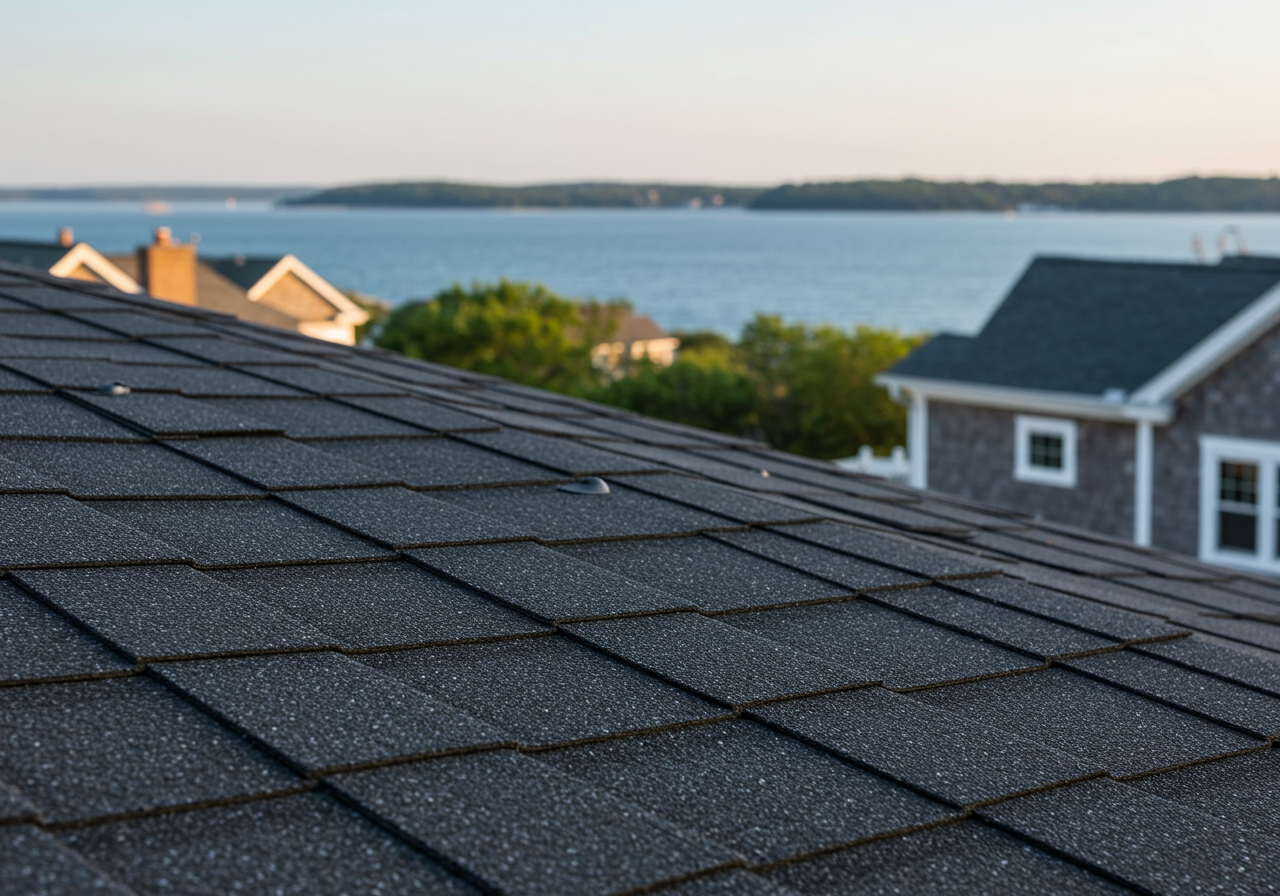
Energy-Efficient Roofing Systems
Exploring alternatives to Energy Star roofing for Milford homeowners seeking optimal energy performance
Beyond the Label: Why "Cool Roofs" Behave Differently in Milford
When most people think of energy efficiency, they look for the little blue sticker. But in New Haven County, the "albedo effect"—how much solar radiation a surface reflects—is a double-edged sword. A roof with a high Solar Reflectance Index (SRI) is fantastic in July when you're trying to keep the AC from running 24/7. However, during a Milford January, that same roof prevents the sun from helping warm your home.
I've found that for many local homes, particularly those with a 6:12 pitch or steeper, the "Energy Star" asphalt shingle isn't always the optimal choice. Look, if you have a massive, flat-roofed commercial building, cool roofing is a no-brainer. But for a residential colonial? The math changes. I often suggest looking at materials that offer thermal mass and better insulation properties rather than just surface reflectivity.
The Thermal Bypass Problem
Most homeowners don't realize that the "hot attic" they feel in the summer is often caused by air leaks from the living space, not just the sun hitting the shingles. If your recessed lights and plumbing stacks aren't sealed, even the most reflective roof on the market won't save you more than a few pennies. Before you commit to a full upgraded roof system installation, it's vital to look at the "envelope" as a whole.
Performance-Grade Alternatives: Metal and Composite Systems
If you're moving away from traditional Energy Star asphalt, your best bets in Milford are typically metal or high-end composites. I'm a big proponent of standing seam metal for coastal properties. Why? Because the air gap created by the installation method (often using 1x4 furring strips) provides a "thermal break" that shingles simply can't match.
Stone-Coated Steel
These are the "stealth" efficiency champions. They look like traditional architectural shingles or even wood shakes (think brands like DECRA or Westlake), but they are actually steel panels. The secret is the "above-sheathing ventilation." Because there is a small pocket of air between the steel and your roof deck, it acts as a buffer.
Stone-Coated Steel vs. Standard Asphalt
Pros
- Exceptional wind resistance (up to 120mph)
- High thermal resistance via air gaps
- 50+ year expected lifespan
Cons
- Higher upfront material cost
- Requires specialized installers
- Can be noisy if not installed with proper underlayment
Composite Slate and Shake
Materials from manufacturers like DaVinci Roofscapes are engineered with UV stabilizers and high-density polymers. While they aren't always "Energy Star" in the sense of being white or bright silver, their density provides a better R-value (insulating power) than a thin layer of asphalt and fiberglass. When you're calculating the potential ROI of these materials, you have to factor in that they'll likely be the last roof you ever buy.
The Thermal Envelope: Why Attic Insulation Trumps Shingle Color
I've walked hundreds of Milford attics, and I can tell you that a $500 investment in blown-in cellulose often yields a higher energy return than a $2,000 "cool roof" upgrade. In our climate, the goal is to keep the roof deck at the same temperature as the outside air. This prevents ice dams in February and baked shingles in August.
The Science of Airflow
To get a roof to perform efficiently, you need a balanced system of intake (soffit vents) and exhaust (ridge vents). If that balance is off by even 15%, you'll see moisture buildup. According to the International Code Council (ICC) standards, you generally need 1 square foot of net free vent area for every 150 square feet of attic floor. I've seen contractors ignore this, and it results in "cooked" shingles that fail in 12 years instead of 25.
"Efficiency isn't about the shingle; it's about the system. A high-albedo roof on a dead attic is just an expensive way to have a cold house."
Checking for Bypasses
During a standard professional leak inspection, I'm looking for more than just water spots. I'm looking for "wind-washing" of the insulation. If the wind is blowing through your soffits and pushing your insulation around, your energy efficiency just plummeted, regardless of what's on your roof.
Financial Realities: ROI on 25-Year Efficiency Upgrades
Let's talk hard numbers. A standard architectural shingle roof in Milford might cost you $12,000 to $16,000. An energy-efficient alternative, like standing seam metal, could easily run $28,000 or more. Does the energy savings close that gap?
The honest answer: Not by itself. You'll save maybe $150–$300 a year on cooling costs. Over 30 years, that's $9,000—not enough to cover the price jump. However, the ROI comes from durability. If the standard roof needs to be replaced in 20 years (typical for CT coastal weather) and the metal roof lasts 50, you've saved the cost of an entire second roof replacement.
Contractor Verification Tip
You can check a company's history via the Better Business Bureau Roofing HQ before you sign a contract. I've seen too many "energy experts" disappear when the roof starts leaking because they didn't understand New England flashing.
Selecting the Right System for Coastal New Haven County
When I'm advising someone in Milford, I tell them to ignore the glossy brochures from California. We have specific needs. Our roofs have to handle the salt air from the Sound and the heavy, wet snow that sits on the eaves for weeks.
Audit your current attic insulation and ventilation levels.
Start by assessing what you already have. Measure insulation depth and check for proper soffit and ridge venting.
Determine if your primary goal is lower monthly bills or longer material lifespan.
This decision will guide whether you prioritize energy efficiency or durability in your material choice.
Request a 'Total System' estimate that includes air sealing and baffle installation.
Don't just get a shingle quote. Ask for a comprehensive estimate that addresses the entire thermal envelope.
Check for local utility rebates through Energize CT or federal tax credits.
Connecticut offers various incentives. Verify eligibility for federal credits using the latest IRS Form 5695 instructions.
Use an automated tool to match with a contractor experienced in high-performance materials.
Not all contractors understand specialty materials. Find someone with proven experience in energy-efficient systems.
If you're serious about efficiency, look for "Class 4" impact-rated shingles that also have "Cool Roof" granules. This gives you a discount on your homeowner's insurance (often 10–15%) while also providing the energy benefit. It's a "stacking" effect that makes the math work in your favor.
Get Your Free Roof Quote
Enter your zip code to get started
Conclusion
In Milford, an Energy Star rating is a great starting point, but it's rarely the finish line for a truly efficient home. Whether you opt for stone-coated steel or a highly-ventilated architectural shingle system, the focus must be on the "system" rather than just the shingle color. I've found that the best-performing homes in our area are those that prioritize air sealing and insulation alongside their material choice.
If you're ready to stop guessing and start measuring, get an estimate that looks at the whole picture. Your roof is your home's first line of defense; make sure it's built for the 2026 climate, not just the 1990 building code.
FAQ

About Daniel Roberts
Verified ExpertDaniel Roberts is a Senior Roofing Consultant with over 15 years of experience in the New England residential construction industry. He specializes in storm damage assessment and energy-efficient roofing systems.