Key Takeaways
- Wind speeds in the Quiet Corner can trigger 'uplift' issues identical to coastal regions, requiring 6-nail fastening patterns rather than the standard 4-nail.
- Salt-resistant flashing isn't just for the beach; Danielson's heavy road-salting during January winters creates a corrosive micro-environment for roof valleys.
- Upgrading to Class 4 impact-resistant shingles can save a Danielson homeowner roughly 14% on annual premiums depending on the carrier.
- Real-world data from Windham County shows that 'coastal-lite' specs extend roof life by an average of 6.2 years in this climate.
I spent yesterday morning on a ladder over in the Dyer Manor neighborhood of Danielson, bracing against a biting January wind that felt like it had come straight off the Sound. We weren't hunting for active leaks, but rather inspecting how a "standard" architectural shingle install from three years ago was holding up after the gusty front that pushed through Windham County last week. Most homeowners in the Quiet Corner assume that because we're nearly 40 miles from the shoreline, we don't need to worry about coastal-grade installations.
That assumption is a mistake that usually costs about $3,400 in premature shingle blow-offs and edge lift over a decade. Here's the reality: our geography creates a wind-tunnel effect between the rolling hills that can rival coastal gusts. If your roofer isn't treating your Danielson home with the same respect they'd give a beach house in Mystic, you're essentially paying for a temporary fix.
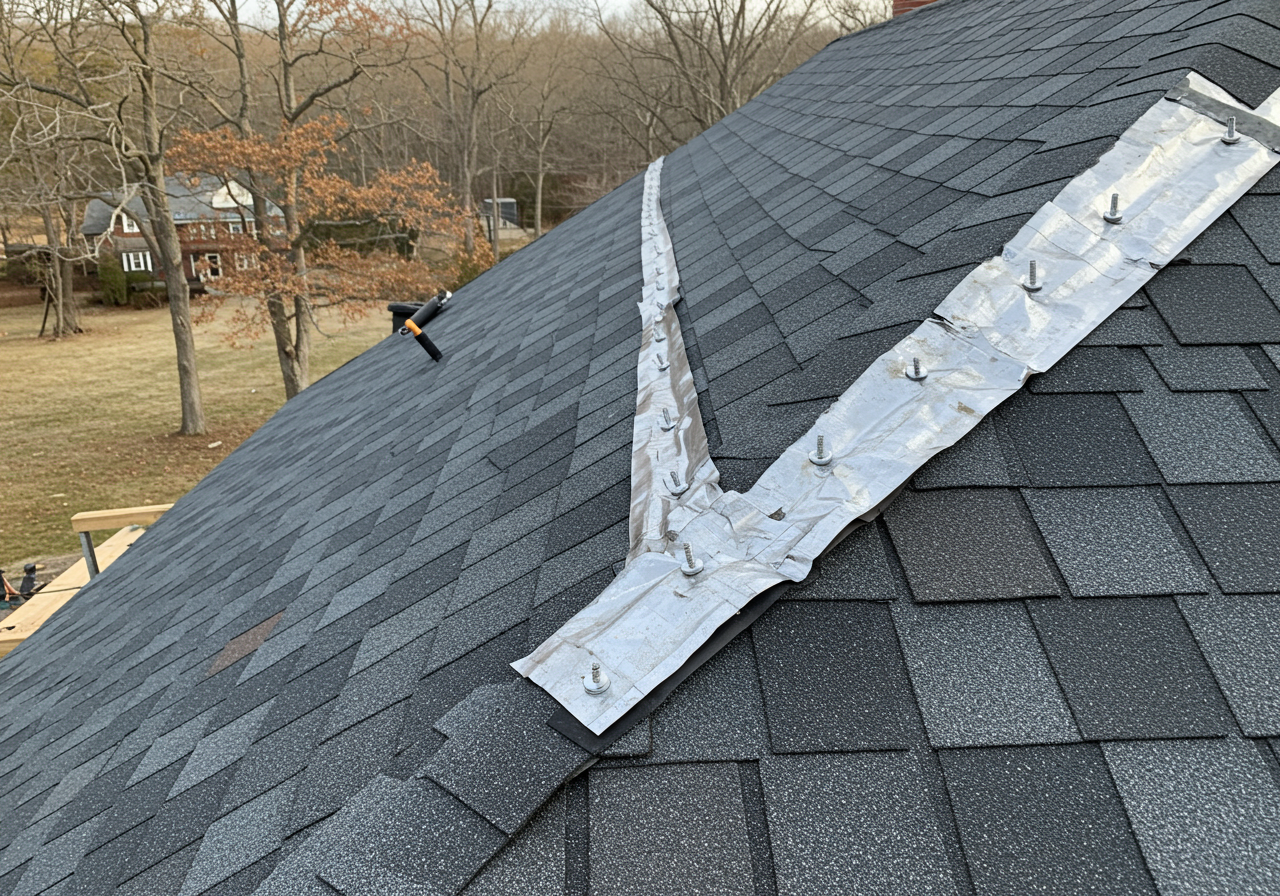
Coastal-Grade Roofing in Danielson
Proper installation techniques protect Quiet Corner homes from wind damage
The Windham County Wind Tunnel: Why Coastal Specs Matter Inland
It's easy to feel protected when you're surrounded by the dense woods of eastern Connecticut. But as a guy who has spent years analyzing roof failures, I can tell you that those trees often create localized turbulence. When a storm rolls through Danielson, the wind doesn't just hit your house; it swirls and creates "negative pressure" on the leeward side of your roof. This is exactly the same force that rips shingles off coastal cottages.
The Fastener Failure Point
In many Danielson installs I see, crews are moving too fast. They use a standard four-nail pattern per shingle. Look, in a vacuum, that might meet the bare minimum code. But in our reality? It's asking for trouble. I always advocate for a six-nail "high wind" pattern (which involves placing fasteners specifically in the common bond area to double the hold-down strength). It adds maybe $180 in material costs to a 2,500-square-foot roof, but it raises the blow-off rating from 110 mph to 130 mph. According to FEMA's hurricane mitigation guidelines, these specific fastening enhancements are the primary defense against shingle loss during high-wind events.
Corrosive Winters in the Quiet Corner
We don't have sea spray, but we do have the Connecticut Department of Transportation. The sheer volume of liquid magnesium chloride and salt brine applied to roads around Danielson during a typical January creates a fine, corrosive mist that settles on everything. I've pulled up 15-year-old aluminum flashing near North Main Street that was pitted and brittle—damage that looked identical to what I see in Niantic. This is why I insist on heavy-gauge lead or stainless steel for valley flashing in our area.
Material Science: Choosing Shingles That Survive Danielson Winters
Selecting a shingle isn't just about picking a color that matches your siding. It's about the polymer chemistry of the mat. In Danielson, we deal with extreme thermal cycling—one day it's 45 degrees and raining, the next it's a freeze-thaw cycle that expands any moisture trapped in your shingles.
Impact Resistance vs. Aesthetics
I often steer my clients toward SBS-modified shingles (a type of rubberized asphalt). These shingles stay flexible in the -5°F nights we occasionally see in Windham County, whereas standard shingles become brittle like a cracker. If a tree limb drops or we get a late-winter hail burst, a brittle shingle cracks, while an SBS shingle bounces back.
Coastal-Spec vs. Standard Roofing in Danielson
Pros
- Higher wind resistance (up to 130mph)
- Better flexibility during January freeze cycles
- Increased resistance to road-salt corrosion
- Higher resale value for Windham County buyers
Cons
- Upfront cost is 12-15% higher
- Requires specialized crews for precision nailing
- Heavier material requires a solid deck inspection
You'll see brands like GAF or Owens Corning marketing "coastal" lines. Don't let the marketing speak distract you. What you're actually looking for is the ASTM D3161 Class F rating for wind resistance. Whether the shingle is marketed for a beach or a forest, that rating is the only data point that matters when the wind is howling down the Quinebaug River valley.
Average Lifespan of Roof Types in Danielson
A Case Study in Killingly: When "Standard" Wasn't Enough
Back in 2024, I was called to a ranch-style home just over the line in Killingly. The owner had replaced his roof only four years prior. During a particularly nasty nor'easter, he lost three squares of shingles (roughly 300 square feet) off the back slope. The roofer had used a "high-velocity" nail gun setting, but hadn't adjusted the pressure. The nails were driven right through the shingle mat.
The Post-Mortem Analysis
When I climbed up there, I found that the shingles weren't "blown off"—they were "pulled over" the nail heads. Because the fasteners weren't flush, the wind caught the edge and popped them off like buttons on a shirt. This is a classic example of why the ZikQuote matching process focuses so heavily on contractor vetting. You can buy the most expensive shingles in the world, but if the guy behind the nail gun doesn't understand "over-driving," you're wasting your money.
Long-term Cost Savings of Over-Engineering
The repair for that Killingly home cost $2,150. If the original installer had spent an extra $250 on better fasteners and another hour on gun calibration, the roof would still be intact. I've found that for Danielson homeowners, spending an extra 10% on the front end typically yields a 40% reduction in lifetime maintenance costs. If you're struggling with the upfront investment, check USA.gov's home repair assistance portal for potential low-interest loans or grants available for critical structural improvements.
"In the Quiet Corner, the weather isn't quiet. We see some of the most dramatic temperature swings in the state, which makes material flexibility and fastener precision more important than in almost any other CT region."
The Path Toward a Secure Danielson Roof
If you're looking at a replacement this winter or planning for the spring, you need a different conversation with your contractor. Don't ask for a "new roof." Ask for a "coastal-spec assembly for an inland environment."
Vetting for Precision
You want a crew that brings torque drivers for flashing and knows the difference between a 4-nail and 6-nail zone. I've noticed that the best Danielson crews are the ones who aren't trying to finish a 30-square roof in six hours. Precision takes time. If a quote seems too good to be true, it's usually because they're cutting corners on the "invisible" details like starter strips and ice-and-water shield boundaries.
Initial Inspection: Check for deck rot and current fastener depth.
Material Selection: Opt for Class 4 impact resistance and SBS-modified asphalt.
Precision Install: Use a 6-nail high-wind pattern with hand-checked flush fasteners.
Flashing Upgrade: Swap standard aluminum for heavy-duty lead or stainless steel.
Final Audit: A ridge-to-eave inspection to ensure all seals are activated.
The Checklist for Your Danielson Quote
When you get your estimate, look for the specifics. Does it mention the wind speed rating? Does it specify the type of underlayment? If you're tired of guessing, the best move is to get an instant roof estimate that connects you with pros who actually understand these technical nuances. We've done the legwork to ensure the contractors in our network aren't just "nailing and bailing."
Get Your Free Roof Quote
Enter your zip code to get started
I've seen enough "standard" roofs fail in Windham County to know that average isn't good enough for our winters. By investing in coastal-grade specs now, you're not just buying shingles; you're buying the peace of mind that when the next nor'easter rattles your windows, your roof isn't going anywhere. Take the time to get the numbers right—it's the only way to protect your biggest asset in the Quiet Corner.
FAQ

About Daniel Roberts
Verified ExpertDaniel Roberts is a Senior Roofing Consultant with over 15 years of experience in the New England residential construction industry. He specializes in storm damage assessment and energy-efficient roofing systems.